


Table of Contents
Wondering how to get clients as a lawyer? Start by building a system. To consistently sign top-dollar cases, you cannot have just one “marketing trick” up your sleeve.
We’ve worked with 100+ legal firms since 2008, and they all used some combination of SEO, PPC, intake optimization, reviews, referrals, and follow-up to master how to get legal clients. Our podcast on how to get law firm referrals explores that channel in more detail.
But how do lawyers get clients consistently in competitive markets? In this guide, we’re breaking down their 14-step growth blueprint.
This is the exact playbook behind a 196% lead growth for Jacob Fuchsberg, a New York personal injury firm.
These are also the same systems behind Grow Law’s attorney lead generation services.
Key Takeaways
- Build a multi-channel marketing system (SEO, PPC, reviews, referrals, intake).
- Define your Ideal Client Profile so every marketing decision attracts the exact cases you want.
- Fix your website’s speed, mobile UX, and CTAs so it converts at least 3–5% of visitors.
- Use SEO for long-term visibility and PPC for immediate, high-intent leads.
- Respond to every lead within 5 minutes to dramatically increase signed cases.
- Optimize for AI search as firms that appear in AI-generated answers attract a growing wave of serious legal clients.
How to Get More Law Firm Clients with Digital Marketing
First, let's ask ourselves: Where do clients find lawyers? The answer is most likely online.
According to a study by Best Lawyers, 96% of legal consumers begin their search for an attorney online.
Every time your law firm doesn’t appear for searches like “lawyer near me” or “personal injury attorney [city],” a potential client is likely calling a competitor instead.
1. Picture Your Ideal Customer Profile (and Write It Down)
If "everyone" is your client, no one is your client.
Before you throw money at ads or SEO (search engine optimization), pause and ask yourself, "Who exactly am I trying to attract?"
Think like a sniper and zero in on your ideal client with precision:
- What’s their case type?
- How much do they make per year?
- Where do they live?
- What are they Googling to find you? (e.g., “personal injury lawyer near me”)
Get crystal clear. That's key to fine-tuning your legal processes and truly understanding how to get more legal clients.
Once you know who you’re targeting, every decision (from your website copy to your paid ads PPC campaigns) becomes 10x more effective.
2. Create Your Digital Marketing Plan of Action
Now that you know exactly who you’re targeting, build a simple, high-level plan to get in front of them.
Start by auditing your current setup and fixing the biggest gaps first:
- Check your website performance: Make sure it loads fast, works flawlessly on mobile, and converts at least 3%–5% of visitors.
- Audit your Google rankings: Identify the high-intent keywords your ideal clients search (e.g., “criminal lawyer [city]”) and track where you currently stand.
- Evaluate your Google Business Profile: Ensure it’s optimized, active, and generating 10–20+ calls or interactions each month.
- Review your ad campaigns: Aim for 7%–10% conversion rates on Google Ads and pause anything that isn’t producing profitable leads.
- Tighten your intake system: Respond to every inquiry within 5 minutes and set up after-hours automation so no lead goes cold.
Use tools like Google Analytics to see where your best traffic comes from, and SEMrush to understand how you compare to competitors.
Finally, map out SMART goals for the next 90 days, i.e., clear targets you can measure and actually hit. SMART goals are the foundation to answer your question, “How to get more clients for my law firm?”
Example: “Increase felony case inquiries by 25% by running targeted Google Ads in [your city].”
Ready to get found first, guaranteed? Read our 13-step digital marketing guide for law firms.
3. Build a High-Performance Website to Attract More Legal Leads
So many law firm websites take 5+ seconds to load and look awful on mobile (which is bad because 52.27% of clients come from mobile).
Your law firm website needs to do one job really well: turn visitors into leads. This means:
- Clear calls-to-action that tell visitors exactly what to do next, e.g., "Book Your Free Consultation".
- Fast load times (under 2.5 seconds), so no one bounces while the homepage loads.
- Simple contact forms that ask for very basic information (don't grill them).
- Helpful content that answers legal questions from potential clients, e.g., writing articles like "Do I Need a Lawyer for a DUI Charge?"
- Client reviews that show you're the real deal... i.e., a lawyer they can trust.
Bonus points if you add a live chatbot for after-hours messages. This is key in understanding how attorneys get clients.

Moreover, a Google study found that when a website’s load time increases from 1 second to 3 seconds, the likelihood of losing visitors jumps by 32%.
That said, visitors alone are not enough. You need a solid website funnel to attract signed cases.
After we rebuilt Cameron Law’s website and conversion funnel, the results were stunning. They saw a 1,011% increase in conversion rates, alongside a 367% increase in qualified leads.
Learn how to create a strong law firm website design to convert prospective clients.

This Is Your "Get More Clients" Hack for 2026
Partner with Grow Law today. Law firms see a massive 88% median revenue boost in Year 1 alone.
Contact Us Today
4. Use SEO to Drive Client Growth
Presenting the goose that lays the golden egg... SEO (search engine optimization)!
Backlinko studied click-through rates (CTR) across 1.3 million pages. They found that the #1 Google organic result gets 27.6% of all clicks.
Only 0.63% of Google searches clicked on a page-two result.
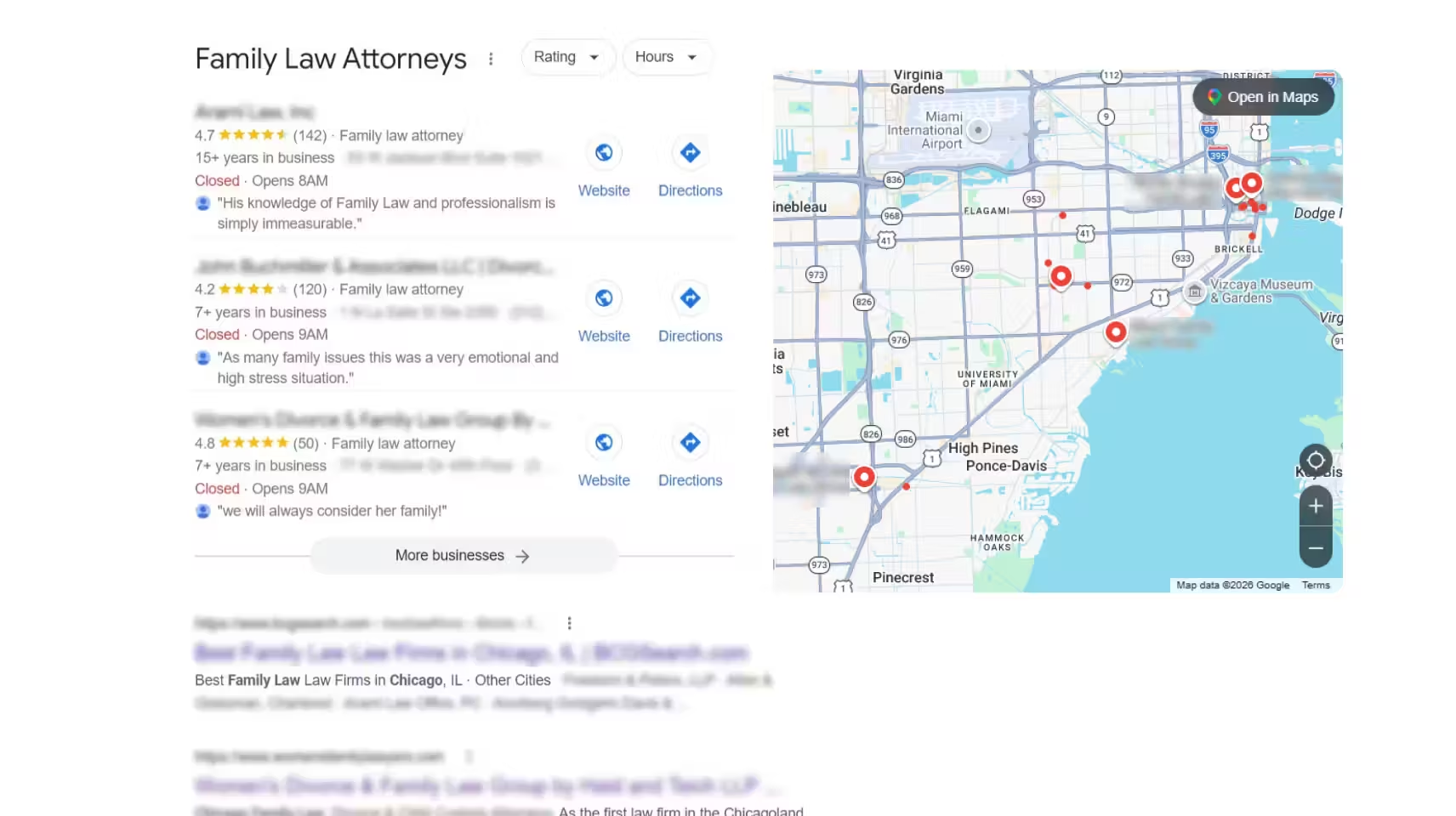
But SEO isn’t just about shoving keywords like "estate planning lawyer" onto your homepage 2,000 times. It’s about building your credibility, authority, and long-term visibility. Let’s break it down:
— On-Site SEO
If you’re wondering, how do lawyers get clients with SEO, you need to think about:
- Fast load times and mobile responsiveness
- SEO-friendly meta tags, titles, and headers
- Easy-to-use navigation and internal linking
- Optimized images and technical structure
- Educational blog posts and FAQ-style content that answer your clients’ actual questions
Make your site easy to navigate, helpful, and relevant. Google will rank it higher, and this massively improves lead generation for law firms.
— Off-Site SEO
This is how Google measures your authority across the web:
- Earning backlinks from trusted, relevant websites
- Managing your online reviews and reputation
- Sharing useful legal content across social channels
- Engaging with local media and niche blogs
And remember: SEO compounds over time (6-12+ months). You must consistently publish helpful, well-structured content to see the biggest long-term gains.
After investing in SEO content and site optimization with Grow Law, Sequoia Legal saw a 6,700% increase in organic traffic along with a 276% increase in qualified leads.
— Local SEO
Most of your clients live nearby, so target them. This list is critical for how to get legal clients:
- Add your city/region to key phrases (e.g., “DUI lawyer in Dallas”)
- Claim and optimize your Google Business Profile
- Keep your Name, Address, and Phone (NAP) identical across all directories
- Ask happy clients to leave reviews
- Create content focused on local laws or headlines
This is not just about rankings. When we helped Gounaris Abboud reach the #1 position for “drug crimes attorney Dayton" and "OVI lawyer Dayton,” the firm saw a 124% increase in qualified leads.
That’s right! Local visibility directly translates into more signed cases.
Swear by these SEO efforts on how to get clients as a lawyer, and you'll do 3 things: Climb the rankings ladder, attract clients, and sleep so much better at night.
Pro Tip: In 2026, SEO goes beyond traditional Google rankings.
Spark Toro reports that 58% of Google searches now end in 0 clicks. AI Overviews are giving direct answers, removing the need to click on a blue link.
On top of that, AI tools like ChatGPT are being used by millions. They prioritize structured content, strong E-E-A-T signals, authoritative backlinks, and a trusted local presence.
Optimize for AI, and you’ll be far more likely to appear in Google AI Overviews and AI-generated answers in ChatGPT, finally cracking the code to how do lawyers get clients with AI?
That’s why more firms are now investing in AI search optimization for lawyers alongside traditional SEO to capture this growing wave of AI legal searches.
5. PPC Is a Great Way to Get More Attorney Clients
SEO is a slow burn, and it takes about 3 to 6 months for the initial results to kick in.
But if you want leads this week, pay-per-click (PPC) ads are your fast pass to the top of Google.
With PPC, you’re bidding on high-intent keywords like “car accident lawyer near me” or “divorce attorney free consultation.” When someone Googles it, boom, your firm shows up first!
Yes, PPC costs money. Ahrefs reports that legal keywords are some of the most expensive out there.
For example, “drunk driving accident lawyer Houston” costs $1,540.00 per click! But if that click turns into a $25,000 case... ka-ching!
How do attorneys get clients using PPC?
- Target high-intent search terms around legal issues (think “hire a DUI lawyer,” not “what is a DUI”)
- Write ads that directly address their fears, questions, or urgency
- Send them to a clean, convincing landing page
- Run location-based ads to attract nearby leads
- Use retargeting to bring back lost visitors
- Monitor your cost per lead and trim what doesn’t convert
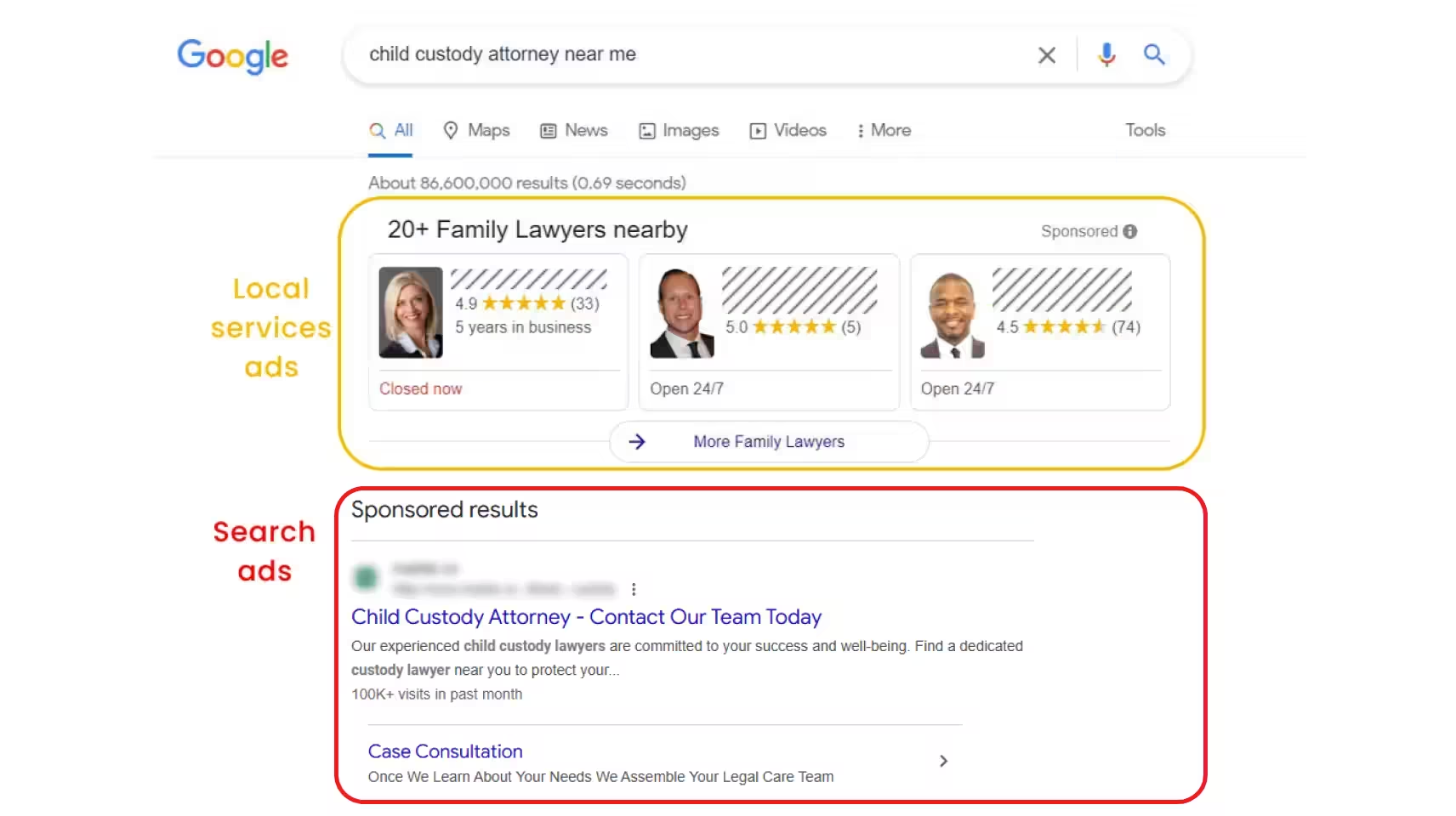
Unfortunately, we see many law firms do PPC wrong: they blame the traffic when the real issue is the landing page. That’s why they can’t seem to figure out how do lawyers get clients.
What do we mean by this? A strong legal PPC landing page should typically convert around 7–10% of visitors. If your page is converting below 5%, you likely have a website or intake problem, not a traffic problem.
Do this right and your PPC can deliver a strong online presence and a pipeline full of leads.
6. Write Insightful Content to Find Prospective Law Firm Clients
Guess what people do before calling a lawyer? They Google their fears.
- “Will I go to jail for a first DUI?”
- “Can I sue my employer for firing me while pregnant?”
- “Will I lose custody if I miss a court date?"
If your website doesn’t address these client expectations, you’re losing them to a lawyer who does.
Content marketing helps you get found by directly addressing these fears. In fact, Forbes reports that 74% of marketers say it boosts engagement and leads.
So, if you’re wondering “How to grow my law practice”, content marketing is key!
- Write blog posts that answer real client questions
- Create short, visually appealing videos that break down legal concepts
- Create downloadable checklists, FAQs, or “what to expect” guides (and collect their emails in exchange)
One valuable, well-written post a month beats five forgettable ones, and answers the all-consuming question: How to get more legal clients.
We’ve used content successfully to boost leads for Denver-based corporate law firm, Sequoia Legal.
Our team expanded their SEO content across practice area pages, city-specific pages, and educational legal content.
Today, a bulk of their traffic comes from these pages, driving a 6,700% increase in organic traffic and a 276% increase in qualified leads.
Pro Tip: We also aligned their content with Google’s E-E-A-T (Experience, Expertise, Authoritativeness, Trustworthiness). This was a major rankings boost!
"Put all of your best ideas out there and let those ideas go do the selling for you."
— Steve Gordon
7. Become Recommended by AI Models
In 2026, AI is a major referral source for law firms.
Rev reports that 65% of Americans have already used an AI chatbot for legal help at some point.
Tools like ChatGPT, Google AI Overviews, Gemini, and Perplexity are inundated with questions like: “Who is the best personal injury lawyer in Dallas?” and “What lawyer should I call after a truck accident?”
So, how do these AI tools decide which firms to mention?
Well, many of the same signals that drive traditional SEO also influence AI visibility, and help with how to get legal clients:
- Strong E-E-A-T signals that show real legal expertise and credibility
- Well-structured website content AI systems can easily understand
- Authoritative backlinks, press mentions, and directory citations
- Optimized Google Business Profiles with strong local signals
- Consistent reviews and accurate business information across the web
- Fast-loading practice area and city-specific pages that directly answer legal questions
In other words, if you have robust SEO, you (by default) have a strong foundation for AI search optimization, or GEO (Generative Engine Optimization).
But GEO extends further than SEO. It’s not just a benefit from “SEO spillover.” You must focus on:
- Entity signals that connect your attorneys, firm, locations, and practice areas
- Schema markup that helps AI systems interpret your content correctly
- Citation consistency across directories and legal platforms
- Topic clustering that builds deep authority around specific legal subjects
- AI-friendly formatting and structured answers that large language models can easily pull from
Our internal GEO performance data across 100+ Grow Law client campaigns shows that 98% of our clients now receive AI-driven qualified leads, proving its success.
Catch the new wave of clients. Discover how AI search optimization for lawyers gets you hired.

8. Legal Directories Are a Good Source for New Law Firm Clients
A ton of lawyers dismiss legal directories... do not make that mistake!
Online legal directories are like a cheat code. They are one of the easiest ways to boost your visibility.
Sites like Avvo, FindLaw, and Martindale-Hubbell already rank well on Google, which means if you're listed there, you rank well, too. Crafty, right?
These platforms act as trusted third-party validators. They send high-authority backlinks to your website (which helps SEO), showcase your reviews (which improves trust), and make it easy for potential clients to contact you directly.

How do you make online legal directories work for you?
- Add a compelling bio
- List all relevant practice areas
- Include credentials and awards
- Upload a professional photo
- Showcase client testimonials
- Make sure your NAP (Name, Address, Phone) is 100% consistent across every platform
It’s low-effort, high-reward visibility on how to get more legal clients. Don’t leave that kind of digital real estate on the table.
9. Advertise Your Legal Services to Clients on Social Media
5.79 billion people are on social media as of 2026 (that's nearly 2 out of every 3 in the world!).
Odds are, your next 100 clients are there right now.
Sure, you won’t close a $10,000 case just because someone liked your reel. But leveraging social media amplifies your brand, content, and credibility. A “follow” today could turn into a paying client tomorrow.
Facebook offers massive reach (3.07 billion users), while LinkedIn is a goldmine for B2B and corporate law practices.
Show up where your ideal clients are and give them value. That will take you far in answering your question, “How to grow my law practice?”
And if you don’t know what to post, try:
- Repurposing your blog content
- Answering common legal FAQs
- Ethically sharing recent wins or case results
Consistency is what spreads word of your credibility. Consistency is what fills your caseload month after month.
10. Email Marketing Can Get Lawyer Clients
Yes, email is still kicking butt in 2026.
For every $1 you spend on email marketing, you could get about $36 to $40 back. Crazy, right?
But this is not surprising, considering a large majority of email users check their inbox every single day, with some checking it up to 100 times a day.
For lawyers, email is your silent, consistent closer. It’s perfect to answer your question, “How to grow my law practice?”
- Nurture leads who aren’t ready yet
- Stay top of mind with past clients
- Gently remind folks you exist (and you’re brilliant)
Start with a simple newsletter. Drop legal updates, bust a myth, or share a quick “Did you know?” tip. But just remember: no one wants to be sold to in their inbox.
Educate. Entertain. Then convert. That’s the secret to how do attorneys get clients!
11. Leverage Reputation Management
In 2026, your reputation lives online.
A one-star review could make a potential client second-guess you for their legal crisis. And then decide you're not worth the risk, and you lose new business.
Demand Sage reports that a staggering 93% of people read online reviews before hiring or making a purchase.
Reputation management is key when figuring out how to get clients as a lawyer.
Start by asking happy clients to leave honest Google reviews. Respond to all reviews (yes, even the ones that go, "this lawyer sucks.”)
But the velocity of reviews is critical. It’s suspicious to Google if you get 100+ reviews in February, and zero reviews in March, April, and May.
Instead, aim for a steady flow of new reviews (like 5 to 10 every month). This can influence both your local search rankings and how trustworthy your firm appears to potential clients.
Want the full breakdown? Read our step-by-step guide on Reputation Management for Lawyers to build your client pipeline.
Your Revenue is at Risk... Don't Neglect Your Marketing
Legal clients saw an explosive 900%+ increase in qualified leads with Grow Law. Join in the success!
Book a Free Consultation Today
12. Create a Referral Program
Good clients like good gossip. If they like you, they'll spread the word.
62% of people get lawyer recommendations from a friend, colleague, or family member.
Plus, referrals are one of the highest-converting lead sources out there because trust is already built in.
Make it easy for referrals to roll in if you're serious about answering your question, “How to get more clients for my law firm?”
- Send handwritten thank-you cards or small gifts to past clients who refer. People remember thoughtful touches.
- Stay in touch with a quarterly email update, or even a “Happy New Year” card that keeps your name top-of-mind.
- Team up with other professionals like real estate agents (for estate planning lawyers), bail bondsmen (for criminal defense attorneys), or therapists (for family law cases).
- Offer a referral incentive (where ethically allowed), even if it’s just a sincere thank-you and spotlight on your website.
Referrals work even better when combined with strong SEO, PPC, content, and intake systems! After implementing a growth strategy (including referrals) with Grow Law, Newlin Law Offices saw a 300% increase in qualified leads.
Want a practical referral system? Start here:
- Identify your top 10 referral sources by practice area and reach out personally
- Set a follow-up cadence; at minimum, send a quarterly email, check-in, or handwritten card
- Create a simple referral acknowledgment workflow so every referral source feels recognized and appreciated
Start building on these robust lead generation efforts, and they will pay you back.
13. Networking
Want more clients? Put yourself in the room!
Networking is one of the most effective channels to unlock new clients for your legal practice, particularly in B2B and corporate practice areas.
And if you're not sure where to start, it's easier than you think:
- Reconnect with law school peers: They may have overflow cases or referrals.
- Attend bar association events: Local or niche, they’re full of referral opportunities.
- Speak at panels or legal seminars: This is an instant authority boost and builds new contacts.
- Join professional organizations or industry groups: Great for B2B or corporate practice areas.
- Collaborate with adjacent professionals: Accountants, realtors, and therapists are referral gold.
Pro tip: Don’t sell. Show up with value and share your insights for free.
And hey, the next time someone says, “Know a good lawyer?”, your name will be the first one they hear.
14. Write a Book to Attract More Clients to Your Law Firm
You don't have to hit the New York Times Best Seller list.
Even a short, practical book tied to your practice area can strengthen your credibility, improve referrals, and make your firm more memorable online.
In fact, many lawyers use a “cheat code” and repurpose their FAQs, blog posts, and client questions into simple authority-building books. These go a long way to support SEO, speaking opportunities, podcasts, and lead generation. And hey, hire a ghostwriter if you're pressed for time!
"The very best thing that you can do to help that agency be successful is to give them an authority piece like a book because it's going to do better on lead gen with advertising."
— Steve Gordon
Steve Gordon's Secrets to Generating More Leads with a Book in the Podcast Series
In this episode, Steve Gordon shares how writing a book can become your best lead-generation tool. He explains how to structure it as a helpful guide, write efficiently with an outline, and turn your book into high-impact marketing content across blogs, videos, podcasts, and more.


Steve Gordon
Founder of Million Dollar Author


Steve Gordon is an accomplished entrepreneur who achieved the position of CEO at the age of 28. Over the past two decades, he has dedicated his expertise to mastering the art of selling high-value services.
As the editor of four highly regarded business newsletters, Steve's insights reach a global audience of CEOs, professionals, entrepreneurs, and sales experts. He provides consultancy services to companies spanning 30 industries, all of which specialize in selling premium products and services within trustworthy selling environments.
As the founder of The Unstoppable CEO, he also hosts a popular podcast. He has authored four bestselling books, including "Podcast Prospecting," "Unstoppable Referrals," "Exponential Network Strategy," and "The Follow-Up Formula."
Fix These Mistakes to Get More Law Firm Leads
You might have a solid strategy on paper, but if you’re making these common mistakes, you’re leaving clients (and money) on the table. Let’s fix that.
1. Vague or Poorly Executed Strategy
A weak plan is worse than no plan at all. Want to know how to get more clients as a lawyer? Start by building a focused, measurable strategy tailored to your goals and ideal audience. Then track what’s working and fix what’s not.
2. Barely Any Reviews
If you don’t have recent, positive reviews, you’re losing leads before they can call. Ask happy clients for feedback, especially after a win. But use good judgment; if the relationship was bumpy, skip the ask.
3. Slow to Respond
Your intake response time is everything. A Harvard Business Review study found that a 5-minute (or less) response time makes you 100x more likely to convert leads.
Leads go cold fast, especially if they reach out after hours. Use automated email or chatbot replies to instantly acknowledge inquiries, then follow up personally.
4. No Lead Tracking
You can’t fix what you’re not measuring. Get familiar with how many leads you’re pulling in each week, how they found you, and what percentage convert into clients. Tools like CRM dashboards or intake software can help you spot what’s working.
5. Overcomplicating Contact Forms
Don’t scare leads off with a 20-question form. Only ask for what’s necessary:
- Name
- Phone
- Optional case details
Simplify your intake and conversion path, and you’ll see dramatic gains without touching your ad budget.
Need proof? After Grow Law improved Cameron Law’s website and intake funnel, the firm saw a 1,011% increase in conversion rates, alongside a 367% increase in qualified leads.
Next Step: Flood Your Client Pipeline with the Experts
Getting clients on your own is a stressful and risky journey.
Partner with Grow Law today.
With 80+ years of combined experience, we've delivered transformational results for law firms across the U.S. Our ROI-first law firm SEO, PPC, and web design services routinely deliver:
- Lead increases by 196% for PI clients like Jacob D. Fuchsberg
- Real visibility that fills your calendar, month after month
- Total transparency into every lead and dollar spent, and what it pays you back
- 100% ownership of all your assets (you own everything!)
You must take action to get more qualified leads for your law firm. That phone won’t ring by itself.
Book Your Free Practice Growth Plan Now
Frequently Asked Questions
-
How Do Lawyers Get Clients?
Lawyers get clients consistently by combining SEO, PPC, reviews, referrals, local SEO, and fast intake follow-up into one system. The goal is to help potential clients find your firm easily and contact you without friction. Firms using a multi-channel strategy usually build more predictable pipelines.
-
What Is the Best Way to Get Legal Clients?
The best way to get legal clients long-term is to combine SEO with strong intake optimization, which delivers the best ROI. SEO keeps your firm visible for organic searches, while intake systems turn that traffic into signed cases. Jacob Fuchsberg Law Firm achieved a 980% marketing ROI and 196% more qualified leads from non-paid channels through its broader growth program. For a deeper breakdown, see our guide to bankruptcy attorney lead generation.
-
How Can a Solo Lawyer Get More Clients?
A solo lawyer can get more clients without a huge budget by starting with local SEO, a Google Business Profile, legal directories, and consistent reviews. Local SEO works especially well for solo attorneys because it targets nearby, ready-to-hire searches from people actively looking for legal help in your city.
-
How Do Law Firms Turn Leads Into Paying Clients?
The best way for law firms to turn leads into paying clients is with fast intake. Respond within 5 minutes, simplify contact forms, use after-hours live chat, and follow up personally with serious leads. After Grow Law improved Cameron Law’s website and intake funnel, the firm saw a 1,011% increase in conversion rate growth.
-
How Long Does It Take to Get Clients as a Lawyer?
It can take a few days to a few months to get clients as a lawyer. PPC campaigns can generate leads within days, while SEO usually takes 3–6 months to build traction. Referral networks and reputation-building often compound over 6–12 months. The strongest firms combine short-term and long-term channels.
-
What Marketing Channels Work Best for Attorneys?
The marketing channels that work best for attorneys depend on your practice area, market, and budget. The most successful firms combine SEO, Google Business Profile optimization, PPC ads, legal directories, referrals, and email marketing. The best results usually come from using several channels together instead of relying on one source. Our guide to marketing an SSDI law firm online explains how to apply this in practice.
-
How Can a Lawyer Grow a Practice Without Referrals?
A lawyer can grow their practice without referrals with SEO, PPC, content marketing, legal directories, Google Business Profile optimization, and social media. These all generate qualified leads directly. Since most legal consumers begin their search online, firms investing in digital visibility can build strong caseloads without relying entirely on referrals. For a tax practice example, explore our tax attorney marketing services.

Compare Your Practice Instantly
Stay Ahead of the Competition!
Compare your law firm's performance to Local competitors with our instant assessment tool
Get a clear picture of your firm's performance
Boost your online presence
Compare My Firm
Compare Your Practice Instantly
Stay Ahead of the Competition!
Compare your law firm's performance to Local competitors with our instant assessment tool
Get a clear picture of your firm's performance
Boost your online presence
Compare My Firm
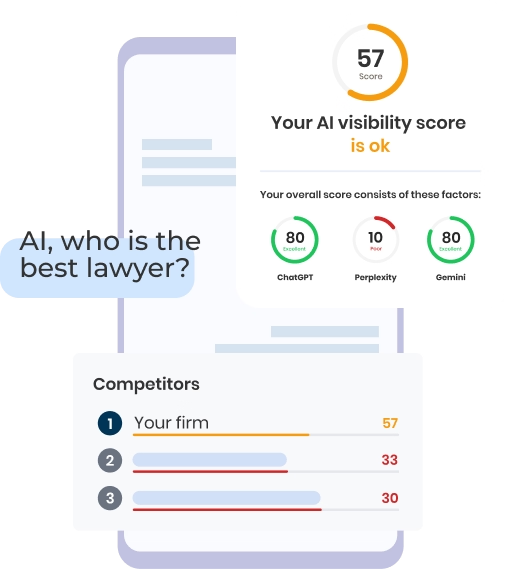
Check Your AI Visibility Instantly
Find Out What AI Is Telling Your Potential Clients
Run our free AI Visibility Report to:
See how often top AI tools mention your law firm
Spot which competitors show up first
Get the next steps to capture more cases
Run My Free AI Report