


Table of Contents
Ah, legal directories... they're the ultimate matchmakers in the legal world.
Avvo lawyer marketing is one of the biggest players in the game, pulling in over 8 million visitors every month.
Potential legal clients go here frequently to size up attorneys, compare reviews, and make quick judgments on who gets their retainer.
But is it a good marketing platform for your firm? How does their rating system work? And is Avvo free to use?
Let's find out! In the next 15 minutes, we’ll break down whether Avvo is worth your time and money in 2026. Keep scrolling.
Key Takeaways
- Platform purpose: Avvo is a massive directory that connects lawyers with hundreds of prospects every month. Compare the legal fit and limitations of another marketplace in our Thumbtack for lawyers guide.
- Public data reality: Your rating is built on hard data like bar records, not simply client reviews.
- Zero cost baseline: Claiming and optimizing your profile is absolutely free.
- Paid entry point: If you want to get a "Pro" badge, expect to pay $50–$100 per month.
- Strategic optimization: Reaching a 95% profile completion rate is the "sweet spot."
- Ecosystem fit: Avvo works best when paired with SEO and AI search optimization.
What Is Avvo for Lawyers?
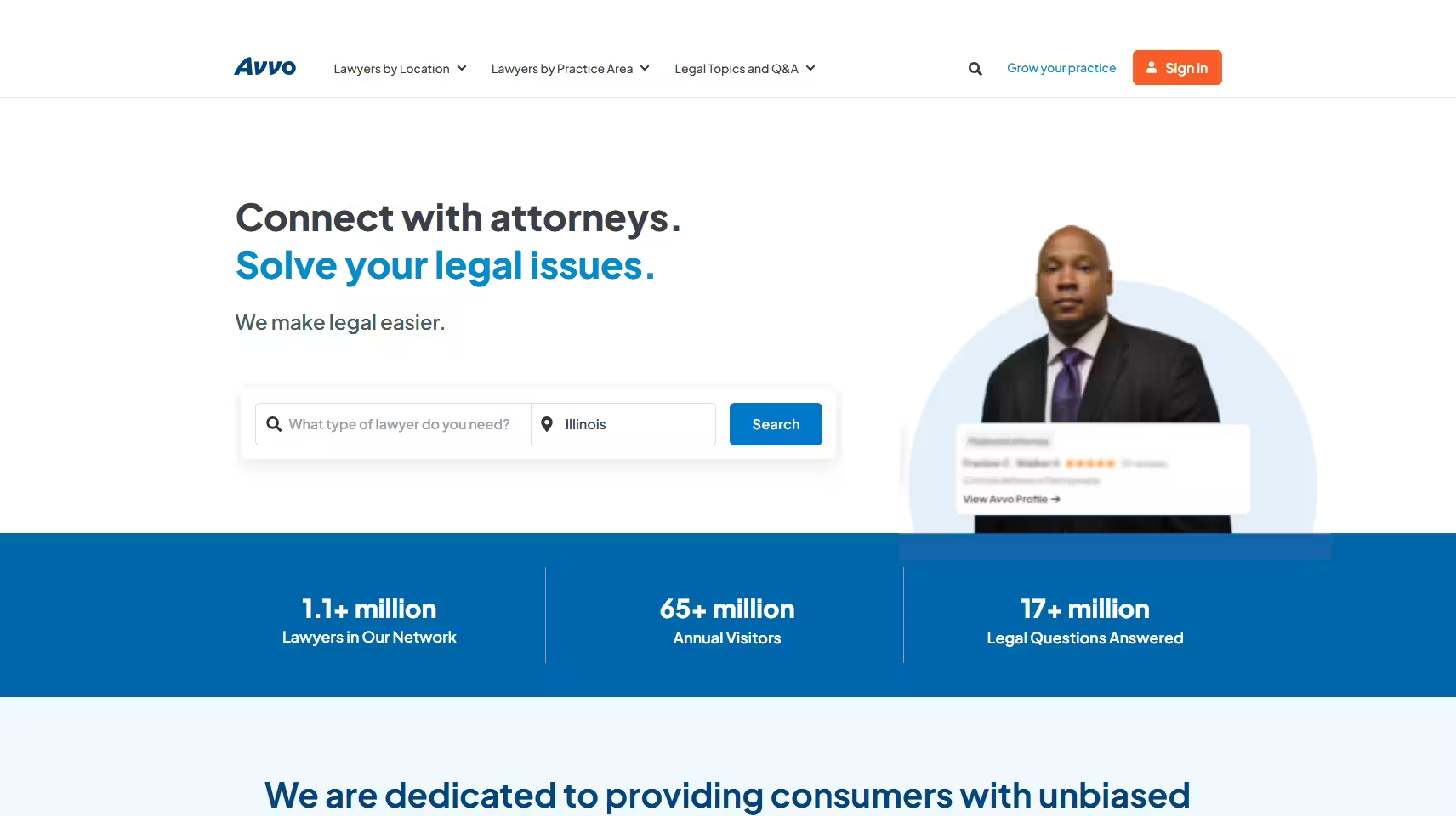
Avvo is an online legal directory that helps people find, research, and connect with lawyers through profiles, client reviews, and a 1–10 numerical rating system.
Launched in 2006, Avvo has grown into a MASSIVE online hub where about 97% of all licensed attorneys in the U.S. already have a profile… whether they know it or not!
But there’s a HUGE hidden benefit with being on Avvo: When you optimize your profile, you aren't just talking to humans; you're feeding data to Google and AI models like ChatGPT.
That’s right! These algorithms use Avvo to verify you're an expert so they can confidently recommend your firm.
At Grow Law, we’ve seen how these directory trust signals help massively boost our legal clients’ digital presence.
Just look at our work with Gounaris Abboud. By setting them up on legal directories like Avvo, they saw a massive 124% jump in qualified leads and a 522% explosion in organic traffic.
Clients are using AI. Are you optimized? Check out our generative engine optimization for law firms services today.
How Does Avvo Lawyer Marketing Work in 2026?
Think of Avvo lawyer marketing as a 3-step "trust bridge" that moves a stranger from a search query to becoming your client.
Step 1: The Visibility Phase
Avvo has massive "domain authority," meaning its pages often rank on the first page of Google for terms like "best attorney near me."
By having a claimed, optimized profile, you are essentially piggybacking on their SEO to get your name in front of serious traffic!
Step 2: The Validation Phase
This is where potential clients "window shop." They look at your Avvo rating, scroll through recent case studies, and read peer endorsements.
Think of it as a pre-vetting process that boosts your credibility before they hit your website.
Step 3: The Data Phase
In the world of Avvo marketing, your profile is a verified data source for AI search engines.
By keeping your info updated, you are feeding structured data to AI bots that recommend firms in their AI-generated answers.
We’ve seen this work wonders.
For clients like Cameron Law, a high-authority profile on Avvo helped drive a 1,011% conversion rate increase and a 775% explosion in organic traffic.
Avvo is Not Enough. Attract Cases Non-Stop.
You still need full-fledged legal marketing to boost your visibility and become THE lawyer in your market.
Contact Us Today

What Is Avvo Rating for Attorneys?
Let's talk about Avvo’s 1–10 rating system.
Every lawyer on Avvo gets a rating — whether they’ve claimed their profile or not.
The platform assigns each attorney a numeric score from 1.0 to 10.0, ranging from "Extreme Caution" to "Superb."
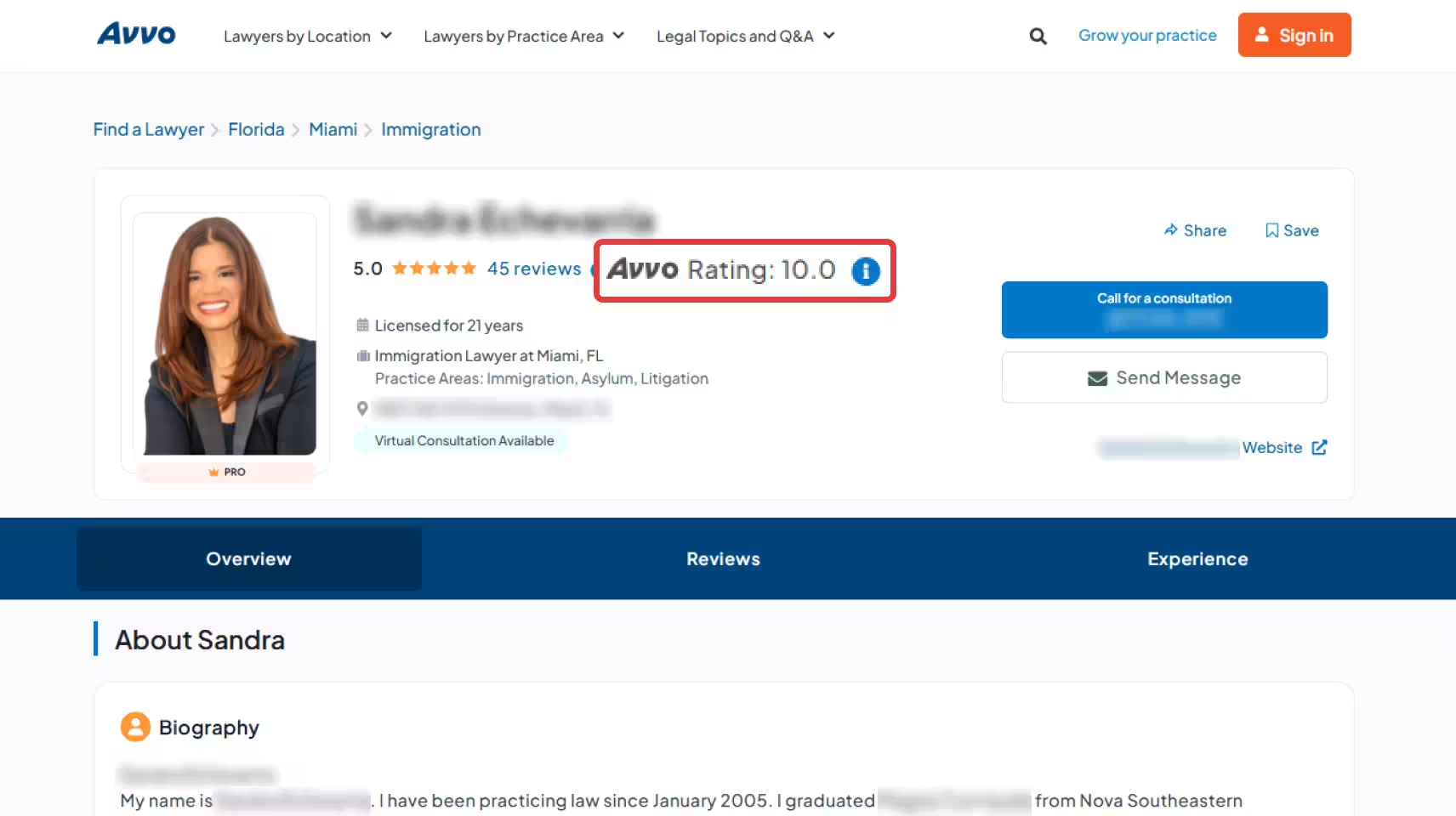
Avvo’s proprietary algorithm pulls data from public sources like state bar records, experience, publications, and peer endorsements, but it doesn’t disclose how each factor is weighted.
That lack of transparency has led many attorneys with solid credentials to wonder why their scores don’t reflect their real reputation.
As for the elusive 10.0 rating — it’s not impossible, but it’s tough.
Earning top marks usually requires consistent positive reviews, peer recognition, and a spotless professional record.
— How Is an Avvo Rating Calculated?
Avvo claims its ratings are "objective," but the math behind them is anything but transparent.
The score comes from two main sources: your Avvo profile and public records (like bar data, court filings, and licensing info).
Sounds simple, right? Not quite.
Most of that data is pulled automatically, meaning even top-tier lawyers can end up with middling scores if their profiles aren’t fully fleshed out.
If you want a better rating, be sure to fill out your profile and update it regularly.
— Client Reviews vs Peer Endorsements
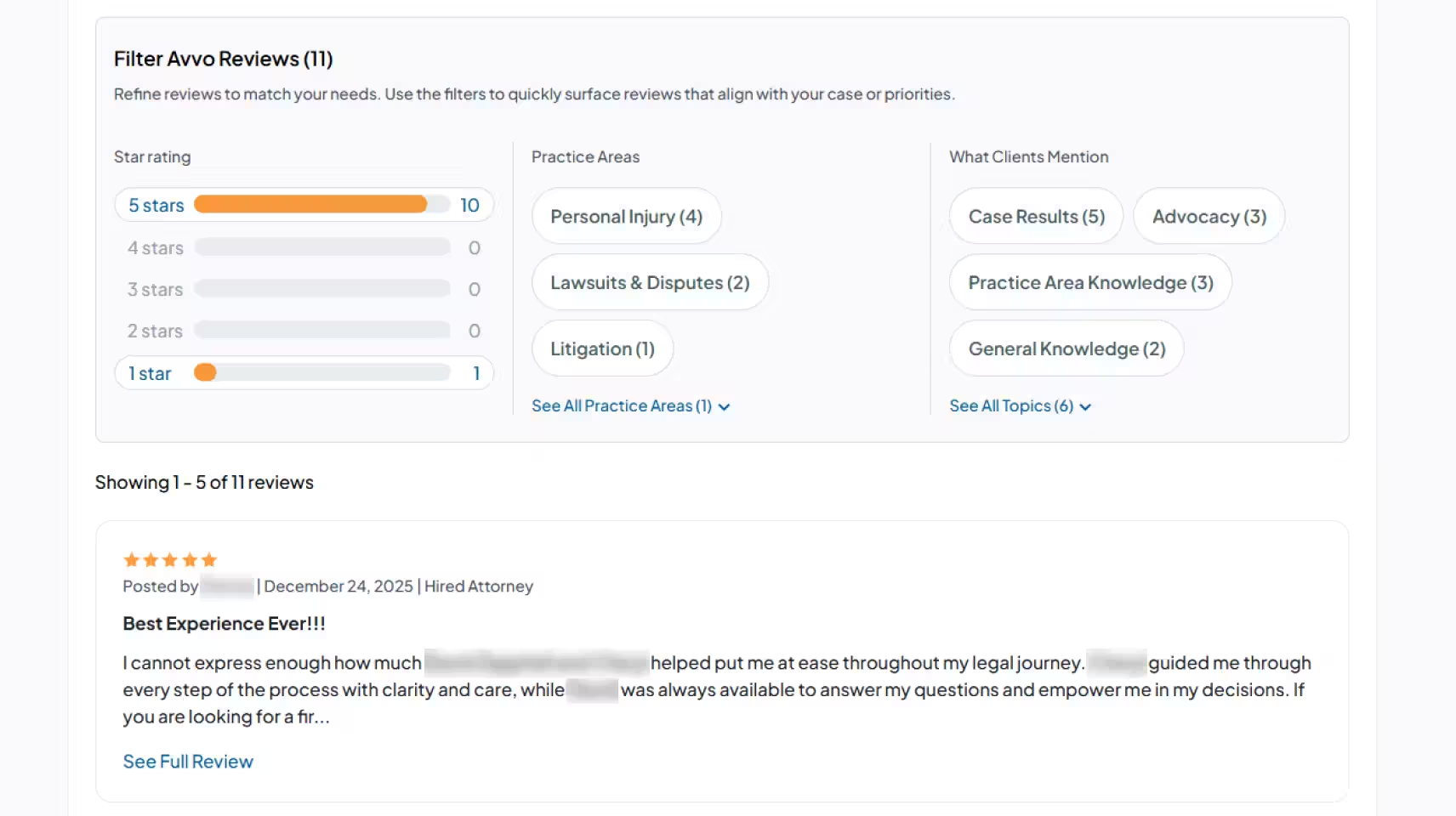
Avvo separates what your clients say and what your colleagues say.
Client reviews are public and highly visible, but they don’t actually move your Avvo rating. Still, they matter. A handful of genuine, detailed reviews can shape how potential clients perceive your credibility.
Peer endorsements, however, do carry weight. When fellow attorneys vouch for your professionalism or expertise, it strengthens both your reputation and your rating on Avvo.
Of course, the system isn’t perfect. Reviewers aren’t always verified, so fake reviews or even competitor reviews can slip through the cracks — something many lawyers find frustrating.
— Verification and Moderation Process
Avvo doesn’t publish client reviews instantly. Here’s how their moderation system works:
- Moderation filters: Every review is screened before posting to ensure it follows Avvo’s guidelines.
- Timestamps and accounts: Each review shows when it was posted and must come from a verified Avvo account.
- No client verification: Avvo doesn’t confirm if a reviewer actually worked with the attorney, which opens the door to fake or competitor reviews.
- Common frustrations: Lawyers often report delayed approvals, missing reviews, or rejected negative feedback that makes the system feel one-sided.
— Want Off the Avvo Platform?
You can contact Avvo’s support team to request that your profile be removed.
However, public records tied to your practice may still appear on Avvo.
Removing your profile can also limit your visibility to potential clients — so weigh the pros and cons carefully before deciding.
— Can You Trust Avvo Reviews?
Avvo reviews are useful, but... they’re not always the full story.
Let’s look at how reliable these ratings really are for both clients and lawyers.
The Consumer Perspective
From a client’s point of view, Avvo makes the lawyer search process refreshingly simple. Here’s how:
- Easy to browse: Clients can search by location or practice area and compare attorneys side by side.
- Detailed profiles: Each listing includes ratings, experience, and reviews that help people size up a lawyer fast.
- Transparent at a glance: The open review system gives clients a quick feel for professionalism and service quality.
But there are a few caveats:
- Selective moderation: Some reviews never make it through — or disappear entirely.
- No identity checks: Avvo doesn’t verify whether a reviewer actually hired the attorney.
- Potential bias: Ratings can skew positive or negative depending on moderation.
That’s why smart clients always cross-check Avvo reviews with Google star ratings, Yelp, and state bar records before making any final decisions.
The Attorney Perspective
From a lawyer’s side, Avvo marketing can be a little hit or miss. Some swear by it. Others… not so much. Here’s the reality:
- Unclaimed or basic profiles can cause headaches. Even if you’ve never touched Avvo, your name might still appear there, with outdated info or no photo at all.
- Missing or filtered reviews are a common gripe. Some lawyers report that positive reviews vanish or that negative ones never make it through moderation.
- A low score doesn’t always mean a bad reputation. Avvo ratings often reflect profile completeness, not real-world skill or client satisfaction.
- Claiming your profile = taking back control. Once you own your listing, you can update details, respond to reviews, and manage how potential clients see you online.
In short, smart Avvo lawyer marketing is more than chasing a perfect score. It takes correcting the narrative and letting your real online reputation shine through.

Uh-Oh. Clients Can’t Find You!
You’re in a very competitive market. You must dominate Google, AI search, and all the top legal directories to attract the best cases.
Contact Us Today
How to Improve Your Avvo Rating
To improve your Avvo marketing rating and maximize visibility, focus on these core optimization steps:
- Claim and Complete: Claim your profile and reach the 95% completion "sweet spot" to trigger Avvo’s internal search algorithm.
- Professional Visuals: Use a high-resolution headshot; profiles with professional photos see up to 94% more engagement.
- Verification: Ensure your bar license is verified and list all practice areas, awards, and legal associations to signal authority.
- Peer Endorsements: Secure testimonials from colleagues, as peer recognition is the most effective way to move your numerical score.
- Social Proof: Regularly collect client reviews and highlight case wins in your portfolio to convert browsers into leads.
- Thought Leadership: List publications and speaking engagements to build expertise, even if they offer a smaller rating bump.
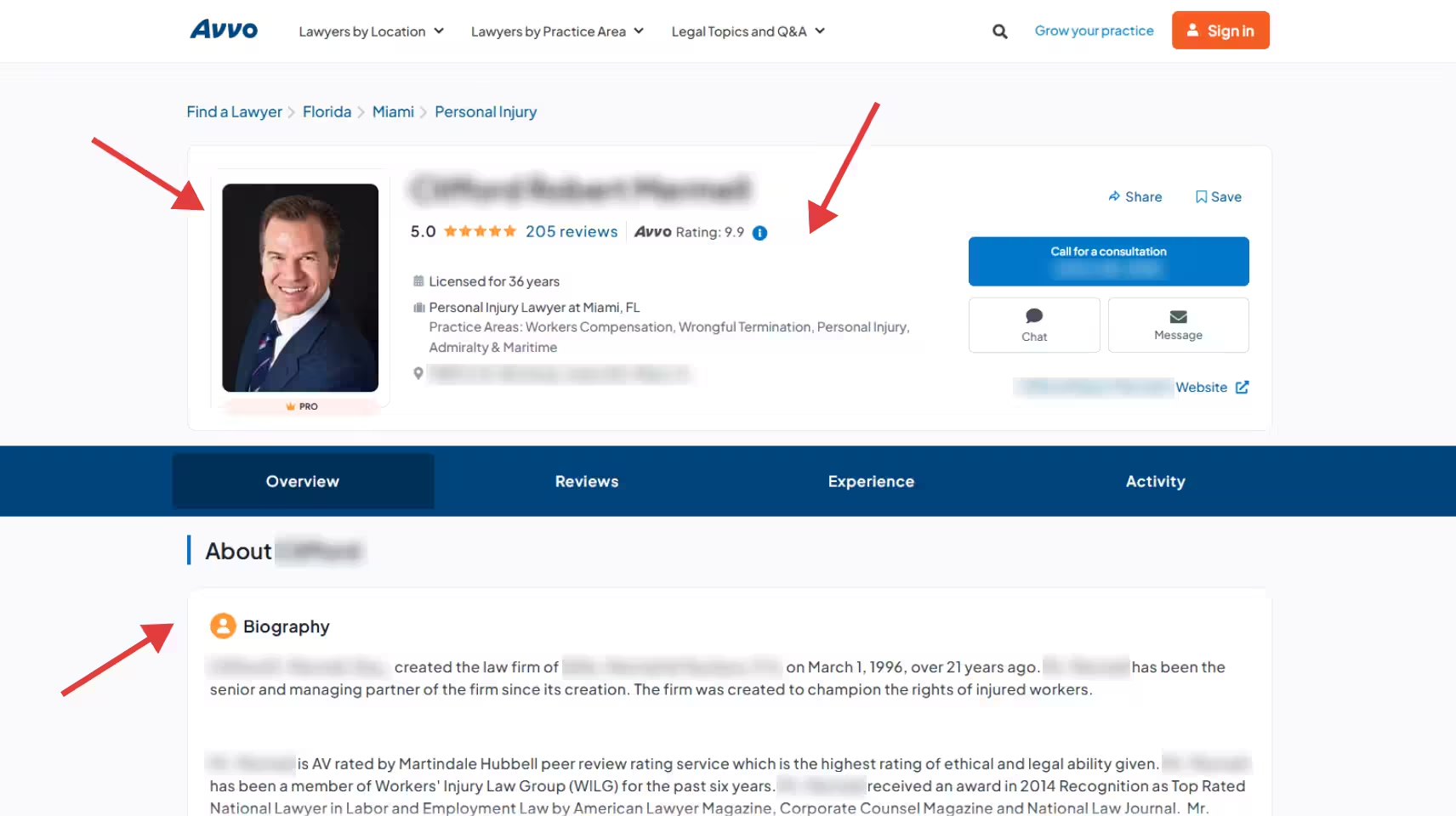
Keep in mind that while answering Q&A forum questions or earning contributor points builds brand awareness, they do not directly increase your 1.0–10.0 rating.
Focus on "hard" data and professional credentials for a score boost.
Is Avvo Free for Lawyers?
The short answer is yes!
Every licensed attorney can claim their profile, upload a headshot, list their practice areas, and respond to reviews without spending a dime.
In fact, for most firms, a 100% optimized free profile is the best way to start your Avvo marketing journey.
However, if you want to hide other lawyers' ads from your page or get a "Pro" badge to stand out, you’ll have to open your wallet.
1. Avvo ProVantage: Removing Friction and Controlling the Narrative
Avvo Pro is a subscription service that typically costs between $50 and $100+ per month.
The Goal: Brand control and direct lead capture.
On a free profile, Avvo places ads for "Similar Lawyers" directly on your page. Pro allows you to remove those competitor ads and insert direct links to your own website.
If your marketing goal is to use your profile as a dedicated, leak-proof landing page to drive direct traffic to your site, Pro can support that.
However, it will NOT improve your actual numerical rating.
2. Avvo AdVantage: Buying Visibility in a Crowded Room
Avvo Advertising operates on a pay-per-click (PPC) or sponsored listing model.
The Goal: Rapid lead generation in high-competition markets.
This pushes your profile to the top of Avvo's search results for specific practice areas and locations.
If you have a brand-new practice or are in a highly saturated field like personal injury, buying this visibility can generate quick inquiries. But it is purely an exposure play.
3. Avvo WebVantage: The "All-in-One" Website Solution
WebVantage is Avvo’s proprietary website design and hosting service aimed at lawyers who want a turnkey digital presence.
The Goal: Professional branding and a mobile-friendly home base without the DIY headache.
Unlike claiming a profile, this typically requires a 12-month contract, and pricing is "request a quote" only.
It’s a fast way to look professional, but these template-based sites often lack the technical "under the hood" power needed for deep SEO.
If your goal is to mimic the 6,700% organic traffic growth we saw with Sequoia Legal, you’ll likely find Avvo’s boxed solution too restrictive.
For high-level SEO and AI search optimization for lawyers, you need a custom site that you own outright.
To recap, here is the breakdown of what you get for free versus what costs extra in 2026:
| Feature | Free Profile | Avvo ProVantage | Avvo AdVantage | Avvo WebVantage |
|---|---|---|---|---|
| Claimed Listing | ✅ Included | ✅ Included | ✅ Included | ✅ Included |
| SEO Backlink | ✅ Included | ✅ Included | ✅ Included | ✅ Included |
| Pricing Model | $0 | Monthly Sub (~$50–$200+) | PPC / Monthly | Quote Only |
| Commitment | None | Month-to-month | Month-to-month | 12-Month Contract |
| Competitor Ads | ❌ Visible on your page | ✅ Removed | ✅ Removed | N/A (Own Site) |
| Search Placement | Standard | Slight Boost | Top of Category | Standard |
| Custom Intro / Links | ❌ No | ✅ Yes | ✅ Yes | ✅ Yes |
| Website Hosting | ❌ No | ❌ No | ❌ No | ✅ Included |
| Lead Tracking | ❌ Basic | ✅ Advanced | ✅ Advanced | ✅ Advanced |
While the free version gets you through the door, the paid plans are designed to increase your "share of voice" in a crowded market.
In 2026, you must optimize for AI. Start with our AI search optimization for lawyers services.
Explore the Pros and Cons of Avvo for Lawyers
We're making progress! Now that you know the basic set-up of Avvo... let's weigh its pros and cons.
Like most marketing platforms, Avvo isn't perfect. Here’s a quick look at what works in your favor and what might hold you back.
— Avvo's Advantages
Avvo may not be perfect, but it definitely has its perks for lawyers who use it strategically:
- Massive reach: Over 8 million monthly visitors actively searching for legal help.
- SEO boost: A complete, consistent Avvo profile strengthens your online visibility, trust signals (E-E-A-T), and backlink authority.
- AI visibility: Avvo is frequently cited by AI tools and appears in AI-generated search answers.
- Built-in reputation tools: Manage reviews, showcase endorsements, and capture leads directly through your profile.
- Peer credibility: Endorsements from fellow attorneys add professional validation that clients notice.
That’s why we recommend keeping your Avvo profile active and optimized.
— Avvo's Limitations
Avvo has its downsides, too, and lawyers are quick to notice them:
- Opaque algorithm: No clear explanation of how ratings are calculated, leading to inconsistent scores.
- Moderation bias: Reviews can be filtered or delayed, and attorneys have limited control over what gets published.
- Pay-to-play visibility: Paid profiles get prime placement, pushing organic listings further down.
- No client verification: Avvo doesn’t confirm whether reviewers actually worked with the attorney, raising credibility concerns.
It’s a useful platform, but far from flawless.
You Fight for Your Clients. We Fight for You!
Grow Law juices up your online visibility and delivers up to 1,018% more leads.
Get More Leads
What Real Clients Say About Avvo
When you look at third-party review sites like Trustpilot or the BBB, public sentiment toward Avvo is a mixed bag.
Many users claim that negative feedback is removed too easily or that the verification process feels one-sided.
One user on Trustpilot even points out, "Don't trust their ratings! Low-quality website that doesn't allow honest negative reviews about lawyers."
Clients sometimes find it difficult to post legitimate complaints if they cannot meet Avvo’s specific moderation guidelines.
However, it is important to balance these critiques with the platform's massive utility.
Millions of people successfully use Avvo every year to find legal help, and many praise the site for its easy-to-use Q&A forum and the ability to compare multiple attorneys in one place.
How to Optimize Your Avvo Profile to Get More Leads and Cases
To get the most out of Avvo lawyer marketing, you have to start thinking about your profile as a high-performance landing page.
Here is the play-by-play on how to optimize your profile:
1. The 95% Rule
Avvo’s internal search algorithm prioritizes profiles that are complete. Aim for at least 95% completion.
This means filling out every section from your education and bar admissions to your specific practice areas.
A complete profile acts as a massive trust signal for both humans and search engines.
2. High-Resolution Professionalism
First impressions happen in milliseconds!
Profiles with professional headshots receive significantly more views and clicks than those without.
Please do not use casual selfies. A high-quality photo signals that you are an established professional who takes your practice seriously.
3. Leverage "The Power of 3" in Reviews
Client reviews are your "social proof."
Aim for a steady stream of recent reviews rather than a massive dump once a year. When prospects see fresh feedback from the last 30–60 days, it proves you are active and consistently winning.
This kind of social proof is part of how we helped Newlin Law Offices achieve a 106% growth in conversion rates.
4. Peer Endorsements: The Credibility Multiplier
While client reviews help you convert, peer endorsements are what often move the needle on your actual Avvo rating.
Reach out to colleagues and exchange endorsements. It shows the algorithm (and the public) that you are respected by your peers in the legal community!
5. Showcase Real-World Stories
Don’t just tell people you’re a good lawyer, show them.
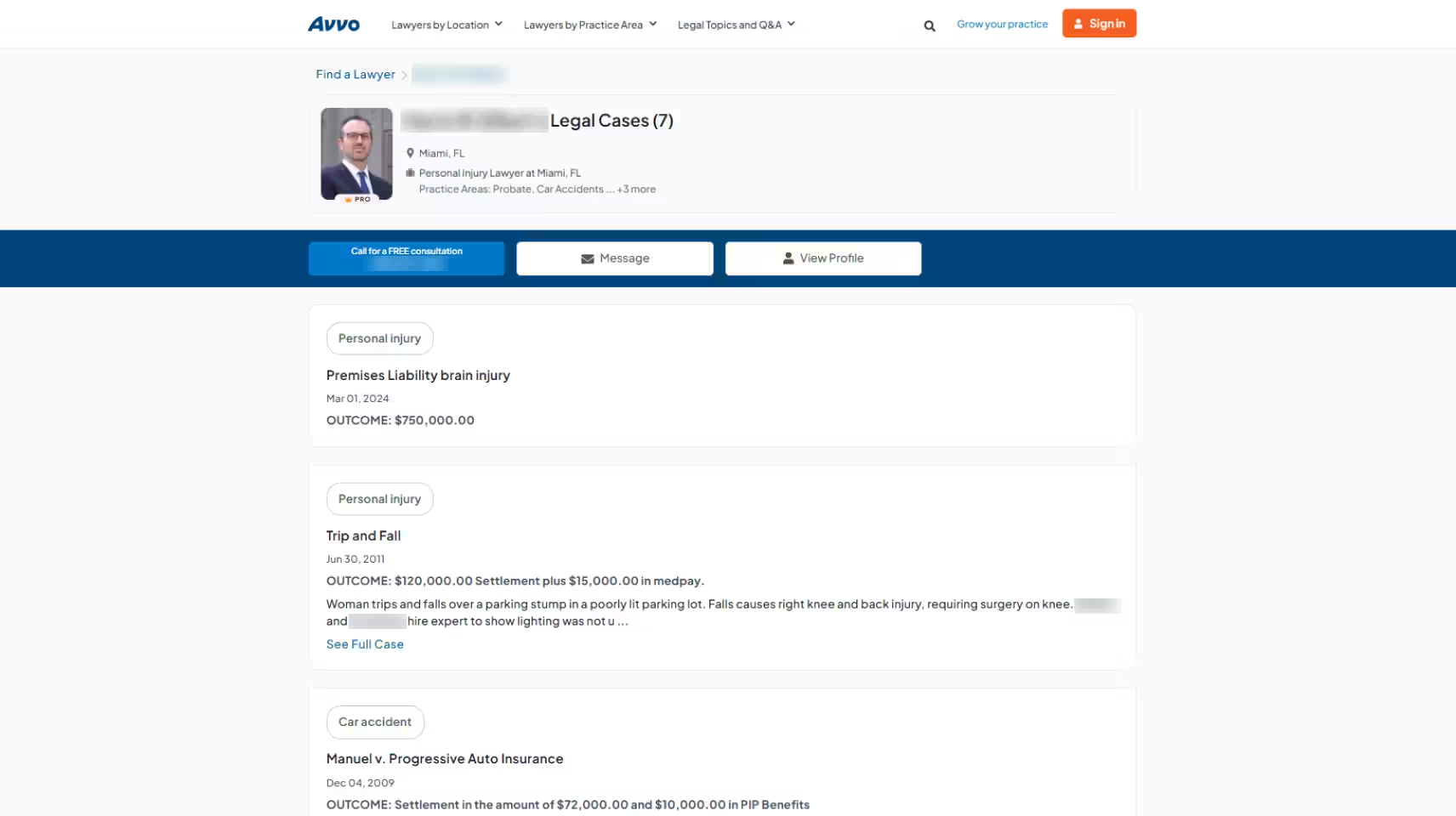
Use the "Cases" and "Awards" sections to highlight your biggest victories. This mirrors the strategy we use at Grow Law to build authority.
On our profiles, we highlight client success stories like Newlin Law Offices' 300% growth in qualified leads to prove our expertise.
6. Feed the AI Bots
Every detail you add (your fee structure, payment options, and detailed "About" section) serves as structured data.
But be thorough. You make it easier for AI models to verify your expertise and improve your law firm’s visibility in AI search.
Avvo vs Other Lawyer Directories
When it comes to Avvo lawyer marketing, it is important to remember that Avvo is just one piece of the puzzle.
You need to know how it stacks up against the other heavy hitters in the directory world. Here is how Avvo compares to the top 5 contenders.
1. Justia vs. Avvo
Justia is the undisputed king of SEO and raw link-building. While Avvo is great for consumer Q&A, Justia profiles often rank higher in Google’s organic results for specific attorney searches.
Many firms use Justia for the technical SEO "juice" and Avvo for the lead-gen interaction.
Thinking about Justia? Read our full Justia review first!
2. Martindale-Hubbell vs. Avvo
Martindale-Hubbell is the "old guard." While Avvo focuses on consumer reviews, Martindale relies on peer-reviewed ratings (like the AV Preeminent).
It’s less about getting a quick click and more about building long-term professional prestige.
But there’s more! Read our full guide on Martindale-Hubbell ratings.
3. Super Lawyers vs. Avvo
Super Lawyers is invite-only, built on peer nominations and vetting, kind of like the "Forbes 30 Under 30" for attorneys.
Avvo marketing is open to all, which makes it great for discoverability but less prestigious.
Check out our Super Lawyers directory guide before making a decision.
Get up to 1,018% More Leads
We bring the clients, you win the cases. Your competitors won't see you coming!
Contact Us Today
4. FindLaw vs. Avvo
FindLaw is a MASSIVE marketing machine owned by Thomson Reuters.
Unlike Avvo’s "freemium" model, FindLaw is heavily focused on integrated, high-cost marketing packages. It’s a full-service approach, but it often comes with a much higher price tag than a DIY Avvo profile.
Conflicted? Read our FindLaw for legal professionals review.
5. Yelp vs. Avvo
Yelp is the wild west. An average of 2.5 million people use Yelp every single day!
It has massive traffic, but it isn't legal-specific. People use Yelp to find everything from tacos to tort lawyers.
Avvo’s advantage here is the legal-centric data (bar records, peer endorsements) that Yelp simply doesn't offer.
Read our guide on Yelp for lawyers today.
Final Verdict: Is Avvo Worth It for Lawyers?
The answer is a definitive yes!
Avvo is an incredible visibility engine that puts you in front of 8 million visitors and provides the structured data needed to gain MASSIVE exposure in AI search.
However, do not put all your eggs in one basket.
The legal world is aggressively competitive. If you want consistent, qualified leads, partner with a law firm SEO agency like Grow Law.
We unify top-tier SEO, AI search optimization, website design, and PPC to deliver a 300% growth in qualified leads for clients like Newlin Law Offices.
Why risk your caseload?
Get Your Complimentary Growth Plan Today
Frequently Asked Questions (FAQs) for Avvo Lawyer Marketing
-
What is Avvo Lawyer Marketing?
Avvo lawyer marketing is the strategic optimization of your attorney's Avvo profile to improve search visibility and attract leads. By managing reviews and credentials, firms use Avvo to boost their authority and appear in relevant local search results.
-
How Does Avvo Work for Lawyers?
The platform aggregates public bar data to create profiles. Attorneys claim these listings to showcase their expertise, answer legal questions, and collect client reviews, creating a "trust bridge" that converts directory visitors into potential clients.
-
What is Avvo’s Rating for Attorneys?
This is a mathematical score from 1.0 to 10.0 based on professional data. The algorithm weighs experience, bar standing, and peer endorsements to provide consumers with an objective snapshot of a lawyer’s background and reputation.
-
How Can Lawyers Improve Their Avvo Rating?
Attorneys can boost their score by reaching a 95%+ profile completion rate. Adding bar admissions, awards, and speaking engagements provides more data, while securing peer endorsements is the fastest way to move the needle on the numerical score.
-
Is Avvo Free for Lawyers?
Yes, claiming and managing a basic profile is completely free. Attorneys can list their credentials, collect reviews, and answer questions at no cost. Paid upgrades are optional and focus on increasing visibility or removing competitor advertisements.
-
Is Avvo Worth it for Lawyer Marketing?
It is worth it as part of a broader ecosystem. It provides high-authority backlinks and structured data for AI search. While useful for lead generation, it works best when integrated with a firm’s independent SEO and organic growth strategy. Our insurance law marketing services show how directory visibility fits a broader growth plan.
-
How Does Avvo Compare to Other Lawyer Directories?
Avvo focuses heavily on consumer interaction and Q&A. While Justia offers better technical SEO and Martindale-Hubbell provides more peer-reviewed prestige, Avvo remains the most popular platform for direct client "window shopping" and side-by-side attorney comparison.

Compare Your Practice Instantly
Stay Ahead of the Competition!
Compare your law firm's performance to Local competitors with our instant assessment tool
Get a clear picture of your firm's performance
Boost your online presence
Compare My Firm
Compare Your Practice Instantly
Stay Ahead of the Competition!
Compare your law firm's performance to Local competitors with our instant assessment tool
Get a clear picture of your firm's performance
Boost your online presence
Compare My Firm
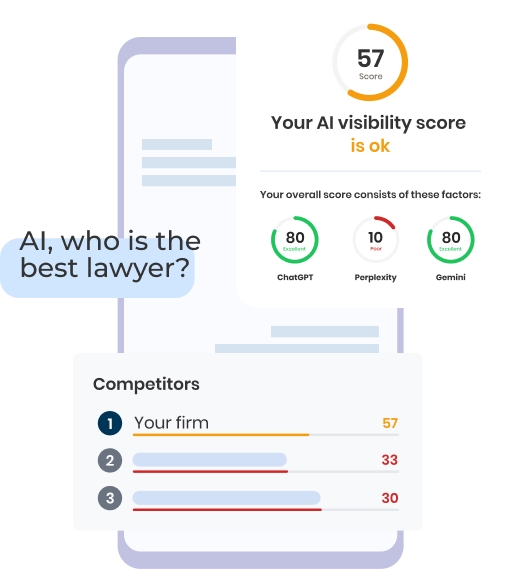
Check Your AI Visibility Instantly
Find Out What AI Is Telling Your Potential Clients
Run our free AI Visibility Report to:
See how often top AI tools mention your law firm
Spot which competitors show up first
Get the next steps to capture more cases
Run My Free AI Report