FREEGet your personalized marketing assessment in 1 minute

Topical Authority SEO for Lawyers: How to Own Your Practice Area in Search

Sasha
Sasha Berson

Co-Founder & CGO, Grow Law

Clock icon

12 min

read

Pen icon

5/4/2026

Law Firm SEO Chapters

  1. SEO for Lawyers
  2. Google Ranking Factors
  3. E-E-A-T Factors
  4. Keyword Research for Lawyers
  5. On-Page SEO for Lawyers
  6. Technical SEO for Lawyers
  7. Content for Law Firm Website
  8. Local SEO for Lawyers
  9. Link Building for Lawyers
  10. Tracking SEO Results
  11. Outsourcing Your Law Firm’s SEO
  12. Lawyer SEO Statistics
  13. Law Firm SEO Cost
  14. SEO for Ultra-Competitive Legal Niches & Metros
  15. Topical Authority SEO for Lawyers

Table of Contents

    Topical authority SEO is the strategy of making Google recognize your law firm as the definitive source on a specific practice area — not just a firm that has a page about it.

    More than 75% of users never scroll past page one of Google results. In competitive legal niches, those first-page positions belong to firms that have built deep, interconnected content ecosystems, not firms that have a handful of individually optimized pages.

    This guide explains what topical authority is and how it differs from standard keyword SEO, how to build a topical authority map for a law firm website, how to execute the content strategy, which tools to use, and what realistic timelines look like when the strategy compounds.

    What Is Topical Authority in SEO — and Why Law Firms Need It Now

    Topical authority in seo is Google's confidence that a website is the authoritative, comprehensive source on a specific subject.

    It's built through content depth — covering not just the main topic but every meaningful dimension of it — and content breadth — covering every relevant sub-topic, question, and variant that a prospect might search on their way to hiring an attorney.

    The shift that makes this matter: Google has moved from keyword-based ranking to entity-based ranking (identifying which websites are recognized authorities on specific topics).

    A law firm with one practice area page can rank for a handful of keywords.

    A firm that has built a complete topical cluster — a pillar page plus 8–12 cluster posts covering every facet of the practice area — can rank for hundreds of related queries simultaneously and earn preferential treatment for the most competitive terms.

    The contrast is stark. A firm with a single “Personal Injury Attorney” page is competing for one keyword.

    A firm with a pillar page plus cluster content covering car accidents, slip and fall, medical malpractice, wrongful death, settlement timelines, what to do after an accident, and how to choose a PI attorney is building topical authority — and Google treats these two sites very differently in rankings.

    Topical authority is the content foundation of a competitive law firm SEO strategy. See how Grow Law builds it: law firm SEO services

    Topical Authority vs. Standard SEO: What's Actually Different

    The difference between keyword SEO and topical authority SEO is the difference between optimizing pages and building a content ecosystem.

    Keyword SEO treats each page as an independent unit targeting an individual query. Topical authority SEO treats the entire site as a coherent argument to Google that this firm is the authoritative source on a specific legal topic.

    A personal injury firm came to Grow Law with 30+ published blog posts and flatlined organic traffic.

    They had published consistently for 2 years but had no topical structure — articles covered unrelated topics, repeated keywords, and had no internal linking.

    A topical authority audit showed the firm was covering 6 different practice area topics at the surface level instead of owning any single one. After restructuring content around a pillar-cluster model (3 pillar pages, 5 cluster posts each), the firm saw its authority in the primary practice area double within 6 months, and organic leads increased by 165%. The volume of content hadn't changed. The architecture had.

    Dimension Keyword SEO Topical Authority SEO
    Approach Optimize individual pages for individual queries Build an interconnected content ecosystem around a topic
    Content priority Volume — more pages targeting more keywords Depth — fewer topics covered comprehensively
    Internal linking Ad hoc, inconsistent Systematic — every cluster links to a pillar, clusters link to each other
    Google signal Page-level relevance Site-level topical authority and entity recognition
    Time to impact Short-term ranking gains, limited ceiling Slower build, much higher ceiling and compounding returns

    What Is a Topical Authority Map — and How to Build One for a Law Firm

    A topical authority map is the documented architecture of pillar pages and cluster content that covers a practice area comprehensively. It's the blueprint that tells Google: this firm doesn't just mention this topic — it owns it.

    A criminal defense firm in a competitive metro had one practice area page ranking for a handful of keywords.

    A topical authority map identified 40+ semantically related queries across sub-practice areas — DUI, drug charges, assault, white-collar crime, juvenile defense, expungement — that no competitor had fully covered.

    Criminal Defense Topical Authority Map

    After building 12 targeted cluster pages linked to the pillar, the firm ranked for 38 of those 40 queries within 8 months, turning a single-ranking page into a practice area that dominated the entire search landscape for their niche.

    Here's how to build a topical authority map for a law firm:

    Step Action Example for Criminal Defense Output
    1. Choose a practice area Pick one practice area to own first — the one with the highest case value or most competition Criminal defense Defined focus area
    2. Build the pillar Create or optimize a comprehensive, long-form pillar page covering the full practice area "Criminal Defense Attorney in [City]" — overview of all sub-practices Pillar page live and optimized
    3. Map cluster topics List every sub-practice, procedure, question, and jurisdiction variant a prospect might search DUI, drug charges, assault, white-collar, expungement, how to choose a criminal lawyer Cluster topic list (20–50 topics)
    4. Audit existing content Map existing posts to the cluster list — identify what's covered, what's missing, what's duplicate 3 existing posts map to cluster; 37 gaps identified Gap analysis complete
    5. Build and interlink Publish cluster content in priority order; link every cluster to pillar, link clusters to each other 12 cluster pages published; all link back to pillar Topical cluster live

    How to Build Topical Authority for a Law Firm Website: A Practical Framework

    Knowing what a topical authority map looks like is different from executing one.

    Here's the content framework that Grow Law uses to build topical authority for law firms — the same approach that helped Yarborough Law Group achieve 452% more qualified leads and 2,938% organic traffic growth after implementing locally-relevant, structured content production.

    Content Type Target Query Cluster Role Internal Link Rule
    Pillar page "[Practice area] attorney in [city]" — high-intent, competitive Hub — receives links from all cluster content Links out to all sub-practice cluster pages
    Sub-practice cluster page "DUI lawyer," "drug possession attorney," "assault charges lawyer" Primary cluster — covers a specific sub-area in depth Links to pillar + to related sub-practice clusters
    FAQ/process content "How long does a DUI case take," "what happens at arraignment," "can I expunge a DUI" Secondary cluster — targets long-tail pre-contact queries Links to relevant sub-practice page + pillar
    Location pages "Criminal defense attorney [neighborhood/suburb]," "[city] DUI lawyer" Geographic cluster — extends authority into local search Links to pillar + sub-practice pages for that location

    The internal linking rule is non-negotiable: every cluster page must link back to the pillar. Every sub-practice page should link to related sub-practice pages where the connection is genuine.

    No content should be orphaned — unlinked pages don't pass authority and don't contribute to topical depth. 

    Cameron Law came to Grow Law in April 2024 with an outdated site structure, weak CTAs, and no topical architecture. After rebuilding the content around practice area pillars and cluster pages, the firm saw a significant increase in qualified leads and conversion rate — illustrating what happens when content architecture is rebuilt around topical clusters rather than individual keyword pages.

    Cameron Law website
    Grow Law builds and executes topical authority content programs for law firms: SEO for law firms

    Topical Authority Tools for Law Firms: What to Use and How

    Building topical authority requires research before production. These are the tools that matter for law firm topical authority work — and what each one is actually used for:

    Tool Primary Use for Law Firms Difficulty Cost Tier
    Semrush Topic Research Identify all the questions, subtopics, and related queries around a practice area — the raw material for your cluster topic list Low Paid ($119+/mo)
    Ahrefs Content Gap Find queries your competitors rank for that your site doesn't — reveals the specific cluster gaps most worth closing Medium Paid ($99+/mo)
    Google Search Console See which queries your existing content already ranks for, identify pages with impressions but no clicks (low-hanging cluster gaps), and track topical authority growth over time Low Free
    Surfer SEO / Clearscope Score individual pages for topical completeness — ensures each cluster page covers the right semantically related terms to rank for its target query Medium Paid ($89+/mo)
    Google Search (manual) Check "People Also Ask" and "Related Searches" for any target query — free, immediate cluster topic generation Low Free

    One important clarification: a topical authority tool identifies gaps and opportunities — it doesn't build authority.

    No software closes the gap between your firm's current content coverage and the comprehensive cluster that earns topical recognition. That requires consistent content production over months, not a one-time audit.

    The best topical authority tool is the one your team will actually use to generate a publication plan and execute against it.

    Tools show you the map. Content builds the authority. Law firms that confuse research with execution never close the gap that the audit reveals.

    How Long Does It Take to Build Topical Authority — and What to Expect

    Topical authority builds faster than traditional backlink-based SEO for one important reason: content production is within the firm's control.

    You don't need to wait for other sites to link to you — you need to publish consistently and link systematically. The timeline depends on market competition, publishing cadence, and how strong the existing pillar pages are.

    Months 1–3: Map built, pillar pages audited and optimized, first 4–6 cluster pages published. Google begins crawling the new architecture. Rankings for secondary queries start appearing. No significant organic lead impact yet — this is foundation work.

    Months 3–6: Cluster content accumulates. Secondary and tertiary queries start ranking. The pillar page rankings for competitive terms begin improving as cluster authority flows upward. Organic sessions increase noticeably.

    Months 6–12: Topical authority recognition kicks in. The site starts ranking for queries it never explicitly targeted — Google extrapolates authority to related terms. Organic leads become a measurable pipeline source.

    Month 12+: Compounding returns. Each new piece of content ranks faster because the domain's topical authority is established. Newlin Law Offices saw a 575% surge in organic traffic, 106% boost in conversions, and 408% ROI within 10 months of consistent content and SEO execution.
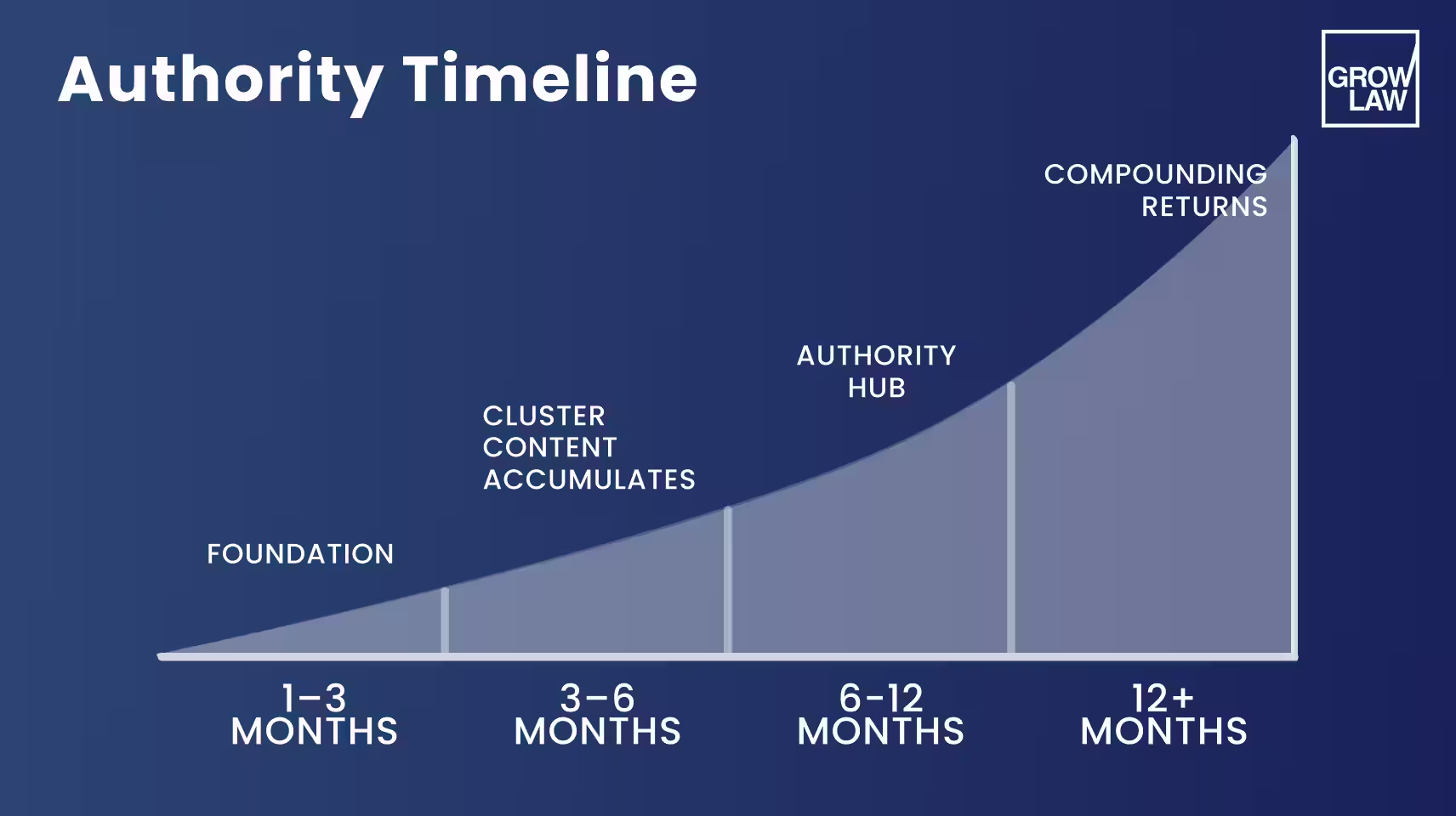
    Authority Timeline

    What accelerates topical authority: a competitive gap in the niche (competitors aren't covering the cluster thoroughly), a consistent publishing cadence of 4–6 pieces per month, and strong internal linking from day one.

    What slows it: thin pillar pages that don't deserve to be hubs, inconsistent publishing (gaps in the content calendar break momentum), and no internal linking strategy, leaving cluster content orphaned.


    Summary

    • Topical authority SEO is Google's recognition that a website is the comprehensive authority on a topic — built through pillar pages and interconnected cluster content, not individual keyword-optimized pages.
    • Keyword SEO and seo topical authority are fundamentally different strategies: keyword SEO optimizes individual pages; topical authority SEO builds a content ecosystem that earns site-level subject-matter recognition.
    • A topical authority map is the blueprint: one pillar page per practice area, surrounded by cluster content covering every sub-practice, procedure, question, and location variant that a prospect might search.
    • How to build topical authority for a website: start with a gap audit, build the pillar, publish cluster content in priority order, link every cluster to the pillar, link clusters to each other — no orphaned content.
    • Tools (Semrush, Ahrefs, Google Search Console, Surfer SEO) identify the map; consistent content production builds the authority. No tool substitutes for execution.
    • Timeline: 2–3 months for foundation, 6 months for meaningful organic lead flow, 10–12 months for compounding returns. Newlin Law Offices: 575% traffic, 408% ROI in 10 months.

    Ready to build topical authority that compounds month over month for your law firm? law firm SEO agency

    Frequently Asked Questions

    • What is topical authority for lawyers?

      Topical authority for lawyers is the SEO principle of building comprehensive, interconnected content around a specific practice area so Google recognizes the firm as the authoritative source on that topic — not just a site with a page about it. A firm with topical authority in personal injury, for example, ranks for hundreds of related queries simultaneously rather than competing for one keyword at a time.

    • How do lawyers build topical authority?

      How lawyers build topical authority starts with choosing one practice area to own, building a comprehensive pillar page for it, and then publishing cluster content that covers every sub-practice, procedural question, and geographic variant that prospects search. Every cluster page links to the pillar; cluster pages link to each other. The process requires 3–6 months of consistent publishing before meaningful authority compounds.

    • What is a topical authority map for a law firm website?

      A topical authority map for a law firm website is the documented content architecture showing which pillar pages anchor which practice areas, and which cluster pages support each pillar. It maps every planned content piece to a specific query, cluster role, and internal linking rule. The map is the planning layer — execution is the content production that fills it over 6–12 months.

    • How does topical authority help law firms rank in SEO?

      How does topical authority help law firms rank in SEO works through Google's entity-based ranking system: when a site consistently covers every dimension of a topic and links content systematically, Google begins treating it as the authoritative source and extends ranking benefits to related queries the site never explicitly targeted. This is how a single pillar page plus 12 cluster posts can dominate an entire practice area search landscape.

    • What is the difference between topical authority and SEO topical authority?

      Topical authority is the underlying concept — Google's recognition of a site as authoritative on a specific subject. SEO topical authority refers specifically to how that concept is applied as an optimization strategy: building pillar-cluster content architectures, implementing systematic internal linking, and publishing at a cadence that signals consistent expertise. In practice, the terms are used interchangeably in legal marketing contexts.

    • What is the best topical authority tool for lawyers?

      The best topical authority tool for lawyers depends on the use case. Google Search Console is the starting point — it's free and shows exactly which queries your existing content ranks for. Ahrefs Content Gap identifies queries that competitors rank for that you don't. Semrush Topic Research generates cluster topic lists. Surfer SEO scores individual pages for topical completeness. Most law firm SEO programs use 2–3 of these in combination.

    • How to build topical authority for a law firm website?

      How to build topical authority for a law firm website follows a five-step process: (1) choose one practice area to own first, (2) audit and strengthen the pillar page for that area, (3) identify cluster topic gaps using Ahrefs or Semrush, (4) publish cluster content at a consistent cadence targeting those gaps, and (5) implement systematic internal linking — every cluster to pillar, clusters to each other. Repeat for each practice area in priority order.

    • How long does it take to build topical authority in SEO?

      How long it takes to build topical authority in SEO varies by market competition and publishing cadence, but Grow Law's experience with law firm clients follows a consistent pattern: initial cluster rankings appear within 2–4 months, meaningful organic lead flow at 6 months, and compounding authority at 10–12 months. On average, Grow Law SEO clients see 80% more sales-qualified leads; top performers see 400% or more. Newlin Law Offices achieved 575% organic traffic growth and 408% ROI in 10 months of consistent topical content execution.

    Previous Chapter

    SEO for Ultra-Competitive Legal Niches & Metros

    Compare My Firm

    Compare Your Practice Instantly

    Stay Ahead of the Competition!

    Compare your law firm's performance to Local competitors with our instant assessment tool

    • Get a clear picture of your firm's performance

    • Boost your online presence

    Compare My Firm

    Compare My Firm

    Compare Your Practice Instantly

    Stay Ahead of the Competition!

    Compare your law firm's performance to Local competitors with our instant assessment tool

    • Get a clear picture of your firm's performance

    • Boost your online presence

    Compare My Firm

    Calculate the Cost of SEO for Your Website

    Please complete all the fields to receive an instant price quote for your stunning new website

    Please Select

    Your Customized SEO Packages

    Incremental growth for small firms with a limited budget

    Mid-size firms ready to fill their calendar with qualified leads

    Any law firm serious about aggressive & sustainable growth

    *Please be aware that all provided estimates are preliminary and subject to refinement following an in-depth discussion about your project and a comprehensive gathering of your specific requirements.
    **Connect with our SEO specialist to explore our ongoing packages designed to enhance your website's visibility and searchability, ultimately leading to an increase in customer engagement and conversion rates.
    Thank you! Your submission has been received!
    Oops! Something went wrong while submitting the form.

    Calculate the Cost of Your Website

    Please fill all fields to get your result

    Does your website need integrations with specific tools or systems:
    *Please be aware that all provided estimates are preliminary and subject to refinement following an in-depth discussion about your project and a comprehensive gathering of your specific requirements.
    **Connect with our SEO specialist to explore our ongoing packages designed to enhance your website's visibility and searchability, ultimately leading to an increase in customer engagement and conversion rates.
    Looking to split the payment?
    Pay for your website in 24 incremental payments (0% Finance)
    Deposit $3,500
    Thank you! Your submission has been received!
    Oops! Something went wrong while submitting the form.

    4ffb9ccd744271471b1feb9af43274a11da6dd9ae1cbe2389501b6b96327ab06960bb8020e01e8de93c64510023fd34f