


Table of Contents
Over 200,000 real estate lawyers are fighting for business from buyers, sellers, and investors.
Yet, the only ones who consistently win clients are those who show up first on Google and AI tools like ChatGPT.
Remember, 93% of online journeys (like hiring a lawyer) start on a search engine. If you’re buried, you might as well be practicing law on Mars.
But — and here’s the exciting part — SEO (search engine optimization) could give you way more online visibility. In fact, it can yield a 300% to 2,200% ROI. Nope, that's NOT a typo!
So, let's dig deeper. Here are 8 power moves to crush SEO for real estate lawyers in 2026.
Key Takeaways:
- Why SEO is vital for real estate lawyers to get more qualified closings.
- The keywords buyers, sellers, and investors search for, so you can match your pages to real client intent.
- How to own your local market with a smart site, Google Business Profile, reviews, and citations.
- The content you need to become the go-to lawyer for Google and AI search tools.
- How to measure success: leads and signed deals, not impressions or vanity metrics.
Why SEO Matters for Real Estate Lawyers (and What to Expect)
Most lawyers think SEO is just about “ranking higher" on search results.
In reality, the ultimate goal is to win more closings.
SEO pushes your real estate law website higher on Google (and even AI tools like ChatGPT) when a buyer, seller, or investor types search queries like "closing attorney nearby."
Remember, these are potential clients already motivated and ready to hire a lawyer. When you appear first — with 4.5+-star reviews — you become the obvious choice!
Ultimately, strong real estate lawyer SEO:
- Gives you way more exposure and search traffic
- Brings in better-qualified leads
- Reduces reliance on referrals that come and go
- Speeds up hiring decisions because clients trust who they see first
- Creates a predictable pipeline of closings and consultations
Not only that, if you ignore SEO for real estate lawyers, you stand to lose 10 to 20% of your traffic every single year!
How Clients Search: Real Estate Law Search Intent Map
Google (or ChatGPT) is where most people begin researching their legal issue.
Depending on where they are in the decision process, they use different types of keywords:
1. Transactional — “I’m ready to hire someone.”
These searches come from prospects who need help immediately. Examples:
- “Closing attorney near me”
- “Real estate attorney [city]”
- “Property lawyer open now”
These are the highest-value keywords in your SEO efforts because the person is ready to take action.
2. Service-Specific — “I need a lawyer for this exact issue.”
These searches show strong intent with a clearly defined problem. Examples:
- “Quiet title lawyer [city]”
- “Deed transfer attorney [state]”
- “Commercial lease review”
- “Zoning lawyer [city]”
These are must-haves in your digital marketing strategy. Each one is a signal to create or optimize a matching service page.
3. Cost & Decision-Stage — “Help me compare my options.”
These prospects are close to choosing, but need clarity before they hire. Examples:
- “How much does a real estate lawyer cost [city]”
- "Who picks the closing attorney in [state]”
- “What does a closing attorney do”
Answer these directly with your legal expertise, and you'll move people to contact you.
Ultimately, when your SEO for real estate lawyers and content marketing hits all 3 keyword types — boom — you'll capture more qualified leads at every point in their search.
Site Structure and On‑Page SEO
This sounds nerdy... but your website's structure is at the heart of good SEO.
For starters, your site should be optimized for mobile devices; 53% of mobile users abandon a site that takes longer than 3 seconds to load!
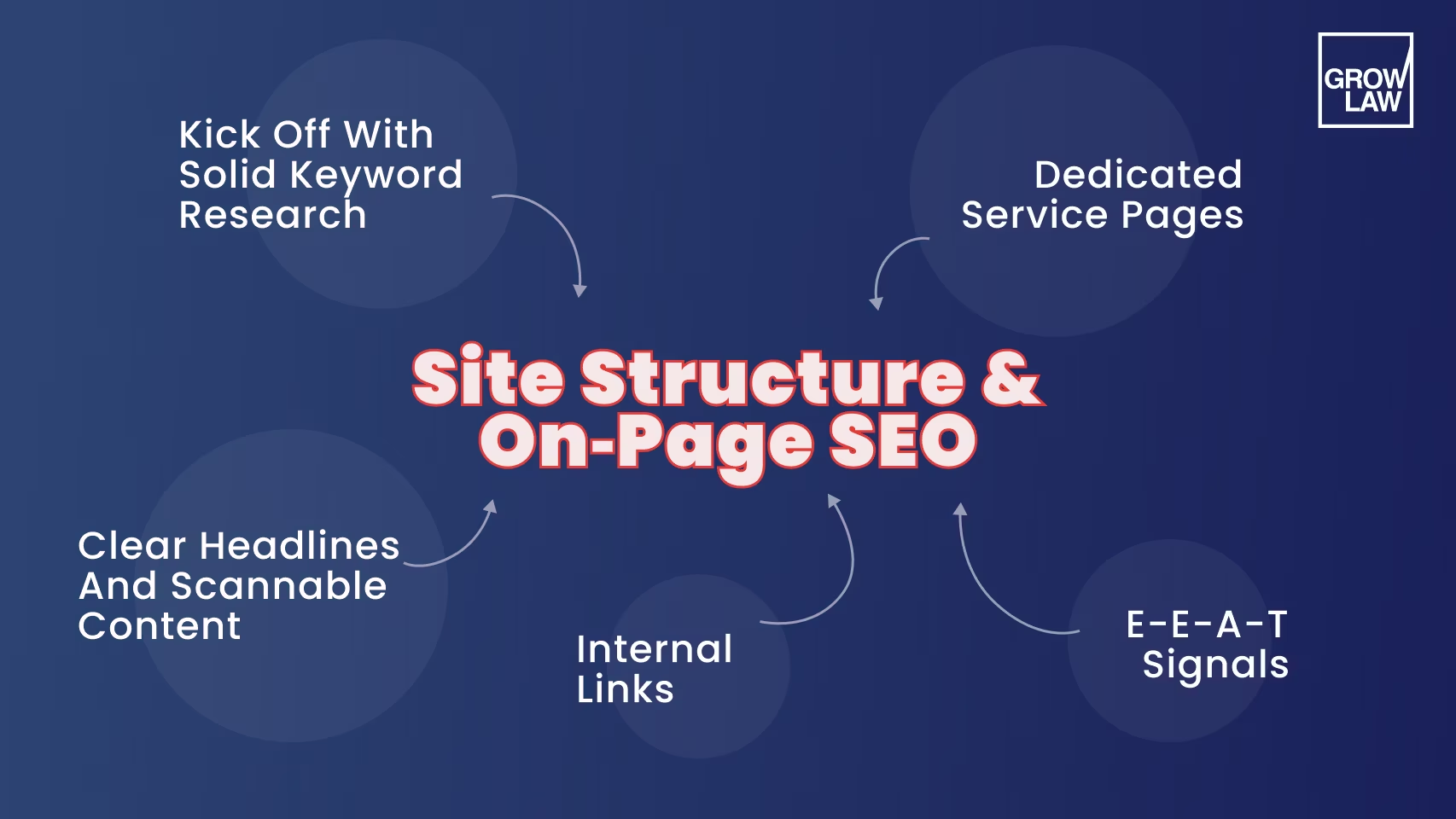
To rank higher on organic search results, add these to your law firm SEO strategy:
- Kick off with solid keyword research to discover what clients search for.
- Dedicated service pages for each core area (Closing Attorney, Deed Transfers, Quiet Title, Commercial Lease Review) using those keywords, so clients can find you.
- Clear headlines and scannable content that match what people actually search for — like “Closing Attorney in [City].”
- Internal links between your blog posts and pages that guide visitors deeper, and help Google understand how your topics relate.
- E-E-A-T signals that prove you’re trustworthy: strong bios, 4.5+ star reviews, FAQs, case details, and real contact options.
Think of your structure like a legal hierarchy. You need one strong real estate lawyer homepage linking to all your individual service pages (while they link back!).
Want a deeper walkthrough of on-page SEO? Check out our SEO for lawyers guide.
Dominate the Map Pack: Google Business Profile
Have you seen that little map box that pops up on Google for local business searches, like "lawyer near me" or "affordable hair stylist in (city)"?
That’s called the Map Pack (aka the “3-pack”) — it’s where your best local prospects come from!
In fact, the Map Pack sees up to 17.6% of all clicks according to FirstPageSage. To catch that premium real estate:
- Claim and complete your profile: Input every detail in your Google Business Profile — office address, hours, practice area (“Real Estate Attorney”), service areas.
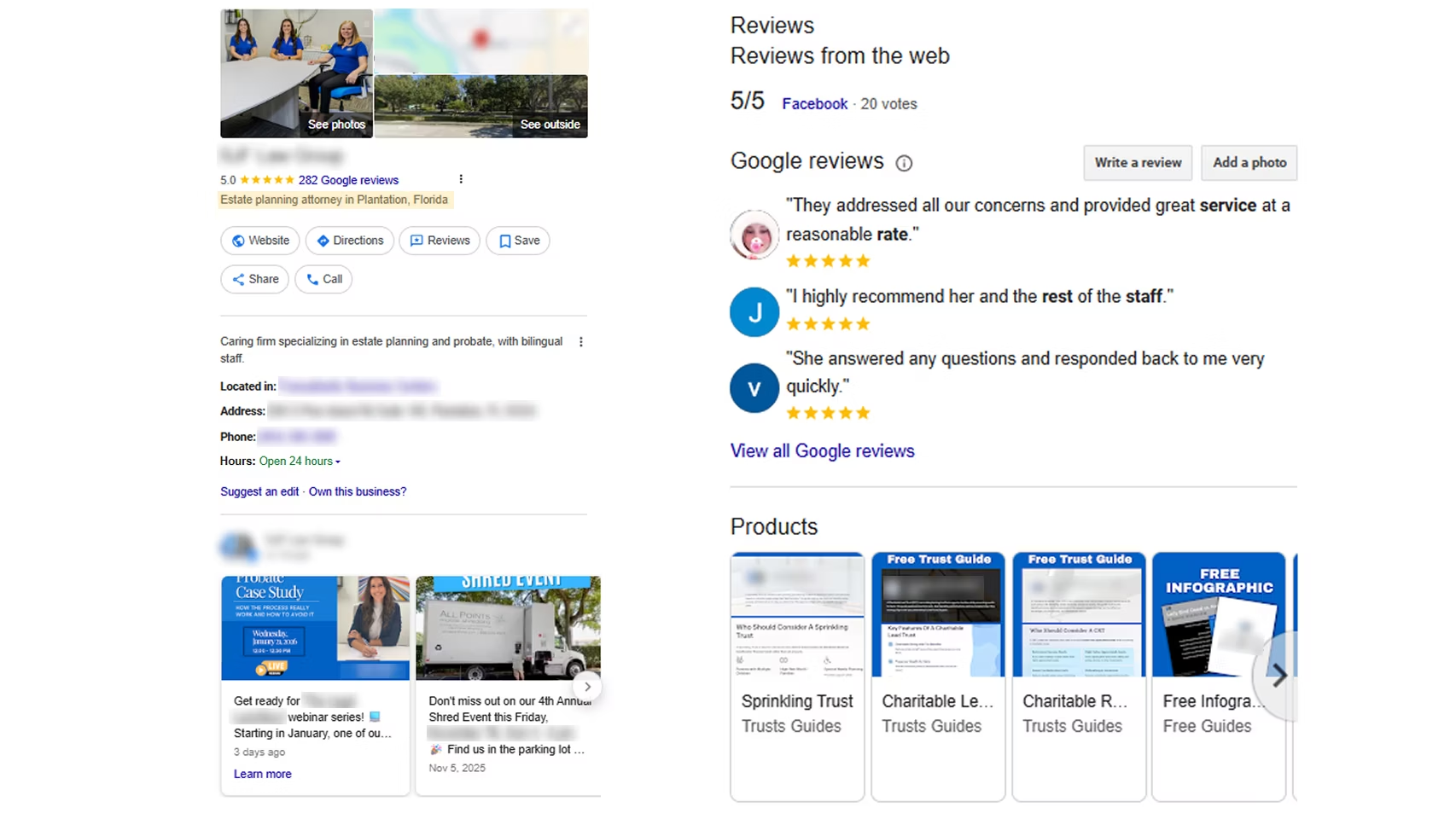
- Keep it active: Regular updates, new photos, posts — Google rewards profiles that aren’t dormant. This is a great way to get more organic traffic.
- Get great online reviews: The higher your average stars and review count (especially mentioning real estate closing, title work, etc.), the better you look to clients.
- Clean up your listings: Make sure your name, address, and phone number are the same everywhere online so Google trusts your business.
There's so much more to your GBP law firm marketing! Grab the full checklist here: Google Maps Guide.
Local SEO Beyond GBP: Citations, Reviews, Reputation
Okay, so you got into the Map Pack — amazing. But other websites want that spot too.
Let's go beyond your GBP, and pack your credibility with citations, reviews, and a better reputation.
Here's how you rise even higher on search engine results pages:
- Make your info match everywhere: Your Name, Address, Phone Number (NAP) must be identical on every directory — Justia, Yelp, Bing, bar sites. If Google sees 3 different phone numbers, it thinks you might be 3 different law firms.
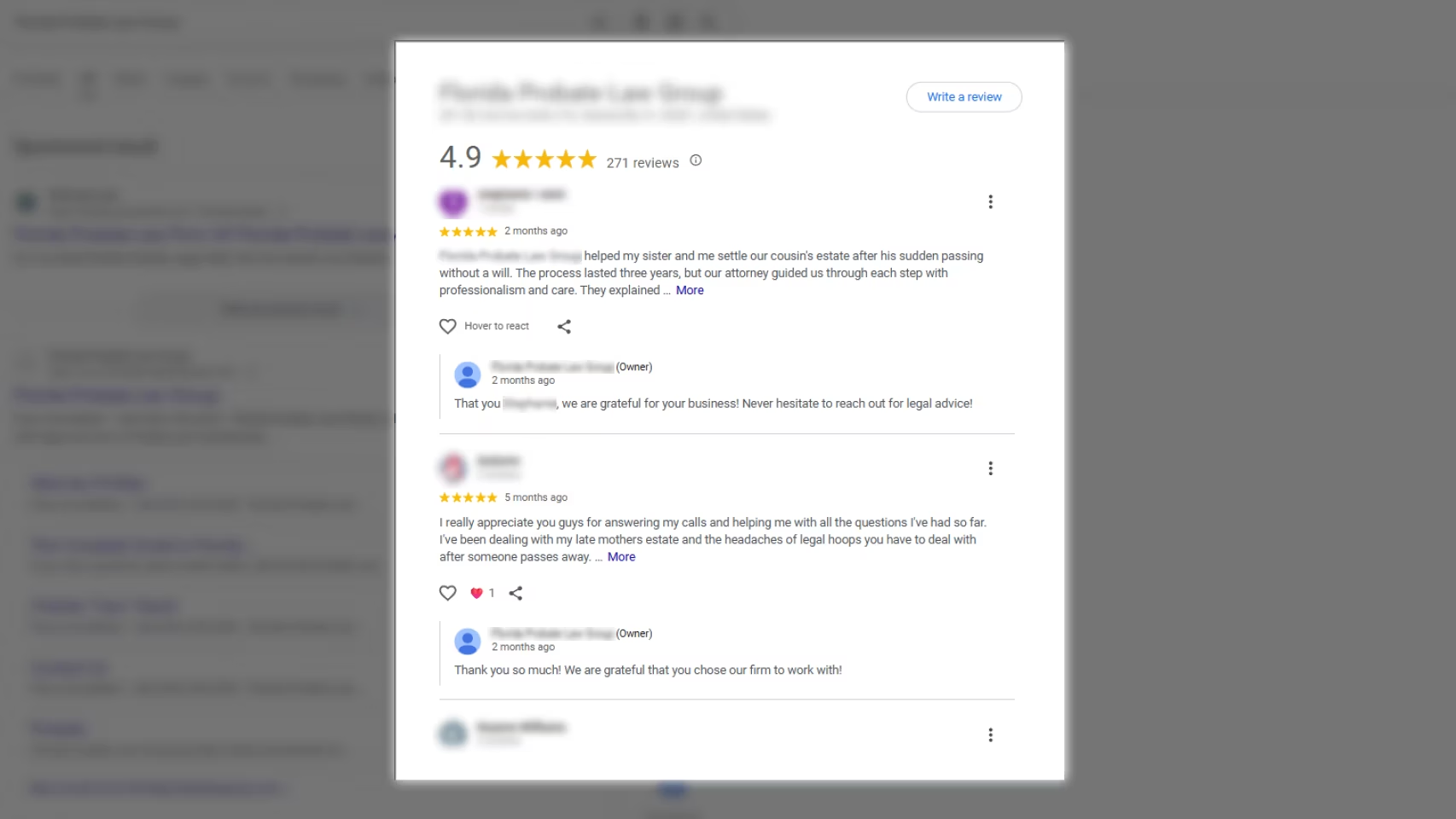
- Reviews, reviews, reviews: Politely ask happy real estate clients to share their experience — bonus points if they mention the service (“closing went smoothly,” “helped with deed transfer”).
- Don’t ghost your reviewers: Reply to every single one. People notice when you care, and frankly, Google and other search engines do too.
- Real photos or it didn’t happen: Show the office, the team, the lobby, basically anything that proves you’re not a hologram.
P.S. Fill in your GBP as soon as possible! A complete GBP listing makes you 2.7× more likely to be considered reputable than a partial or neglected one.
Want to build the best lawyer Google Business Profile? Read our GBP Guide.
Keyword Research for Real Estate Law Firms
Did you know 48% of your prospects will begin their legal search online?
We'll let you in on a secret: Understand searcher intent. Someone typing “real estate attorney near me” is ready to hire. Someone hunting “what does quiet title mean” is still in research mode.
- Use keyword tools like Google Keyword Planner, Ahrefs, or Semrush to pinpoint what your local clients type in when they’re ready.
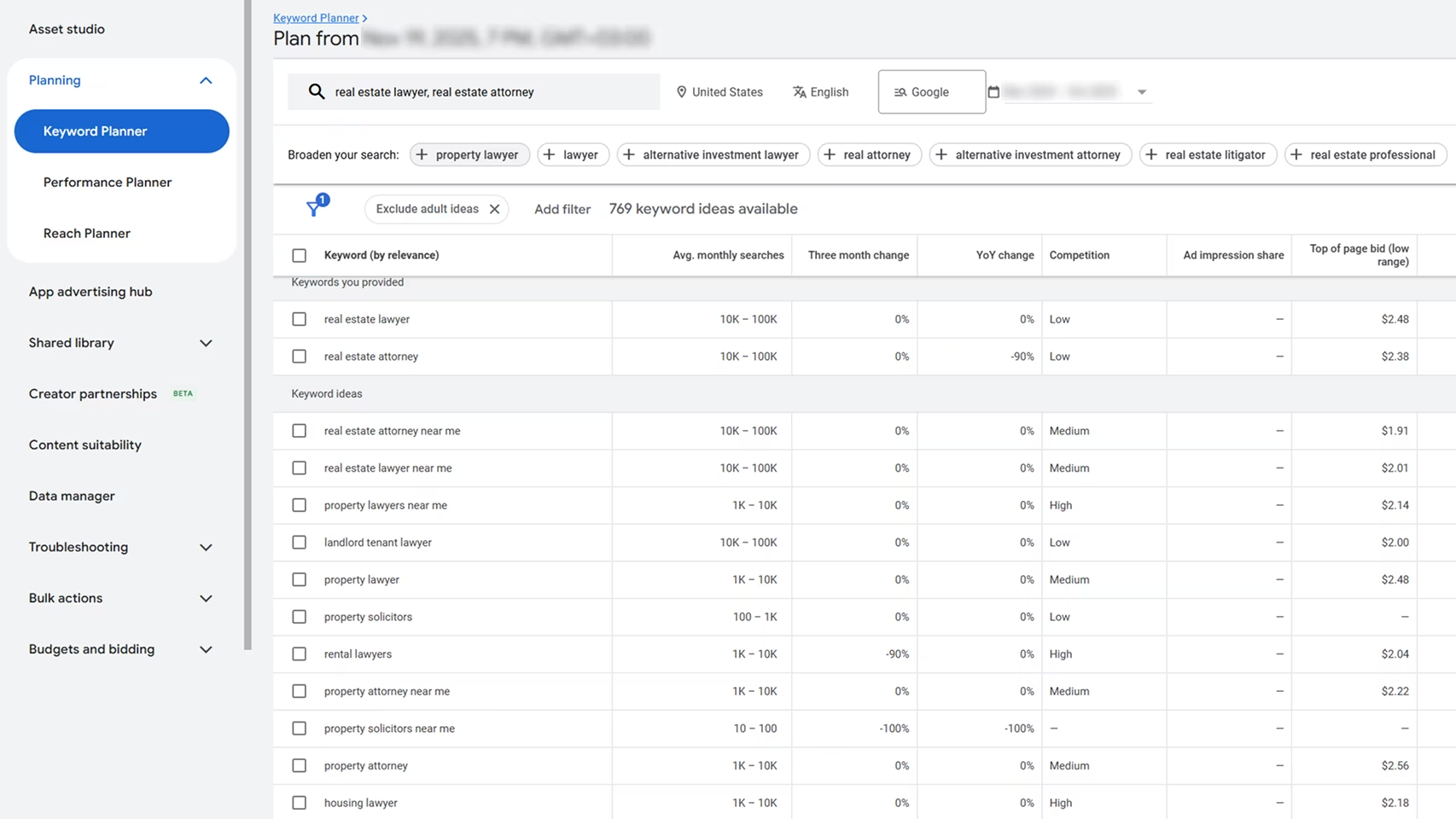
- Mirror competitor keywords: Check what other real estate law firms in your city rank for and steal inspiration.
- Go hyper-local by adding your city or county into keywords like “deed transfer attorney Atlanta.”
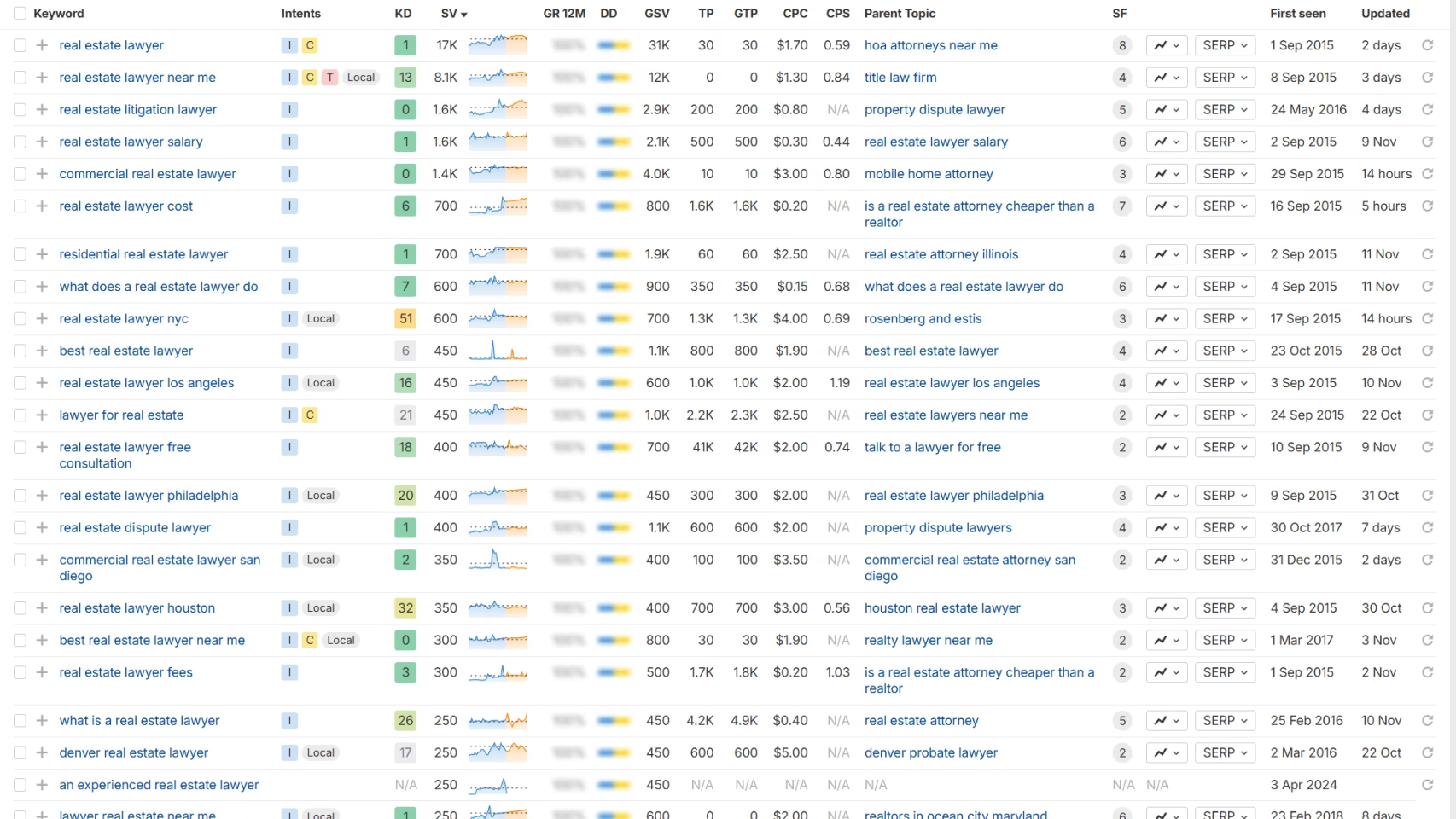
- Answer real-life questions with content around searches like “how much does a closing attorney cost in Florida?” or “who picks the closing attorney in Texas?”
Pro Tip: Nearly 70% of all search traffic comes from long-tail keywords like "commercial lease review attorney (city)". You can outrank bigger competitors by targeting the phrases they overlook.
Target "Money" Keywords!
More leads. More clients. More money. Our keyword research + SEO pros handle the work while you enjoy the money.
Get Your Free Consultation

Create Content That Closes: Pages, Guides, FAQs
As Andrew Davis famously said, “Content builds relationships. Relationships are built on trust. Trust drives revenue.”
Content is everywhere. 74% of marketers say it helps generate leads, and 49% say it directly boosts revenue.
So, what is it? High-quality content answers real questions in plain English, and makes your website visitors feel understood:
- Build pages around each core service: Closing Attorney, Deed Transfer, Commercial Lease Review, Quiet Title. If you don’t have a page for it, Google assumes you don’t do it.
- Answer real-life questions: FAQs like “Who picks the closing attorney in South Carolina?” get web traffic and gain trust.
- Create helpful guides: Step-by-step content for topics like “What happens during a real estate closing?” keeps visitors engaged — and the longer they stay, the better you rank.
- Use plain language: No one is searching for “conveyancing complexities.” They’re searching “How do I transfer a deed to a family member?”
- Write so AI tools will quote you: Because they will. AI scrapes content and showcases the most helpful pages — meaning your content can reach clients before they even touch Google.
These tips are vital... we repeat, vital... to the success of your on-page optimization.
Pro Tip: This week, make a list of the top 10 questions new clients ask you, then turn each one into an FAQ on your site, using ChatGPT as your drafting assistant.
Earn Local Links and Authority
A website link is basically another website vouching for you. The more respected the source, the more Google looks at you as legit.
In fact, you're 3.8x more likely to rank in the top 10 results with a strong backlink profile.
Follow this high-quality backlink checklist to boost your search engine rankings:
- Create resources with referral partners: Team up with a title company or realtor to publish a guide like “How to Avoid Closing Delays” and link to each other. Everyone wins.
- Say yes to local sponsorships: If you support an event or business networking group, they’ll usually thank you with a link from their website — which Google loves.
- Join every relevant directory: Local chamber of commerce, bar associations, real estate groups… anywhere your clients (and Google) expect to find you.
- Answer questions where locals are reading: Contribute insights to local news stories or Q&A sites — they often credit you with a link.
Want more creative link-earning ideas? Read our Link Building Guide now.
Technical SEO Essentials for Law Firm Websites
Technical SEO is the "under the hood" stuff that makes your website truly irresistible to Google.
Every high-ranking law firm website swears by this list:
- Fast load speed: 64% of users now browse legal services on their phones first. If your site drags, people bounce — and Google notices. Aim for under 3 seconds.
- Mobile-friendly design: More than half of your clients are searching on their phones during lunch breaks and walkthroughs. Your site should look flawless on a tiny screen.
- Indexing basics: Your sitemap tells Google what pages exist. Your robots.txt tells Google which pages not to show. Both must be set up properly.
- Core Web Vitals: Smooth scrolling, quick button taps, zero janky movement. This is Google’s way of saying: “Make your website pleasant to use.”
- HTTPS security: HTTPS = safe. No HTTPS? Your site might show a “Not secure” warning — a conversion killer.
Want a deeper dive (with examples made for attorneys)? Check this out: Technical SEO Guide.
Measure What Matters: Leads, Not Just Rankings
A “#1 ranking” sounds cool… but is it actually bringing you qualified leads and signed closings?
That’s the whole game.
Instead of obsessing over position changes, track where real clients are coming from:
- Use Google Analytics to see which pages drive contact form submissions and calls
- Add UTM tracking to buttons and ads so you know exactly what campaign brought a lead in
- Monitor Google Search Console to learn which relevant keywords push conversions
- Set up call tracking so every lead is tied to a marketing source
- Watch Google Business Profile actions like “Call,” “Directions,” and “Website clicks” — those show real buying intent
At Grow Law, our Client Portal pulls all of that data together in one place, so you don’t have to chase down reports. You can log in anytime and see:
- Where website traffic and leads come from
- How much revenue you make (+ your ROI!)
- Which channels produce new closings
- And much, much more!
At the end of the day, your keyword rankings and overall legal SEO success depend on doing these 4 elements: Track, tweak, rinse, repeat.

The Game is On. Ready to Win?
Grow Law gives you a major edge with up to 1,018% more leads! 100+ happy clients have seen the proof. Ready to join them?
Get Your Free Consultation
FILL Your Pipeline with Pro SEO for Real Estate Lawyers
That was a lot — so let’s summarize what actually moves the needle in real estate lawyer SEO:
- Show up first where prospective clients are already searching (Google + Map Pack)
- Align your legal content with what buyers, sellers, and investors need help with
- Build trust through reviews, reputation, and local authority signals
- Keep your website fast, mobile-friendly, and properly structured
- Track leads and revenue — not vanity metrics like clicks or impressions
And yes… it’s a lot to handle on your own while running a firm!
At Grow Law, our attorney SEO services, paid ads, and web design services have helped lawyers achieve results like a 3,345% marketing ROI and 1,000%+ increases in qualified leads!
You could have this kind of success, too.

Compare Your Practice Instantly
Stay Ahead of the Competition!
Compare your law firm's performance to Local competitors with our instant assessment tool
Get a clear picture of your firm's performance
Boost your online presence
Compare My Firm
Compare Your Practice Instantly
Stay Ahead of the Competition!
Compare your law firm's performance to Local competitors with our instant assessment tool
Get a clear picture of your firm's performance
Boost your online presence
Compare My Firm
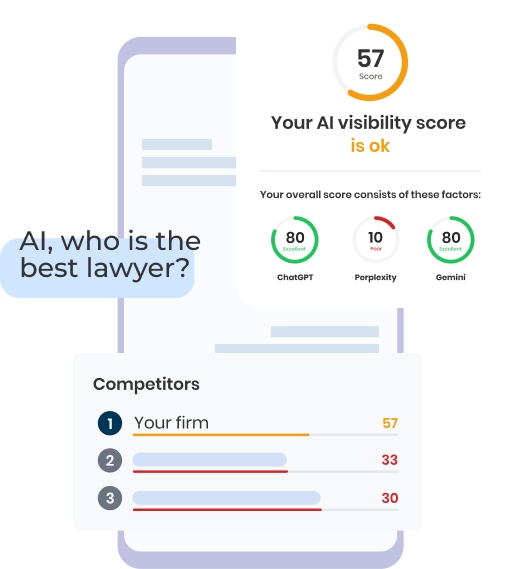
Check Your AI Visibility Instantly
Find Out What AI Is Telling Your Potential Clients
Run our free AI Grader to:
See how often top AI tools mention your law firm
Spot which competitors show up first
Get the next steps to capture more cases
Run My Free AI Report
- Search engine optimization https://en.wikipedia.org/wiki/Search_engine_optimization
- Local search engine optimization https://en.wikipedia.org/wiki/Local_search_engine_optimization
- Google Business Profile https://en.wikipedia.org/wiki/Google_Business_Profile
- Property law https://en.wikipedia.org/wiki/Property_law
- Google Search Console https://en.wikipedia.org/wiki/Google_Search_Console

