


Table of Contents
Which is the best AI visibility tool for your law firm? The answer boils down to what you intend to do with the data. There is no universal winner.
We’ve been experimenting with AI visibility tools this past year, and here’s a quick breakdown of our findings.
| Category | Tools | Best Fit |
|---|---|---|
| Enterprise intelligence | Profound, Scrunch AI | You need deep competitor benchmarking and board-level reporting across multiple locations. |
| Lean monitoring | Peec AI, Otterly.AI | You want straightforward citation tracking without enterprise complexity or cost. |
| SEO-suite integration | Semrush AI Visibility Toolkit, Ahrefs Brand Radar | You want AI visibility folded into an SEO platform you already pay for. |
| Monitoring-to-execution | AirOps, SE Visible | You want tracking data to feed directly into content briefs and production workflows. |
Why are these AI visibility tools vital now? Because you can rank well on Google but still be completely invisible on AI search.
An Ahrefs analysis of more than 1,000 pages cited by ChatGPT found that 28.3% of ChatGPT's most-cited pages had zero Google organic visibility. Poor visibility here means lost leads.
Today, we’ll walk you through where and how to track your AI visibility, along with how GEO for law firms can take it a step further to drive your caseload.
If you’re a managing partner, law firm CMO, marketing director, or SEO lead, this is a must-read.
Key Takeaways
- AI visibility and Google rankings are separate metrics. You can rank #1 organically and still get zero mentions in ChatGPT or AI Overviews for the same question. Our guide to AI Overviews for lawyers explains the Google-specific visibility layer.
- No single tool wins across the board. Match the category to whether you're a multi-location firm, a solo practice, an in-house team on an existing SEO platform, or an agency managing clients.
- Run a free baseline before paying for anything. Manually query ChatGPT, Perplexity, and Google, or use a free report, to confirm you have a visibility gap.
- Prioritize citation rate and qualified leads. Citation rate tells you whether AI mentions you at all; qualified leads tell you whether that visibility translates into business.
- Calculate true cost of your usage, not the entry price. Prompt volume, engine count, number of locations, and seats all push your cost well past the vendor's homepage number.
What Are AI Visibility Tools & What Do They Measure?
AI visibility tools track how often and how favorably AI platforms like ChatGPT, Google AI Overviews, Gemini, Copilot, and Perplexity mention your law firm for legal queries.
Don't confuse them with traditional rank trackers. A rank tracker tells you where (or if) your website is positioned on Google for a keyword.
AI visibility tools tell you whether your firm gets named inside an AI-generated answer, which is a different game with different rules.
You can hold the top organic spot for "personal injury lawyer Houston" and still never get mentioned on ChatGPT for the same question.
Additionally, don't confuse them with legal-work AI tools either. Products built for legal research, drafting, or case management (Harvey, CoCounsel, Spellbook, etc.) help you do your job. AI visibility tools track your mentions on AI search only. This article covers the second category.
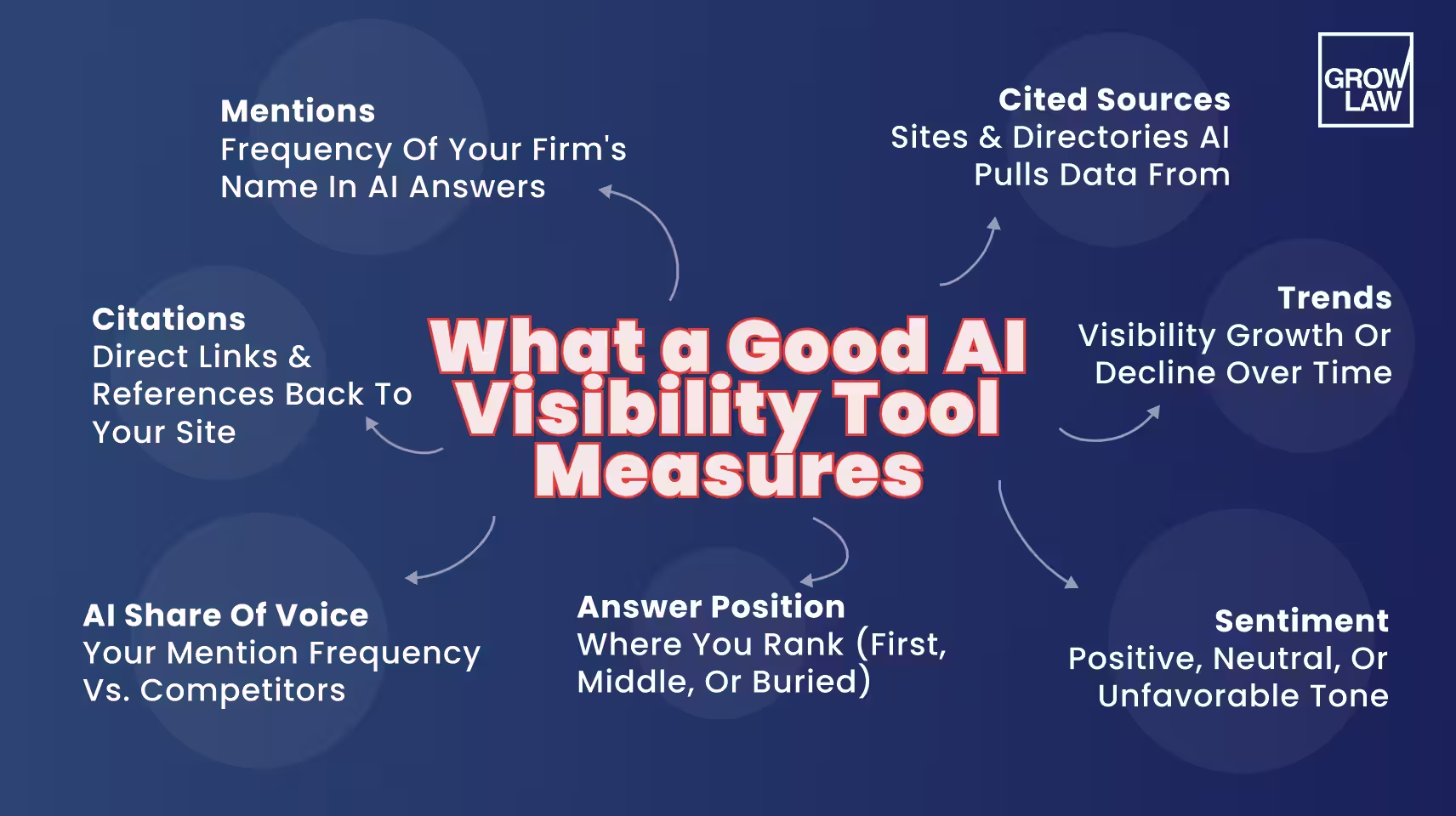
Here's what a good AI visibility tool measures:
- Mentions: how often your firm's name shows up in AI-generated answers to relevant legal questions
- Citations: whether AI platforms link to or reference your website as a source
- Answer position: where you land when your firm does get mentioned, first, buried, or somewhere in between
- Sentiment: whether the AI describes your firm positively, neutrally, or unfavorably
- Cited sources: which websites and directories AI platforms pull from when they answer legal questions (so you know who you're actually competing against)
- Trends: whether your visibility is climbing, holding steady, or slipping over time
- AI share of voice: how your mention frequency stacks up against competing firms for the same prompts
The shift is happening as we speak. Pew Research's 2025 panel found that users clicked a regular search result only 8% of the time with an AI summary on screen, versus 15% when there wasn't one.
The old game of "rank high and wait for the click" is breaking down. In the near future, your best shot at being found won't be your search ranking. It'll be whether AI mentions your firm by name.
— It’s Not About Visibility. It’s About Leads.
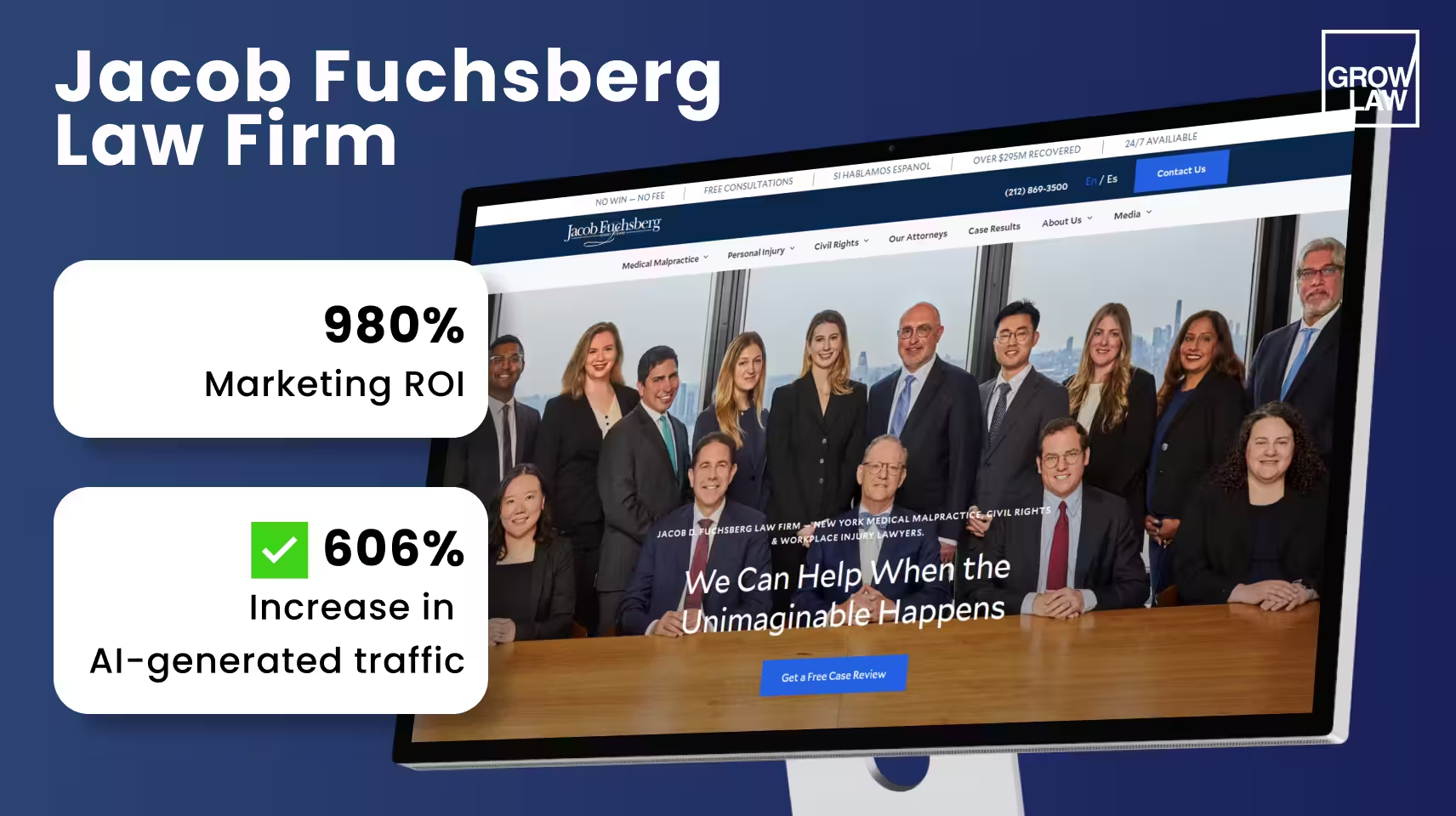
That is the ultimate prize. Visibility alone won’t fill your caseload. Look at Jacob D. Fuchsberg, a respected PI firm out of New York.
After partnering with us for a full AI search optimization campaign, Jacob D. Fuchsberg saw AI-driven traffic rise from 170 to 1,200 monthly sessions (a 606% increase) between 2024 and 2025.
Their average marketing ROI reached 980% between February and April 2026. Qualified leads shot up by 196% from February 2023 to January 2026.
This is proof that your AI visibility can have a sizable impact on your caseload.
Want the full mechanics of how citation tracking works and how to read the data week over week? We cover that in depth in our blog: AI citation tracking for law firms.
How We Evaluated AI Visibility Tools for Law Firms
We built this comparison around one question: will this tool tell you whether your firm shows up when a prospect asks AI for a lawyer?
To answer that fairly, we scored every platform against the same weighted rubric, using the same research window, comparing like against like.
- Research date. We pulled pricing, plan limits, and feature sets from each vendor's official site as of August 2026. AI visibility tools update fast. Recheck pricing and plan details before you buy.
- Repeatability controls. Wherever possible, we tested the same set of prompts across platforms rather than relying on each vendor's own sample reports. Results reflect consistent conditions rather than cherry-picked demos.
- Legal and local segmentation. Generic AI visibility scores don't tell you much if you're a local firm. We weighted platforms higher when they could segment by practice area and by city or region. "Does AI mention me for personal injury queries in Dallas" is a different question than "does AI mention me at all."
- Official-source verification. Every pricing figure, model coverage claim, and integration listed in this article was checked against the vendor's own site manually, not third-party review aggregators, close to publication.
Here's the rubric we used:
| Criterion | What It Measures | Weight |
|---|---|---|
| AI-engine coverage | Number of AI platforms tracked (ChatGPT, Gemini, Perplexity, AI Overviews, Copilot, Claude) | High |
| Prompt repeatability | Whether the tool re-runs the same prompts consistently to track change over time | High |
| Legal/local segmentation | Ability to filter or build prompts by practice area and geography | High |
| Citations & share of voice AI | Whether the tool shows source citations and benchmarks your mention rate against competitors | High |
| Competitor benchmarking | Depth of competitor comparison data | Medium |
| Actionability | Whether the platform turns tracking data into specific content or technical recommendations | Medium |
| Total cost | Pricing transparency and true cost at the seat/prompt volume a law firm needs | Medium |
| Integrations | Compatibility with existing SEO or marketing stacks | Low |
A note on our disclosure. Grow Law sells GEO services and we offer our own free AI Visibility Grader.
We built this rubric to be usable regardless of which tool you choose, including ones we don't sell or resell.
Where a claim comes from a vendor's official page, we say so. Where it comes from our own testing, we say that too.
Your Competitors Are Getting Cited. Are You?
Don’t just track it. Fix it.
Our GEO team fixes your AI visibility to get you mentioned on ChatGPT, Gemini, and Perplexity. 98% of our clients now get AI-driven leads.
Get Your Free Growth Plan

The Best AI Visibility Tools for Law Firms in 2026
Here's how each platform stacks up, pulled directly from official vendor pricing pages.
Confirm current numbers before you buy, since several of these vendors have updated their pricing more than once in 2026.
— Profound
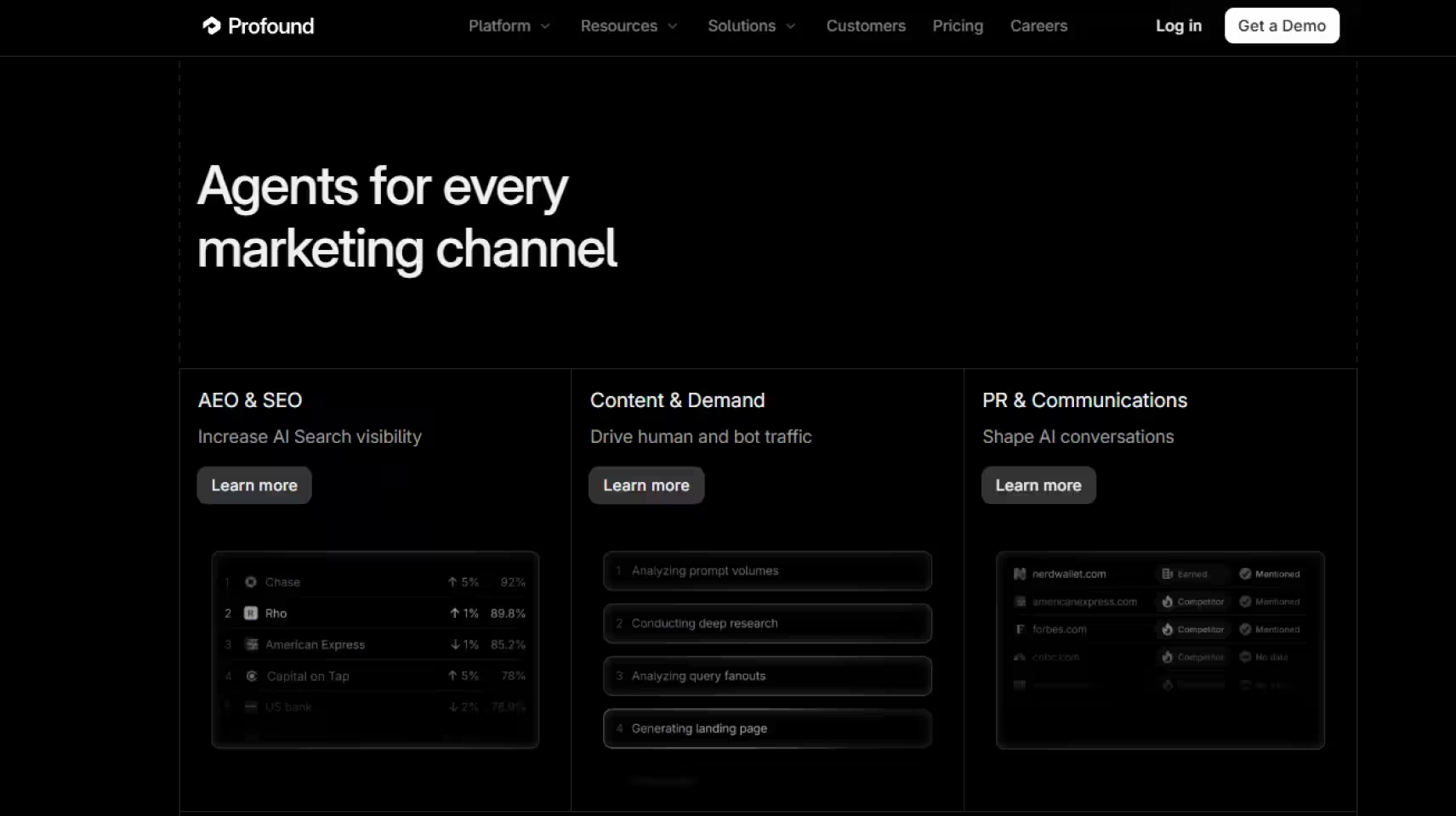
Best fit: Multi-location firms and larger marketing teams that need enterprise-grade reporting and can justify a higher spend.
Engines: Starter tracks ChatGPT only. Growth tracks a fixed set of 3: ChatGPT, Perplexity, and Google AI Overviews. Enterprise covers up to 9, adding Google AI Mode, Gemini, Copilot, Grok, DeepSeek, and Claude.
Law firm use case: A firm with locations across several states can use Profound's Prompt Volumes feature to see which practice-area questions AI platforms are actually fielding in each market, then prioritize content accordingly.
Metrics: Answer Engine Insights, Prompt Volumes, Agent Analytics, and Agents (automated content generation credits).
Strength: Unlimited domain tracking on every tier, plus Agent Analytics that tracks AI-sourced traffic and attribution across your site.
Limitation: Starter covers ChatGPT only with 50 tracked prompts and 1,500 monthly responses analyzed. Reaching Perplexity and AI Overviews requires the $399/month Growth tier, and full 9-engine coverage, including Claude and Gemini, requires custom Enterprise pricing.
Pricing basis: Starter $99/month, Growth $399/month, Enterprise custom.
Official source: https://www.tryprofound.com/
— Peec AI
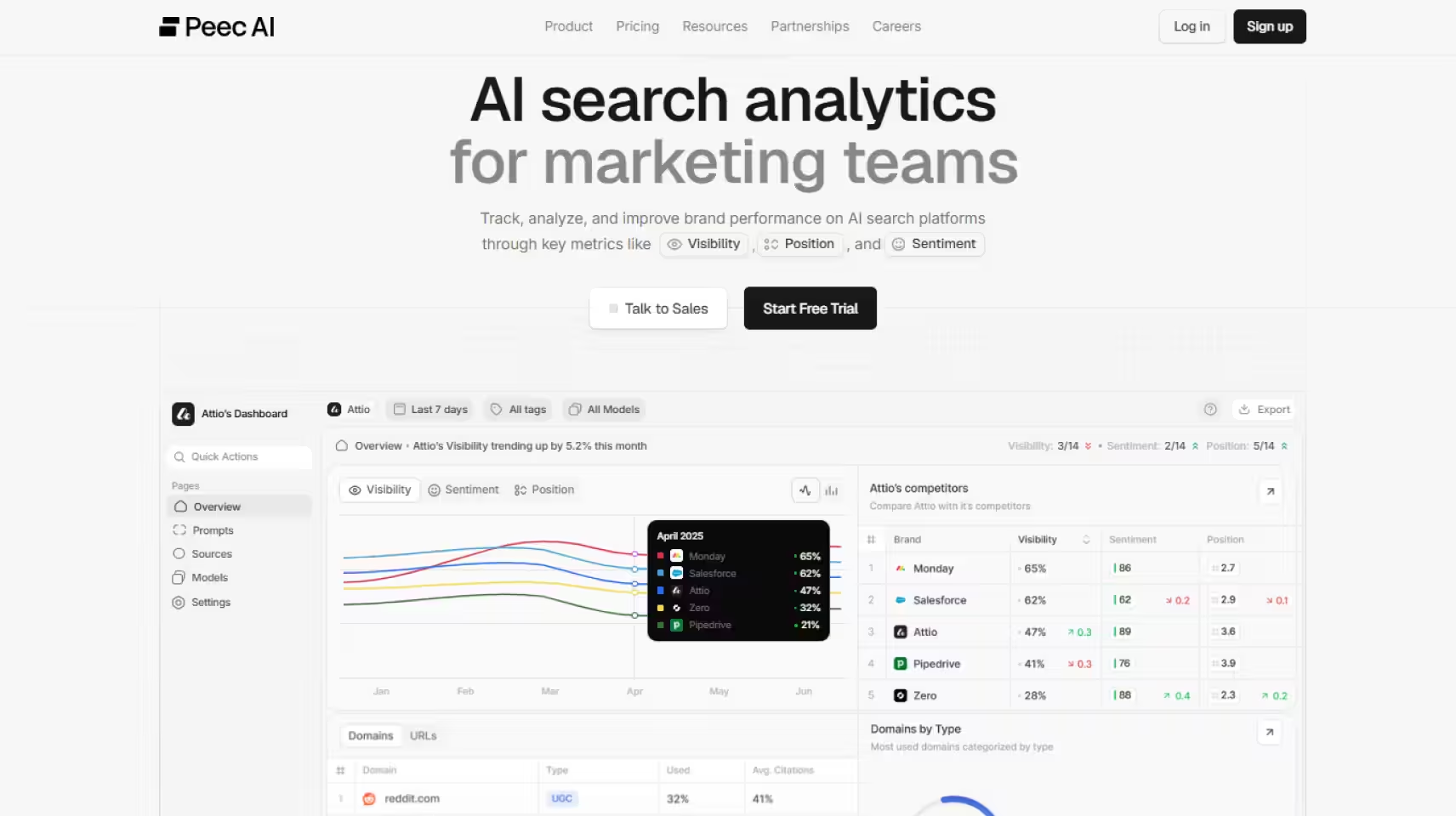
Best fit: Small to mid-size firms and agencies that want clean, BI-style reporting without a steep learning curve.
Engines: Every self-serve tier lets you choose 3 models from ChatGPT, AI Mode, AI Overviews, Copilot, Perplexity, and Gemini. Claude is Enterprise-only. Enterprise unlocks up to 11 models total, including Claude Sonnet 4, GPT-5 Search, DeepSeek, Qwen, and Mistral via API.
Law firm use case: A solo or small-firm marketing team can set up prompts around specific practice areas and cities, then use Peec's visibility, sentiment, and position scoring to see not just whether AI mentions the firm, but how favorably and how prominently.
Metrics: Visibility, sentiment, position, and citation source tracking, benchmarked against named competitors.
Strength: Every tier includes unlimited users and daily tracking, and Advanced adds multi-country tracking plus native Looker Studio integration.
Limitation: The 3-model cap holds across every self-serve tier. Adding a 4th model costs an extra $30 to $140/month depending on tier, and Claude specifically isn't available outside Enterprise at all.
Pricing basis: Starter $95/month, Pro $245/month, Advanced $495/month, Enterprise custom.
Official source: https://peec.ai/
— Scrunch AI
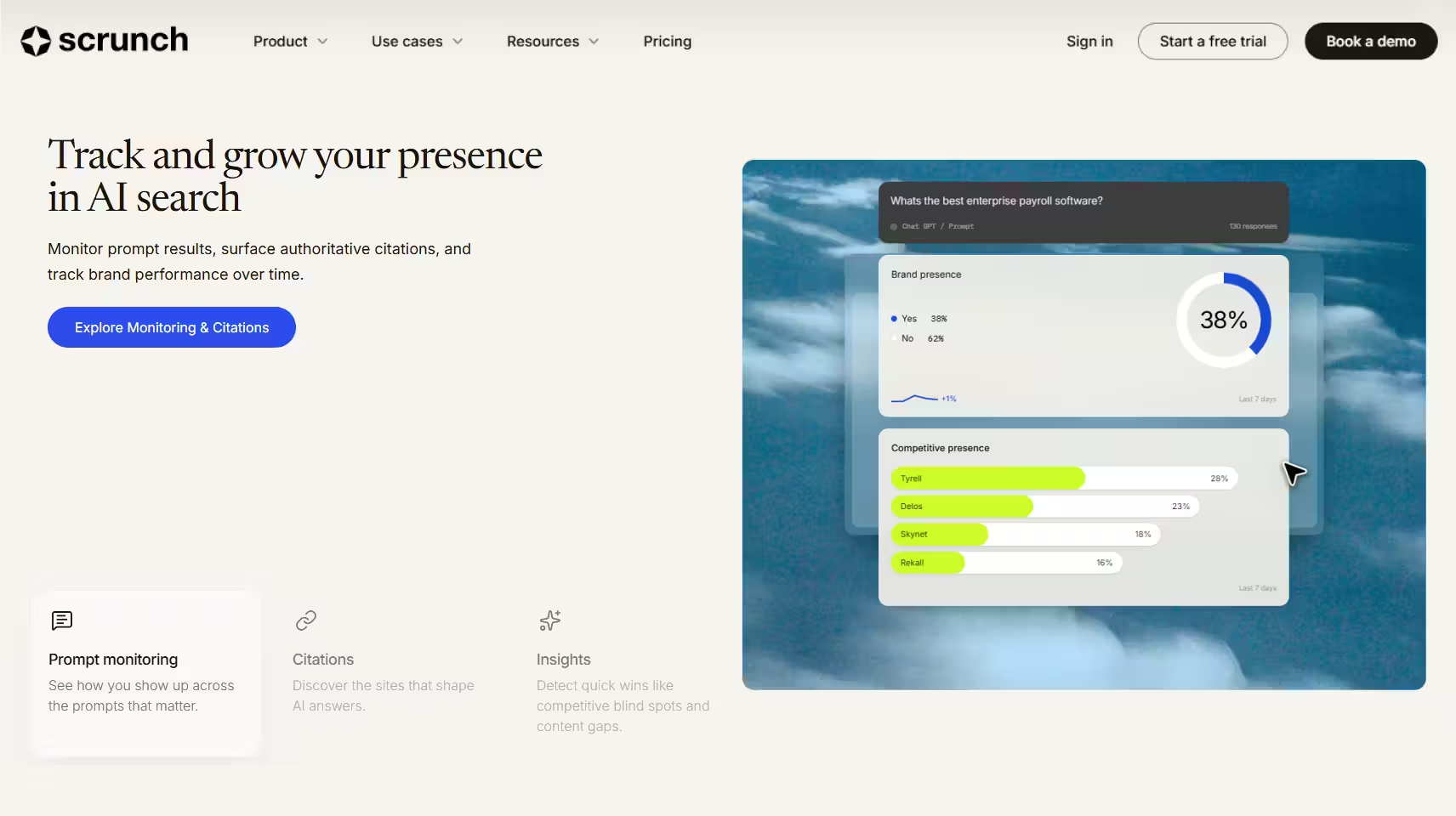
Best fit: Firms that want site-level AI audits and AI agent traffic monitoring bundled with standard visibility tracking.
Engines: Core covers 4 platforms (ChatGPT, Perplexity, Google AI Overviews, Copilot). Enterprise expands to 9, adding Claude, Gemini, Meta AI, Google AI Mode, and Grok.
Law firm use case: A firm can use Scrunch's site audit feature to check whether its practice-area pages are structured in a way AI crawlers can actually parse, then track whether that shows up as improved citations over time.
Metrics: Prompt monitoring, citations and sources, sentiment analysis, and site audits (5 per month on Core, with 25 pages mapped).
Strength: Core includes 5 user licenses, Google SSO, and a 7-day free trial with no credit card required, which is generous for an entry tier.
Limitation: Core is capped at 125 unique prompts, 1 brand workspace, and tracking limited to a single country. Claude and Gemini, two platforms law firm prospects commonly use, sit entirely behind Enterprise.
Pricing basis: Core $250/month, Enterprise custom.
Official source: https://scrunch.com/
— AirOps
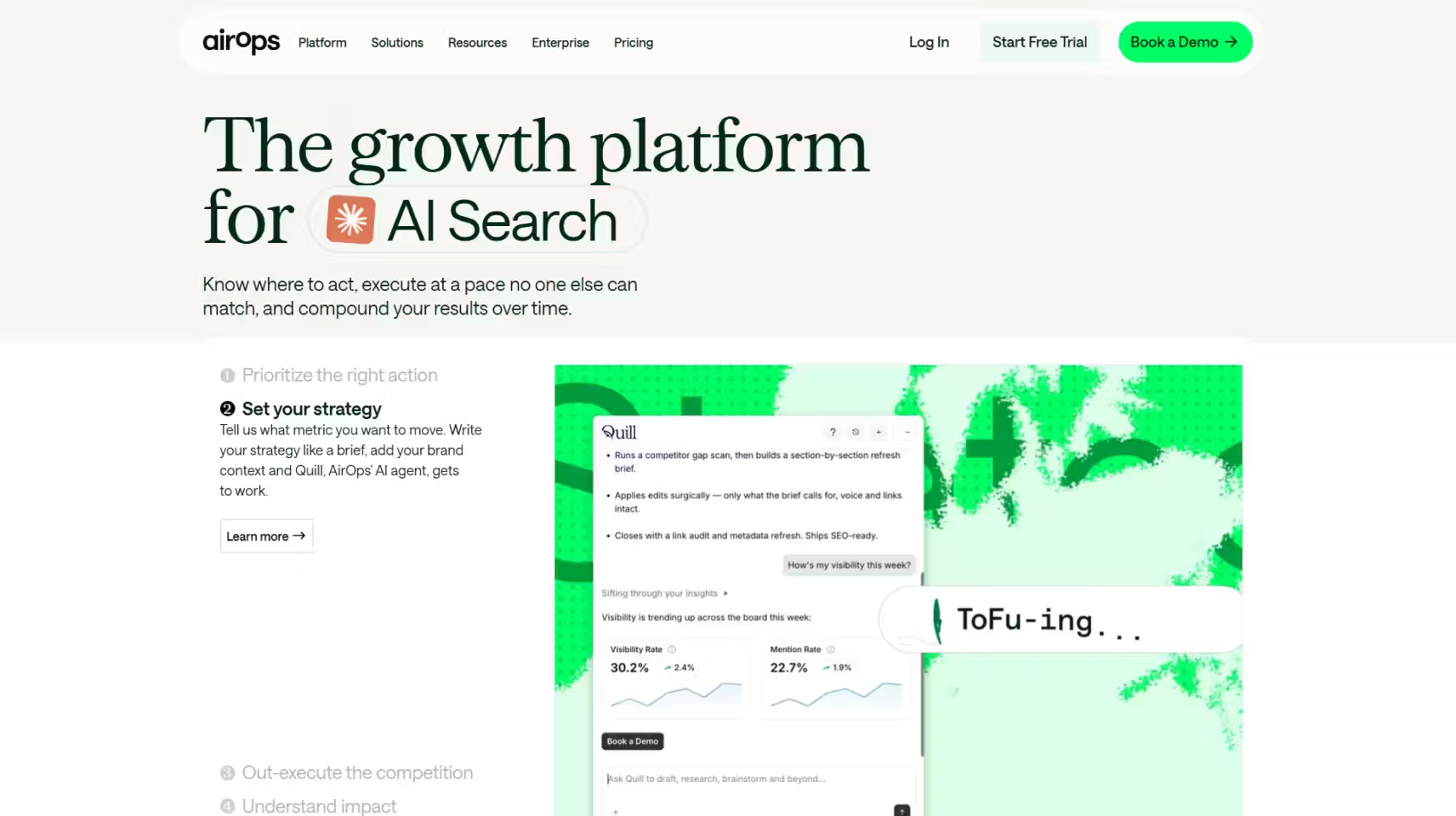
Best fit: Content and SEO teams that want AI visibility data to feed directly into a content production workflow rather than sit in a standalone dashboard.
Engines: Solo tracks ChatGPT Insights only. Pro adds Multi-Engine Insights across additional AI platforms.
Law firm use case: A firm's content team can track which practice-area prompts AI platforms aren't citing the firm for, then route those gaps directly into AirOps' workflow builder (Quill) to draft and publish new pages that close them.
Metrics: Tracked prompts and pages, Opportunity Reports (monthly on Solo, weekly on Pro), and content production tasks.
Strength: Both Solo and Pro start free, and Pro includes unlimited seats plus CMS, SEO, AEO, social, and project management integrations, along with live cohort training.
Limitation: Pricing is task-based rather than a flat monthly fee, and AirOps doesn't publish dollar figures for Solo or Pro beyond the free entry point. Budgeting requires estimating task volume with their team first, and Solo overage runs $0.025 per task.
Pricing basis: Solo and Pro both start free with usage-based billing on task volume; Enterprise is fully custom.
Official source: https://www.airops.com/
— Semrush AI Visibility Toolkit
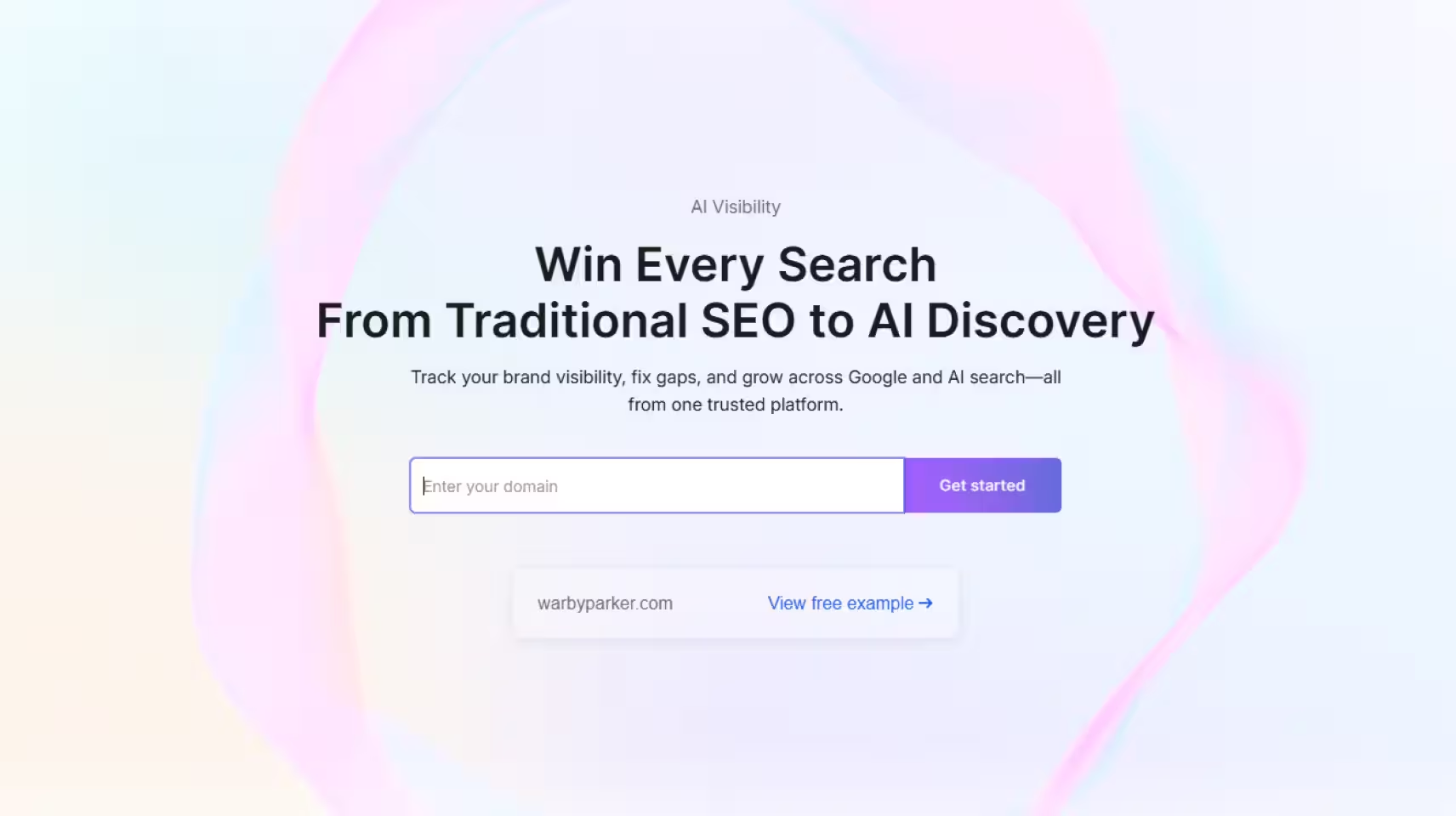
Best fit: Firms already running Semrush for keyword research and rank tracking who want AI visibility folded into existing reporting.
Engines: Google Search/AI Overviews, ChatGPT, Perplexity, and Gemini, with coverage continuing to expand.
Law firm use case: A firm's SEO manager can pull AI visibility data into the same dashboard already used for organic rankings, so partners see one report instead of two.
Metrics: Visibility Overview, Competitor Research, Prompt Research, Brand Performance, Prompt Tracking, and AI Search Site Audit.
Strength: The standalone toolkit is a clean, low-commitment entry point if you don't want to move your whole SEO stack, and Semrush One bundles it with core SEO tools at a lower combined cost than buying separately, with meaningfully higher prompt limits (50 to 200 daily versus 25 on the standalone toolkit).
Limitation: The standalone toolkit caps out at 25 tracked prompts and 1 domain, with no free trial. A multi-location firm tracking prompts across several cities will likely outgrow it fast and need either paid add-ons or a Semrush One upgrade.
Pricing basis: Standalone toolkit $99/month per domain. Bundled via Semrush One: Starter $165.17/month annual, Pro+ $248.17/month annual, Advanced $455.67/month annual (monthly-only rates run $199, $299, and $549 respectively).
Official source: https://www.semrush.com/ai-seo/overview/
— Ahrefs Brand Radar
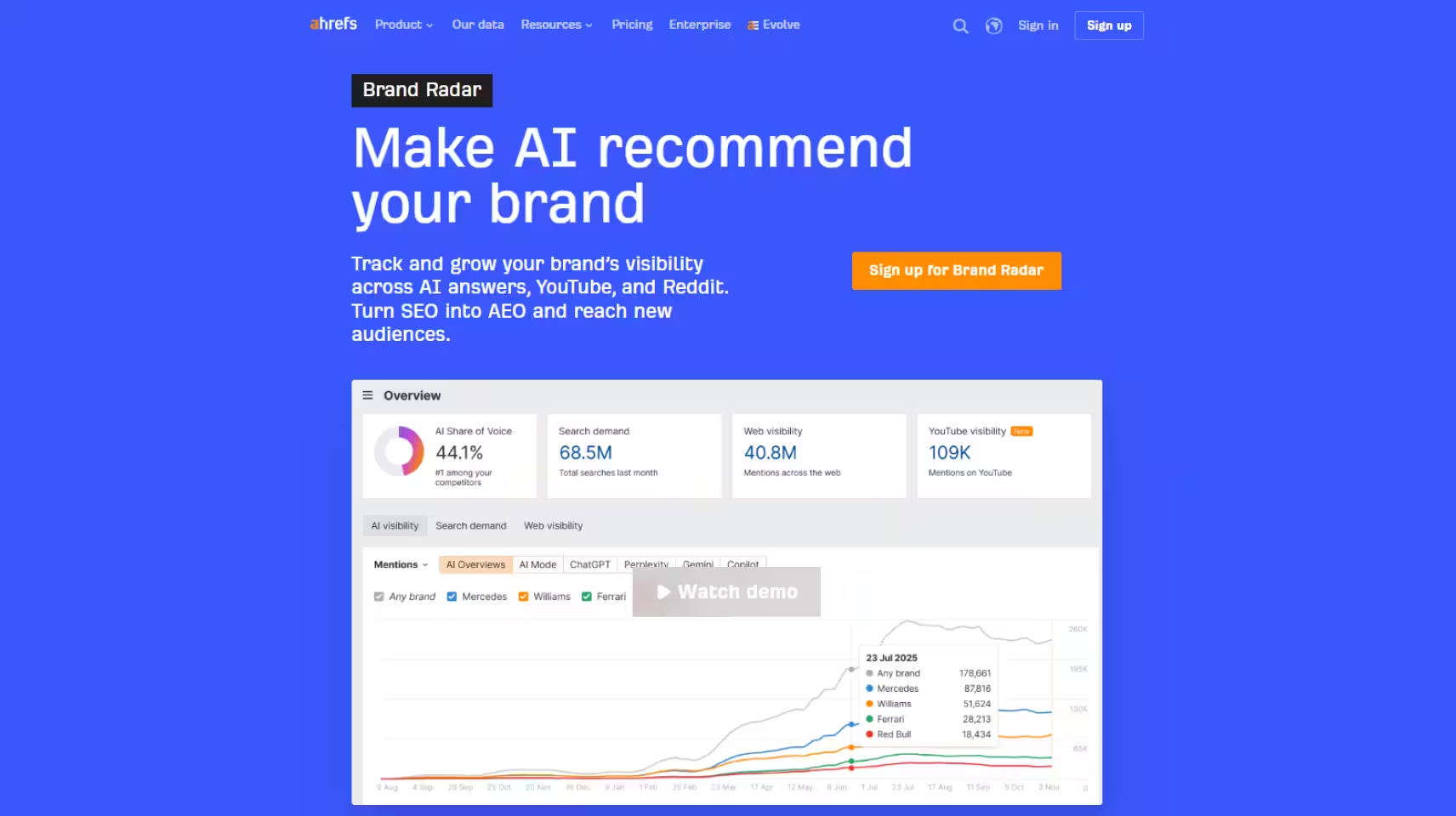
Best fit: Firms already invested in Ahrefs for backlink and keyword data who want AI visibility inside the same ecosystem.
Engines: Both tiers cover AI Overviews, AI Mode, ChatGPT, Perplexity, Copilot, and Gemini. All Platforms adds full access to the entire 481 million-plus prompt database versus Select's per-platform access. Claude is not tracked on either tier.
Law firm use case: A firm can cross-reference which competitor pages get cited in AI answers against Ahrefs' backlink data, to see whether citation correlates with link authority in the local legal market.
Metrics: AI visibility and brand mentions, competitor benchmarking, search demand, web visibility, and (free while in beta) YouTube, TikTok, and Reddit mention tracking.
Strength: The prompt database is the largest in the category at 481 million-plus monthly prompts, built on real search-backed prompts rather than synthetic queries, and both tiers include YouTube/TikTok/Reddit bonus tracking at no extra cost.
Limitation: Brand Radar requires an active base Ahrefs subscription underneath (starting around $129/month), so real total cost runs well past the $398 or $699 headline number. Claude coverage is absent entirely.
Pricing basis: Select Platforms $398/month, All Platforms $699/month, both on top of a required base Ahrefs plan.
Official source: https://ahrefs.com/brand-radar
— Otterly.AI
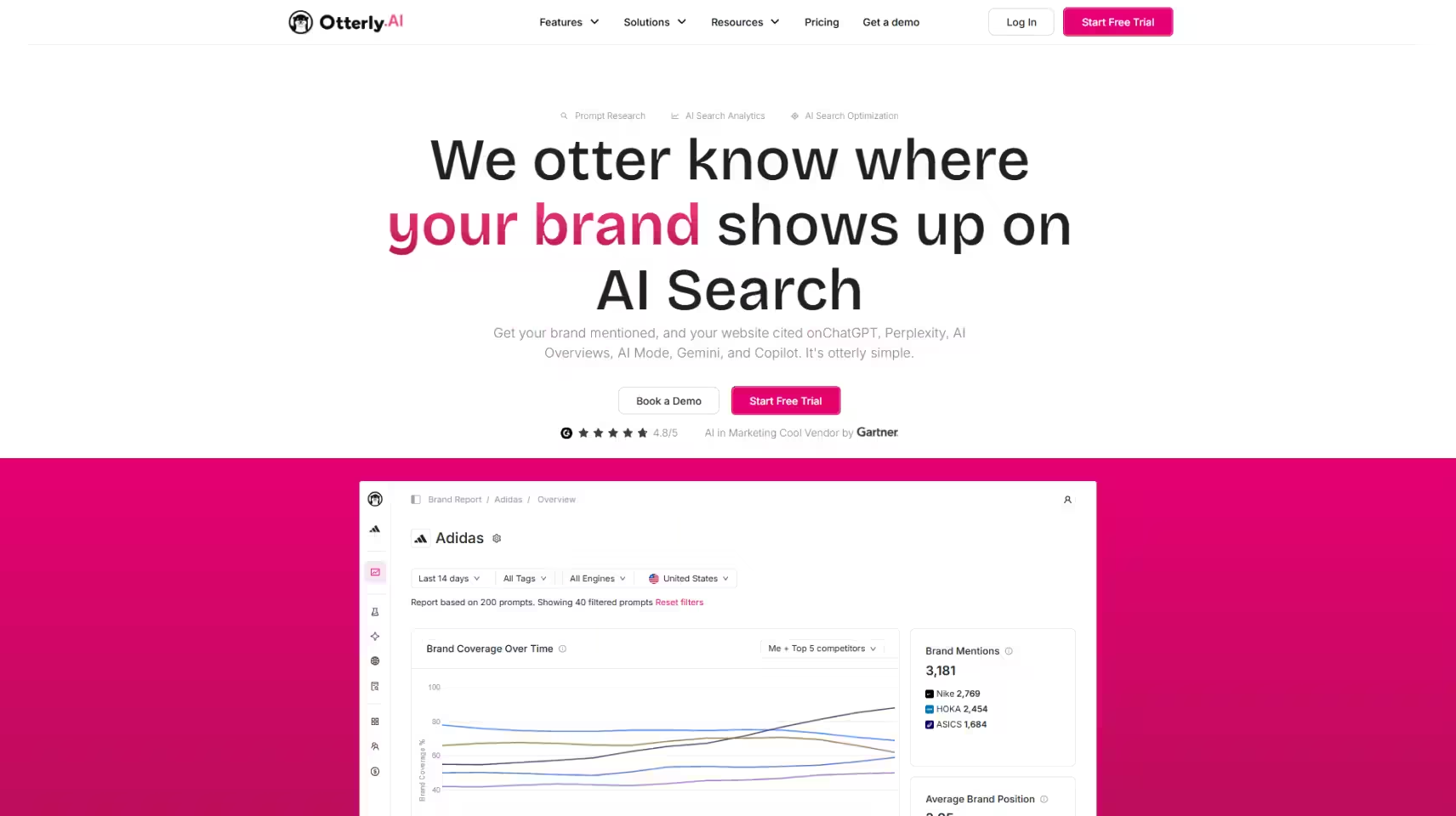
Best fit: Solo attorneys and small firms that want the lowest-cost entry point into AI visibility tracking.
Engines: Every tier covers 4 core engines (ChatGPT, Google AI Overviews, Perplexity, Copilot). Claude, Google AI Mode, and Gemini are paid add-ons on every plan.
Law firm use case: A solo practitioner can start on Lite to establish a baseline citation rate across the highest-volume platforms before deciding whether to invest further.
Metrics: Brand Visibility Index, domain ranking, link citation analysis, GEO audits, and ChatGPT Ads Tracking. For the paid conversational-search layer, review our ChatGPT advertising services.
Strength: Unlimited team members on every tier, including the $29 Lite plan, plus a 7-day free trial with no credit card required.
Limitation: The 4-engine core holds across every tier. Adding Claude costs $29 to $439/month depending on your tier, and Gemini or AI Mode adds $9 to $149/month each. Lite is also capped at 1 workspace and 3 recommendations per week.
Pricing basis: Lite $29/month, Standard $189/month, Premium $489/month, Enterprise custom starting around $1,000/month.
Official source: otterly.ai
— SE Visible
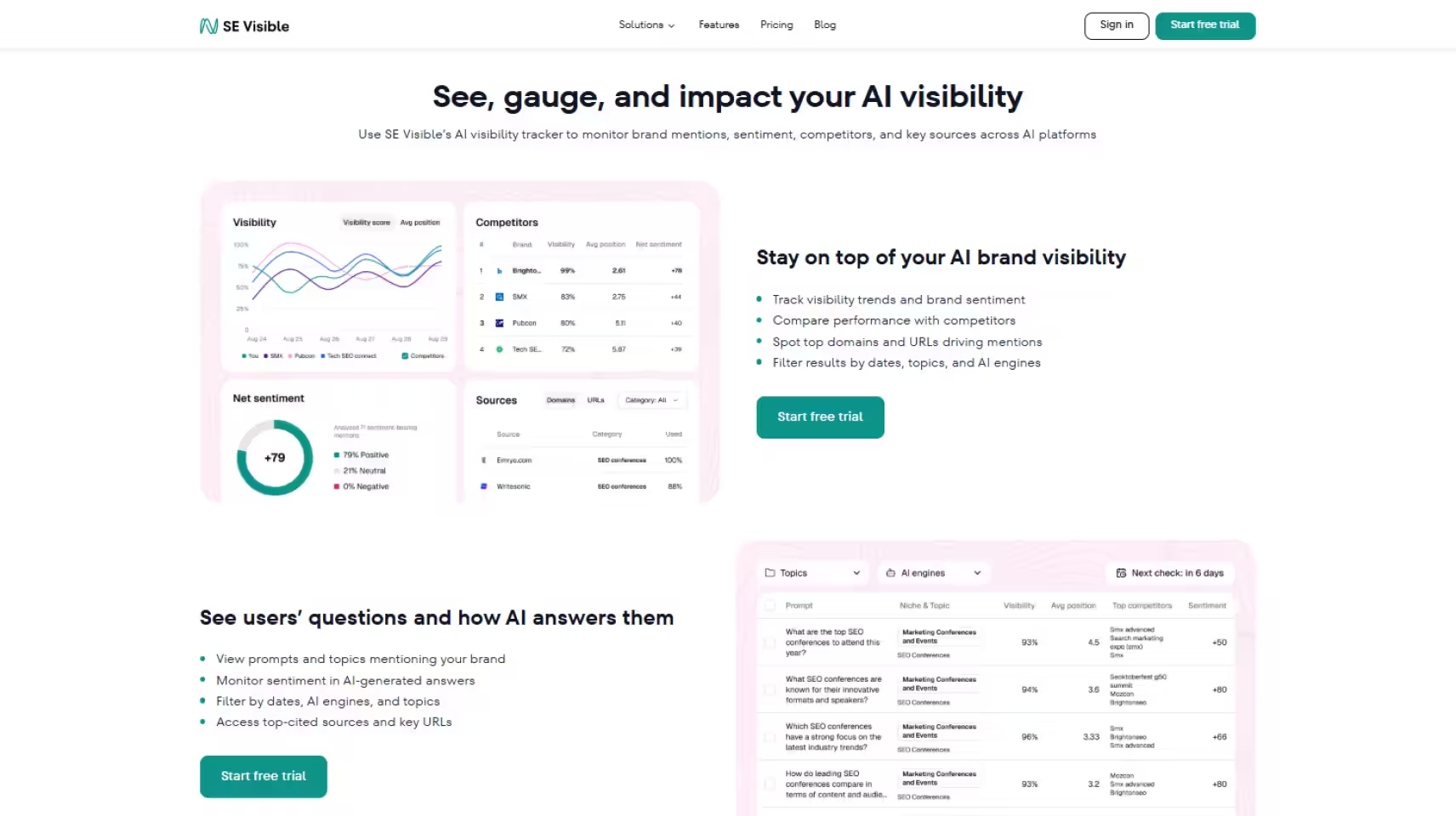
Best fit: Mid-market firms that want a standalone AI visibility platform at a lower price point than the enterprise players, without needing an existing SE Ranking subscription.
Engines: ChatGPT, Gemini, AI Mode, Perplexity, and AI Overviews, consistent across all three tiers.
Law firm use case: A firm without a dedicated GEO budget can start on Basic to monitor a handful of practice-area and city prompts, then scale up projects as the program grows. Multi-language configuration also makes it a fit for firms serving Spanish-speaking clients.
Metrics: Brand visibility trends, sentiment, competitor benchmarking, and source/domain analysis showing which sites AI cites alongside the firm.
Strength: Every tier tracks the same 5 engines rather than gating platforms behind higher pricing, unlike Otterly, Scrunch, and Ahrefs. It also includes unlimited user collaboration with no per-seat cost and a 10-day free trial.
Limitation: Prompt volume and analyzed-answer ceilings scale quickly with price. Basic's 200 prompts and roughly 12,000 AI answers analyzed monthly may not stretch far for a multi-location firm without moving up to Core or Plus.
Pricing basis: Basic 99/month (79 promotional), Core 189/month (151 promotional), Plus 355/month (284 promotional), all with a 10-day free trial.
Official source: visible.seranking.com

It’s Getting Harder to Rank in AI Search
It will cost you more to achieve the same AI visibility even three months from now. Take action to fix your AI visibility today.
Get Your Free Growth Plan
Which AI Visibility Tool Fits Your Law Firm?
Before you pay for anything, run a free baseline. Ask ChatGPT, Perplexity, and Google questions like "best personal injury lawyer in [city]" or "do I need a lawyer after a car accident?")
Grow Law's AI Visibility Report does this for you — for free — in about 2 minutes. It shows how often AI recommends your firm, which competitors appear ahead of you, and next steps.
That baseline tells you whether you have a real gap worth paying to track, before you commit to a monthly subscription.
If you need ongoing tracking, here’s how to find the right tool for you:
— Solo Attorneys and Small Firms
Start with the lowest-cost entry points: Otterly.AI Lite at $29/month or Peec AI Starter at $95/month. Both cover the highest-traffic engines (ChatGPT, Google AI Overviews, Perplexity) without asking you to commit to enterprise pricing before you know whether AI visibility is even a problem for your firm.
— Multi-Location Personal Injury or Criminal Defense Firms
You need to segment by city and practice area, and you need competitor benchmarking that goes beyond a single market.
Profound Growth or Scrunch AI Core give you multi-engine tracking and citation data across markets. Both cap out fast on prompt volume, though, so budget for Enterprise pricing once you're tracking more than a handful of cities.
— In-House Marketing Teams at Firms Already Running an SEO Platform
If your firm already pays for Semrush or Ahrefs, the AI Visibility Toolkit or Brand Radar add-on is the lowest-friction path. You get AI visibility inside the same dashboard your team already uses for rankings, without adding a new login or a new vendor relationship.
— Agencies and Enterprise Users Managing Multiple Firms
AirOps and SE Visible fit here differently.
AirOps is the right call if you want visibility data to trigger content production automatically. It routes citation gaps directly into a workflow that drafts and publishes pages.
SE Visible fits firms that want a straightforward, mid-priced platform with unlimited user collaboration. It works well for managing several client brands or locations at once without per-seat costs stacking up.
— Firms Serious About Board-Level Reporting
Profound and Scrunch AI both offer the deepest enterprise reporting in this category, but their entry tiers are narrow by design. Expect to move to custom pricing once you need full engine coverage, including Claude and Gemini, which both vendors gate behind their top tier.
We’ll say it again: start with the free baseline, confirm you have a real visibility gap, then match the tool to how many locations, practice areas, and AI engines you need to track.
— Confused? Let’s Run Through a Hypothetical.
Picture a single-location firm with a 2-person marketing team. They start with the free baseline, run 15 manual queries, and find they're cited in only 2.
Before paying for anything, they ask one question: would recurring, multi-model tracking change what they publish next month?
If the answer is yes, they move to a lean monitoring tool like Otterly.AI or Peec AI. If the answer is no, the free baseline was enough for now.
The AI Search Metrics Your Law Firm Must Track
Tracking software gives you data. What you do with that data is what generates leads.
For the 100+ clients currently on our roster, here are the metrics we track.
| Metric | What It Tells You |
|---|---|
| Citation rate | The percentage of target queries where AI mentions your firm at all. Your primary KPI, and the number every other metric supports. |
| Query coverage | How many of the questions your prospects actually ask, across every practice area and city you serve, you've actually built prompts around. A high citation rate on 10 queries means less than a high citation rate on 50. |
| Platform distribution | Which AI engines cite you and which don't. Strong performance in Google AI Overviews but nothing in ChatGPT points to a different content gap than the reverse. |
| Competitor gap | Queries where a competitor gets cited and you don't. This turns tracking data into a specific, fixable content to-do list. |
| Volatility | How much your citation rate swings week to week or month to month. Monthly tracking catches a decline before it shows up as fewer calls. |
| AI share of voice | Your mention frequency compared to competing firms on the same prompts. Tells you whether you're gaining ground or losing it, not just whether you show up in isolation. |
| Cited-source mix | Which websites and directories AI platforms pull from when answering legal questions in your market. Shows you where your GEO investment needs to go next. |
| Qualified leads | The metric that actually matters to the partners. Citation rate and share of voice are leading indicators. Qualified leads tied back to AI-driven traffic are the number that justifies the spend. |
We have to point this out: ChatGPT traffic inside Google Analytics 4 is useful, but it's incomplete. Many AI-driven journeys never generate a click at all.
A prospect can read a full answer inside ChatGPT, remember your firm's name, and later search for you directly or call the number they saw. GA4 does not attribute this back to that original AI mention.
Citation tracking catches what GA4 misses.
Ultimately, monitoring data on its own doesn't close gaps. It tells you where you're missing, not how to fix it.
Once you know which queries, platforms, and competitors are outperforming you, the next step is our AI search optimization for attorneys.
How to Compare AI Visibility Tools During a Trial or Demo
Every vendor demo will look impressive. The only way to tell tools apart is to run the same test across each one. Here's a 7-step checklist for any trial or demo.
- Build a fixed prompt set before you start. Write 20 to 30 real prompts across your practice areas and cities, the kind of questions prospects ask. Use the same list on every tool you evaluate. A vendor's own sample prompts are built to make their platform look good.
- Confirm regions and models match your market. Check which AI engines the tool tracks and whether it covers every city your firm serves. A tool that only tracks 3 engines or 1 region isn't comparable to one that covers 6, even if the sticker price looks similar.
- Look at raw answers and citations, not just scores. A visibility score is a summary. Read the actual AI-generated answer text and see exactly which competitors get named and which sources get cited. Scores can hide the details that actually explain why you're losing a query.
- Test competitor reporting specifically. Pull up a query where you know a competitor outperforms you and see whether the tool shows you why. Some platforms flag the gap; fewer explain the cause.
- Check what you can actually export. Ask whether you can pull raw data to CSV or into a reporting tool like Looker Studio, or whether you're locked into the vendor's own dashboard. If you need to report results to partners, exportability matters more than it looks like on a feature list.
- Judge actionability. Some tools stop at telling you where you're missing. Others turn that gap into a specific recommendation, a content brief, or a technical fix. Decide which one your team actually needs before you buy monitoring you won't act on.
- Calculate true cost at your real volume. Vendor homepages advertise entry-tier pricing. Your real cost depends on prompt volume, number of engines tracked, number of projects or locations, and number of seats. Price out your actual usage, not the cheapest tier on the pricing page.
— From Trial to Decision: One Firm's Comparison
Picture a multi-location personal injury firm running a trial across 3 vendors:
- Build the same 25 prompts covering their top practice areas and all 4 office cities
- Run them against each platform
- Compare the raw answers side by side
One tool shows they're cited in 6 of 25 queries. A second tool, tracking a wider set of engines, shows the real number closer to 9.
The firm exports both data sets, checks where competitors dominate, and only then prices out what full coverage across all 4 cities would actually cost once prompt volume and engine add-ons are factored in.
That comparison, not the vendor pitch decks, is what determines their final pick.
Would you like a deeper diagnostic than a trial run can give you? You can get a full technical check on AI crawler access, schema, and content structure in our AI search visibility audit for law firms guide.
Do Law Firms Need Paid AI Visibility Software?
Our honest answer: It depends on what you'd do with the data.
If your firm has one location, a tight marketing budget, and hasn't yet confirmed whether AI visibility is even a problem, start with the free baseline. Run 15 to 20 manual queries across ChatGPT, Gemini, and Perplexity, or use Grow Law's free AI Visibility Report.
If you’re already showing up consistently or your team has no bandwidth to act on a monthly report, paid software adds cost without adding action.
Paid software only earns its cost when you need monitoring regularly, and someone is actually going to use the data. That's true if any of the following apply to your firm:
- You have multiple locations or practice areas, so manual testing across every city and query combination is no longer realistic.
- You need to show partners or stakeholders a repeatable, trackable number, not a one-time snapshot.
- You're actively investing in GEO content and need to know whether it's working within weeks, not find out from a lead volume drop months later.
- You're losing ground to a competitor in AI answers and need to know exactly where the gaps are.
If none of those apply yet, the free baseline is the right starting point. Once they do, the tool you pick should match your firm's size, budget, and how many engines and locations you need to track.
Don't Just Track Your AI Visibility — Fix It
Knowing your AI mentions is a start. But it doesn't put a single lead in your pipeline.
Clio found that nearly 50% of legal consumers are already turning to AI to find lawyers or answers to their queries.
Grow Law is your growth partner as we enter this new era. We've helped law firms gain AI visibility with the exact schema fixes, Q&A content, and directory presence that AI platforms actually cite.
In an analysis of 100 Grow Law client campaigns, 98% received AI-driven qualified leads, 72% appeared in AI Overviews, and 28% were directly mentioned in AI-generated answers.
We built our law firm GEO services specifically to close the gap between "we're tracking our visibility" and "AI is actually sending us clients."
Start Here: Get Your Free Growth Plan
Frequently Asked Questions
-
What are AI visibility tools?
What are AI visibility tools — they're software platforms that track how often, and how favorably, AI systems like ChatGPT, Google AI Overviews, Gemini, and Perplexity mention your law firm when people ask legal questions. They differ from traditional SEO rank trackers, which measure where your website lands in Google search results rather than whether AI names your firm directly. Most track mentions, citations, sentiment, and how you compare to competing firms.
-
What are the best AI visibility tools for law firms?
What are the best AI visibility tools for law firms depends on your firm's size and goals. There's no single universal pick. Multi-location firms needing deep reporting often do better with Profound or Scrunch AI. Solo and small firms typically start with Otterly.AI or Peec AI for lower cost. Firms already running Semrush or Ahrefs can add AI visibility through those platforms directly instead of buying a new tool.
-
How do AI visibility tools work?
How AI visibility tools work comes down to this structured process: they run a set of prompts, which are questions your potential clients might actually ask, against AI platforms like ChatGPT and Perplexity on a recurring schedule. The tool records whether your firm gets mentioned, where you rank in the answer, what sentiment surrounds the mention, and which sources the AI cited. Over time, this builds a trend line showing whether your visibility is improving, holding steady, or declining.
-
How can law firms track AI visibility?
How can law firms track AI visibility — either manually or with software? Manual tracking means running your target queries directly in ChatGPT, Gemini, and Perplexity and logging the results by hand, which works for an initial baseline but doesn't scale. Software automates this across multiple engines and prompts on a recurring schedule. Most firms start manually, then move to paid tracking once they're actively investing in GEO content.
-
How to track law firm mentions in ChatGPT?
How to track law firm mentions in ChatGPT comes down to asking it the exact questions your prospects would, such as "who's the best personal injury lawyer in [city]." Note whether your firm appears, in what context, and which competitors show up instead. For ongoing tracking, tools like Otterly.AI, Peec AI, and Profound automate this process across a larger prompt set and log results over time so you don't have to check manually.
-
What metrics should law firms track in AI search?
What metrics should law firms track in AI search include citation rate, query coverage, platform distribution, competitor gap, volatility, share of voice AI, cited-source mix, and qualified leads. Citation rate and qualified leads matter most, since one shows whether AI mentions you at all and the other ties that visibility back to actual business results. The rest help diagnose why a gap exists and where to fix it first.
-
How to compare AI visibility tools?
How to compare AI visibility tools — run the same fixed set of 20 to 30 prompts across every platform you're evaluating rather than relying on vendor sample data. Check which regions and engines each tool covers, review raw answers and citations rather than summary scores, and confirm what you can export. Then calculate true cost at your actual prompt volume and location count, not the advertised entry price.
-
Do law firms need AI visibility software?
Do law firms need AI visibility software — this comes down to the scale and follow-through. A single-location firm just getting started can rely on a free baseline check. Firms with multiple locations, active GEO investment, or a need to report trackable numbers to partners generally get real value from paid tracking. If nobody on your team will act on the monthly data, though, the software adds cost without adding results.

Compare Your Practice Instantly
Stay Ahead of the Competition!
Compare your law firm's performance to Local competitors with our instant assessment tool
Get a clear picture of your firm's performance
Boost your online presence
Compare My Firm
Compare Your Practice Instantly
Stay Ahead of the Competition!
Compare your law firm's performance to Local competitors with our instant assessment tool
Get a clear picture of your firm's performance
Boost your online presence
Compare My Firm
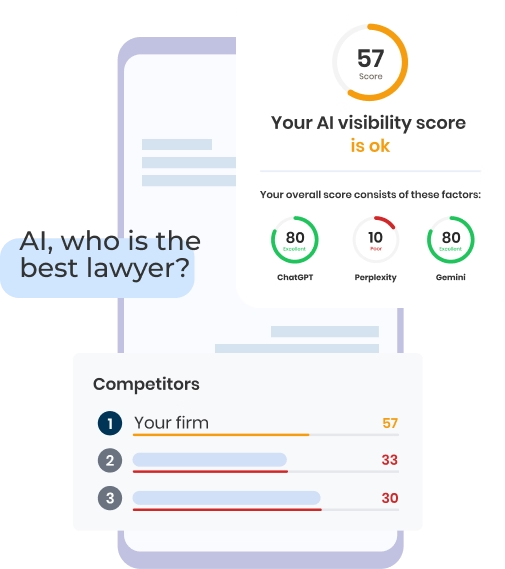
Check Your AI Visibility Instantly
Find Out What AI Is Telling Your Potential Clients
Run our free AI Visibility Report to:
See how often top AI tools mention your law firm
Spot which competitors show up first
Get the next steps to capture more cases
Run My Free AI Report
.avif)
.avif)
.avif)

