


Table of Contents
If you've tried an SEO agency before and watched it promise big, then trickle in low-quality leads, you're not alone.
Most immigration lawyers we talk to have been there. The problem isn't SEO. It's how it was executed.
SEO for immigration lawyers is a fantastic way to position your firm in front of people on Google actively searching for visa help, green card attorneys, or asylum representation.
We speak from experience. Our law firm SEO services have 4X’d qualified leads for SimVisa, a Chicago immigration client, while cutting cost per lead by over 90%.
And in 2026, SEO also gives you an edge on AI tools like ChatGPT. Today, we’ll break down our 8-step SEO blueprint.
Is SEO for Immigration Lawyers Mandatory in 2026?
Search engine optimization (SEO) for immigration lawyers is the practice of optimizing your law firm’s website so it ranks higher in search engines like Google. The goal is to get users actively searching for visas, green cards, and deportation defense to see your website first.
In 2026, SEO is vital.
In today’s climate, your clients are under tremendous pressure. Visa deadlines are real. Deportation fears are real. Family separations are real. When someone types "immigration attorney near me" into Google, they’re already desperate.
That urgency means traffic tends to convert at a higher rate.
Immigration SEO also carries unique complexity. Audiences here are often bilingual. Your content touches life-altering decisions, which means Google holds it to its highest scrutiny (YMYL — "Your Money or Your Life" standards).
If we had to pick just 3 benefits, here's what immigration SEO delivers:
We’ve seen proof of the power of SEO over the last 18 years. Across 100+ clients, our law firm SEO services have driven an average of 1,200% traffic growth and 1,080% more qualified leads.
Look at the immigration firm, SimVisa. With our SEO, their qualified leads grew 4 times. Cost per lead dropped by over 90%.
We simply build high-intent pages around family-based immigration, marriage green cards, and visa services, effectively replacing their referral dependency.
But if you’re starting from scratch, we recommend this 8-step blueprint.
Step 1. Build a Top-Performing Immigration Law Firm Website
Your website is your first impression with anxious clients seeking information. A strong, well-optimized site will massively boost your credibility and visibility on Google.
But there’s a science to SEO. You cannot phone this in.
- Make your navigation seamless and your content clear, concise, and engaging.
- Use high-quality images and videos; this means crisp headshots (minimum 800×600px), and a homepage intro video (60–90 seconds, professional lighting, no phone recordings).
- Add valuable content like blog posts, FAQs, and immigration resources, and update them every 3 months.
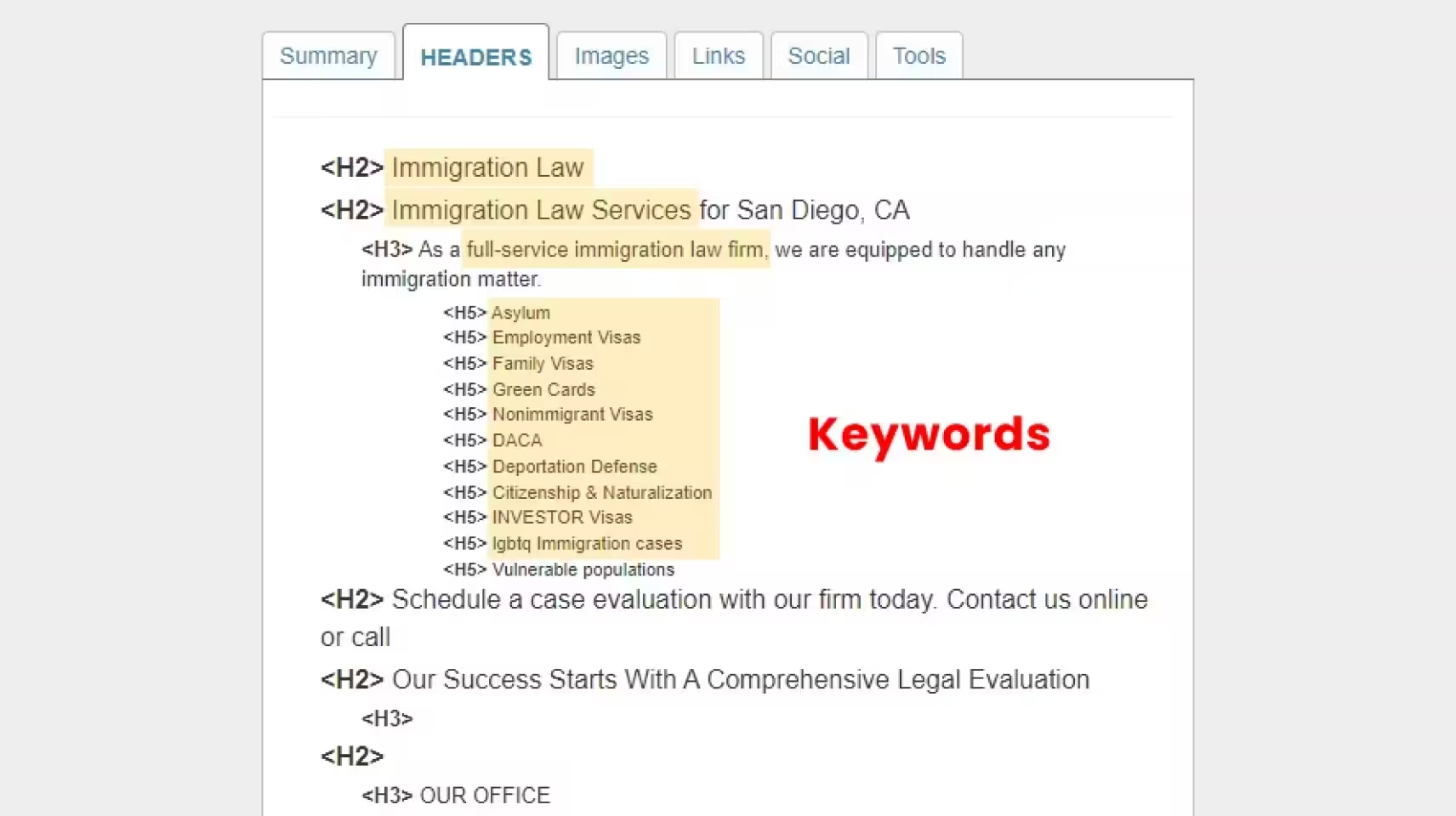
- Use keywords like “green card lawyer” or “citizenship attorney.”
- Ensure mobile-friendliness, as a large majority of your prospects will view your site on their phones.
- Make contacting you easy with click-to-call buttons, and also, promote your site on social media.

Pro Tip: For immigration firms specifically, make sure you use a multilingual website architecture. You need dedicated Spanish-language landing pages to speak to your audience (not Google-translated content, preferably use a real person).
Also, pay attention to Core Web Vitals. Google uses page speed, visual stability, and load responsiveness as direct ranking factors.
This is one of the most underused steps in SEO for immigration attorneys.
Need a little inspiration? Check out our list of the best immigration law firm websites in 2026.
Step 2. Choose the Right Immigration Keywords
Keyword research is about figuring out which words and phrases your potential clients are typing into Google.
Consider searches like "green card lawyer near me," "citizenship attorney in [city]," or "help with visa application."
But don’t just run with that. Confirm it. Use tools like Google Keyword Planner, Moz Keyword Explorer, and Ubersuggest to uncover high-volume, competitive immigration keywords.
When we choose keywords, we consider 3 factors:
- Relevance: The keywords you choose should be relevant to your business and the immigration law services you offer.
“Immigration lawyer for work visa" is relevant. "Immigration rules for international students" or "how to find jobs in the US as a foreigner" are not. - Competition: The more competitive a keyword is, the harder it will be to rank for it in the search engine.
- Search volume: The search volume for a keyword is the number of people who search for it each month.
A strong immigration attorney SEO strategy also prioritizes visa-specific long-tail queries like "H-1B transfer attorney," "DACA renewal lawyer," "asylum attorney near me," or "marriage green card lawyer in [city]."
These convert at a higher rate than broad terms because the person searching knows exactly what they need.
Want to master that balancing act? Our 2026 guide shows you the step-by-step process for keyword research for law firms.
— Best SEO Keywords for Immigration Law Firms
Show more

Step 3. Dominate with Local SEO to Get Found In Your Neighborhood
46% of all Google searches are for local information.
Immigration law SEO starts locally. It’s why you must rank high for terms like "immigration lawyer near me.”
Start by claiming and fully optimizing your Google Business Profile for lawyers. We consider this the lowest-hanging fruit.
You’ll also get into the Local 3-Pack with a great GBP. These are the 3 firms that appear at the top of Google Maps that pull 42% of all clicks.
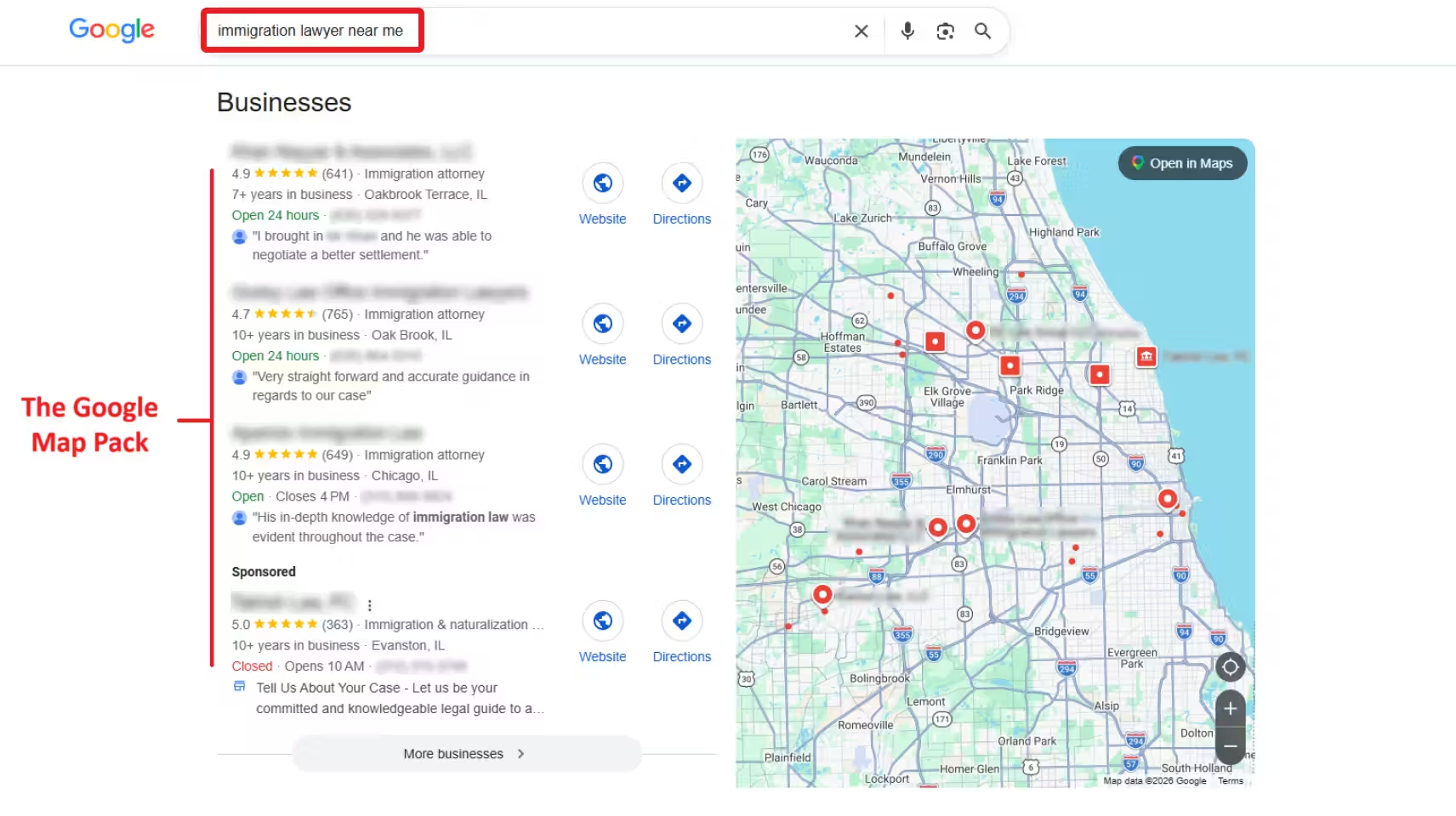
How do you build a complete local SEO foundation?
- Optimize your Google Business Profile: Add service categories, photos, hours, and a keyword-rich description.
- (Important) Add bilingual Q&A to your GBP: If your clients speak Spanish, answer common questions in Spanish directly on your profile to capture searches that your competitors miss.
- Use local keywords throughout your site: "Green card lawyer in Miami," "asylum attorney in Houston," "immigration lawyer in Chicago."
- Build location pages for surrounding cities: If you serve multiple areas, each city deserves its own optimized page.
- Generate reviews consistently: Aim to get at least 5 to 10 reviews every month.
- Display client testimonials on your site: Social proof converts hesitant visitors.
- Optimize for mobile: As we said earlier, most local searches happen on phones. Plus, Google indexes your site based on the mobile version.
Working with an experienced attorney SEO agency makes the difference between showing up and getting buried.
— From 8 Leads a Month to Over 55: Local SEO In Action
In 2024, we were contacted by an immigration firm in Miami. Their problem: "We're getting maybe 8 leads a month from our website, everything else is referrals.”
We looked into it and saw they had no GBP optimization, no location pages, and nothing targeting the Spanish-speaking clients.
Our team optimized their Google Business Profile with service categories and Spanish-language Q&A, built 6 location pages for surrounding cities like Hialeah, Doral, and Coral Gables, and set up a review generation system.
4 months later, they were in the Google Map Pack! Organic leads went from 8 to 55+ per month. Cost per consultation dropped from $310 to $74.
With SEO, those results are common. Another client, Yarborough Law Group, saw 2,938% organic traffic growth and a 452% increase in qualified leads, driven largely by local SEO.
Want to win every "near me" search? Read our complete local SEO for immigration lawyers guide.
Step 4. Create High-Quality Content That Attracts Immigration Clients
We've been doing immigration lawyer SEO for 18 years. The one thing we've seen consistently: Informative, well-structured attorney website content is one of the most effective investments you can make.
But it gets complicated. In 2026, with the rise of AI-driven search, Google's algorithm favors people-first content, especially for complex, high-stakes topics like immigration law.
You could see 67% more leads and 434% more indexed pages simply by posting good content regularly.
But what does “good” content look like? Use the Pillar-Cluster model.
These are groups of interconnected pages targeting a specific visa type, immigration process, or client situation.
Each Pillar links to each Cluster page (which links back to the Pillar and to each other), creating an interconnected hub.
— How Organic Traffic Jumped By 340% with the Pillar-Cluster Model
In 2025, we worked with a solo immigration attorney in Houston who focused on H-1B, L-1, and O-1 work visas. He wasn’t ranking for any long-tail immigration terms.
We built a 10-article cluster targeting specific visa queries: H-1B transfers, cap-exempt H-1Bs, RFE responses, and PERM labor certification timelines. Each article included an FAQ schema.
The results after 9 months: His organic traffic shot up 340%, 3 pages began ranking in the top 5 for H-1B-related queries, and (this one surprised even us!) his first consultation from blog content came in within 30 days.
Ready to start creating that high-quality content? Our 10-tip guide is packed with blog ideas for immigration attorneys.
Step 5. Use On-Page Optimization for Immigration Law Firms
On-page SEO is everything you can control directly on your website.
For search engine optimization for immigration attorneys, that means:
Your title tags must clearly describe the service and location. Meta descriptions should give someone a reason to click. Your URLs should be clean and readable: "/green-card-lawyer-miami" not "/page?id=2847."
As we said, your content must answer key immigration questions in plain English.
Link related pages together. For instance, your H-1B page should link to your work visa hub, which should link to your contact page. This keeps visitors moving through your site.
And do not underestimate visuals either. Pages with videos see 88% more time spent on them!
We also recommend using FAQ schema markup. Add a structured schema to your immigration FAQ pages to tell Google what questions you're answering. This increases your chances of appearing in featured snippets and AI-generated results.
For immigration clients Googling things like "how long does a green card application take" or "what happens if my visa expires," this is a real competitive edge.
The effort is worth it. SEO delivers an average ROI of $22 for every $1 spent, while PPC averages just $2. Need more guidance? Compare both in our PPC for immigration lawyers guide.
Step 6. Get Backlinks That Drive Immigration Clients to You
Backlinks are links from other websites to yours. And yes, they affect your SEO rankings.
When another website links to yours, it's telling Google: "This source is credible. This source is trustworthy. Show it more."
Take this seriously because backlinks are one of the top 3 ranking factors for Google.
In SEO for immigration lawyer success, not all backlinks are equal. A link from USCIS.gov or a state bar directory carries far more weight than a link from a random blog.
Luckily, as an immigration firm, you have access to some genuinely powerful niche link sources:
- USCIS.gov and government references: Being cited or listed alongside official immigration resources is a huge authority play.
- Immigration nonprofit organizations: Legal aid societies, refugee resettlement organizations, and advocacy groups often link to trusted attorneys.
- State bar directories: Foundational, high-authority links every firm should have.
- Ethnic media outlets: Spanish-language newspapers, community publications, and cultural organizations reach your exact audience and carry strong local authority.
- Legal directories: Avvo, FindLaw, Justia, and similar platforms (these rank on page one).
- Guest blogging on relevant legal or immigration sites.
- High-quality content: Guides, infographics, and videos that others naturally want to link to.
Track your backlink growth using tools like Ahrefs, and remember: strong backlink-building takes time, but it pays off.
Want a deeper dive? Read our blog on link building for lawyers and discover great techniques to become highly visible to the right clients.
Step 7. Run a Technical SEO Check to Keep Your Site Healthy
Even the best content won't rank if your website's technical foundation is broken.
This is the "under-the-hood" part of immigration law SEO company work that most clients never see. But it’s important.
Run a basic technical SEO check to ensure your site runs smoothly and is easy for search engines to crawl and index. Here's a simple checklist:
- Check that important pages are indexed: Search site:yourdomain.com on Google or use Google Search Console.
- Test your site speed and Core Web Vitals: Google measures loading speed, visual stability, and interactivity as direct ranking factors. Use PageSpeed Insights to see where you stand.
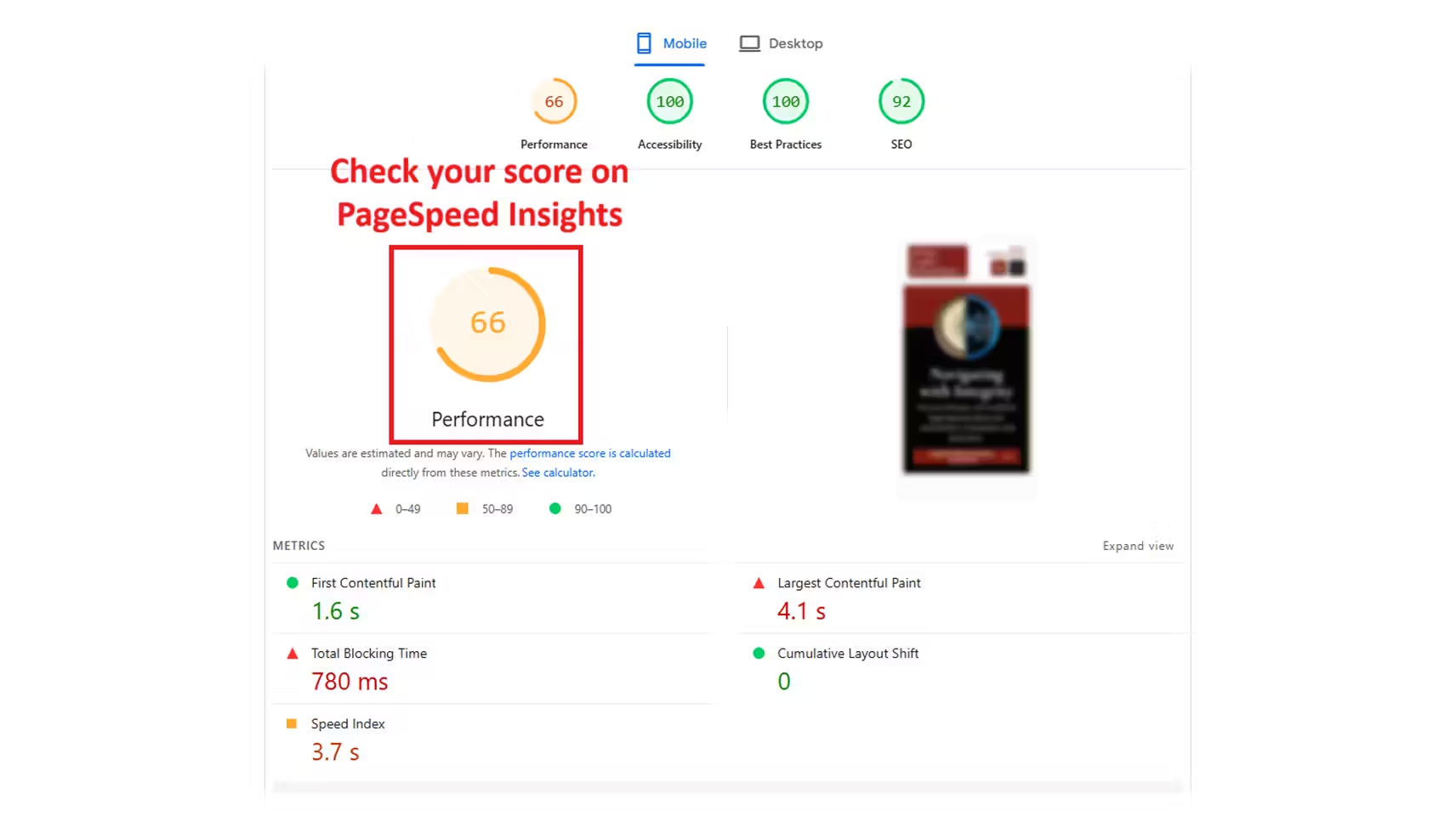
- Ensure mobile-friendliness: Google uses mobile-first indexing, meaning it ranks your site based on how it performs on a phone, not a desktop.
- Find and fix broken links: Use tools like Screaming Frog or Ahrefs to identify and repair any dead pages or broken internal links.
A quick review now can prevent major traffic losses later.
We speak from experience. Newlin Law Offices saw a 575% increase in organic traffic and a 408% marketing ROI within 10 months, driven in part by fixing the technical foundation their previous agency had ignored.
Step 8. Get Found in AI Search Results
We’ve all seen it. AI is rapidly controlling how clients find lawyers in 2026.
More and more immigration clients are turning to ChatGPT, Gemini, and Perplexity before they type a query into Google.
They're asking things like "do I need an immigration attorney for an H-1B transfer?" or "what's the difference between asylum and refugee status?"
AI answers by citing specific sources that it considers authoritative. The question is: is your firm one of them?
Appearing in AI-generated answers comes down to a few things:
- FAQ schema markup: Structured data that makes your content easy for AI systems to read and cite.
- Authoritative, specific content: AI tools favor sources that answer questions directly and completely, not generic overview pages.
- E-E-A-T signals: Experience, Expertise, Authoritativeness, and Trustworthiness. Attorney bios, credentials, case results, and cited sources all contribute.
- Consistent NAP data: Your name, address, and phone number should be identical across every directory and platform.
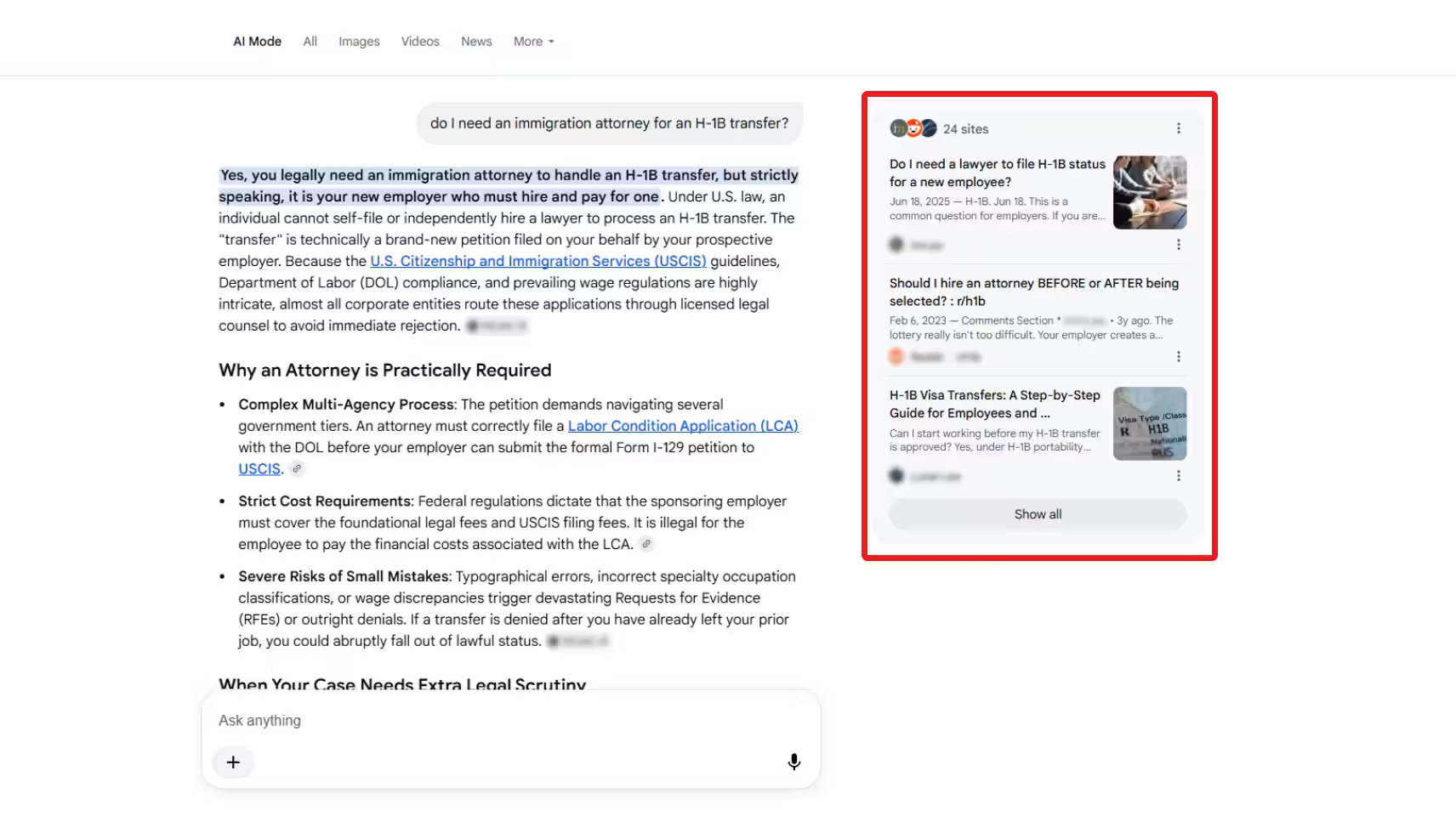
If you noticed that a couple of these are part of SEO, good eye! AI does heavily rely on your existing SEO foundation.
This is an emerging channel. Right now, most immigration firms aren't optimizing for it at all. That's an opportunity.
Want to see how visible your firm is in AI search results? Use our free AI Grader to find out where you stand and what to fix.
Next Step: Attract New Clients with Expert Immigration Law Firm SEO
Most immigration firms we talk to have tried SEO before. They got some early traction, then it plateaued. That's not what we do.
Our immigration law firm SEO programs are built around one thing: getting you qualified leads consistently and maximizing your ROI.
Just look at our clients. Omar Ochoa Law saw a 2,592% increase in organic traffic, a 1,000% increase in qualified leads, and a 3,345% marketing ROI.
Across our 100+ clients, typical ROI runs to 380% in the first 12 months.
From advanced technical optimization to authoritative, search-ready content, we handle everything SEO. Take a breather and focus on your cases.
The next step: Start with a free marketing audit. We'll show you where you stand, and how much you can grow in your market. No obligation to commit.
Frequently Asked Questions

Compare Your Practice Instantly
Stay Ahead of the Competition!
Compare your law firm's performance to Local competitors with our instant assessment tool
Get a clear picture of your firm's performance
Boost your online presence
Compare My Firm
Compare Your Practice Instantly
Stay Ahead of the Competition!
Compare your law firm's performance to Local competitors with our instant assessment tool
Get a clear picture of your firm's performance
Boost your online presence
Compare My Firm
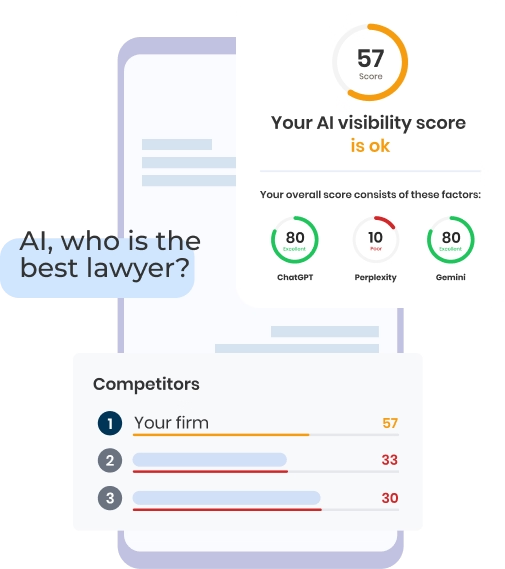
Check Your AI Visibility Instantly
Find Out What AI Is Telling Your Potential Clients
Run our free AI Visibility Report to:
See how often top AI tools mention your law firm
Spot which competitors show up first
Get the next steps to capture more cases
Run My Free AI Report
.avif)
.avif)
.avif)

