


Table of Contents
Search everywhere optimization is the practice of building your law firm's discoverable presence across every environment where a potential client might search for legal help — not just Google's traditional results page.
If you've been hearing this term and wondering whether it's marketing noise or something real, this guide is the answer. We'll cover what has actually shifted in how clients find attorneys, which channels now matter beyond Google, how to build AI search visibility and LLM presence for your firm, and where to start when you can't do everything at once.
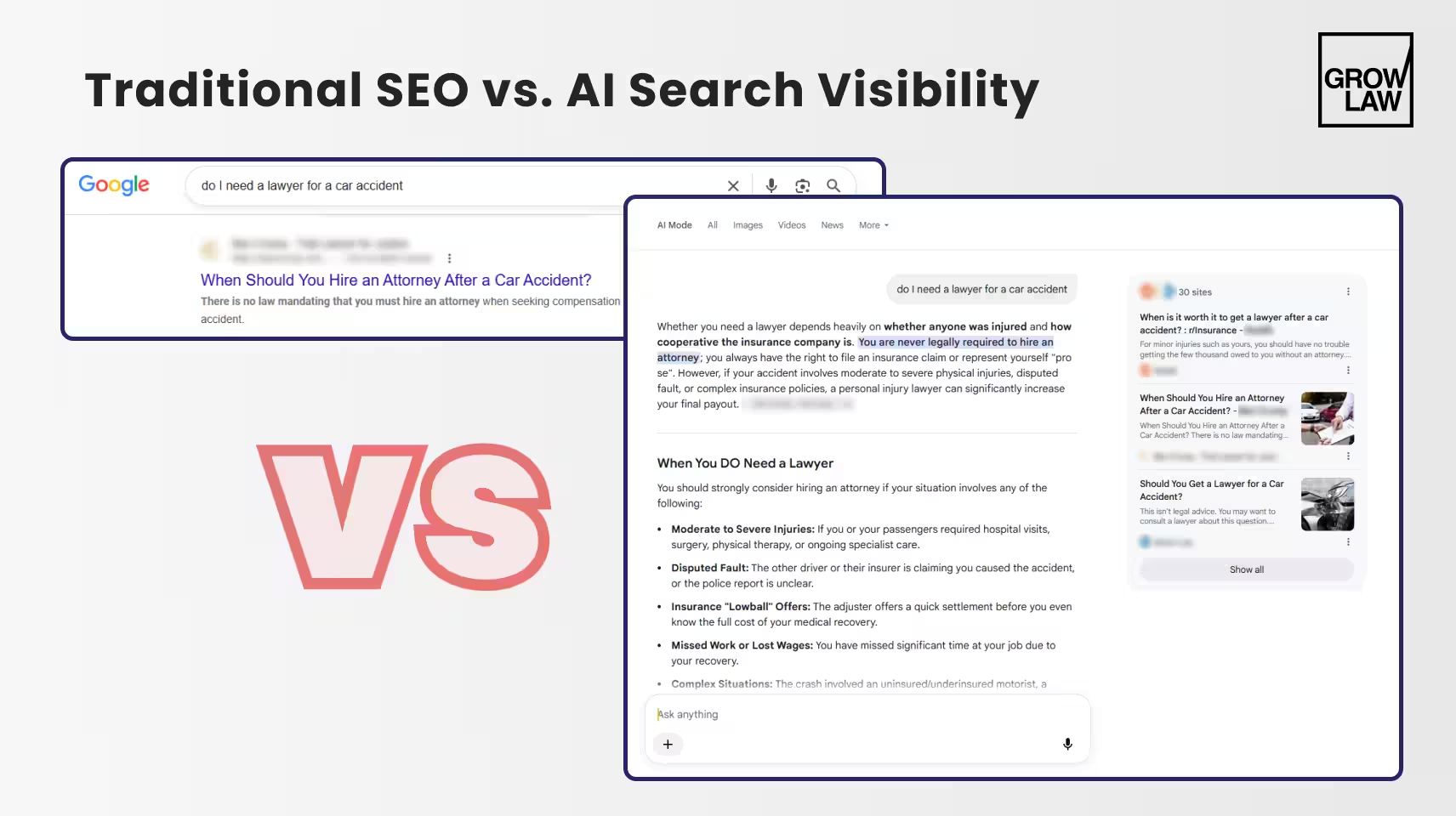
One thing to say clearly before we start: this is not an argument to abandon Google. Google still accounts for the majority of legal searches. But Google itself has changed — AI Overviews now appear at the top of search results for a significant share of legal queries, answering the question before anyone clicks a link. A firm that ranks on page one can still be invisible when a prospective client reads an AI-generated answer that names a competitor. That gap is what search everywhere optimization addresses.
See how AI visibility fits into a complete digital strategy → Generative engine optimization for law firms
The Search Landscape Has Changed: Why Google Alone Is No Longer Enough
Most law firm clients still find their attorney through Google. That is not in dispute. What has changed is what happens on Google's results page. AI Overviews — the AI-generated summaries that appear above organic results — now show up on approximately 20% of all Google searches.
For legal queries specifically, that figure is 23.6%. These summaries answer the user's question directly, often without linking to a website. Sixty percent of users who receive an AI-generated answer never click through to any website at all.
A firm that ranks number one for "divorce attorney Dallas" can now sit below an AI Overview that names three other firms as recommended divorce attorneys in Dallas. The ranking is real. The visibility is gone. AI search visibility has become a separate outcome from traditional search rankings, and the tactics that produce one do not automatically produce the other.
Beyond Google, a growing segment of prospective legal clients — especially under 40 — start their search somewhere else entirely. They ask ChatGPT "who is the best personal injury lawyer in Chicago." They search YouTube for "what happens if I refuse a breathalyzer." They look up immigration attorneys on TikTok because a friend told them that's where they found theirs. These are not fringe behaviors. They are increasingly common paths to hiring a lawyer, and most law firms have zero presence on any of them.
Search everywhere optimization is the framework for addressing all of these simultaneously — not by abandoning what works, but by extending the firm's presence to the full range of places where its clients are actually looking.
What Search Everywhere Optimization Means for Law Firms
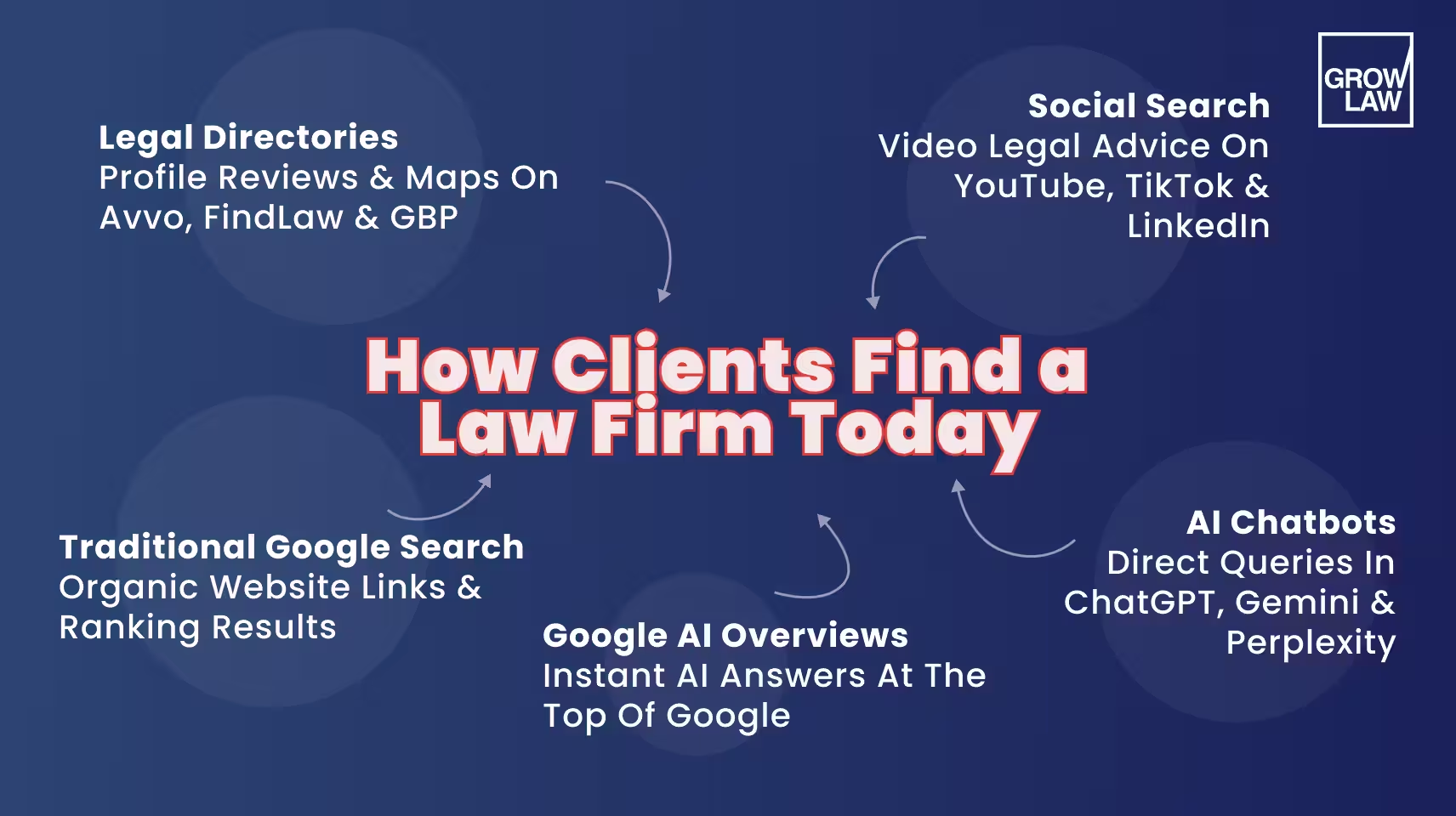
Search everywhere optimization for law firms means managing your firm's presence across five distinct environments where prospective clients search. Each environment has different ranking signals, different content formats, and different relationships to the others.
The five environments:
- First, Google traditional search — still the highest-volume channel.
- Second, Google AI (Overviews and AI Mode) — sitting above traditional results for a significant share of legal queries.
- Third, AI chatbots — ChatGPT, Gemini, Perplexity, Claude, and Microsoft Copilot, where an increasing number of people ask legal questions and request attorney recommendations.
- Fourth, social search — primarily YouTube, but also TikTok, LinkedIn, and Instagram for specific practice areas and demographics.
- Fifth, legal directories — Avvo, Justia, Martindale-Hubbell, and Super Lawyers, which function as both independent lead sources and as the primary citation data that AI systems use to verify and recommend law firms.
These five environments are not independent. A firm's presence on legal directories directly improves its AI citation probability. A well-structured website with FAQ blocks and attorney attribution improves both traditional Google rankings and AI Overview inclusion. Content built for YouTube search also gets indexed by Google and referenced by AI systems. The environments compound on each other when the underlying authority signals are strong, and they fail together when they're weak.
Search everywhere optimization is not about being everywhere for its own sake. It is about being present in the specific environments where your target clients actually search — and building the underlying authority that makes all of those presences mutually reinforcing.
How to Build AI Search Visibility and LLM Visibility for Your Firm
AI search visibility — appearing in Google AI Overviews, ChatGPT answers, Gemini responses — is not produced by a single tactic. It is produced by a set of authority signals that AI platforms use when deciding which law firms to cite. Understanding those signals is what distinguishes firms that appear in AI answers from firms that do not.
The most important signal: off-site brand mentions. Research analyzing millions of AI-generated responses found that mentions of a business on authoritative third-party sites had a 0.67 correlation with appearing in AI results — the strongest correlation of any factor studied. For law firms, that means your profiles on Avvo, Justia, Martindale-Hubbell, Super Lawyers, and bar association sites are not just directory listings. They are the primary data source that AI systems use to verify that your firm exists, is credentialed, and is recommended by reliable sources.
After off-site mentions, the other factors that move LLM visibility: Structured content — FAQ blocks with question-based H3 headings, direct answer formatting, content that can be cleanly extracted by AI. Attorney-attributed pages — bylines with bar numbers, jurisdiction notes, visible credentials. Schema markup — LegalService, FAQPage, Person, and Organization schema tell AI systems what your firm does and who runs it. Topical authority clusters — AI platforms favor firms whose websites cover a topic comprehensively, not just with one optimized page.
At Grow Law, when we audit a firm's AI visibility, we look at which legal questions trigger Google's AI Overviews in the firm's practice areas and city, what ChatGPT, Gemini, Claude, and Copilot actually say when asked to recommend attorneys in the firm's market, and where the gaps are between the firm's current profile and the firms that AI is currently recommending. That audit is the starting point for any AI visibility campaign.
A personal injury firm we worked with held positions 1–3 on Google for their primary practice area keywords. Organic traffic was strong. But a GEO audit showed that ChatGPT and Google's AI Overview were not mentioning the firm when prospects asked for attorney recommendations in their city — a competitor with lower traditional rankings but more complete legal directory profiles and active Q&A contributions on Avvo was appearing instead. After building out their directory presence, adding structured FAQ content to practice area pages, and publishing attorney-attributed answers on legal forums, the firm began appearing in AI-generated answers for their primary queries within 10 weeks.
See how Grow Law builds AI visibility for law firms → AI search visibility for attorneys
Social Search SEO: Which Platforms Actually Matter for Law Firms
Social search — using social media platforms as search engines rather than as feeds — is a real behavior, not a trend. The question for law firms is not whether to engage with it, but which platforms are worth the effort and which ones aren't.
YouTube is the highest-value social search platform for law firms, and it is not particularly close. It is the second-largest search engine in the world and the primary source of video content that Google indexes and references in AI Overviews. Questions like "what happens at a DUI hearing," "how long does a personal injury case take," and "do I need a lawyer for a car accident" all have significant YouTube search volume. An attorney who publishes clear, factual, two-to-four minute answers to these questions captures search traffic that neither a blog post nor a practice area page can compete for.
LinkedIn is the second most valuable platform for legal, specifically for business law, employment law, and estate planning — practice areas where decision-makers research attorneys before reaching out. Attorneys who publish substantive posts about relevant legal topics on LinkedIn are visible to exactly the professional demographic that hires business attorneys and estate planners.
TikTok and Instagram Reels matter for specific practice areas with younger client demographics: immigration law, family law, criminal defense. Not because the content goes viral, but because younger clients specifically search these platforms for legal information in a way that older demographics do not.
What not to prioritize: Twitter/X and Facebook for organic reach. Both platforms's algorithms actively suppress content with external links. The organic reach is negligible for most law firms.
An immigration law firm we worked with had no social search presence despite serving a demographic — younger immigrant clients — that heavily uses TikTok and YouTube to search for legal information. A competitor was producing short-form videos explaining the immigration process in plain language and appearing in search results for queries like "immigration lawyer consultation what to expect." After the firm produced eight short explainer videos repurposed from existing blog content and published them to YouTube and LinkedIn, they began receiving 12–15 additional monthly inquiries from social search channels within 60 days.
Brand Visibility SEO: Building the Off-Site Signals AI Systems Read
Brand visibility in the context of LLM search is not about social media follower counts or brand awareness campaigns. It is about the breadth and consistency of your firm's mentions on authoritative third-party sites — the sites that AI systems trust as sources of accurate information about legal professionals.
For law firms, the highest-leverage off-site signals are: complete, verified profiles on Avvo, Justia, Martindale-Hubbell, Super Lawyers, Lawyers.com, and HG.org; listings in state and local bar association directories; mentions in local media (news articles quoting the attorney, local bar event coverage); and client reviews on Google, Avvo, and Yelp. Each of these represents a third-party site saying, in effect, "this firm exists, does legal work, and is credentialed." AI systems trained on legal data treat these as verification sources.
Client reviews deserve separate attention. A review on Google or Avvo is not just a trust signal for humans considering whether to call. It is an entity-verification signal for AI systems deciding whether to mention the firm. A firm with 47 reviews on Google and an active Avvo profile is more likely to appear in an AI-generated response recommending attorneys than a firm with 6 reviews and an unclaimed directory profile, even if the traditional SEO metrics are similar.
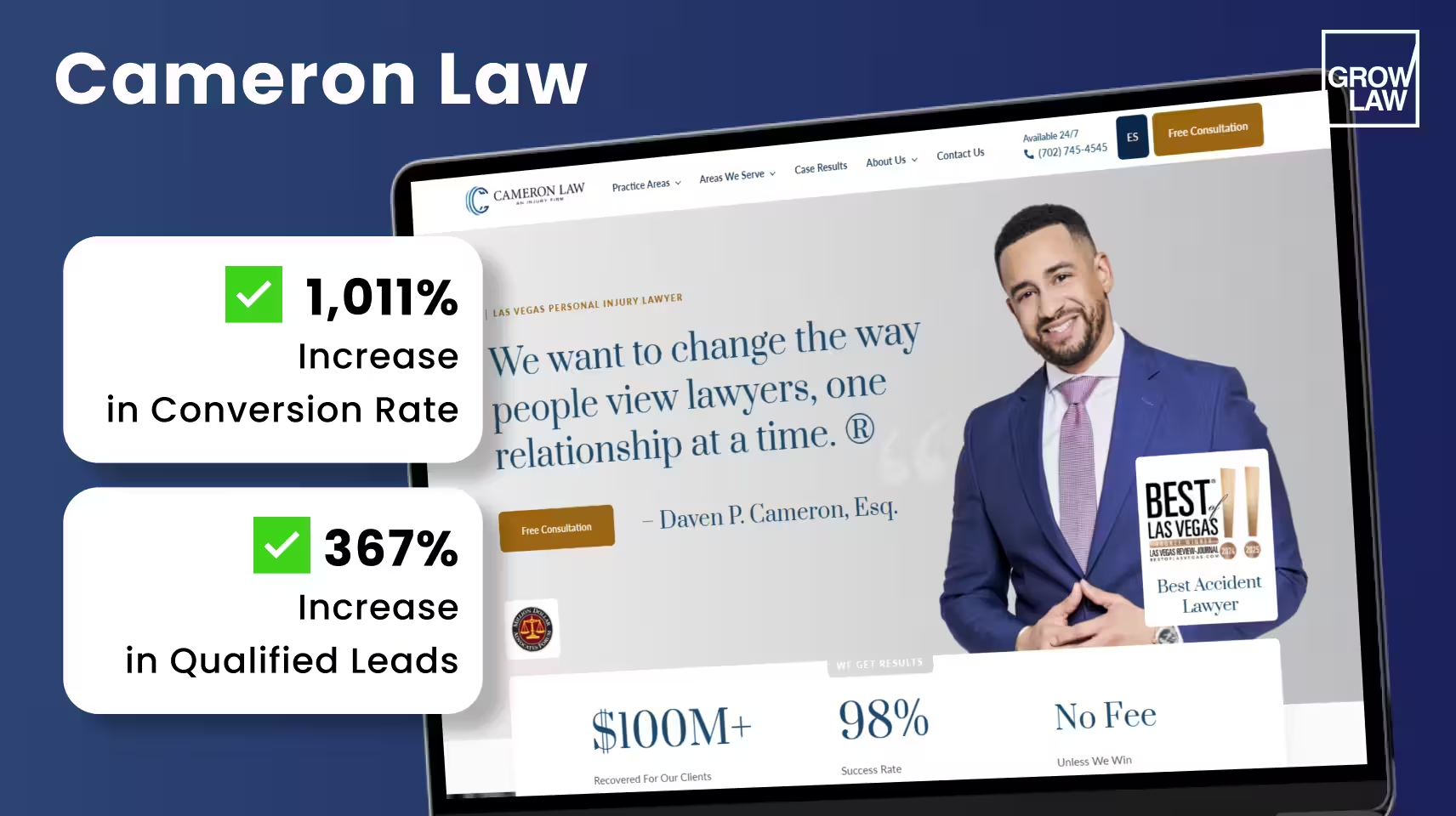
Cameron Law came to us with strong representation but inconsistent digital presence — limited directory coverage, sparse review volume, and no structured content optimized for AI extraction. After building out their brand visibility across directories, improving their review collection process, and restructuring their content for AI citation eligibility, they saw a 367% increase in qualified leads and a 1,011% lift in conversion rate. Multi-channel brand presence converts at higher rates than a single-channel ranking because the firm has already been verified by multiple independent sources before the prospect ever picks up the phone.
How to Prioritize: Where to Start When You Can't Do Everything at Once
Most law firms cannot overhaul five search channels simultaneously. The firms that try usually spread themselves thin and see mediocre results across all of them. A sequenced approach produces better outcomes.
Start with the Google foundation. If your traditional search rankings are weak, your AI Overview presence and LLM citation probability will be weak too — AI systems primarily cite content that Google already trusts. Before investing heavily in AI-specific or social search tactics, make sure your practice area pages are built correctly, your technical SEO is clean, and your existing organic rankings are as strong as they should be. Our guide to optimizing a law firm for Google AI results explains how to apply this in practice.
Second, claim and complete your legal directory profiles. This is the highest-leverage step per hour of effort in the entire search everywhere optimization framework. Avvo, Justia, Martindale-Hubbell, Super Lawyers, HG.org — each complete, verified profile directly improves your AI citation probability. Most firms have unclaimed or incomplete profiles on at least three of these. This is a week's work, not a months-long project.
Third, add FAQ and structured content to your existing practice area pages. FAQ blocks with question-based H3 headings make your existing pages eligible for Google AI Overviews without requiring new content. This is the fastest path to appearing in AI search for queries your pages already rank for.
Fourth, start YouTube with one practice area. Two to four short explainer videos per month — answering the specific questions your prospective clients ask before they hire a lawyer — is enough to begin capturing social search traffic. Start with your most important practice area and expand from there.
Fifth, expand to additional social platforms only after the first four steps are stable. Adding TikTok or LinkedIn before your directory presence and FAQ content are solid is putting distribution ahead of authority. The authority signals have to come first.
Sequoia Legal followed this sequence. They came to us with strong offline credentials and a weak digital footprint — no structured content, incomplete directories, no social search presence. After building out their practice area page cluster, completing their directory profiles, and establishing a content authority structure, their organic traffic grew by 6,700% and qualified leads increased by 276%. The growth came from the compounding effect of all five channels reinforcing each other, not from any single tactic.

See how Grow Law builds multi-channel search presence for law firms → Law firm GEO services
Summary
- Search everywhere optimization extends your firm's presence beyond Google to Google AI Overviews, AI chatbots (ChatGPT, Gemini, Perplexity), social search (YouTube, LinkedIn, TikTok), and legal directories.
- AI Overviews now appear on ~20% of all Google searches and 23.6% of legal queries. Sixty percent of users who receive an AI answer never click through. Traditional rankings no longer guarantee visibility.
- The strongest signal for LLM visibility is off-site brand mentions — complete directory profiles on Avvo, Justia, and Martindale-Hubbell directly improve AI citation probability.
- YouTube is the highest-value social search platform for most law firms. LinkedIn matters for business and employment law. TikTok is relevant for practice areas with younger demographics.
- Start with Google foundation, then directories, then FAQ content on existing pages, then YouTube, then additional social platforms.
- All five environments compound on each other when authority signals are strong. The sequence matters because weak foundations undermine everything built on top.
FAQ

Compare Your Practice Instantly
Stay Ahead of the Competition!
Compare your law firm's performance to Local competitors with our instant assessment tool
Get a clear picture of your firm's performance
Boost your online presence
Compare My Firm
Compare Your Practice Instantly
Stay Ahead of the Competition!
Compare your law firm's performance to Local competitors with our instant assessment tool
Get a clear picture of your firm's performance
Boost your online presence
Compare My Firm
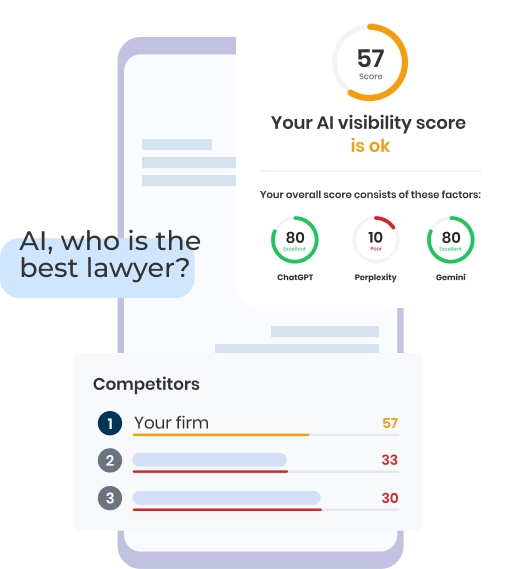
Check Your AI Visibility Instantly
Find Out What AI Is Telling Your Potential Clients
Run our free AI Visibility Report to:
See how often top AI tools mention your law firm
Spot which competitors show up first
Get the next steps to capture more cases
Run My Free AI Report
.avif)
.avif)
.avif)

