


Table of Contents
Google AI Search and law firm SEO are now connected more directly than ever. In its May 19, 2026 announcement, "A new era for AI Search," Google described a major upgrade to Search: an AI-powered Search box, AI Mode, follow-up questions from AI Overviews, and new agent-like features designed to help users move through longer, more complex tasks.
For law firms, this is not just a product announcement. It changes how potential clients may discover attorneys, compare options, and move from a legal question to a consultation.
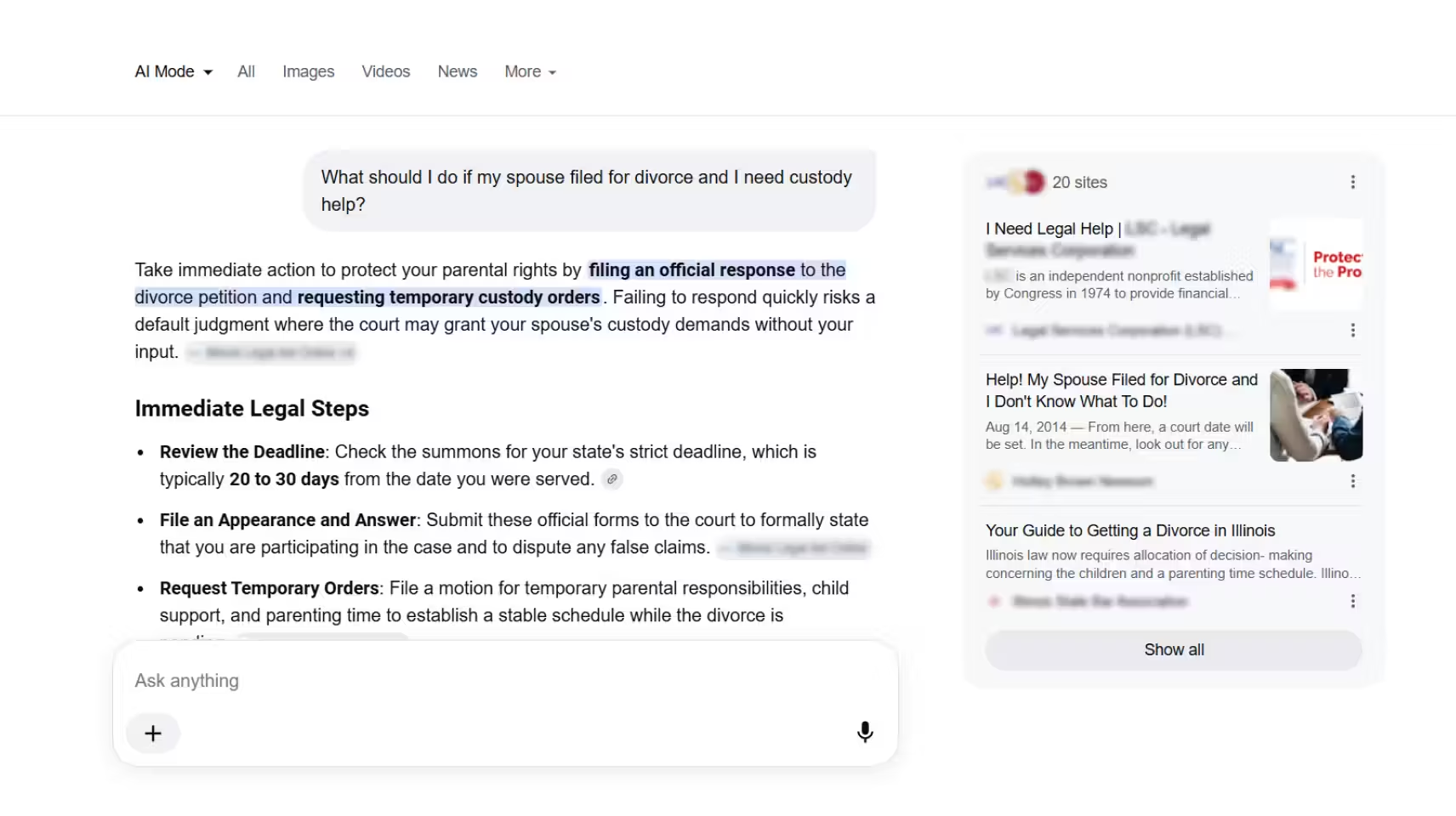
Instead of typing only short keywords like "divorce lawyer near me," "estate planning attorney," or "criminal defense lawyer," users can now search in a more natural way: "What should I do if my spouse filed for divorce and I need custody help?" or "Do I need a lawyer after an accident if the insurance company already contacted me?"
Google’s AI-powered experience is built to handle these longer, situation-based questions.
What Google Announced
- A new intelligent AI-powered Search box, which Google called its biggest Search box upgrade in more than 25 years.
- AI Mode as a deeper, conversational layer of Search, powered by advanced Gemini model capabilities.
- Follow-up questions from AI Overviews into AI Mode, so users can continue researching without starting over.
- Search agents that can monitor information and help users with ongoing tasks.
- Generative UI and richer result formats designed around the user’s specific question.
The important point for legal marketing: Google is making Search less keyword-only and more task-based.
That means visibility will depend not only on ranking for isolated keywords, but also on whether a firm’s website and wider digital footprint help answer the kinds of questions clients actually ask.
Why This Matters for Law Firms
Legal search is already high-intent. People usually search when they have a problem, a deadline, a risk, or a decision to make. AI Search pushes that behavior further: users may ask detailed questions before they ever click a website.
That makes legal visibility more layered. A firm may need to appear across organic search, local results, AI-generated answers, directories, review platforms, “People Also Ask,” and authoritative supporting content. One ranking is no longer the full picture.
Grow Law’s Strategic Response
Grow Law’s approach is moving toward broader search presence, not just traditional position tracking. The focus is on building systems that make a law firm more visible, more credible, and more useful across the full search results experience.
To support this shift, Grow Law is connecting SEO strategy with practical AI visibility checks. Law firms can use the Grow Law AI Search Visibility Tool to see how their brand appears in AI-driven search experiences and where competitors may already be gaining visibility. For firms that need a broader strategy, Grow Law’s Generative Engine Optimization service focuses on improving visibility across AI Search, topic clusters, local signals, and the wider search ecosystem.
| Focus area | What it means for law firms |
|---|---|
| Cluster-based SEO | Building topic clusters around practice areas, client questions, local intent, and decision-stage content instead of relying on isolated service pages. |
| Top X presence | Tracking whether a firm appears in the most valuable parts of the results page, including organic listings, local packs, AI surfaces, directories, and supporting sources. |
| AI visibility monitoring | Using software, workflows, and audits to identify where competitors are appearing and where a client’s visibility can be improved. |
| Practice-area depth | Strengthening content around real legal scenarios across practice areas such as family law, estate planning, immigration, criminal defense, employment law, and personal injury. |
| Authority signals | Improving the structure, clarity, internal linking, local signals, and content quality that help Google understand what the firm does and why it should be trusted. |
The Key Takeaway
Google’s May 2026 update makes one thing clear: Search is becoming more conversational, more AI-driven, and more competitive. For law firms, SEO should now be measured by more than a single ranking position.
The firms that win will be the ones with strong topical authority, structured practice-area clusters, trusted local signals, and visibility across the full search ecosystem. Grow Law is adapting its strategy around that shift: helping law firms build stronger SEO foundations, improve AI Search visibility, and compete for Top X presence where future clients are actually looking.

Compare Your Practice Instantly
Stay Ahead of the Competition!
Compare your law firm's performance to Local competitors with our instant assessment tool
Get a clear picture of your firm's performance
Boost your online presence
Compare My Firm
Compare Your Practice Instantly
Stay Ahead of the Competition!
Compare your law firm's performance to Local competitors with our instant assessment tool
Get a clear picture of your firm's performance
Boost your online presence
Compare My Firm
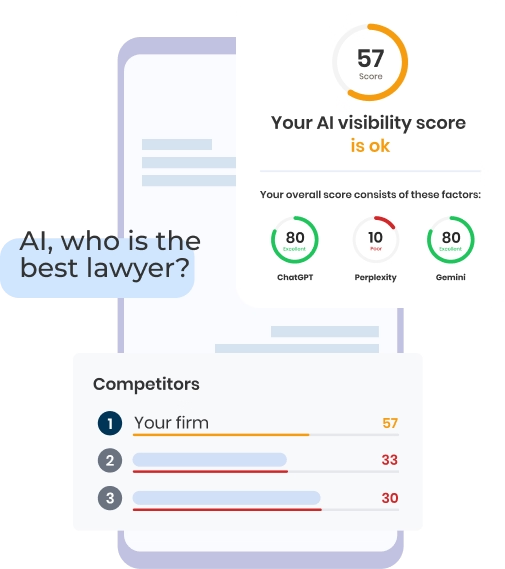
Check Your AI Visibility Instantly
Find Out What AI Is Telling Your Potential Clients
Run our free AI Visibility Report to:
See how often top AI tools mention your law firm
Spot which competitors show up first
Get the next steps to capture more cases
Run My Free AI Report
.avif)
.avif)
.avif)

