


Table of Contents
Lawyer advertising rules go beyond the internet. They have real-world consequences.
In fact, these advertising violations account for 17% of all disciplinary actions, as per the ABA.
That means calling yourself the "best" divorce lawyer in the city or guaranteeing a case outcome in your ad headline could be grounds for a bar complaint or license suspension.
In the next 10 minutes, we’ll break down the top PPC management for law firm rules every lawyer must follow in 2026. You’ll walk away knowing how to stay compliant, protect your reputation, and successfully grow your practice.
What Are Lawyer Advertising Rules & Why They Matter in 2026
Lawyer advertising rules are the ethical and legal standards that govern how you, as an attorney, can promote your services. They apply to everything. Your TV spot, Google Search Ad, Instagram reel, and even the AI-generated copy your agency uploads to your website.
The foundation is the American Bar Association's Model Rules of Professional Conduct, specifically Rules 7.1 through 7.5. These set the baseline for what every attorney in the country must follow. On top of that, your state bar adds its own layer.
In 2026, the volume of touchpoints has exploded. A single law firm might be running Google Ads, posting on LinkedIn, collecting reviews on Avvo, and publishing AI-drafted blog content, all simultaneously. Each one is an advertising surface. Each one is a potential violation.
That's why advertising for lawyer violations is a surprisingly common trigger for bar complaints year over year.
ABA Model Rules Every Law Firm Advertiser Must Know
The ABA Model Rules of Professional Conduct set the floor for attorney advertising nationwide.
At a glance, here's what each rule means for the campaigns you're running.
These attorney advertising rules apply equally to your TV spot, your Google Search campaign, your Facebook retargeting ad, and the bio on your Avvo profile.
What Lawyers Cannot Say in Their Ads (False and Misleading Claims)
Rule 7.1 is the easiest attorney advertising rule to violate. It states, "A lawyer shall not make a false or misleading communication about the lawyer or the lawyer's services."
In practice, that means the problem isn't always an outright lie. It could even be a headline that overpromises.
The ABA further explains, "A communication is false or misleading if it contains a material misrepresentation of fact or law, or omits a fact necessary to make the statement considered as a whole not materially misleading."
Even a technically true statement can violate Rule 7.1 if it omits context that would change how a prospective client understands it.
— The "Expert" and "Specialist" Problem
Rule 7.2(c) is explicit: you cannot "state or imply that a lawyer is certified as a specialist in a particular field of law" unless you've been certified by an ABA-accredited or state-approved organization, and you identify that organization in the communication.
It applies to your Google Ads headlines, your website practice area pages, your LinkedIn bio, and even your Facebook ad copy — everything.
These advertising by lawyer headlines would violate the rule:
- "Chicago's Top Divorce Specialist — Call Now"
- "Expert DUI Defense Attorney — Free Consultation"
- "Certified Immigration Law Expert"
Unless the certification exists and is named, none of these advertising for lawyer headlines are compliant.
— Other Claims That Cross the Line
Beyond the specialist prohibition, Rule 7.1 catches a wide range of common ad copy. Here's what to avoid across channels:
Google Ads headlines:
- "Guaranteed Results — Personal Injury Lawyer"
- "We Win or You Don't Pay" (unless your fee structure actually works this way)
- "Best Car Accident Attorney in Dallas"

Instagram and social ad copy:
- "We've never lost a case" (unverifiable and almost certainly false)
- "Get your settlement" (implies a guaranteed outcome)
- "The #1 family law firm in Florida" (superlative with no verifiable basis)
Email subject lines:
- "We can get your charges dropped"
- "Your case is worth more than you think"
- "Guaranteed defense — open to find out how"
— The Price You Pay for Violating the Attorney Advertising Rules
An Illinois family law firm approached us in 2024, running Google Search Ads with the headline "Best Divorce Lawyer in Chicago — Guaranteed Results." They told us the campaign ran for 6 weeks before a bar complaint was filed. Ads were pulled, and $12,000 in spend paused.
Our team did a full ad copy audit and compliance rewrite, including removing outcome guarantees and updating disclaimers. The revised campaigns went live and it paid off. Their cost per lead dropped from $320 to $190 within 60 days.
Like you just saw, a compliant advertising for lawyer campaign, built around what your firm delivers, converts better than one making promises it can’t keep.
Get a Complimentary Marketing Audit
Find out how much demand there is in your geographical area
Request Audit
.avif)
Testimonials, Reviews, and Social Proof — Compliance Rules
In legal marketing, client testimonials are one of the most powerful trust signals. 98% of potential customers will read your reviews.
But they can easily be mishandled.
Rule 7.2(b) draws a hard line: "A lawyer shall not compensate, give or promise anything of value to a person for recommending the lawyer's services."
That means you cannot offer gift cards for Google reviews, referral discounts in exchange for testimonials, or even incentivized Avvo ratings, regardless of how indirectly the arrangement is structured.
— The Edited Review Problem
The prohibition goes further than compensation.
As per the ABA’s advertising rules for attorneys, you cannot write, reword, or materially edit a client's testimonial to make it sound stronger than the original. The review must reflect what the client actually said, in their own words.
In 2024, a PI firm out of Florida came to us, having learned this the hard way. They used edited client testimonials on their website and in Facebook ad creative, paraphrasing quotes to sound more compelling than the original reviews.
After a state bar review, the firm was required to remove all modified testimonials, rewrite their ad copy, and add outcome disclaimers across every channel.
The irony is this: Authentic, unedited testimonials with proper disclaimers consistently outperform fabricated ones. Prospective clients can smell a rat. They know the difference between a real client voice and polished marketing copy.

— Disclaimer Requirements
Any testimonial used in advertising by lawyers, on your website, in a Google Ad, in a Facebook campaign, or on your Avvo profile needs to make clear that past results do not guarantee future outcomes. This applies to:
- Client success stories featured in ad creative
- Case result statistics cited in campaigns
- Star ratings or review snippets pulled into ads
- Video testimonials used on landing pages
Don’t bury the disclaimer. It needs to be visible and legible wherever the testimonial appears.
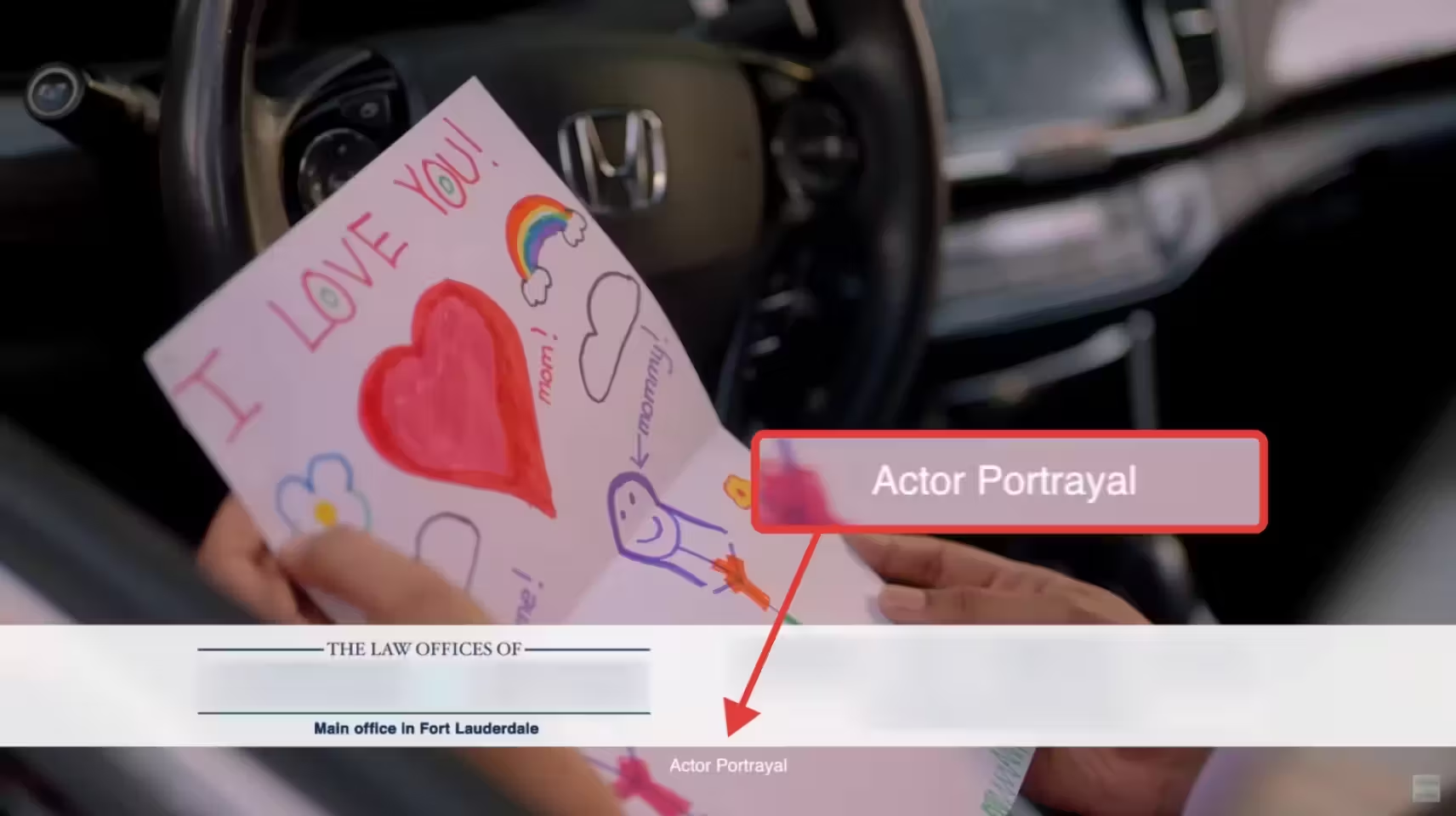
— Platform-Specific Considerations
Have you heard of review gating? It’s the practice of filtering clients before asking for reviews, so only satisfied clients are directed to leave one.
If your intake process routes happy clients to Google and unhappy ones to a private feedback form, that's a violation of platform policy and potentially your state bar's rules on misleading communications.
On social media, any client story used in paid ad creative should be treated the same as a formal testimonial. It needs the client's explicit permission and an outcome disclaimer.
How Lawyer Advertising Rules Apply to Google Ads
It’s tricky to run Google Ads as an attorney. You have to operate under 2 sets of lawyer advertising rules simultaneously: your state bar's ethics requirements and Google's advertising policies for legal services.
Violating either one of these attorney advertising rules can get your campaign pulled.
— What Google Won't Allow
Google's legal services advertising policies prohibit misleading claims, guaranteed outcomes, and ads that misrepresent the nature of the services being offered.
That aligns closely with Rule 7.1, but Google's enforcement is automated and immediate. A non-compliant ad gets disapproved before it runs.
A bar complaint comes later, after it has already happened. Headlines Google will flag or disapprove:
- "Guaranteed Settlement — Call Now"
- "100% Win Rate — Personal Injury Lawyer"
- "Best DUI Attorney in [City] — Certified Expert"
These violate both Google's policies and ABA rules. Compliant lawyer advertising is critical to avoid the backlash.
— LSA and "Google Screened" Requirements
Local Service Ads (LSAs) operate differently from standard Google Search Ads. To run LSAs as an attorney, your firm must pass Google's verification process.
This includes a background check, license verification, and insurance confirmation. The resulting "Google Screened" badge signals to prospective clients that your firm has cleared a basic credibility threshold.
What many attorneys don't realize is that the LSA profile itself is an advertisement. The practice areas you list, the reviews displayed, and the claims in your business description all fall under the same lawyer advertising rules as any other ad.
If you list a practice area your firm doesn't actively handle, it runs directly into Rule 7.1.
%20example.avif)
— Writing Compliant Ad Copy That Is Still Persuasive
Compliance doesn't mean boring. The strongest-performing legal ads have specifics (what you handle, where you practice, and what the client should do next) rather than superlatives and outcome promises.
What works:
- "Chicago Divorce Attorney — Free 30-Minute Consultation"
- "Criminal Defense in Harris County — Available 24/7"
- "No Fee Unless We Win — Personal Injury Cases in Florida"
What doesn't:
- "Best Lawyer in Chicago"
- "Guaranteed Results — DUI Defense"
- "Top-Rated Expert Attorney"
The first set tells a prospective client something useful. The second set makes claims you can't substantiate and exposes you to both Google disapprovals and bar complaints.
— Yes, Compliance-Aware PPC Gives You a Better ROI
There's a direct connection between compliant ad copy and campaign performance.
How? Vague, superlative-heavy headlines attract unqualified clicks. Specific, accurate ad copy attracts people who need what you offer.
One of our clients, KJT Law Group, saw a 440% increase in PPC qualified leads alongside a 50% decrease in cost per lead after we restructured their campaigns around compliance-aware targeting and copy.
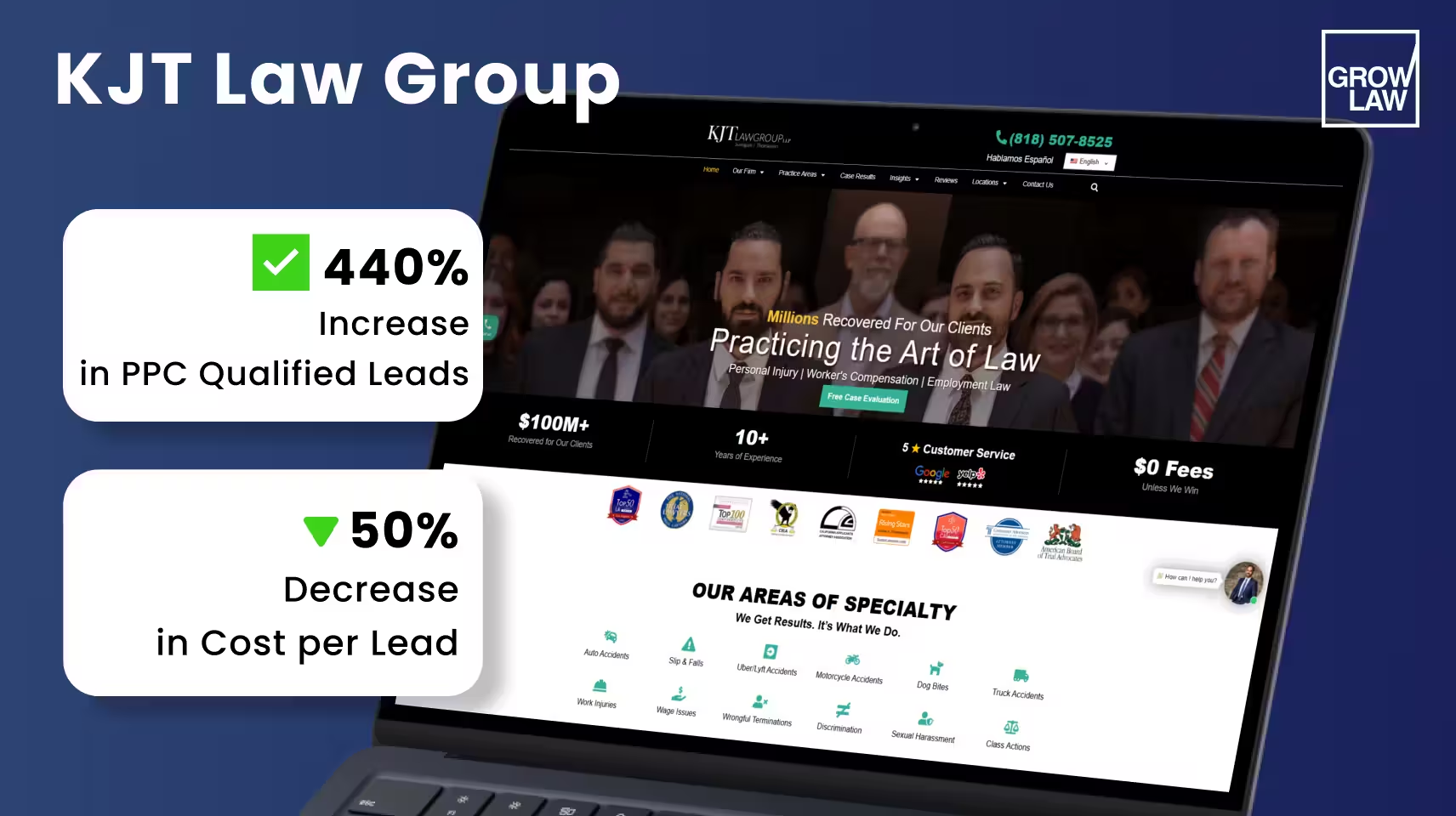
Aggressive growth and ethical compliance are not mutually exclusive.
Just as for KJT, we've built compliance-aware campaigns for criminal defense, family law, and immigration firms — 3 of the highest-scrutiny practice areas in legal advertising.
But compliance only goes so far. At Grow Law, we have an AI lead qualification system to filter unqualified contacts before they reach your intake team. That way, your campaigns are built to put you in contact with the right clients.
Not sure if your current campaigns meet Google's policies? Don’t risk it. Check out our PPC management for law firms page.
State-Specific Advertising Rules: What Varies by Jurisdiction
The ABA Model Rules set the baseline. Every state builds on top of that, and in some cases, adds requirements that directly affect how you run digital campaigns.
Here's what attorneys in 3 major markets need to know.
New York
New York has some of the most detailed advertising retention and disclosure requirements in the country.
- All ads must be pre-approved by the lawyer or law firm before dissemination
- Copies of all advertising materials must be retained for a minimum of 3 years; digital and computer-accessed communications require one year
- Website content must be archived upon initial publication, after any major redesign, and at least every 90 days for ongoing changes
- If you advertise a fee range or hourly rate, you are legally bound by those amounts; you cannot charge more than what your ad states
- Certain ads must be labeled "Attorney Advertising." This applies to many digital formats, including email and social media
- Educational content like blog posts or newsletters generally falls outside advertising rules unless it primarily promotes the firm's achievements or expertise
California
California's State Bar takes a broad view of what constitutes misleading advertising, and its lawyer advertising rules apply equally to your website, Google Ads, and social media.
- No statements that are untrue, confusing, deceptive, or misleading in any form; this includes technically true statements that omit material context
- Free consultation offers must accurately reflect what "free" means; advertising a free consultation while charging for anything beyond 5 minutes is a violation if your average consultation runs longer
- Lawyers participating in referral services must be certified and adhere to strict state bar guidelines
- Testimonials cannot create an expectation that prospective clients will receive the same results as the person giving the testimonial
Texas
Texas requires attorneys to submit advertising materials for review, one of the more prescriptive state-level requirements for digital advertisers.
- All advertising materials must be filed with the Advertising Review Committee of the State Bar of Texas within 10 days of first dissemination
- Pre-approval is available; attorneys can submit materials 30 days before dissemination to get clearance before a campaign goes live
- Any claims made in ads must be substantiated with documentation. This includes performance claims, case result statistics, and any comparative statements about fees or services
- This filing requirement applies to digital ads, including Google Search campaigns, social media ads, and email marketing
AI-Generated Ads and Emerging Compliance Risks
AI writing tools have made it faster than ever to produce ad copy, landing page content, and social media posts.
For law firms, that speed comes with a compliance risk.
The rule is simple: it doesn't matter who wrote your ad. If it's published under your name or your firm's name, you own it.
— The Problem With AI-Generated Legal Ad Copy
Generative AI predicts language. As the ABA notes, it "does not reason about doctrine, jurisdiction, or legal consequences.”
This means it can produce copy that sounds polished and professional while violating Rule 7.1 in the same sentence.
Left unchecked, AI-generated legal ad copy defaults to exactly the kind of language bar associations flag: superlatives, implied guarantees, and outcome-oriented claims.
A tool prompted to write a Google Ads headline for a personal injury firm might produce:
- "Get Max Compensation — Call Now"
- "Top-Rated PI Lawyers — Maximum Settlements"
- "We Fight for the Best Outcome"
None of those are something you wrote. All of them are something you'd be disciplined for publishing as per the ABA’s advertising rules for attorneys.
— Who Is Responsible
You are. As the ABA states directly: "Lawyers remain responsible for every word that leaves the firm."
The ABA's existing framework doesn't carve out an exception for AI-assisted content.
Rule 7.1 applies to any communication made on your behalf, regardless of how it was produced. If your agency used an AI tool to draft your ad copy and you approved it without a compliance review, the liability is yours.
Clio’s 2025 Legal Trends Report shows that 79% of lawyers are already using AI in their firm, highlighting the ever-growing need to familiarize yourself with the ABA’s advertising rules for attorneys.
— How to Audit AI-Generated Ad Content Before Publishing
Before any AI-drafted content goes live, whether it's a Google Ad, a landing page, or a social post, run it through these checks:
- Does any headline or claim imply a guaranteed outcome?
- Does any copy use "expert," "specialist," or "best" without formal certification to back it up?
- Are all practice areas listed ones your firm actively handles?
- Do testimonials or case results include the required outcome disclaimers?
- Is the responsible lawyer or firm clearly identified in the communication?
If the answer to any of the first 4 is "Yes," rewrite before publishing. AI is a useful drafting tool. Compliance review is still your responsibility.
Summary: Your Compliant Advertising Checklist
Bookmark this before you launch your next campaign. Run every ad, landing page, and social post through these checks before anything goes live.
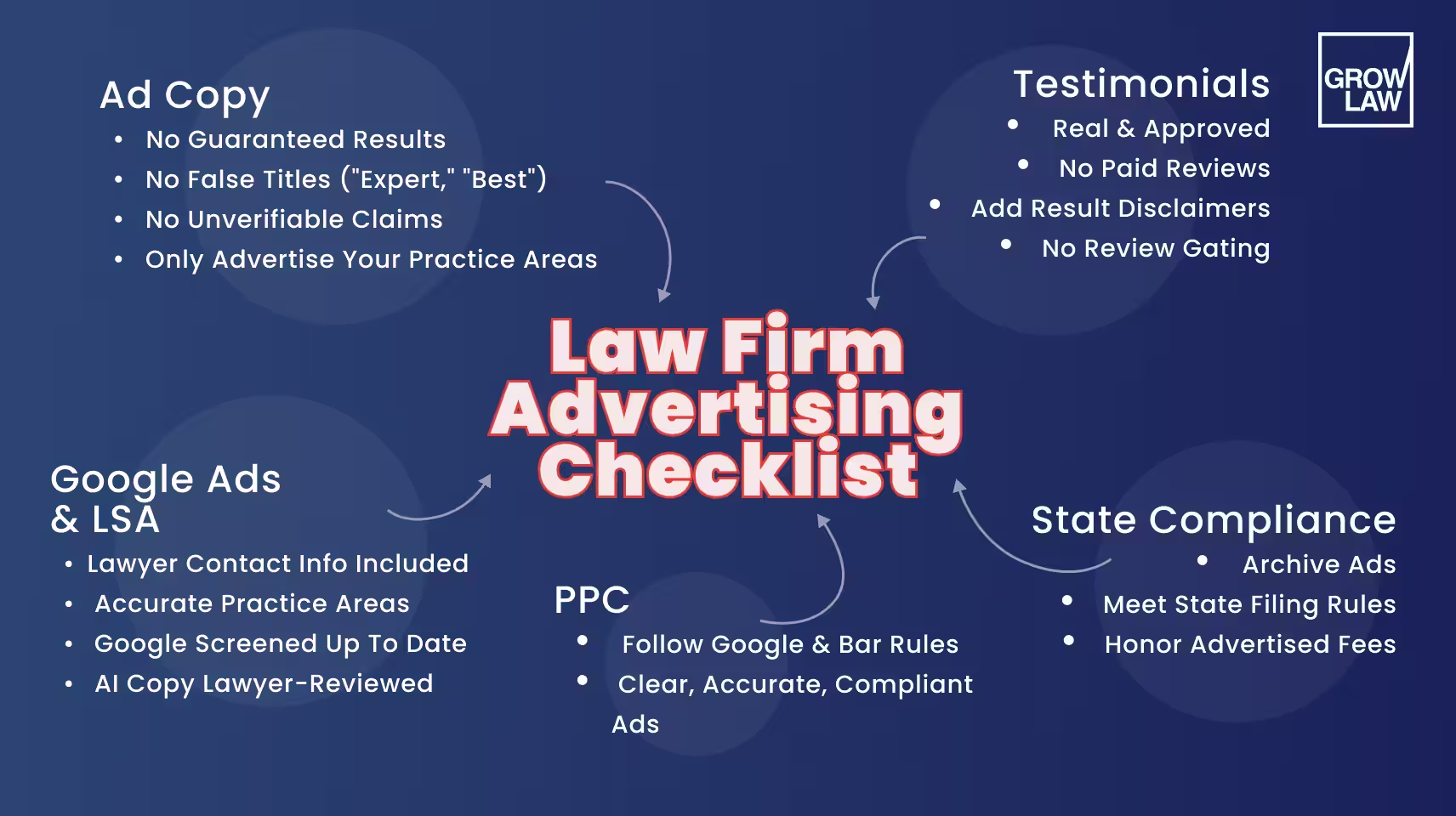
Ad Copy and Claims
- No headlines or claims that imply a guaranteed outcome ("guaranteed results," "we always win," "maximum settlement")
- No use of "expert," "specialist," or "best" unless you hold a formal certification from an ABA-accredited or state-approved organization — and that organization is named in the ad
- No superlatives or unverifiable comparisons ("top-rated," "best lawyer in [city]," "#1 firm in Florida")
- All practice areas listed in your ads are ones your firm actively handles
Testimonials and Social Proof
- All testimonials are authentic, unedited, and published with the client's explicit permission
- No compensation, gifts, or incentives were offered in exchange for reviews or referrals
- Every testimonial and case result includes a visible outcome disclaimer
- No review gating in your intake process; all clients are directed to leave reviews equally
Digital Ads and LSA
- Every ad identifies the name and contact information of at least one responsible lawyer or law firm
- Your Google LSA profile only lists practice areas your firm actively handles
- Your LSA "Google Screened" verification is current; license, background check, and insurance confirmed
- All AI-generated ad copy has been reviewed by a lawyer before publishing
State Requirements
- You know your state's retention requirements and have a system to archive ads accordingly
- Any pre-approval or pre-filing requirements in your state (Texas, Florida) have been met before dissemination
- If you advertise fee ranges or hourly rates, those amounts are ones you can honor
PPC and Campaign Management
- Your Google Ads headlines have been reviewed against both Google's legal services policies and your state bar's ethics rules
- Campaigns are built around compliant lawyer advertising practices; specific, accurate, and free of outcome guarantees
— Don't Risk Your License on Non-Compliant Advertising
Stay compliant, and you won’t just avoid discipline, you’ll outperform over-the-top, superlative ads.
Back in 2024, KJT Law Group saw a 440% increase in PPC qualified leads and a 50% decrease in cost per lead after using our law firm PPC services.
Come explore the potential of your ads. Since 2008, we’ve exclusively served legal firms, know the ABA’s standards, and have an in-house attorney who quality checks every piece of ad copy we produce.
Across our client base, the typical result is a 380% marketing ROI in 12 months. That's what compliant, well-structured campaigns deliver.
Book your free growth plan and let’s scale your business without putting your license at risk.
Frequently Asked Questions About Lawyer Advertising Rules

Compare Your Practice Instantly
Stay Ahead of the Competition!
Compare your law firm's performance to Local competitors with our instant assessment tool
Get a clear picture of your firm's performance
Boost your online presence
Compare My Firm
Compare Your Practice Instantly
Stay Ahead of the Competition!
Compare your law firm's performance to Local competitors with our instant assessment tool
Get a clear picture of your firm's performance
Boost your online presence
Compare My Firm
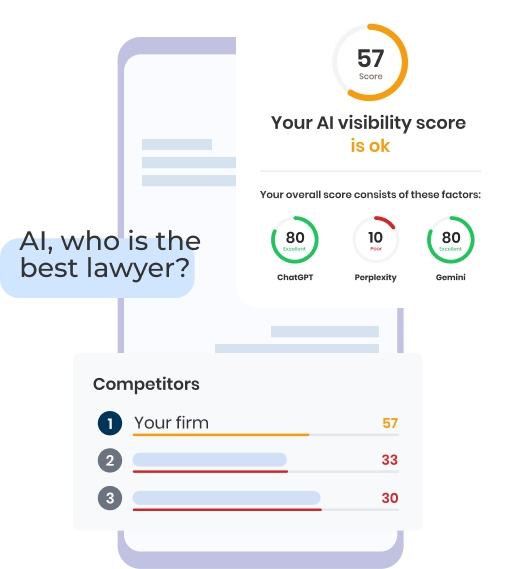
Check Your AI Visibility Instantly
Find Out What AI Is Telling Your Potential Clients
Run our free AI Visibility Report to:
See how often top AI tools mention your law firm
Spot which competitors show up first
Get the next steps to capture more cases
Run My Free AI Report
.avif)
.avif)
.avif)

