


Table of Contents
You didn't go to law school to worry about where your next case would come from. Yet here you are, trying to fill your caseload week after week.
Employment-law SEO is harder to plan than a generic legal campaign because the audience may include employees in urgent situations, employers evaluating ongoing counsel, or both. Each group searches differently and needs a distinct path from search to consultation.
This guide explains how to build that path step by step: audit the site, map search intent, strengthen local visibility, improve service and educational content, fix technical barriers, earn relevant authority, and track whether organic traffic becomes qualified inquiries.
If your firm serves both sides, keep the architecture, navigation, internal links, and calls to action separate enough that neither audience lands on a message written for the other.
Your audience is split two ways — employees in crisis, employers managing risk — and labor news cycles that spike search demand overnight. Employment lawyer SEO gives you strong organic visibility to capture that traffic.
Since 2008, we’ve helped employment and labor practices like Yarborough Law Group achieve a 452% increase in qualified leads in just 12 months with our SEO.
Today, we’re sharing the exact playbook behind our law firm SEO services to get those results.
Key Takeaways
- Start with the firm’s actual client side: employee, employer, or separate paths for both.
- Map one primary intent to each service, location, and educational page before writing.
- Treat your Google Business Profile, reviews, citations, and local relevance as one system.
- Use attorney-reviewed, jurisdiction-aware content that answers the searcher’s next question.
- Measure qualified inquiries, source, and conversion quality alongside rankings and traffic.
- Build traditional SEO and AI-search visibility from the same technical, entity, and authority foundation. Our GEO for employment lawyers page develops the AI-search layer in more detail.
What Is Employment Lawyer SEO & Why Is It Different from General Legal SEO?
Employment-law SEO is the process of making a firm’s website easy to find, understand, and trust when the right audience searches for workplace-related legal help. The work combines page-level intent mapping, local visibility, useful content, technical health, relevant authority signals, and measurement.
For this guide, the important distinction is execution: which page should answer each search, how employee-side and employer-side paths should differ, and how to tell whether visibility is producing suitable inquiries. Readers comparing providers or service scope should use the dedicated employment lawyer SEO services page.
73% of people said they would use Google to research a lawyer before hiring one, highlighting the need for SEO.
But employment law firm SEO is very different from general legal SEO.
Think about it: Most practice areas have a single audience. Employment lawyer marketing has two: employees who've been wronged and employers managing liability.
They each search differently. A "wrongful termination lawyer" search and an "employment attorney for small business" search may both find your site, but only if you've built pages for both as part of your employment attorney SEO efforts.
There's also the emotional intensity. Someone searching "was I illegally fired" or "can I sue my employer for harassment" is in crisis.
Don’t forget demand volatility. A wave of mass layoffs, a major NLRB ruling, or a high-profile discrimination lawsuit can spike relevant searches in your market literally overnight.
General legal SEO treats all of this the same. Employment law SEO creates space for each of these scenarios.
But is employment law firm SEO better than paid ads? In 2024, on a single day, Google's organic results got 4.6 billion clicks while paid ads got only 16.4 million.
Over 99% of clicks went to organic results, proving the sheer potential of organic employment lawyer marketing.
However, capturing that organic market share takes a coordinated approach. If an audit shows that technical fixes, content production, local SEO, authority building, and measurement all need coordinated execution, compare the scope on Grow Law’s employment lawyer SEO services page.
— How One Firm’s Qualified Leads Surged By 2,450%
Get SEO right, and the results are significant. Exceed Legal, a Boise-based employment and business law firm, partnered with us in 2024 to build that visibility from the ground up.
Their organic traffic grew 829%, qualified leads increased 2,450%, and they achieved an 898% marketing ROI — while doubling their monthly caseload from 12 to 24 cases.
This is precisely why employment lawyer marketing is critical to your caseload in 2026.
Before You Start: Run a 20-Minute Employment SEO Audit
Check five things before choosing keywords or publishing pages:
- Audience clarity: Can a visitor tell within seconds whether your firm represents employees, employers, or both?
- Page ownership: Does every service, location, and guide have one clear search intent?
- Local foundation: Is your Google Business Profile accurate, complete, and aligned with your site?
- Technical access: Can search engines crawl, index, and render the important pages on mobile?
- Measurement: Can your firm trace organic inquiries from source to consultation quality?
The audit does not need to solve every issue. Its job is to identify the first constraint so the six steps that follow are applied in the right order
1. Employment Law Keyword Research: Which Terms Drive Cases
Your job is to find keywords that get you cases.
"Employment lawyer" and "labor attorney" both get searches, but they attract people at every stage, from researchers to people who “maybe” have a case.
We’d suggest drilling it down. Here are 3 employment law keyword categories to start with:
Transactional employment lawyer keywords come from people ready to hire. They follow the pattern: [practice area] + [lawyer/attorney] + [city]. Someone searching "wrongful termination attorney Chicago" has already decided they need representation.
Informational employment lawyer keywords capture people earlier, like employees who suspect something is wrong but haven't committed to legal action. Searches like "how to file an EEOC complaint" or "what counts as wrongful termination" are lower-competition, high-volume.
Local modifier employment lawyer keywords combine intent with geography. "Employment discrimination attorney near me" or "wage theft lawyer [city]" drive calls directly from Google Maps.
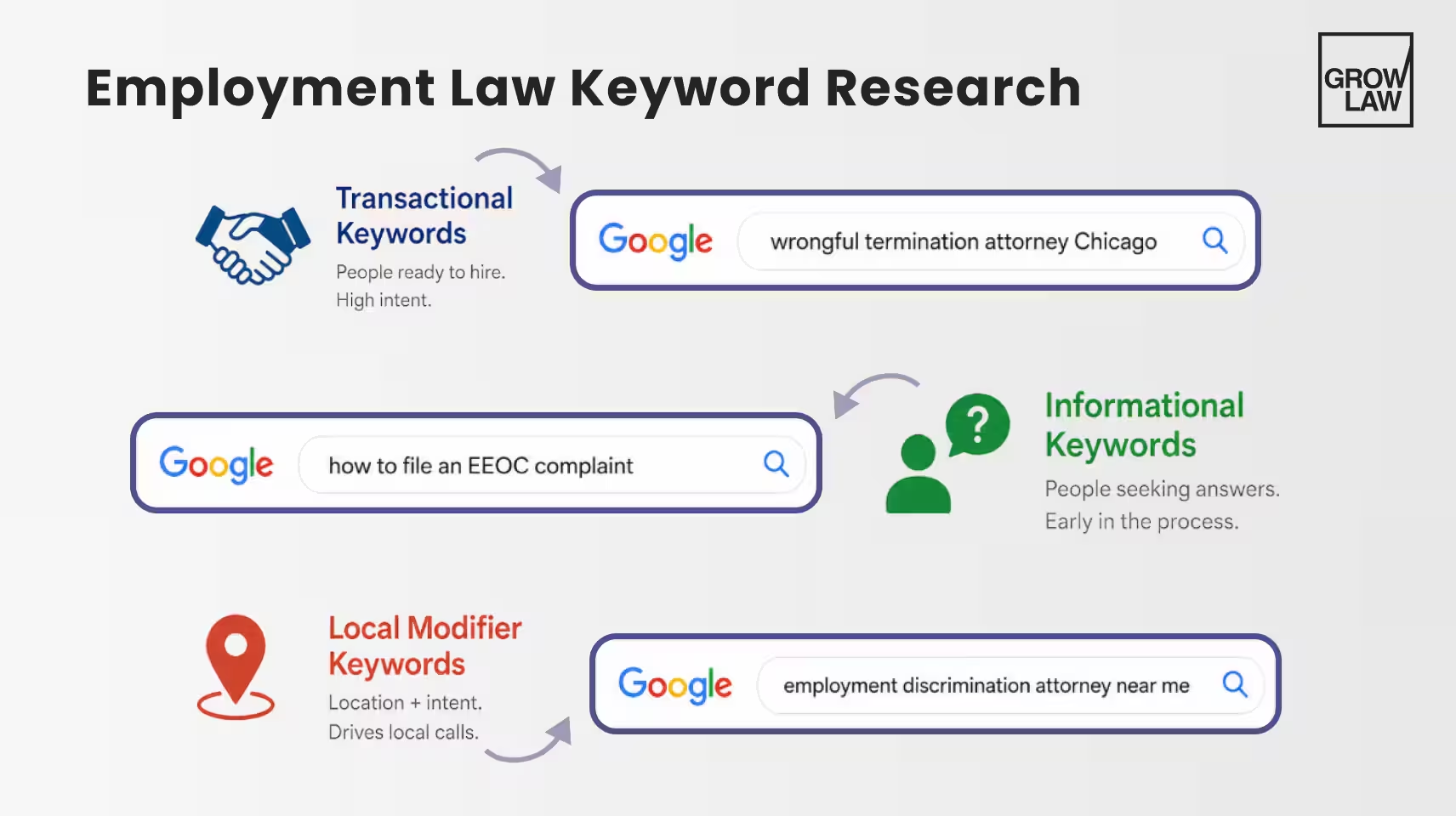
In your employment law firm SEO, each practice sub-area needs its own page, its own employment law keyword cluster, and content.
Why do we say this? In 2024, an employment attorney in Chicago was targeting only broad terms like "employment lawyer.”
After we identified commercial terms like "wrongful termination attorney Chicago," "FLSA overtime lawyer Illinois," and "workplace harassment lawyer near me," we built them 8 new practice-area landing pages.
Their organic traffic grew 340% in 9 months. Cost per qualified lead dropped from $280 to $95.
This is why SEO for employment lawyers requires a dedicated keyword map. Lumping "employment law" into one page leaves dozens of high-intent searches with nowhere to land.
Turn the Keyword List Into a Page Map
A keyword list becomes useful only after every phrase has a destination. Assign each approved query to one of four page roles:
- Service pages for people comparing legal help for a defined workplace matter.
- Location pages for a real office or service area with distinct local context.
- Educational articles for early questions, process explanations, and issue awareness.
- Attorney and firm pages for credentials, experience, and trust validation.
Then check for collisions. If two pages answer the same search with the same promise, consolidate them or narrow their roles before adding more content. For mixed employee- and employer-side practices, map the two audiences separately even when they share a domain
2. Local SEO for Employment Lawyers: Getting Into the 3-Pack
Your Google Business Profile (GBP) is a free listing with your name, location, practice areas, reviews, photos, and contact details.
When someone searches "wrongful termination lawyer near me," it's your GBP that determines whether you show up in the local 3-Pack at the top of Google.
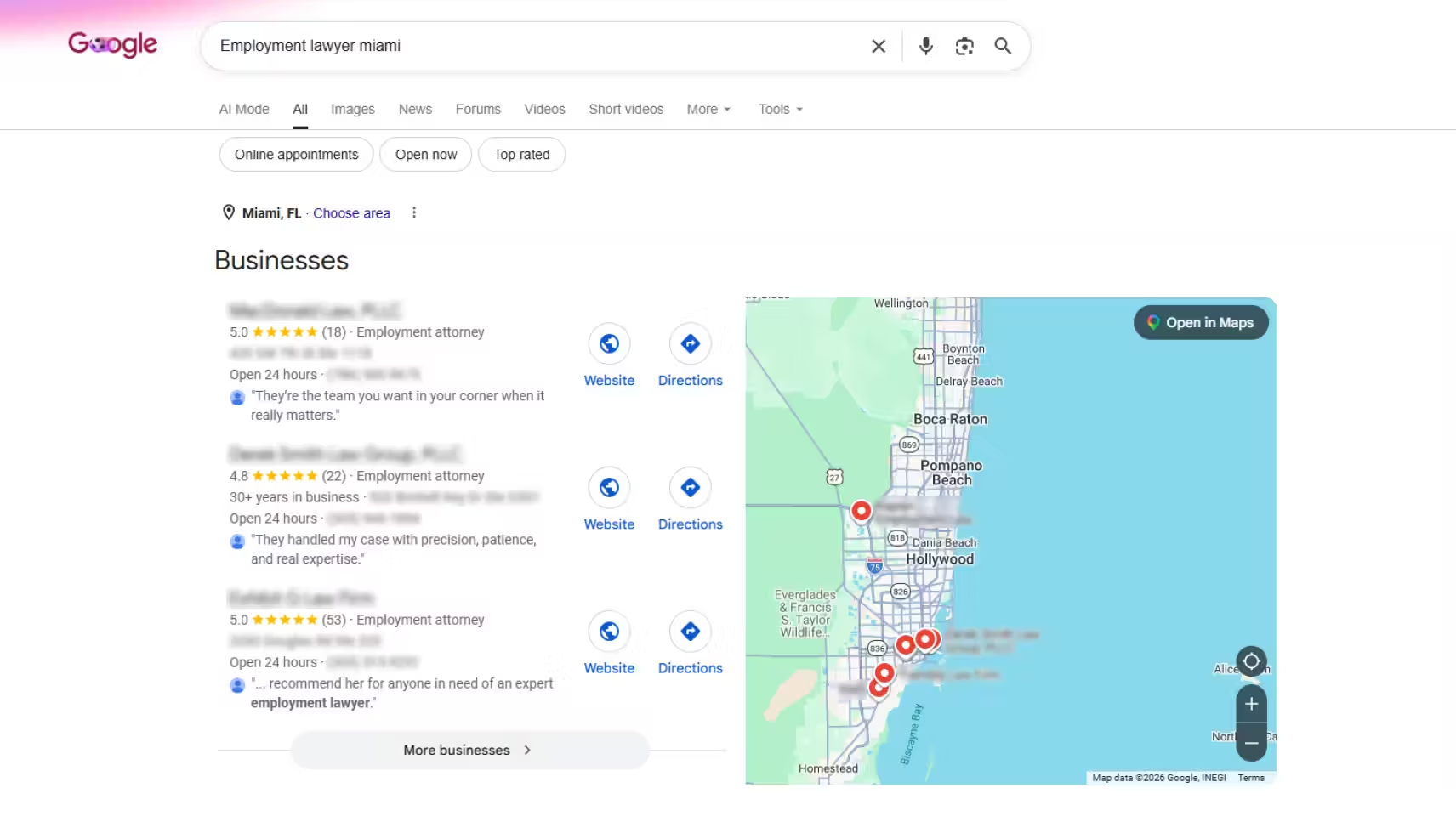
Soci AI even reports that you can see 126% more traffic and 93% more actions (calls, website clicks) by being in the 3-Pack as opposed to being ranked 4-10.
We use these GBP optimizations for all our clients’ employment law practices:
- Primary category: "Employment Attorney", the most specific available
- Secondary categories: "Labor Relations Attorney" and "Legal Services" for broader coverage
- Services: List each practice area individually, wrongful termination, discrimination, wage and hour, FMLA, harassment, retaliation
- Photos and Q&A: Real office and attorney photos drive significantly more engagement; use the Q&A feature to answer common employment queries
In 2024, we worked with a three-attorney employment firm that showed why Seattle law firm marketing must start with local visibility: it was nearly invisible for “wrongful termination lawyer Seattle” and “employment discrimination attorney near me.”
In our employment law marketing efforts, we ran a targeted local SEO sprint with GBP optimization, citation cleanup, and location-specific landing pages.
In 90 days, they entered the 3-Pack. Their Google Maps leads grew from 2 per month to 19 within 6 months.
— Use a Local SEO Priority Order
Start with accuracy, then coverage, then activity:
- Confirm your firm name, address, phone, hours, primary category, and website destination.
- Align your profile’s services and descriptions with the approved pages on the site.
- Correct major citation inconsistencies on relevant legal and local directories.
- Build a review-request process that follows your firm’s professional obligations and protects client privacy.
- Track calls, form submissions, direction requests, and qualified consultations from local search.
For a multi-office firm, create a location page only when the office and market are real and the page can provide distinct local value. Swapping a city name into otherwise identical copy is not a local strategy.
— Citations, Reviews, and Location Pages
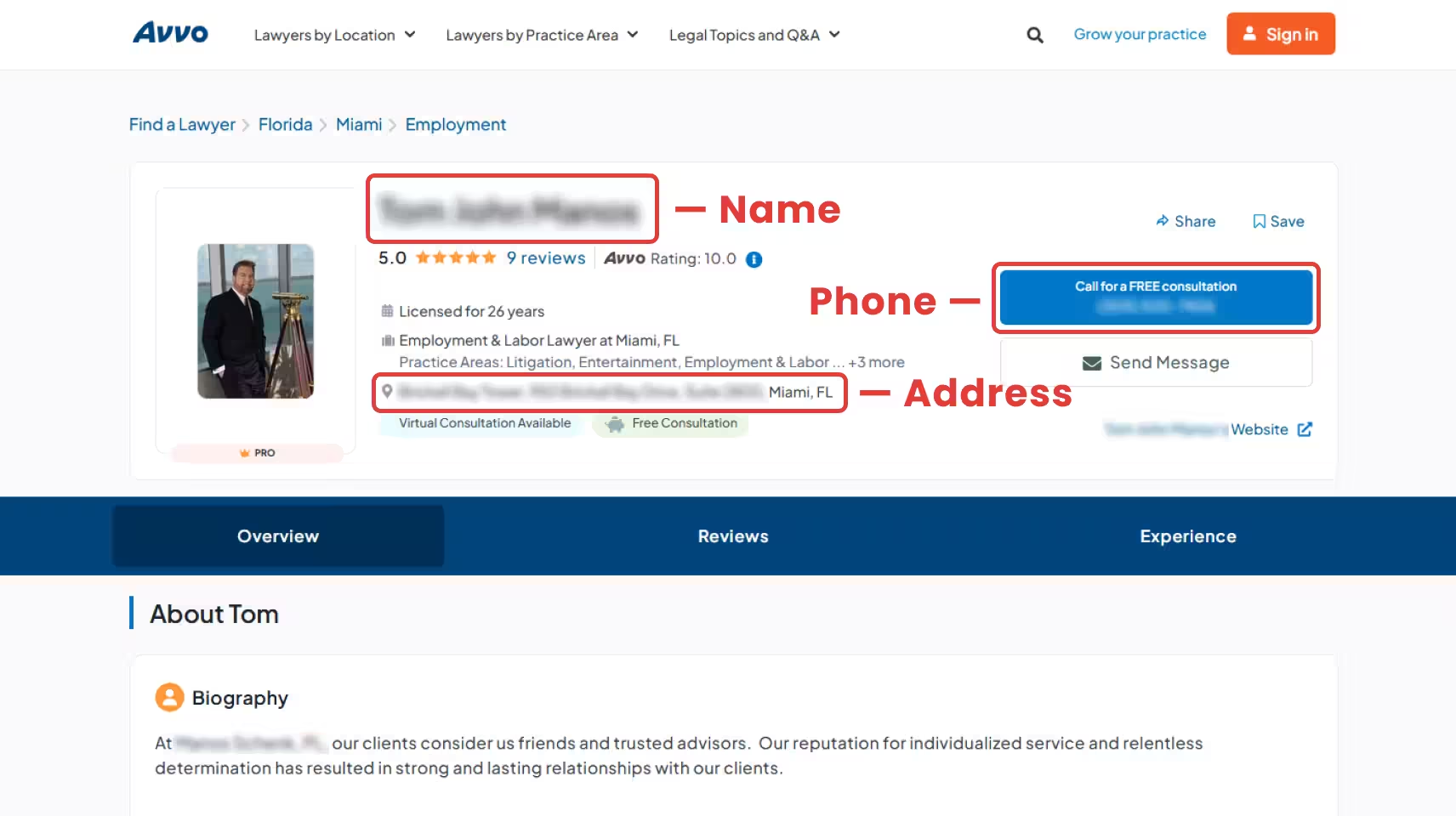
In your employment law marketing, you need to maintain a consistent NAP (name, address, phone) across Avvo, Justia, FindLaw, Martindale-Hubbell, and your state bar directory.
A single discrepancy can suppress your local rankings (we’ve had this happen to us!)
Also, collect reviews. They are a direct ranking factor. Businesses with 50 or more Google reviews are 266% more likely to be in the Local Map Pack.
Finally, if you’re a multi-location firm, each city needs its own dedicated landing page. More on this below. This is critical to local employment attorney SEO.
3. On-Page SEO and Website Optimization for Employment Law Firms
Do you have one "Practice Area" page trying to rank for a dozen different searches?
It won’t work. Much like location pages, Google needs a dedicated page for each service to understand what you do and who you serve.
— Practice area pages
Every major practice area needs its own page: wrongful termination, workplace discrimination, sexual harassment, wage and hour violations, FMLA, retaliation.
Each page should target a specific keyword cluster, open with the client's problem (not a description of the law), and include a clear call to action. A page titled "Wrongful Termination Lawyer in [City]" will outrank a generic "Employment Law Services" page for that search.
— Location pages
Do you serve multiple cities or counties? Each needs a dedicated location page. And no, this should not be a template with the city name swapped in.
Always include local context as part of your employment attorney SEO: courts you practice in, state-specific employment statutes, local landmarks, and any local case experience you can reference.
These pages are what allow your firm to rank in multiple markets simultaneously.
| Page Type | Primary Purpose | Key Elements |
|---|---|---|
| Practice area page | Rank for specific service searches | Keyword cluster, client-focused opener, CTA |
| Location page | Rank in multiple markets | Local courts, state statutes, city-specific content |
| Attorney profile page | Build your credibility and EEAT signals | Schema markup, credentials, case results |
| Homepage | Brand and broad keyword authority | Clear practice area links, GBP alignment |
| Blog/resource page | Capture informational searches | FAQ format, internal links to practice pages |
Trust us, this page blueprint works.
Take Texas Horizons Law Group. When they came to us in 2023, they were competing in one of the toughest legal markets in the country, and their website was mediocre.
We rebuilt the architecture from the ground up: dedicated practice area pages, location pages, optimized attorney profiles, schema implementation.
Within a year, organic traffic was up 377%. Qualified leads shot up by 494%. Marketing ROI hit 510%.
Same firm. Just way better content and SEO.
— H1 and H2 structure
Every page needs one H1 that includes the primary keyword and speaks directly to the client's intent. H2s should map to the sub-questions a prospective client would ask.
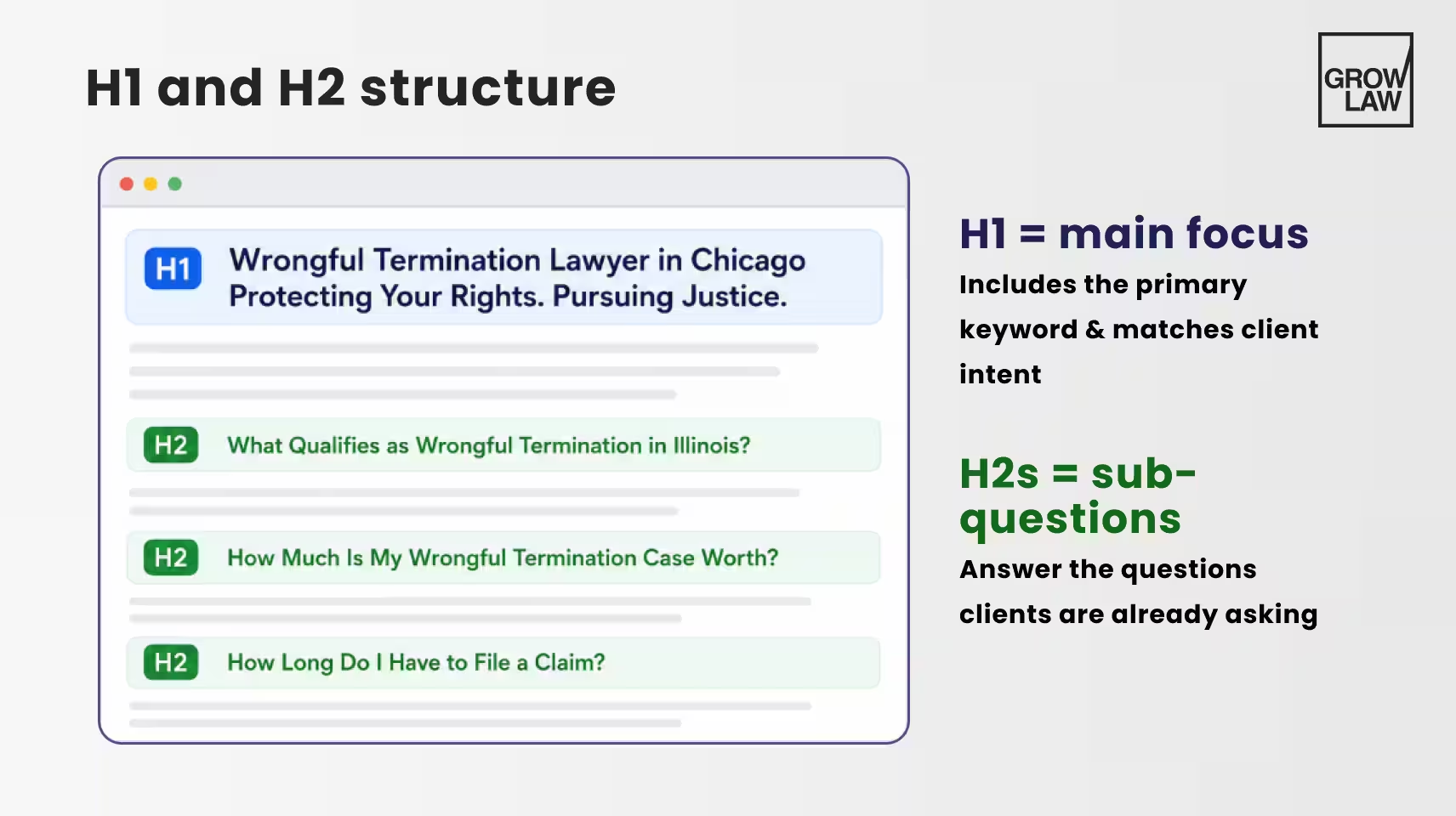
Nearly 100% of page-one Google results include their target keyword in the title or H1, per Backlinko.
On a wrongful termination page, that might look like: "What Counts as Wrongful Termination in [State]," "How Long Do You Have to File a Claim," and "What Compensation Can You Recover."
This structure helps Google parse your content and helps anxious clients find answers fast.
— Schema markup for attorney profiles
A schema is structured data added to your site's code that tells Google exactly what it's looking at. For employment law firms, the most important schemas are Attorney, LegalService, and LocalBusiness.
In 2026, as AI tools like ChatGPT and Google's AI Overviews increasingly surface attorney recommendations directly in search, structured data is one of the clearest signals they use to identify credible, relevant practices.
Properly implemented, schema markup can produce rich results in search like star ratings, office hours, and attorney credentials displayed directly in the SERP, making your listing more clickable than a plain blue link.
SEO for employment lawyers is tough, we won’t lie to you. It’s easily a multi-person, 40-hour-per-week commitment. But these steps are non-negotiable.
4. Content Marketing and Blogging for Employment Law SEO
85% of the employment law firm blogs we see are generic posts about "knowing your rights.” This could apply to any practice area in any state.
Since 2008, we’ve treated content as a case acquisition system.
According to WordStream, 49% of marketers report that organic search has the best ROI of any marketing channel (up to 748%). For employment law, the right content can easily double or even triple your ROI.
How do we know this? We’ve done it! In 2023, KJT Law Group, a Los Angeles employment, personal injury, and workers' compensation firm came to us with a barely full pipeline. Our guide to generating workers’ comp cases explains how to apply this in practice.
After we expanded their content and campaign targeting to cover employment law issues like discrimination, wage and hour disputes, wrongful termination, their qualified leads surged by 440% and cost per lead dropped 50% in under 12 months.
— Separate Content by Audience and Funnel Stage
Employee-side content often begins with an urgent event, a personal question, or uncertainty about what to do next. Employer-side content more often supports risk review, policies, investigations, contracts, or ongoing counsel. A mixed practice should not force both journeys into one article, service page, or call to action.
For each topic, record the intended reader, the question being answered, the page that owns the commercial next step, the attorney who will review it, and the internal links that connect the article to related service and location pages. This keeps the editorial calendar useful to readers and prevents multiple pages from chasing the same query. Our guide to internal links in legal SEO explains how to apply this in practice.
— Use popular blog ideas
Your potential clients are searching with specific, urgent questions after a bad day at work. Your blog should answer them directly:
- "What counts as wrongful termination in [state]?"
- "How to file a workplace discrimination claim with the EEOC"
- "Can my employer retaliate for reporting harassment?"
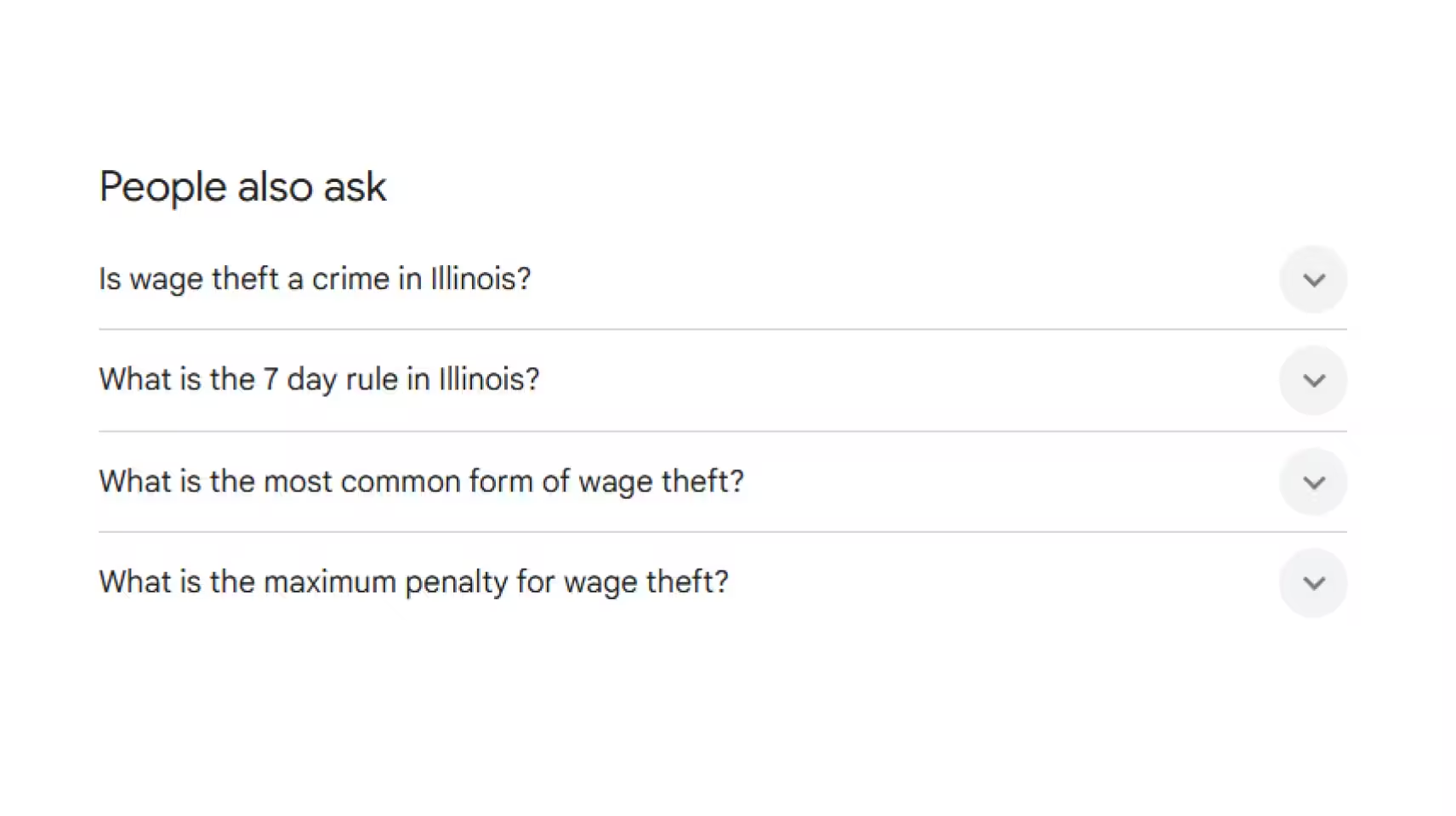
- "What is wage theft and do I have a case?"
To find more topics like these, use Google's "People Also Ask" boxes. Search any employment law term. The PAA questions that appear are real queries your potential clients are typing.
— Evergreen resources that create long-term authority
State-specific guides don't go stale and attract traffic for years: "[State] Employment Law Guide: Employee Rights in 2026," "Wrongful Termination in [State]: Filing Deadlines and What to Expect," "Wage and Hour Laws in [State]: Overtime, Minimum Wage, and Unpaid Wages."
These pages rank for high-volume informational searches and attract inbound links from HR blogs, local news outlets, and labor advocacy organizations, directly supporting your link building.
— Podcast positioning
There’s a huge demand for podcasts. Globally, the podcast audience exceeded 619 million listeners in 2026, growing 6.83% year over year.
Host or appear on podcasts to discuss labor trends, workplace rights, and major verdicts. These build credibility with both potential clients and referral sources.
If you release even 20-minute weekly episodes covering the news, you’ll tap into the same news cycle demand spikes that drive search volume.
Plus, your transcripts rank for long-tail keywords. Show notes pages capture additional search traffic. Guest appearances produce backlinks from legal and HR publications. It’s a win-win-win.
5. Link Building Specific to Employment Law Practices
Backlinks are links from other websites that point to yours. Every time a reputable site links to your firm's page, your credibility shoots up in Google’s eyes.
It takes an average of 203 high-quality backlinks to get on the first page of Google; that number skews higher for competitive markets.
But for employment law firms, the opportunity isn't just volume. It's specificity. You need links from the right places.
- State bar employment law sections — Most state bars maintain online resources, attorney directories, and publications specific to employment and labor law.
- HR industry blogs and publications — HR professionals are natural referral sources for employment lawyers. Publications like SHRM, HR Dive, and Workforce Magazine regularly cite legal experts.
- Labor union and worker advocacy organizations — State and local labor councils, worker centers, and employee rights organizations often maintain resource pages linking to attorneys who handle employment matters.
- EEOC partner and fair employment agency resources — Federal and state fair employment agencies maintain partner resource pages and referral lists.
- Local business journals and news outlets — Publications covering workplace issues, layoffs, and labor disputes in your market are always looking for attorney sources.
- Legal news publications covering labor issues — Outlets like Law360, Bloomberg Law, and your state's legal newspaper regularly cover employment law developments.
One link from SHRM or your state bar's employment law section is worth more than fifty generic blog links from unrelated industries.
6. GEO and AI Search Visibility for Employment Lawyers in 2026
Potential clients now ask ChatGPT questions like, "What are my rights if I was fired without cause?” or prompt Google's AI Overview to summarize their options before clicking a single link.
This is Generative Engine Optimization (GEO): optimizing your firm to be cited and recommended by AI-powered search tools.
78% of legal queries now trigger a Google AI Overview, the highest rate of any industry! Brands cited in AI Overviews earn approximately 120% more organic clicks per impression than uncited brands on the same queries.
AI tools pull from sources they consider authoritative, well-structured, and trustworthy.
Keep in mind, legal content is classified as YMYL (Your Money Your Life) under Google's framework — meaning it faces stricter quality scrutiny than most sectors, and E-E-A-T signals carry decisive weight.
| GEO Signal | What To Do | Why It Matters |
|---|---|---|
| Schema markup | Implement Attorney, LegalService, LocalBusiness schema | Tells AI crawlers who you are and what you practice |
| Practice area pages | Answer real client questions in plain language | Pages structured around actual queries get cited |
| EEAT signals | Attorney bios, credentials, case results, bar memberships | Builds the trust profile AI tools use to recommend firms |
| Third-party mentions | Earn citations in HR blogs, legal outlets, bar resources | AI synthesizes across the web, not just your site |
| Content depth | Cover what the law says, who qualifies, what to expect | Comprehensive pages outperform thin ones in AI results |
— Measure AI Visibility Without Separating It From SEO
Track whether your firm is cited or mentioned for a controlled set of employment-law questions, which pages support those mentions, and whether the same pages earn impressions, visits, and qualified inquiries in traditional search.
The practical work remains familiar: clear service and location pages, descriptive attorney profiles, crawlable content, accurate structured data, consistent firm and attorney entities, useful third-party mentions, and concise answers to real questions. Review AI visibility monthly, but prioritize changes that improve both machine understanding and the reader’s ability to choose the right next step
GEO isn't a replacement for traditional SEO. It still relies on 80% of your SEO foundation. That’s why you need robust SEO.
Most employment law firms we talk to have tried SEO before. They got some early traction, then it plateaued. That's not what we do.
— Turn the Blueprint Into a 90-Day Priority List
Start with the constraint revealed by the audit. If audience and page ownership are unclear, fix the architecture before publishing more content. If the structure is sound but local visibility is weak, prioritize your Google Business Profile, citations, reviews, and location signals. If qualified traffic already exists, focus on conversion paths and intake measurement.
Review progress monthly and keep the first 90 days limited to changes the team can implement and measure. Firms that want help turning the audit into an execution plan can review Grow Law’s employment lawyer SEO services.
Start with a free marketing audit. It’s time to take action and grow your caseload.
Employment Lawyer SEO Implementation FAQs
-
How should employment lawyers choose target keywords?
Start with your firm’s real services, client side, locations, and intake priorities. Group approved queries by intent, then assign each group to one page role. Avoid creating a second page when an existing page already answers the same search.
-
How should employee-side and employer-side content be separated?
Use distinct service hubs, navigation labels, supporting articles, internal links, and calls to action. A mixed practice can share a brand and domain, but each audience should reach content written for its situation and evaluation path.
-
Which local SEO tasks should employment firms prioritize?
Correct your Google Business Profile and core business information first, align it with the website, repair important citation inconsistencies, establish a privacy-aware review process, and measure qualified local inquiries.
-
What technical SEO issues should employment law firms audit?
Check crawlability, indexation, mobile performance, page templates, internal links, duplicate titles, broken redirects, structured data, and whether important service and location pages can be reached through normal navigation.
-
How can employment lawyers build trustworthy links?
Prioritize relevant legal, local, business, HR, professional, and editorial sources where your firm can contribute genuine expertise. Avoid paid link patterns, fabricated listings, and high-volume outreach that puts your reputation at risk.
-
How does AI Search change employment-law SEO?
AI tools increase the value of clear entities, structured pages, concise answers, attorney credentials, accurate schema, and credible third-party references. These signals also support traditional search, so GEO should extend your SEO foundation rather than replace it.
-
How should an employment law firm measure SEO results?
Track visibility and traffic as leading indicators, then connect them to calls, forms, source, qualified consultations, conversion rate, and retained matters when the intake system can provide that data.

Compare Your Practice Instantly
Stay Ahead of the Competition!
Compare your law firm's performance to Local competitors with our instant assessment tool
Get a clear picture of your firm's performance
Boost your online presence
Compare My Firm
Compare Your Practice Instantly
Stay Ahead of the Competition!
Compare your law firm's performance to Local competitors with our instant assessment tool
Get a clear picture of your firm's performance
Boost your online presence
Compare My Firm
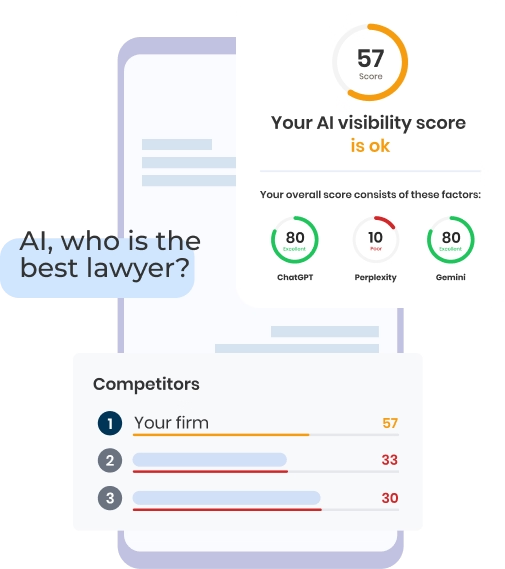
Check Your AI Visibility Instantly
Find Out What AI Is Telling Your Potential Clients
Run our free AI Visibility Report to:
See how often top AI tools mention your law firm
Spot which competitors show up first
Get the next steps to capture more cases
Run My Free AI Report
.avif)
.avif)
.avif)

