


Table of Contents
SEO for criminal defense lawyers remains an important investment in 2026.
The market is highly competitive, and prospects often compare several firms before contacting one. Visibility matters, but the page also has to match the charge, location, and questions behind the search.
With a strong strategy, you can connect focused service pages, accurate local signals, useful educational content, technical performance, and lead attribution.
In this article, we break down how those elements work together to improve visibility and generate more qualified consultations.
How Criminal Defense SEO Works
Search engine optimization (SEO) for criminal defense lawyers improves a firm’s visibility for relevant charges, locations, and legal questions.
Criminal defense prospects often move quickly, so your firm’s website has to be easy to find, understand, and contact when someone searches for charge-specific or local help.
For charge-specific searches, the strongest pages combine the alleged offense, the location, the attorney’s experience, and a clear next step. Educational guides can answer broader questions before the prospect is ready to call.
A well-run criminal defense SEO strategy does five things at once:
- helps the firm appear for relevant charge and location searches;
- strengthens local visibility through an accurate Business Profile and consistent business information;
- publishes useful, attorney-reviewed educational content;
- keeps the site crawlable, mobile-friendly, and easy to navigate; and
- connects calls, forms, qualified consultations, signed cases, and revenue to reporting.
That visibility compounds as your service pages, local signals, and educational content earn more impressions, links, and qualified consultations over time.
Criminal defense SEO is one of the most reliable client acquisition channels in 2026.
How Criminal Defense SEO and PPC Work Together
Criminal defense SEO and PPC differ mainly in timing, cost structure, and the assets they build.
PPC can launch quickly and capture urgent demand while the campaign is funded. SEO takes longer, but it can expand organic and local coverage through service pages, educational content, technical improvements, and authority.
Compare the channels using qualified-lead cost, signed-case cost, case quality, market coverage, and attribution — not only clicks or ranking positions.
SEO and PPC can both support criminal defense lead generation, but they work differently:
- PPC can launch quickly, gives direct budget control, and allows immediate query testing; performance depends on active spend.
- SEO builds more gradually through organic and local visibility, useful content, technical assets, and authority.
- Both channels should be measured using qualified leads, signed cases, cost per qualified lead, cost per signed case, and revenue.
In competitive markets, paid clicks can be expensive, while SEO usually requires several months of consistent work. Track both channels by cost per qualified lead and cost per signed case.
SEO for criminal defense lawyers works differently. The content and authority you build today keep generating traffic in month 6, month 12, and month 18, at zero ongoing cost per click.
That said, PPC and criminal defense SEO aren't enemies. They're a team.
PPC gets you in front of clients ASAP. Search engine optimization for criminal defense attorneys builds rankings that pay for themselves over time.
Grow Law’s criminal defense portfolio includes two strong examples:
- Gounaris Abboud achieved a 583% marketing ROI, 124% more qualified leads, a 112% higher conversion rate, and 522% more organic traffic.
- Yarborough Law Group achieved an 857% marketing ROI, 452% more qualified leads, and 2,938% more organic traffic.
Together, these cases show how stronger visibility and conversion can translate into a larger qualified-lead pipeline.
How AI Search Changes Criminal Defense SEO
ILawyer Marketing ran a study that included 1,052 participants (aged 21 to 65) across the U.S. They asked:
If you need to hire a lawyer to handle a very important legal for you, what online sources would you use in your research process? Select all that apply.
AI-assisted search is becoming another research channel alongside Google. Prospects can now ask longer, more specific questions about charges, penalties, local procedures, and what to do next.
To improve your visibility in AI Overviews, AI Mode, and other search experiences, focus on the same foundations used for standard SEO: crawlable pages, clear internal links, strong page experience, important information in visible text, and structured data that matches the page.
AI-feature traffic is included in Search Console’s Web performance reporting
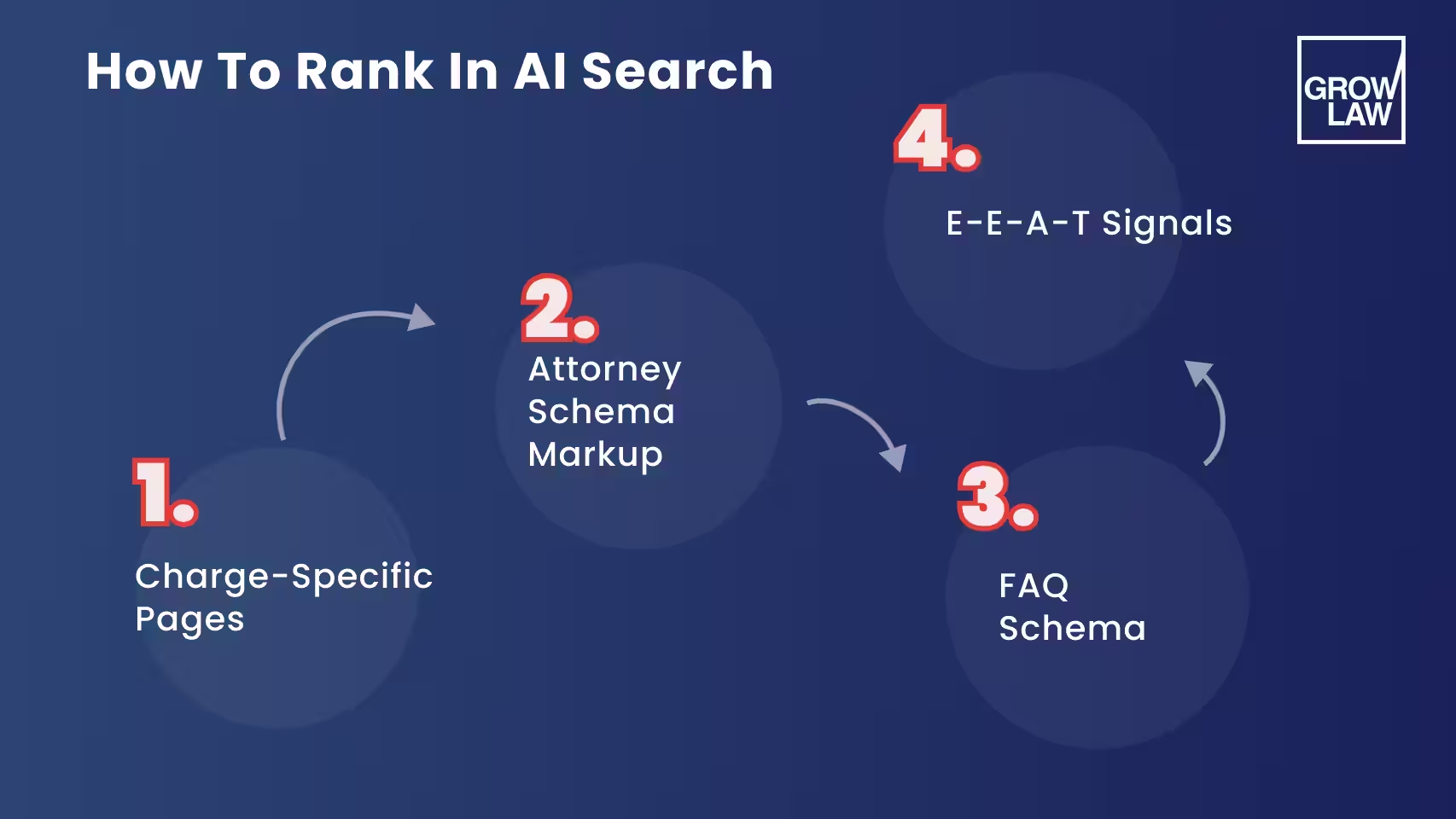
How do you optimize for AI search in 2026?
— Charge-Specific Pages
Build dedicated pages for DUI, drug possession, assault, weapons charges, expungement, and other services only when your firm can provide distinct, accurate, jurisdiction-specific information.
Use structured data to help search engines connect visible information about your firm, attorneys, services, and FAQs. Keep it aligned with the page copy and use it to reinforce clear, detailed content.
Add question-and-answer sections around real prospect questions, and have an attorney review the legal details before publication.
— FAQ Schema
Question-and-answer sections mirror how clients phrase urgent queries to ChatGPT and Perplexity. "What happens after a DUI arrest in Texas?" "Can I avoid jail time for a first drug offense?" You can use the People Also Ask (PAA) tool to find popular legal questions to address.
— E-E-A-T Signals
E-E-A-T (Experience, Expertise, Authoritativeness, Trustworthiness) is Google's framework to evaluate the expertise behind a piece of content. In criminal defense, that means named attorneys as authors, verifiable credentials, cited sources, and real case experience are excellent trust signals.
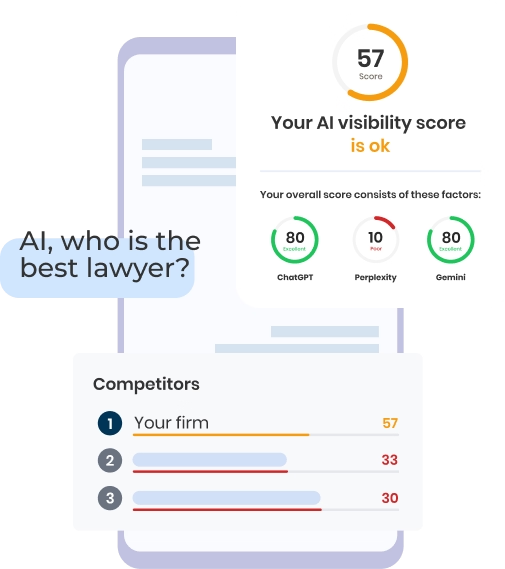
Is AI recommending your law firm? Run our free AI Grader and find out in 2 minutes. You'll see exactly how often ChatGPT, Perplexity, and Gemini mention your firm, who's showing up instead, and how to fix your visibility.
How to Improve Local Visibility for a Criminal Defense Firm
Are you in the Local Map Pack?
When a prospect searches for a criminal defense lawyer nearby, local results may appear prominently above or alongside the organic listings.
This is valuable visibility. Google says local rankings are mainly based on relevance, distance, and prominence, so strengthen the factors you can influence: accurate business information, relevant links, a strong review profile, and useful location pages. This comes down to 5 things:
- Claim and complete your Google Business Profile with accurate categories, services, photos, and business information.
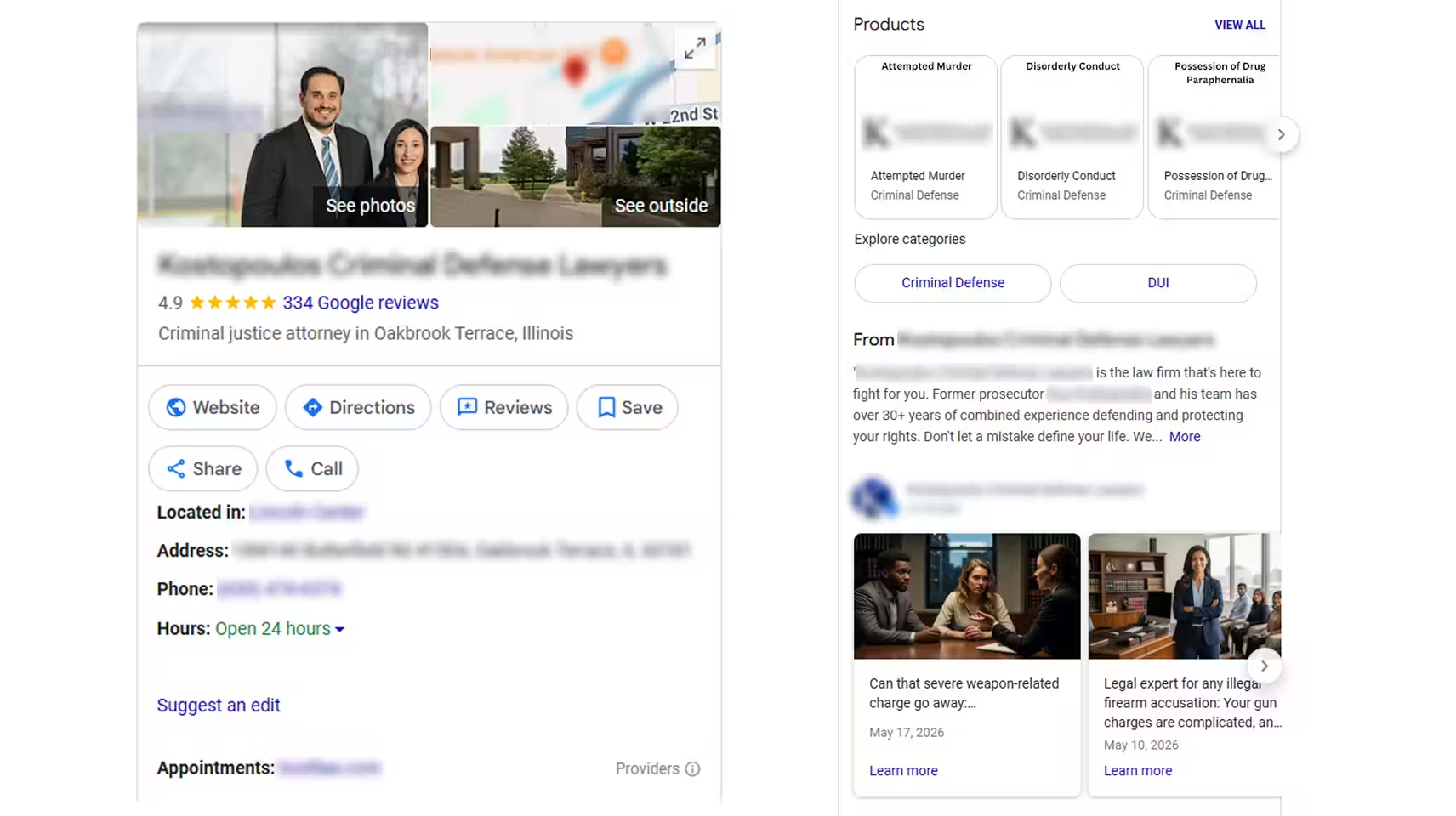
- Keep your name, address, phone number, hours, and website consistent across important listings.
- Build city-specific pages only when each page adds useful local information.
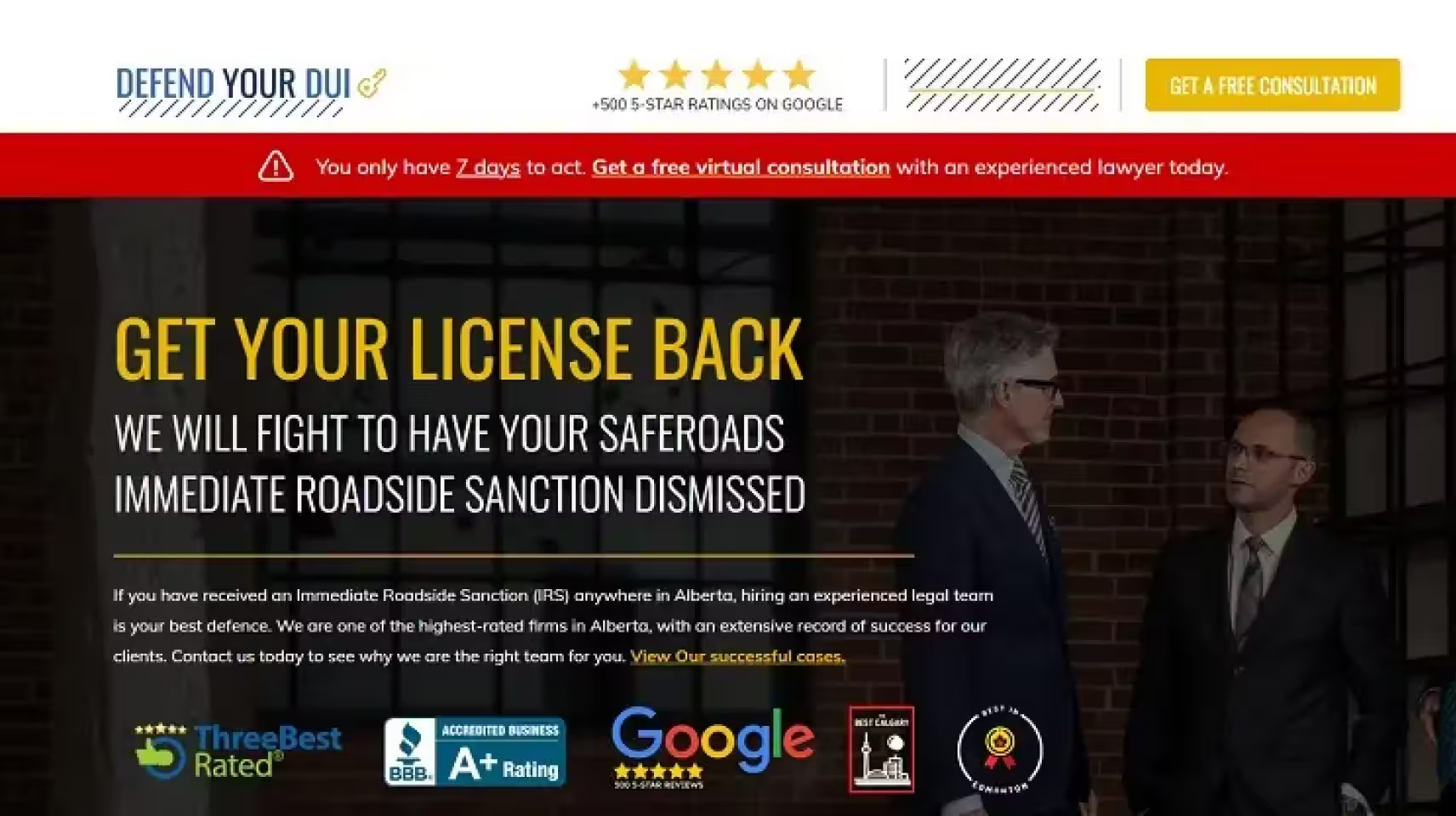
- Maintain accurate profiles in relevant legal and local directories to strengthen consistency and trust.
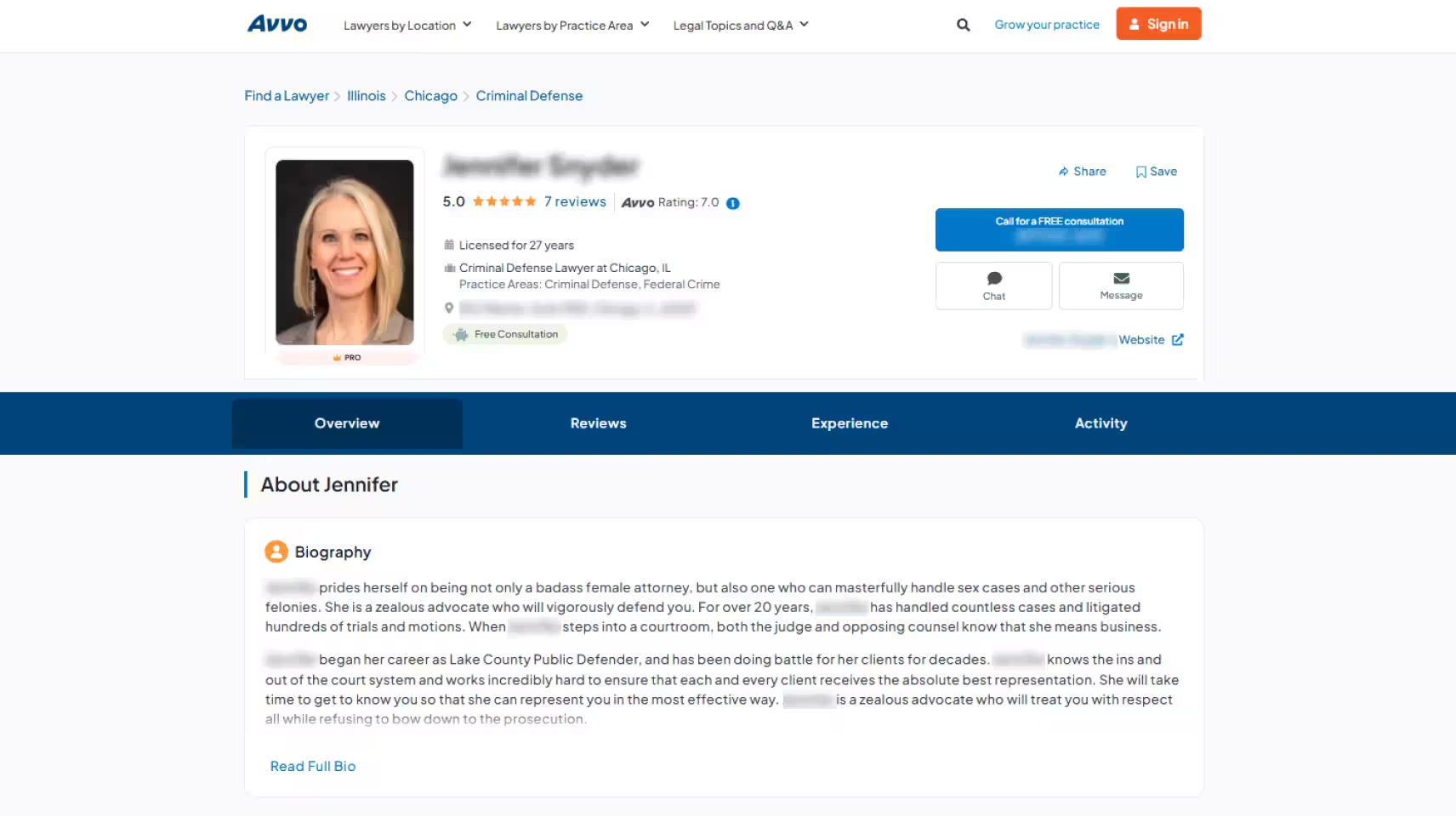
- Ask for honest reviews and respond helpfully without prescribing keywords, ratings, or a universal review count.
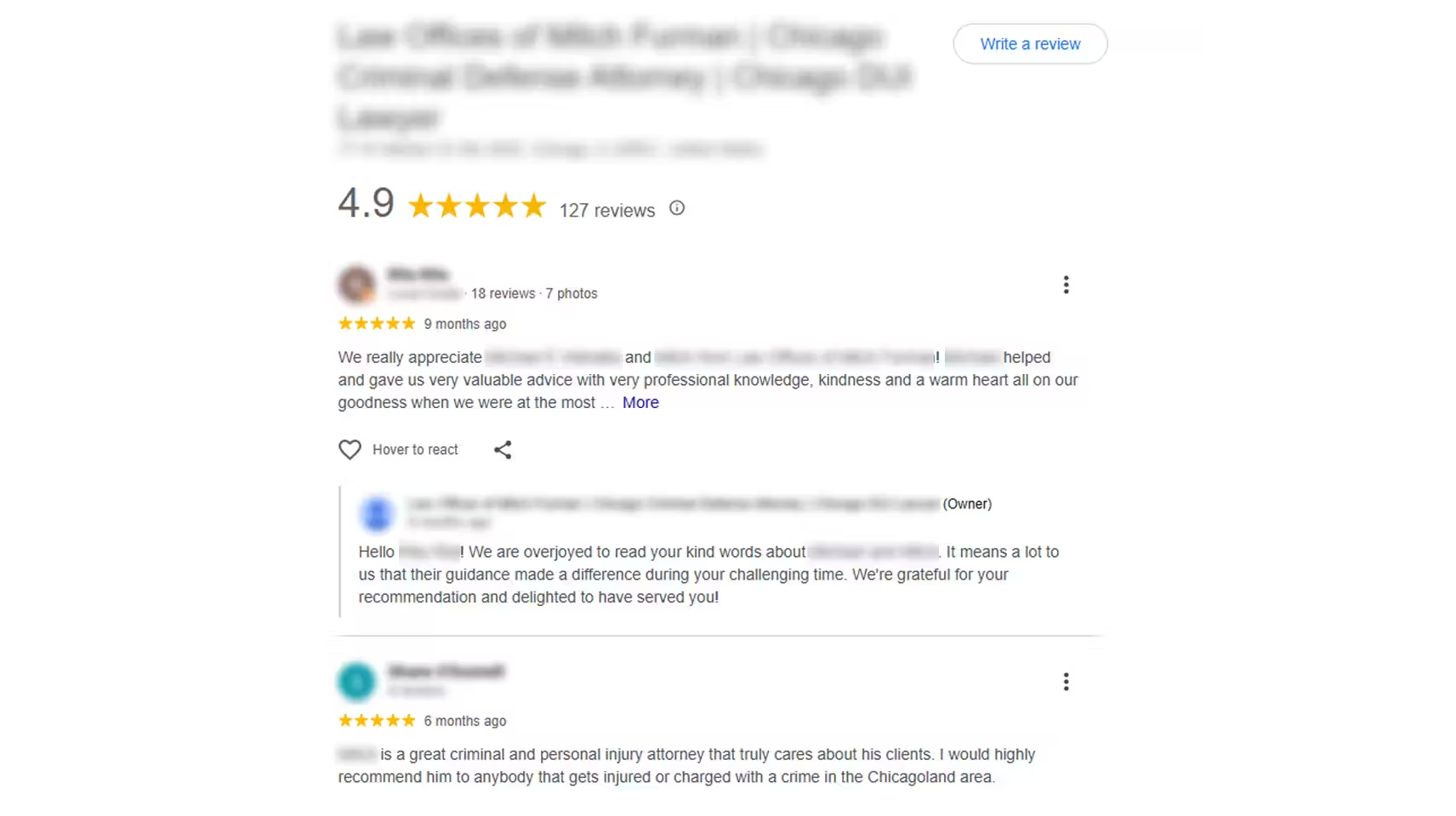
- Monitor Business Profile performance alongside Search Console and intake data
Our marketing for criminal defense attorneys team uses this exact playbook.
One published example is Gounaris Abboud. After strengthening its digital presence, the firm increased qualified leads by 124%, conversion rate by 112%, and organic traffic by 522%.
— How Gounaris Abboud Saw a 124% Lead Surge in Dayton
Gounaris Abboud are exceptional trial attorneys. But when they came to Grow Law in 2023, Google had no reason to surface them.
Their GBP was barely set up, citations were inconsistent, and their content was poorly targeted for the communities in Dayton. All in all, very poor criminal defense attorney SEO.
We rebuilt their GBP, corrected every citation, and created geo-targeted content for the markets they served.
Gounaris Abboud achieved a 583% marketing ROI, a 124% increase in qualified leads, a 112% increase in conversion rate, and a 522% increase in organic traffic with a Grow Law SEO strategy.
Your Criminal Defense Law Firm Website: Technical and On-Page SEO
We've audited 50+ criminal defense websites since 2008.
As of June 2026, mobile devices generated 51.51% of worldwide web traffic. For criminal defense firms, that makes the mobile experience a core part of technical SEO.
A technically sound site helps search engines crawl and understand the pages while giving prospects a clear mobile experience. Audit indexation, crawl errors, internal links, templates, redirects, forms, click-to-call actions, and real-user performance.
Use PageSpeed Insights and Search Console to monitor Core Web Vitals and prioritize the issues affecting mobile users. Your site must be easy to read and easy to navigate on mobile.
Practice-area pages. One generic "criminal defense" page cannot rank for DUI, drug charges, assault, weapons offenses, and expungement. Each charge needs its own dedicated page with tailored content, FAQs, and a clear call to action.
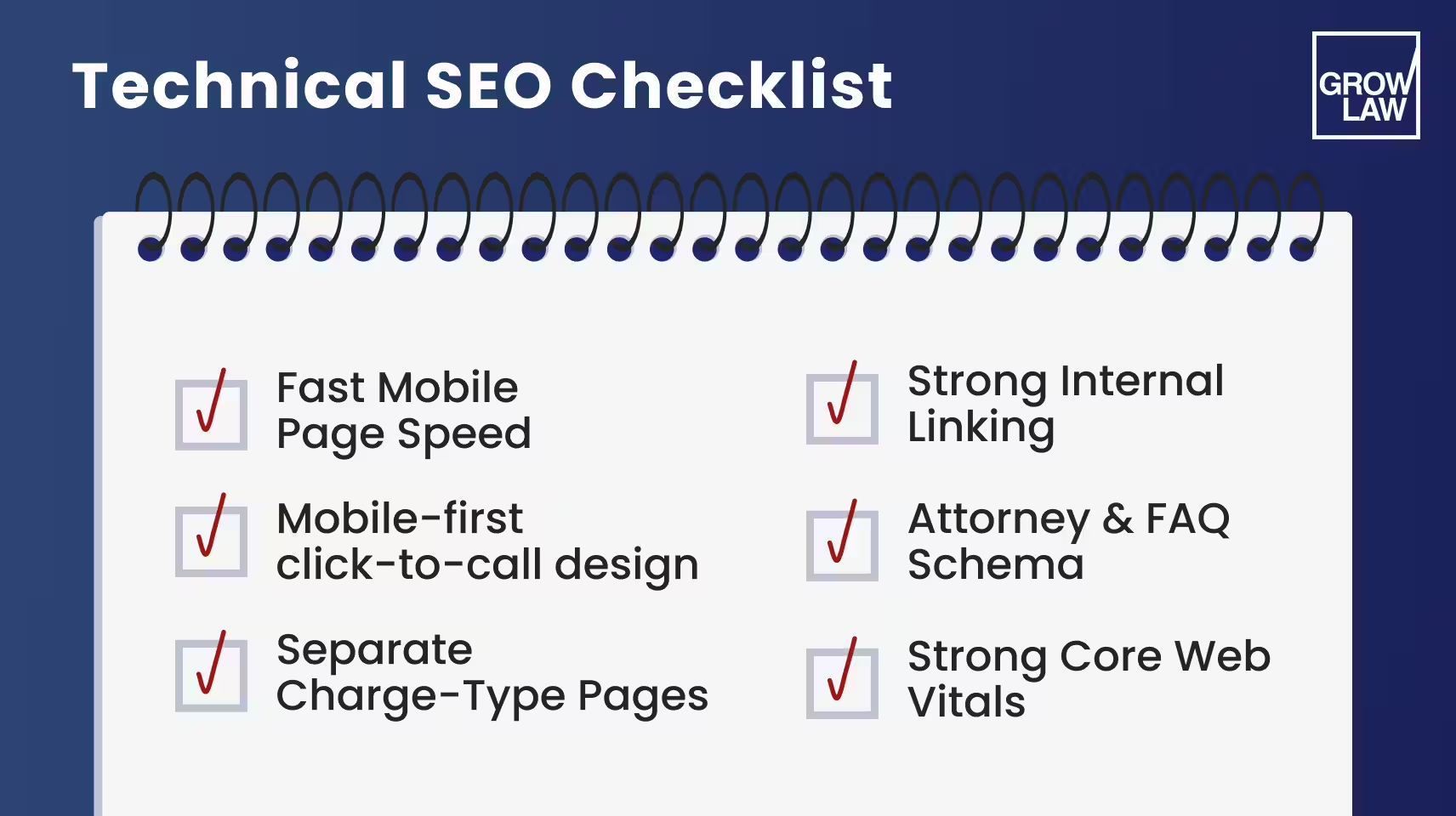
To recap: Here's the technical SEO for criminal defense lawyers checklist you need:
- Keep important pages indexable and canonicalized correctly.
- Use a mobile-friendly design with clear click-to-call actions.
- Build focused charge pages when each page provides distinct value.
- Link related charge, location, and educational pages.
- Use structured data only when it matches visible content.
- Maintain HTTPS, redirects, and broken links.
- Monitor real-user Core Web Vitals, with current “good” thresholds of LCP within 2.5 seconds, INP at 200 milliseconds or less, and CLS at 0.1 or less at the 75th percentile.
A criminal defense attorney who's never lost a jury trial can still lose a client to a competitor with a faster website. That's the reality of criminal defense law firm SEO in 2026.
How to Build a Criminal Defense Content Strategy
For years, SEO advice focused heavily on publishing volume. Today, quality and usefulness matter more than hitting a universal monthly quota.
Start with the charges the firm actually handles and the questions prospects ask during intake. Build dedicated pages around priority services such as DUI, assault, drug offenses, and expungement, then support them with guides covering process, timelines, rights, and next steps.
Create accurate, original content for people and have important legal information reviewed before publication.
Topic clusters can help organize criminal defense content when they reflect your firm’s real services and make your site easier to navigate.
You build a "Pillar" page on a broad topic (say, DUI defense), then link it to deeper, specific pages or "Clusters" (first offense DUI, refusing a breathalyzer, field sobriety tests, license suspension) that all link back to it.
Google sees that an interconnected web of content in your criminal defense attorney SEO and ranks you higher.
We put this into practice with a solo criminal defense attorney. They had no online visibility, one practice page, and no blog.
Create a clear main page for each priority charge area, support it with useful related guides, and connect the pages with natural internal links.
For most firms, 4–6 well-researched posts per month is a practical pace when attorneys have enough time to review the legal details.
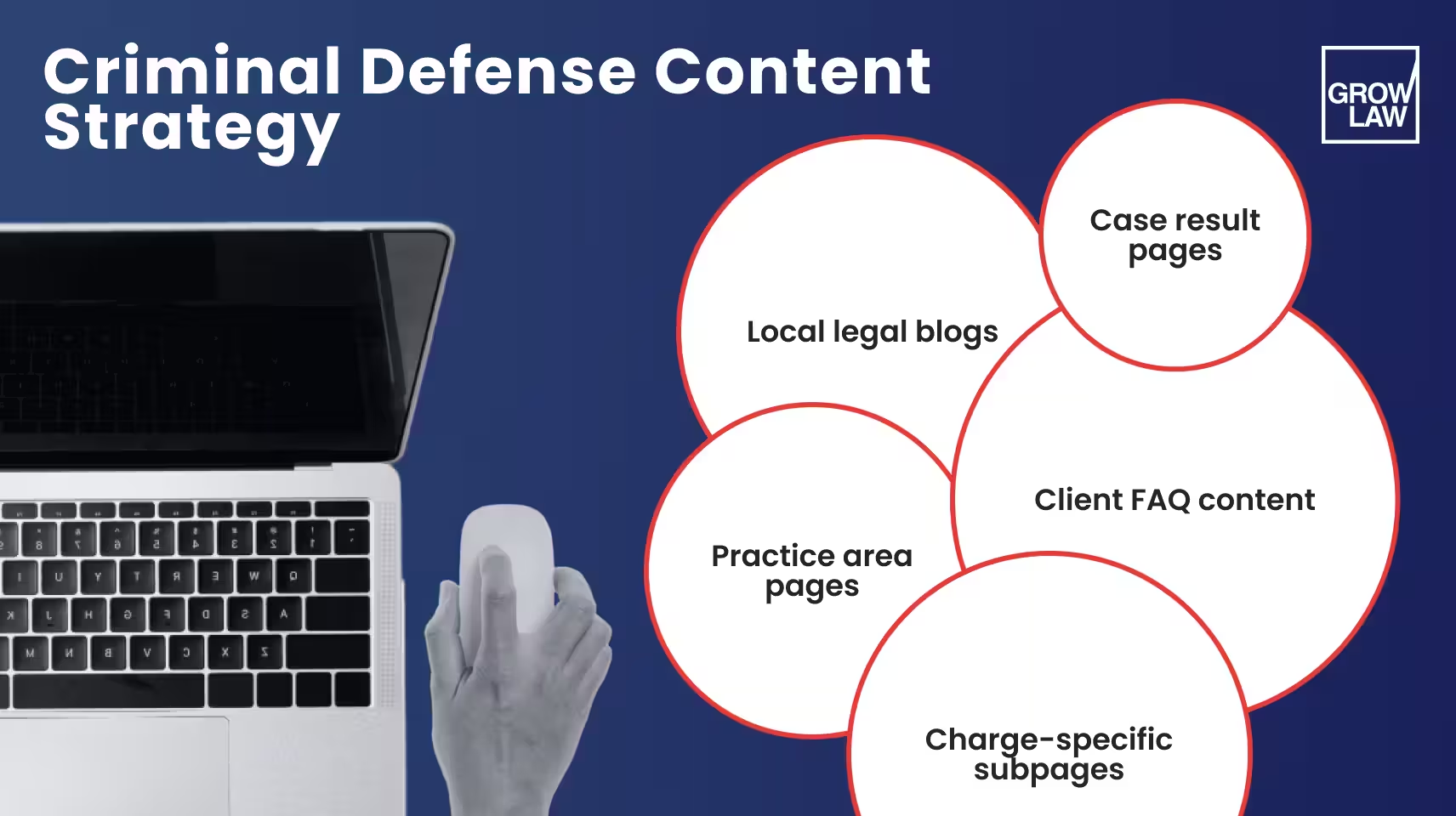
We’ve used these exact content types for their criminal defense firm:
- Practice-area pillar pages (DUI, drug charges, assault, weapons, expungement)
- Charge-specific subpages targeting long-tail keywords
- FAQ content targeting questions clients actually ask
- Local blog posts covering courts, judges, and jurisdiction-specific procedures
- Case result pages that build E-E-A-T and social proof
That’s how you build a robust search engine optimization for criminal defense attorneys strategy.
Backlinks and E-E-A-T for Criminal Defense Firms
You’re in a highly scrutinized niche.
Google puts criminal defense websites in the same category as it puts medical and financial sites — YMYL (Your Money or Your Life).
In Google’s own words, "We prioritize helpful, reliable information that's created to benefit people, not content that's created to manipulate search engine rankings."
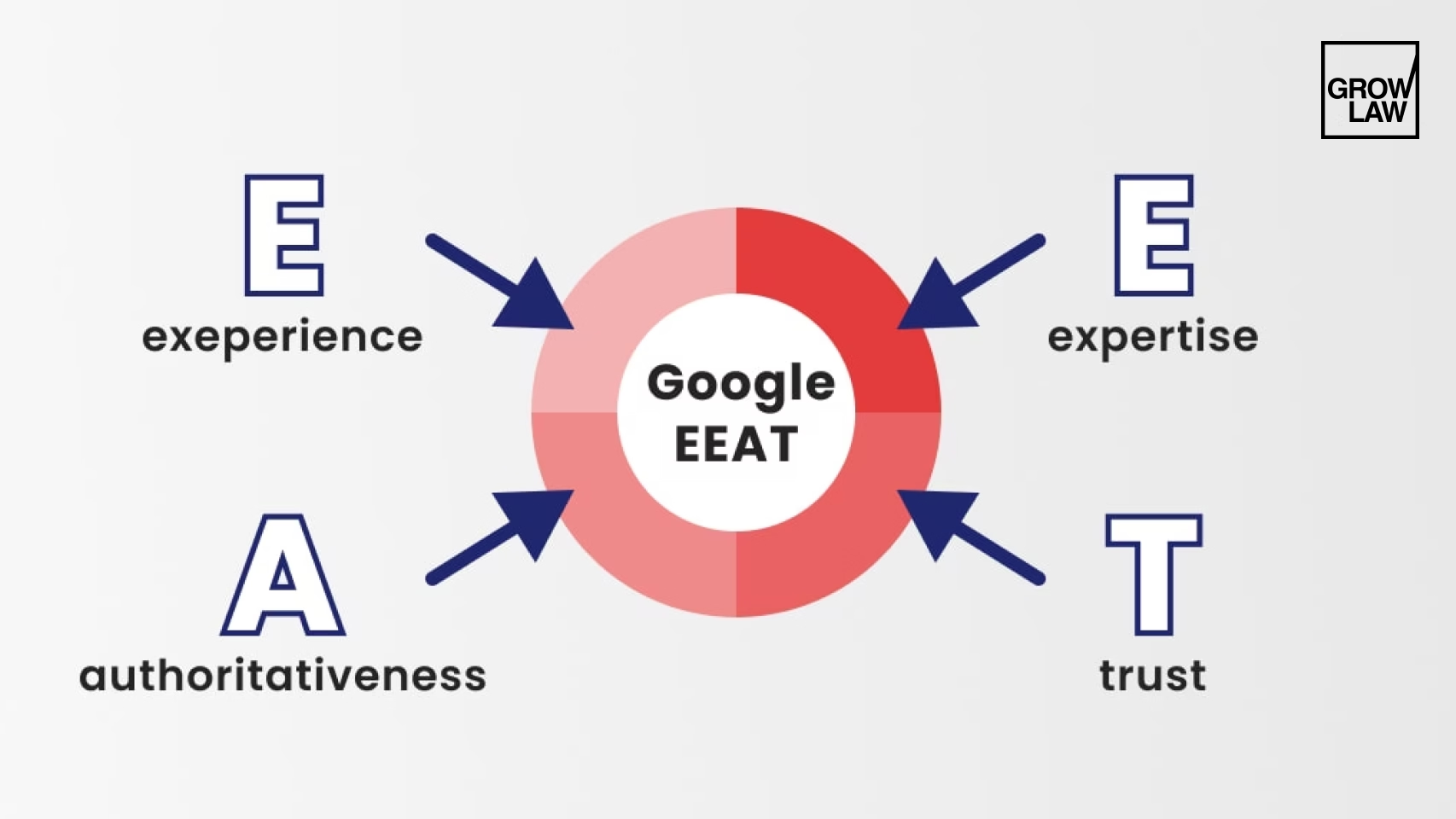
That's what E-E-A-T (Experience, Expertise, Authoritativeness, and Trustworthiness) is designed to measure.
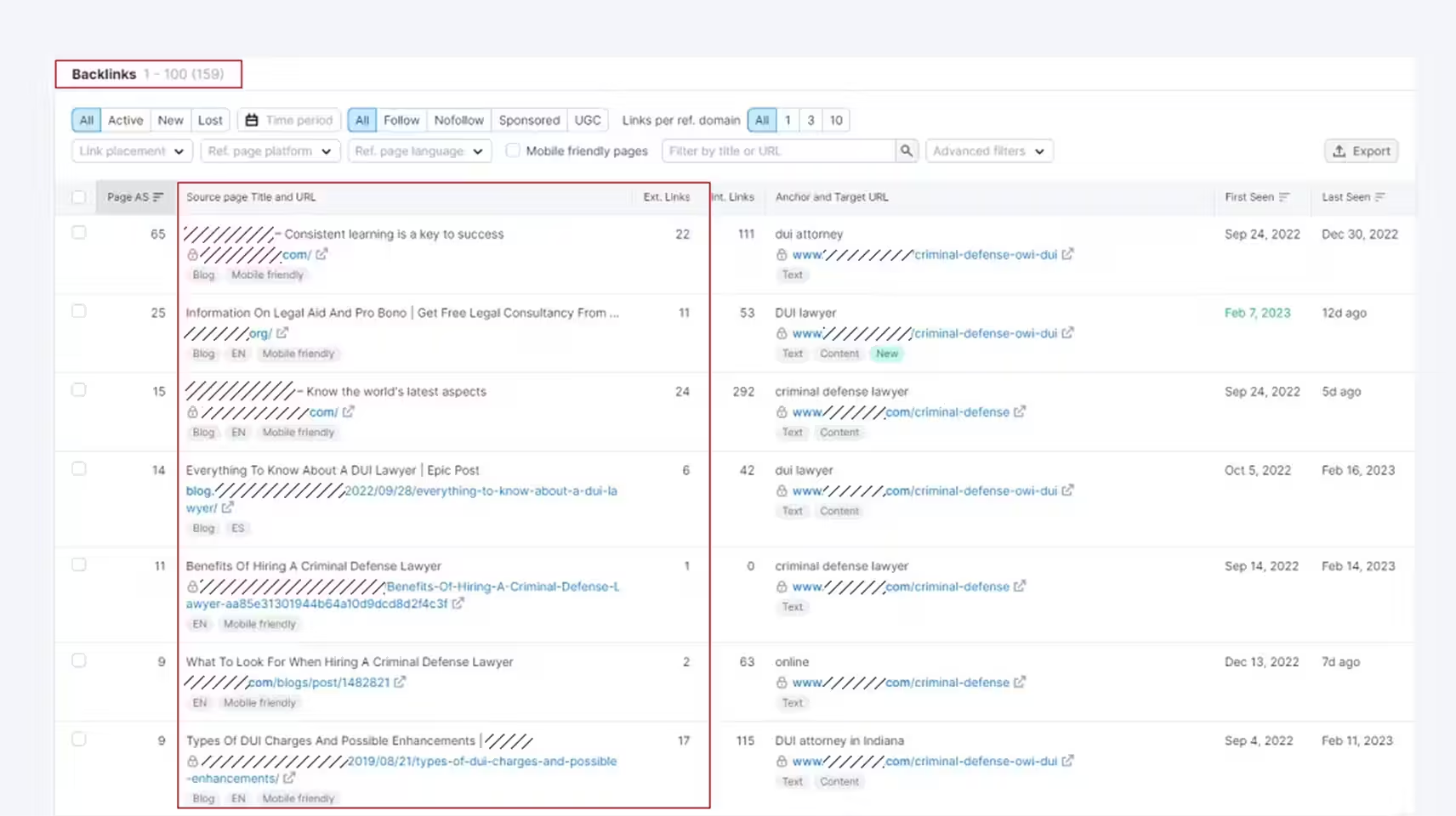
Backlinks and third-party profiles can support your visibility and reputation, but they are only one part of authority building.
SEO veteran, Neil Patel, who’s been doing this for 20+ years, says, "Prioritize authoritative backlinks over volume link building."
We agree! These must be relevant, authoritative links that signal your firm is recognized beyond your own website.
The good news is: criminal defense attorneys have a natural advantage here. You have opinions on DUI checkpoint legality. You've handled cases that made local news.
You can comment on sentencing trends, plea deal statistics, or changes in state criminal law. That's link-worthy content, and local media, legal publications, and bar association websites will cite it.
The highest-value link-building tactics for criminal defense firms:
- Local media outreach: Comment on DUI checkpoint stories, high-profile cases, or criminal justice reform as a named expert source
- Useful tactics may include accurate legal directory profiles, local media commentary, original research, attorney-authored educational resources, community participation, and relevant professional memberships
- Focus on placements that reach the right audience and reinforce the firm’s local and legal credibility
- Guest articles on legal publications: Above the Law, state bar journals, and legal marketing blogs
- Court outcome pages on your own site: Documented case results build E-E-A-T signals that backlinks alone can't replicate
When to Consider Outside Criminal Defense SEO Support
You can do criminal defense SEO yourself. Google's documentation is public, the tools are accessible, and there's no shortage of tutorials (like this one!)
Some firms can manage parts of SEO internally. Outside support may make sense when:
- indexing or template issues remain unresolved;
- your team lacks capacity to create accurate charge and location content;
- local SEO operations are inconsistent;
- authority outreach is not being maintained;
- inquiries and signed cases are not connected to source data; or
- your firm cannot prioritize and execute fixes consistently.
For less than that, a criminal defense SEO expert runs a strategy that compounds month over month.
Compare internal and external support by looking at who will own the work:
- technical and analytics ownership;
- local SEO operations;
- charge-specific content production and attorney review;
- authority outreach;
- lead qualification and CRM attribution; and
- capacity to prioritize and execute fixes consistently.
For an implementation plan, review Grow Law’s criminal defense lawyer SEO services.
Since 2008, we've delivered transformational results for 100+ law firms across the U.S.
The Ahearne Law Firm increased qualified leads by 400% and organic traffic by 1,827%, after we executed an SEO plan tailored to their firm.
Book Your Complimentary Growth Plan Now
Frequently Asked Questions About Criminal Defense SEO

Compare Your Practice Instantly
Stay Ahead of the Competition!
Compare your law firm's performance to Local competitors with our instant assessment tool
Get a clear picture of your firm's performance
Boost your online presence
Compare My Firm
Compare Your Practice Instantly
Stay Ahead of the Competition!
Compare your law firm's performance to Local competitors with our instant assessment tool
Get a clear picture of your firm's performance
Boost your online presence
Compare My Firm
Check Your AI Visibility Instantly
Find Out What AI Is Telling Your Potential Clients
Run our free AI Visibility Report to:
See how often top AI tools mention your law firm
Spot which competitors show up first
Get the next steps to capture more cases
Run My Free AI Report