


Table of Contents
An attorney bio is not a formality. It's the most important E-E-A-T signal on your law firm website. Google evaluates legal content (YMYL — Your Money or Your Life) against the demonstrated expertise of the author. A practice area page attributed to a named, credentialed attorney with a detailed bio page carries fundamentally different weight than the same page with no authorship signal.
Grow Law's team brings 80+ years of combined SEO experience in legal markets — and attorney bio optimization is one of the consistent levers that contributes to the 400%–800% marketing ROI Grow Law clients achieve. Whether you're looking at attorney bio examples from large firms or lawyer bio examples from solo practices, the same optimization principles apply.
In this guide, we explain why attorney bios are your firm's strongest SEO credential, what every lawyer bio page should include, what high-performing attorney bio examples look like, the technical optimization layer, how author bio SEO builds content authority, and how bios should link to practice areas for maximum ranking impact.
Why Attorney Bio Pages Are Your Strongest E-E-A-T Signal
Google's E-E-A-T SEO framework — Experience, Expertise, Authoritativeness, Trustworthiness — applies with particular force to legal content. The Google Search Quality Evaluator Guidelines treat legal content as YMYL, meaning it's evaluated against the highest quality standards.
The primary E-E-A-T signal for YMYL content is not the domain's backlink profile or the page's keyword optimization. It's the demonstrated expertise of the content's author.
Your attorney credentials are the firm's greatest E-E-A-T advantage. A law firm blog post authored by 'Admin' with no credentials gets evaluated fundamentally differently from the same post attributed to a named attorney with a verified bar admission, 15 years of practice experience, and a detailed bio page. The difference isn't marginal — it's the difference between content Google treats as potentially citable and content it treats with uncertainty.
A family law firm had three attorneys with one-paragraph bios — bar admissions, brief practice description, under 150 words each. None of the bio pages were internally linked from practice area content.
After expanding each bio to 600–900 words with bar admissions, notable experience, practice philosophy, attorney-authored FAQ content, and case outcome examples, adding Attorney schema, and linking each bio to relevant practice areas, the firm's domain authority in family law increased measurably, and qualified lead volume grew by 110% over 7 months.
Attorney bio optimization is part of Grow Law's law firm SEO programs: law firm SEO services
What Every Lawyer Bio Page Should Include for SEO
A fully optimized lawyer bio page serves two functions simultaneously: it demonstrates expertise to Google as an E-E-A-T signal, and it convinces the prospect reading it that this is the right attorney to hire. These goals are not in conflict. They require the same content.
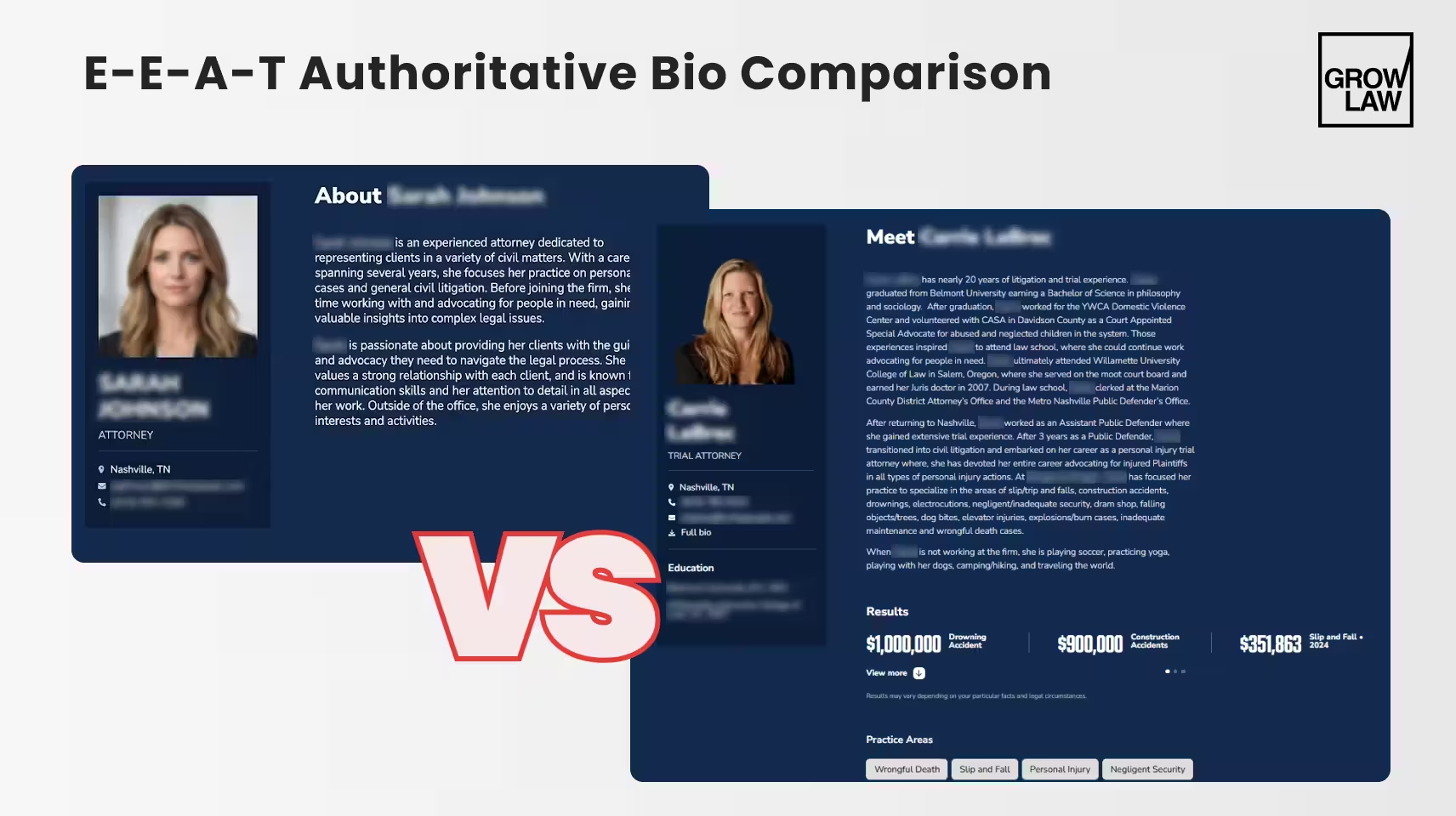
Attorney Bio Examples: What High-Performing Bios Look Like
The difference between attorney bio examples that convert and ones that don't isn't word count — it's the presence of specific, verifiable claims that signal both expertise (to Google) and trustworthiness (to the prospect).
A credential list is not a bio. A credential list with context, voice, and demonstrated outcomes is.
High-performing attorney bios follow a consistent structure:
Eli Fuchsberg of Jacob Fuchsberg Law Firm is an example of a named partner whose credentialed online presence is core to the firm's brand and authority. The firm achieved a 980% marketing ROI, 196% increase in qualified leads, and 200% organic traffic increase — results that reflect what strong attorney entity signals produce when combined with a full SEO program.
Loren Barr of Barr & Douds Attorneys achieved a 29,340% increase in organic traffic — a result that compounds when named partner authority is built systematically into the site's content and linking architecture.
Attorney Bio SEO: Technical Optimization
The content of an attorney bio page produces E-E-A-T signals. The technical implementation determines whether Google can read and act on those signals. Both layers are required as strong bio content with weak technical implementation produces partial results.
Implement Attorney schema using Schema.org's Person type extended with legal-specific properties. The “sameAs” property should link to the attorney's state bar profile, LinkedIn, and any authoritative legal directories — these connections help AI models and search engines recognize the attorney as a verified entity.
Author Bio SEO: How Attorney Bylines Build Content Authority
Author bio SEO is the practice of connecting content to a credentialed attorney entity through bylines, bio pages, and author schema.
It's one of the highest-leverage E-E-A-T improvements available to law firms because it doesn't require new content. It requires attributing existing content to the attorneys who should be associated with it.
A criminal defense firm had published 30+ blog posts over two years, all without author attribution. Google was unable to connect the content to a credentialed legal expert.
After adding attorney bylines to every article, building out each attorney's bio page with bar credentials, practice focus, and published article links, and implementing author schema on all content pages, the firm saw a 65% increase in featured snippet appearances for criminal defense queries within 4 months, without publishing a single new article.
The byline and bio structure gave Google the entity signals it needed to surface existing content with higher confidence.
The author bio SEO loop works in both directions: the bio page builds the attorney's E-E-A-T signals through credentials and schema, and the bylines connect those signals to every piece of content the attorney authors.
Each new article strengthens the authority connection. Over time, the attorney becomes a recognized entity for their practice area and geography, which is exactly what Google needs to cite the content with confidence.
Grow Law builds the attorney SEO infrastructure — bio optimization, schema, author attribution — as part of every law firm SEO program: attorney SEO
How Attorney Bios Should Link to Practice Areas
The internal linking architecture between attorney bios and practice areas is one of the most consistently underutilized SEO levers on law firm websites.
When implemented correctly, it creates a bidirectional authority flow: practice area pages link to attorney bios that demonstrate expertise, and bio pages link back to practice area pages, passing the authority the bio has accumulated.
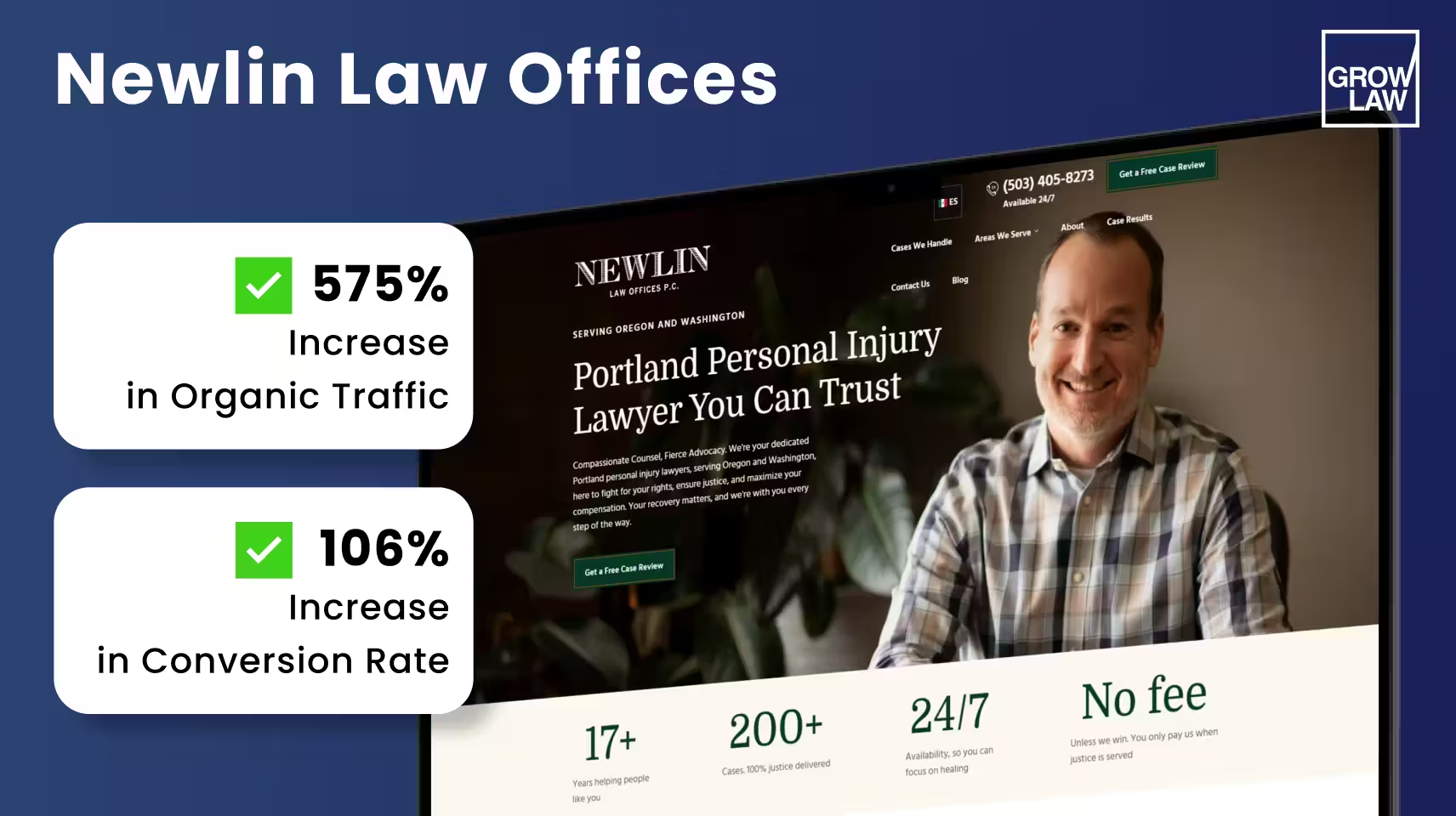
Newlin Law Offices implemented a structured attorney-plus-practice-area content architecture — including proper bio-to-practice-area internal linking — and achieved a 575% organic traffic increase and 106% conversion rate improvement over 10 months. The linking structure allowed practice area page authority to strengthen bio pages and vice versa, compounding the E-E-A-T signals across the entire site.
Track the impact of your bio and internal link changes using Google Search Console. Monitor impressions and clicks for attorney name queries and practice area and city queries separately to see how bio optimization affects both branded and non-branded search visibility.
Summary
- Attorney bio pages are the primary E-E-A-T signal for law firm websites — Google evaluates YMYL legal content against the demonstrated expertise of the named author, making bio optimization a prerequisite for content performance.
- Every lawyer bio page should include: full name, bar admissions (with bar number), education, linked practice areas, years of experience, notable outcomes, peer recognition, a professional photo, and a CTA.
- Attorney bio examples that convert are structured: opening paragraph with credentials and client type, credentials block, practice philosophy, case outcomes, peer recognition, and CTA. A credential list is not a bio.
- Technical optimization: Attorney schema with sameAs links to bar directory and LinkedIn, proper page title format, no duplicate content across attorney bios, and author schema on all content pages.
- Author bio SEO compounds without new content. Adding attorney bylines to existing articles and implementing author schema produced a 65% increase in featured snippets for one firm within 4 months.
- Internal linking from bio pages to practice areas and back creates a bidirectional authority flow. The most consistently underutilized SEO lever on law firm websites.
Ready to build attorney bio pages that drive rankings and qualified leads? Learn more about our law firm SEO agency.
Frequently Asked Questions

Compare Your Practice Instantly
Stay Ahead of the Competition!
Compare your law firm's performance to Local competitors with our instant assessment tool
Get a clear picture of your firm's performance
Boost your online presence
Compare My Firm
Compare Your Practice Instantly
Stay Ahead of the Competition!
Compare your law firm's performance to Local competitors with our instant assessment tool
Get a clear picture of your firm's performance
Boost your online presence
Compare My Firm
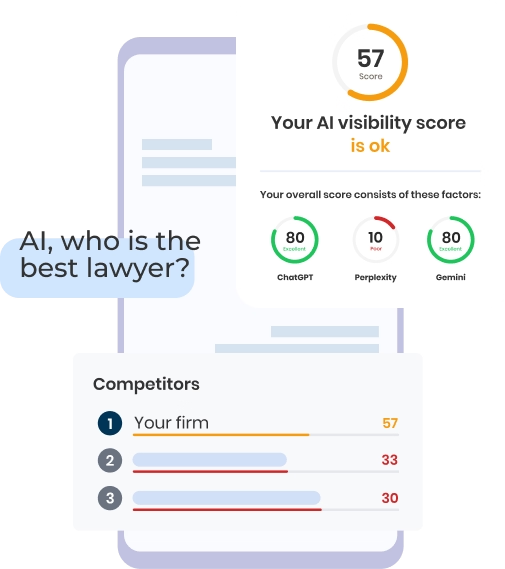
Check Your AI Visibility Instantly
Find Out What AI Is Telling Your Potential Clients
Run our free AI Visibility Report to:
See how often top AI tools mention your law firm
Spot which competitors show up first
Get the next steps to capture more cases
Run My Free AI Report
.avif)
.avif)
.avif)

