


Table of Contents
Small law firm marketing is not a scaled-down version of what BigLaw does — it's a different discipline with different constraints and different levers.
This guide covers the channels, strategies, and budget frameworks that actually work for solo attorneys and small practices: how to build a marketing foundation that generates consistent leads without requiring a dedicated staff or an enterprise-level budget.
We'll walk through how to set a strategy, what to spend, which digital channels to prioritize, how to build long-term organic visibility, and the most common mistakes that keep small firms stuck.
Why Small Law Firm Marketing Is Different — and Why It's Harder Than It Looks
Most small law firms compete on an uneven playing field. According to industry data, 75% of small law firms face competition primarily from other small firms, while 53% also compete directly against significantly larger practices with established brand recognition and marketing teams.
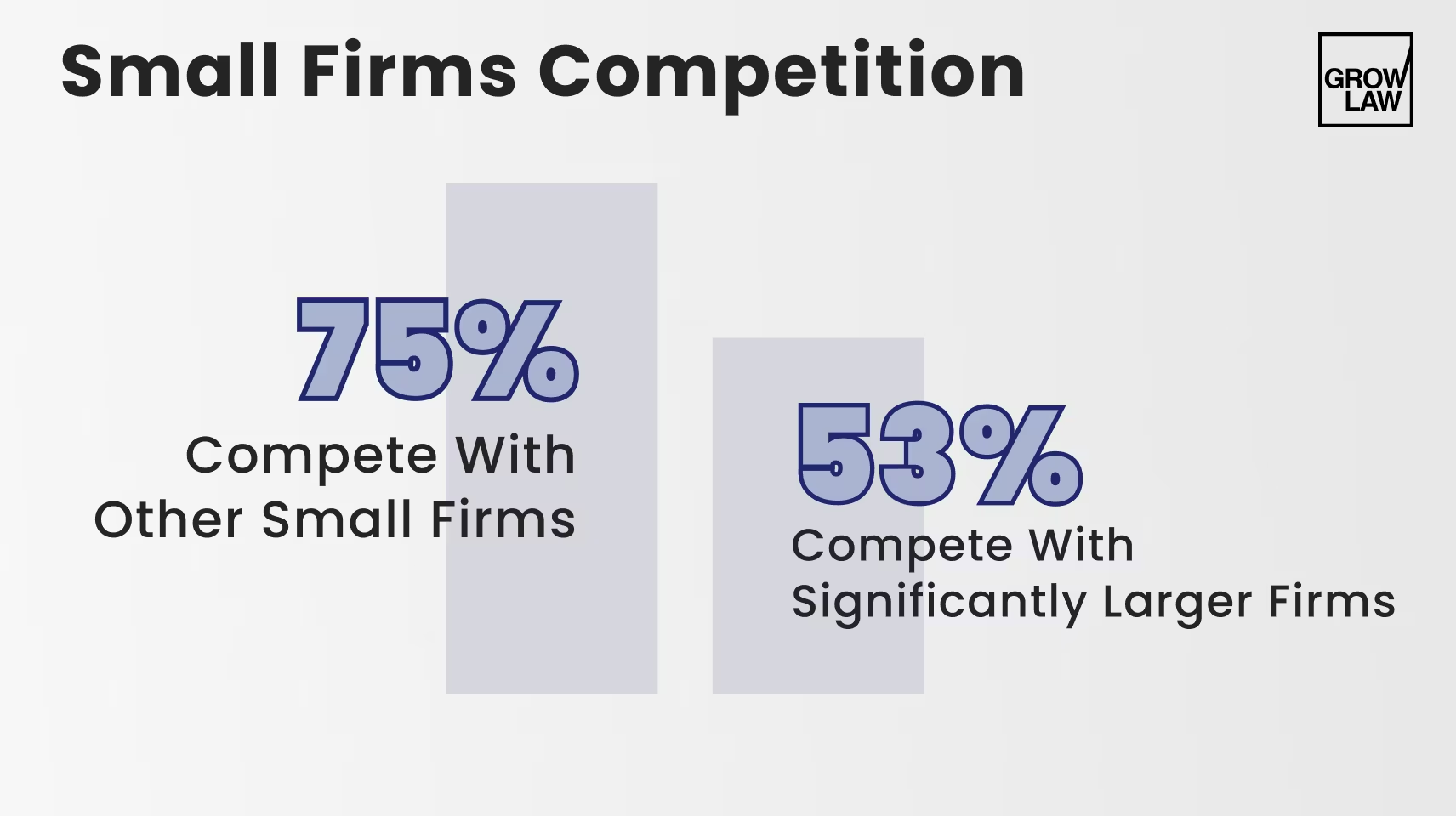
That means you're fighting on two fronts simultaneously — against firms your size who are learning the same tactics you are, and against larger firms who have resources you don't.
The typical small firm marketing challenge isn't a lack of good intentions. It's structural: no dedicated marketing person, a budget that feels too small to matter, and a reliance on referrals that work inconsistently and don't scale.
Referrals are not a strategy — they're a byproduct of reputation. Building a real pipeline requires deliberate, consistent effort across channels that generate demand, not just reward it.
The firms that break out of this pattern are not the ones that spend the most. They're the ones that stop spreading thin and build on a defined foundation.
Build a Marketing Strategy Before You Spend a Dollar
There's a consistent pattern we see with new clients: scattered spend across channels with no connection to each other and no way to measure what's working.
A solo family law attorney came to us after 18 months of paying for Google Ads, a Yelp listing, and a local magazine ad — roughly $800/month with no tracking in place. She had no reliable pipeline and was entirely dependent on referrals.
After consolidating her spend into a structured plan (SEO + one targeted PPC campaign + Google Business Profile optimization), the firm generated 3x more consultation requests within 5 months and cut cost per lead by 40%.
The difference wasn't the budget. She was already spending. The difference was a strategy — a clear definition of who she was targeting, which channels were right for that audience, and what success looked like in 90 days.
Marketing for small law firms starts with three foundational decisions: who is your ideal client (practice area, geography, case type), which 1–2 channels can you actually execute consistently, and what's your measurable 90-day goal. Everything else follows from those answers.
A simple pre-spend checklist:
A structured marketing approach is what separates growing firms from stagnant ones. See how Grow Law approaches it: marketing services for small law firms
How to Set a Realistic Small Law Firm Marketing Budget
The standard guideline is 2%–5% of gross revenue allocated to marketing. For a small firm generating $500K annually, that's $10,000–$25,000/year, or roughly $830–$2,000/month. That's a reasonable floor for a solo attorney in a less competitive market.
In a competitive metro — or when entering a new practice area — expect to spend more. Grow Law's full-service marketing programs for small firms run $2,500–$15,000/month, depending on scope, market size, and channel mix.
That range reflects what it actually costs to compete in most markets.
The framing that matters here is ROI, not cost. Omar Ochoa Law, a small personal injury practice, achieved a 1,087% increase in qualified leads after implementing a full digital marketing program — along with an 86% decrease in cost per qualified lead and a 655% increase in organic traffic.
If a case is worth $20,000 in revenue, and marketing generates two additional cases per month, the math justifies almost any reasonable monthly spend.
Marketing is not an expense if it brings in cases worth 10x the spend. The question isn't whether you can afford to market — it's whether you can afford not to.
The Digital Channels That Actually Move the Needle for Small Firms
Not all channels perform equally for small law firms. The data from our client work is consistent: 79% of law firms consider SEO the most effective marketing channel, and 81% consider content marketing their top investment.
That's not a coincidence — both build assets that compound over time rather than stopping the moment you cut the budget.
Here's how the core channels compare for small firms:
SEO and Google Business Profile are the foundation — they determine whether you show up when someone searches for an attorney in your city.
PPC is the accelerant — useful when you need leads now and can afford to pay per click.
Content is the long-term asset — every article and practice area page builds topical authority that compounds monthly.
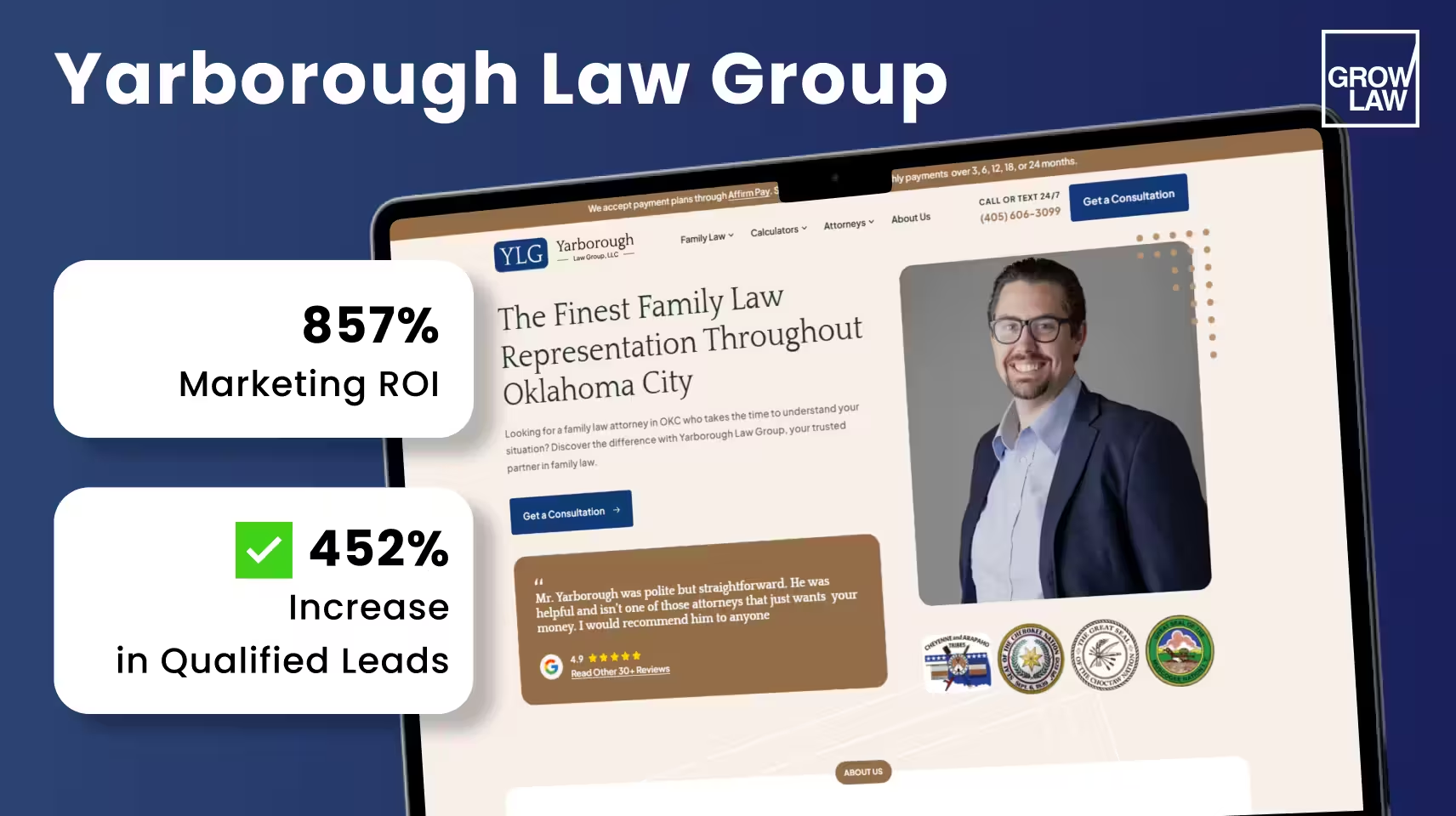
Yarborough Law Group implemented an organic-first strategy through Grow Law and saw 452% more qualified leads and 2,938% organic traffic growth. Cole Yarborough noted that the firm's clientele filled to the point where he had to bring on additional staff — a pipeline problem most small firms would welcome.
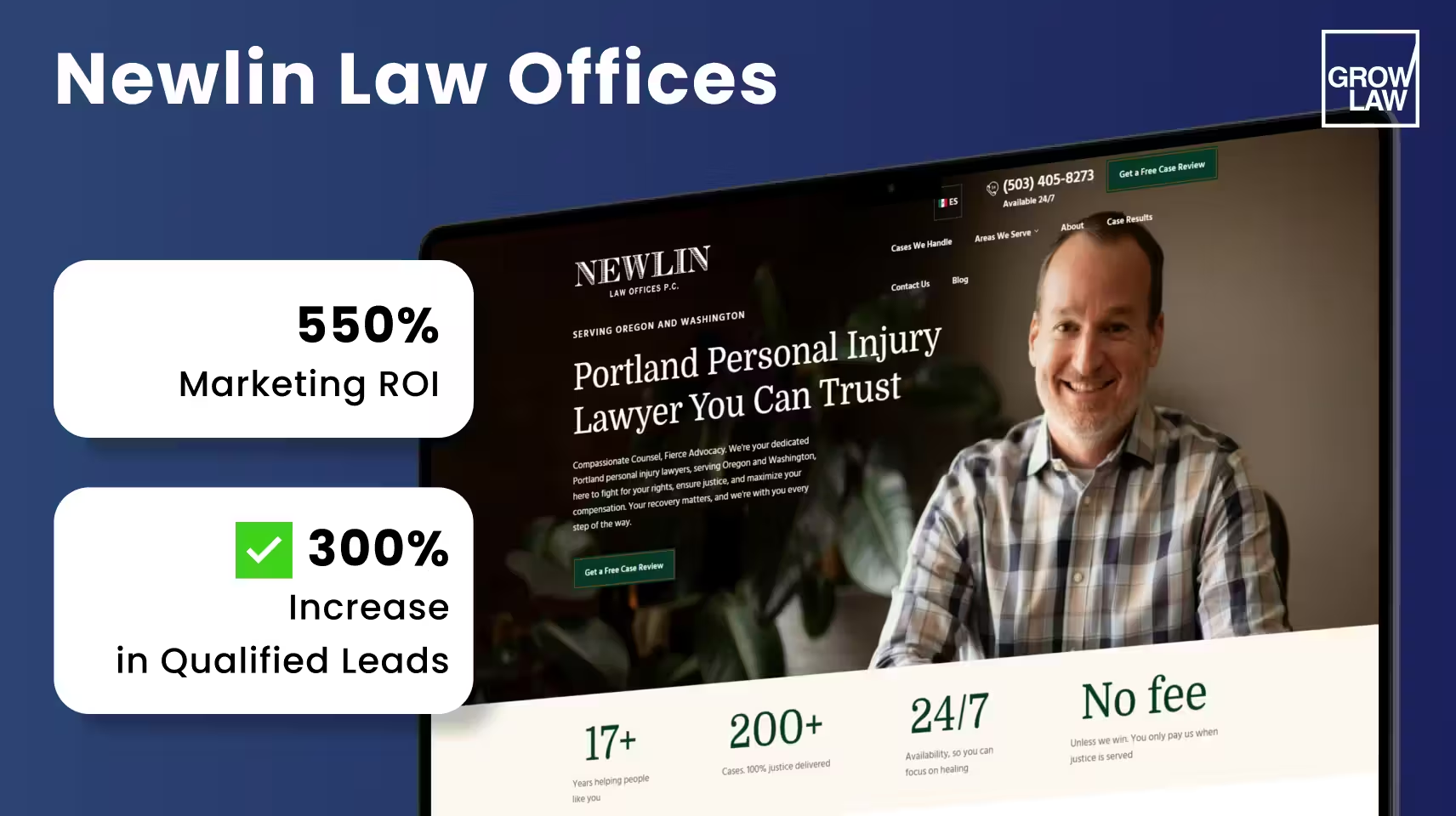
For a leaner example of what marketing a small law firm can produce when the budget is modest but the execution is focused: Newlin Law Offices generated a 550% marketing ROI, 300% more qualified leads, and a 106% increase in conversion rate — without the scale of a larger practice.
Content Marketing and SEO: The Long Game That Compounds
The fundamental difference between paid ads and content-driven SEO is what happens when you stop paying. PPC stops the moment the budget runs out.
Content and SEO accumulate — each article, each practice area page, each FAQ targeting a client question becomes a permanent asset that generates traffic without ongoing cost.
We worked with a small immigration law firm that came to us with fewer than 200 organic sessions per month. Their primary competitor in the same metro had 40+ blog posts ranking on page one for practice-area queries. After a 6-month campaign — 12 new articles, practice area page rewrites, and Google Business Profile optimization — the firm reached 1,800+ monthly sessions and cut their paid ad spend by 30% without losing lead volume.
The content categories that matter most for small law firms: blog posts targeting the questions prospects actually ask before hiring an attorney, practice area pages built around geographic + practice type keywords, local landing pages for each service area, and FAQ content that answers the specific concerns your target client has. 65% of law firms now allocate the majority of their marketing budget to online channels — content and SEO are the primary reasons.
Texas Horizons Law Group saw a 377% increase in organic traffic through sustained content and SEO investment — a result that builds over years, not months, and that no paid channel can replicate.
.avif)
Ongoing content and SEO require consistent execution over time. See how Grow Law handles it for small practices: small law firm marketing agency
The 5 Marketing Mistakes Small Law Firms Keep Making
These aren't theoretical. They come from intake calls and audits with firms who've been spending money without results.
- No tracking setup, spending blind. If you can't tell which channel or campaign generated a consultation request, you're making budget decisions based on guesswork. Google Analytics, call tracking, and form attribution take a few hours to configure and immediately change how you allocate spend.
- Treating referrals as a full pipeline. Referrals are good. They're also unpredictable, unscalable, and outside your control. A firm that runs entirely on referrals has no real marketing pipeline — it has a dependency.
- Inconsistent Google Business Profile. Wrong hours, outdated photos, no responses to reviews, no posts — a neglected GBP actively hurts local rankings. It's one of the highest-ROI assets a small firm has, and most firms manage it once and forget it. Managing your profile is free and takes minutes at business.google.com.
- Doing everything in-house without the bandwidth. An attorney trying to manage PPC campaigns, write blog posts, and optimize their own website is not going to do any of it well. Marketing requires consistent execution. If there isn't bandwidth internally, that work belongs outside the firm.
- Choosing channels based on familiarity rather than fit. A family law attorney spending on Facebook because they use it personally, when their clients are searching Google for 'divorce attorney near me' — that's a fit problem. Channel selection should follow where your specific client looks, not what's comfortable.
Summary
- Small law firms face a two-front competition: other small firms and larger practices with more resources — a structured strategy is the equalizer.
- Build a strategy before you spend: define your target client, pick 1–2 channels, set a 90-day measurable goal.
- Budget 2%–5% of revenue as a baseline; competitive markets and new practice areas justify higher spend.
- SEO and GBP are the foundation, PPC is the accelerant, and content is the long-term asset — don't treat them as interchangeable.
- Content marketing and SEO compound over time; every article and practice area page becomes a permanent lead-generation asset.
- The most common mistakes — no tracking, referral dependency, neglected GBP — are fixable in weeks, not months.
Ready to build a real marketing foundation for your practice? Law firm marketing for small practices
Frequently Asked Questions

Compare Your Practice Instantly
Stay Ahead of the Competition!
Compare your law firm's performance to Local competitors with our instant assessment tool
Get a clear picture of your firm's performance
Boost your online presence
Compare My Firm
Compare Your Practice Instantly
Stay Ahead of the Competition!
Compare your law firm's performance to Local competitors with our instant assessment tool
Get a clear picture of your firm's performance
Boost your online presence
Compare My Firm
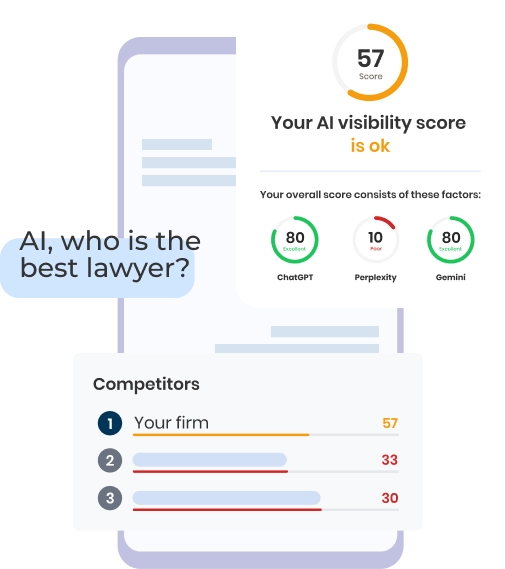
Check Your AI Visibility Instantly
Find Out What AI Is Telling Your Potential Clients
Run our free AI Visibility Report to:
See how often top AI tools mention your law firm
Spot which competitors show up first
Get the next steps to capture more cases
Run My Free AI Report
.avif)
.avif)
.avif)

