


Table of Contents
SEO for intellectual property attorneys presents a challenge that most IP lawyers don't anticipate: your clients don't search the way you practice.
The language of IP law — patent prosecution, trademark clearance, IP portfolio management — is not the language of a startup founder trying to protect their product. Bridging that gap is where IP lawyer marketing begins — and firms that get it right generate up to 10x more leads than those relying on referrals and directory listings alone.
This guide covers what makes IP attorney SEO different from general law firm SEO, how to map the keyword landscape across patent, trademark, and copyright practices, what content strategy looks like in a niche with lower search volume but higher case value, and what technical and E-E-A-T signals matter most when you're competing nationally.
Why SEO Works Differently for Intellectual Property Attorneys
Most IP attorneys who have tried SEO describe the same experience: they added keywords to their website, published a few articles about patent law, and saw no results.
The reason is almost always the same — the content was written in legal terminology that the firm's actual target clients weren't using.
A patent attorney with deep expertise in software and biotech came to Grow Law, generating zero organic traffic from the startup and tech company clients they wanted to serve. Their website described services in internal legal language — "patent prosecution," "IP portfolio management," "freedom-to-operate opinions." Their target clients — startup founders and CTOs — were searching "how to patent software," "startup IP attorney," "trademark registration for tech companies."
After a keyword overhaul targeting client-language queries and rebuilding the content architecture around them, organic sessions increased 340% within 8 months, and the firm signed three new tech company retainer clients from organic search alone.
This is the core principle of intellectual property lawyer marketing: SEO starts with understanding how clients describe their problem, not how attorneys describe their service.
The firm that maps those two vocabularies together — and builds content at every intersection — wins the organic search channel.
See how Grow Law builds SEO strategies for IP firms: intellectual property lawyer marketing
The IP Law Search Landscape: What Clients Actually Search For
IP law covers four distinct practice areas, each with its own search behavior and client profile. Understanding how each maps to search intent is the foundation of patent lawyer SEO and broader IP attorney keyword strategy.
The search volume gap between IP law and higher-volume practice areas like personal injury or family law is real. But so is the case value gap.
A single patent prosecution engagement or trademark portfolio retainer generates significantly more revenue than most consumer law matters.
The SEO math is different: 15 qualified organic leads per month in IP law can represent more revenue than 150 leads in a commoditized practice area. Grow Law's IP and law firm clients report 400%–800%+ marketing ROI — and Grow Law has generated over $50 million in qualified leads across its client base in the last 6 months. Those numbers reflect what happens when digital marketing is built around case value, not lead volume.
Local vs. National SEO for IP Law Firms
Most law firm SEO is fundamentally local. IP attorney SEO is different: several IP services have national or even international search intent, which changes the strategy significantly.
IP firms that compete nationally need a stronger topical authority profile than local-only firms. A patent attorney trying to rank for 'how to patent software' is competing with national publications, bar association resources, and established IP firms in major tech markets.
Building that topical authority requires consistent, in-depth content production over 12–18 months — not a one-time website optimization.
An IP firm's SEO strategy should mirror how their best clients found them. If your most valuable clients came from Google searches about startup IP or software patents, that's where to build authority — not around the legal terminology on your current service pages.
Content Strategy for IP Attorneys: Building Authority in a Low-Volume Niche
The most common objection we hear from IP attorneys about SEO: "Our niche has too little search volume to bother." It's a misreading of the numbers. Low absolute search volume does not mean low opportunity — it means lower competition for high-value queries.
An IP firm focused on trademark and copyright came to Grow Law with that exact assumption. A keyword audit found 40+ monthly search opportunities their metro competitors weren't targeting — "how to trademark a logo," "copyright infringement small business," "trademark vs. copyright," "how long does trademark registration take."
After building 18 topic-specific pages optimized for featured snippets, the firm became the dominant organic result for their primary service area in their market. The outcome: 12–15 qualified inbound consultations per month from organic search alone, replacing a paid ad dependency entirely.
The content architecture that produces those results:
Newlin Law Offices built this kind of content foundation and generated a 575% increase in organic traffic — along with a 106% increase in conversion rate. The conversion rate improvement is the key signal: targeted content doesn't just bring more traffic, it brings better-fit visitors who convert at higher rates than paid traffic.

For context, the average Google Ads conversion rate across industries is around 3.75% — Grow Law's IP-focused PPC campaigns regularly exceed 100%. Organic content, when built on the right keyword strategy, produces comparable conversion quality without the per-click cost.
Grow Law builds content strategies specifically for IP firms competing in low-volume, high-value niches: SEO for IP attorneys
Technical SEO for Intellectual Property Law Firm Websites
IP law firm websites have specific technical SEO challenges that general law firm guides don't cover. The most common ones we see in audits:
The highest-impact technical fix for most IP firms is schema implementation combined with site architecture cleanup.
These two changes — properly siloing patent, trademark, and copyright practice areas and marking up each with the right structured data — have the most direct effect on how Google categorizes and ranks the content.
Patent Lawyer SEO: The Most Competitive IP Niche
Patent SEO deserves specific attention because it operates differently from trademark or copyright SEO in three important ways: the client is more technically sophisticated, the competition is more geographically concentrated in tech markets, and the E-E-A-T signals that matter are unique to patent practice.
Patent clients — inventors, startup founders, R&D teams — evaluate IP attorneys differently than most legal clients.
They're looking for technical credibility, not just legal credentials. A patent attorney with an engineering degree and USPTO registration who publishes detailed content about software patent strategy is going to outperform a generalist IP firm for startup patent queries, regardless of which firm has the larger website.
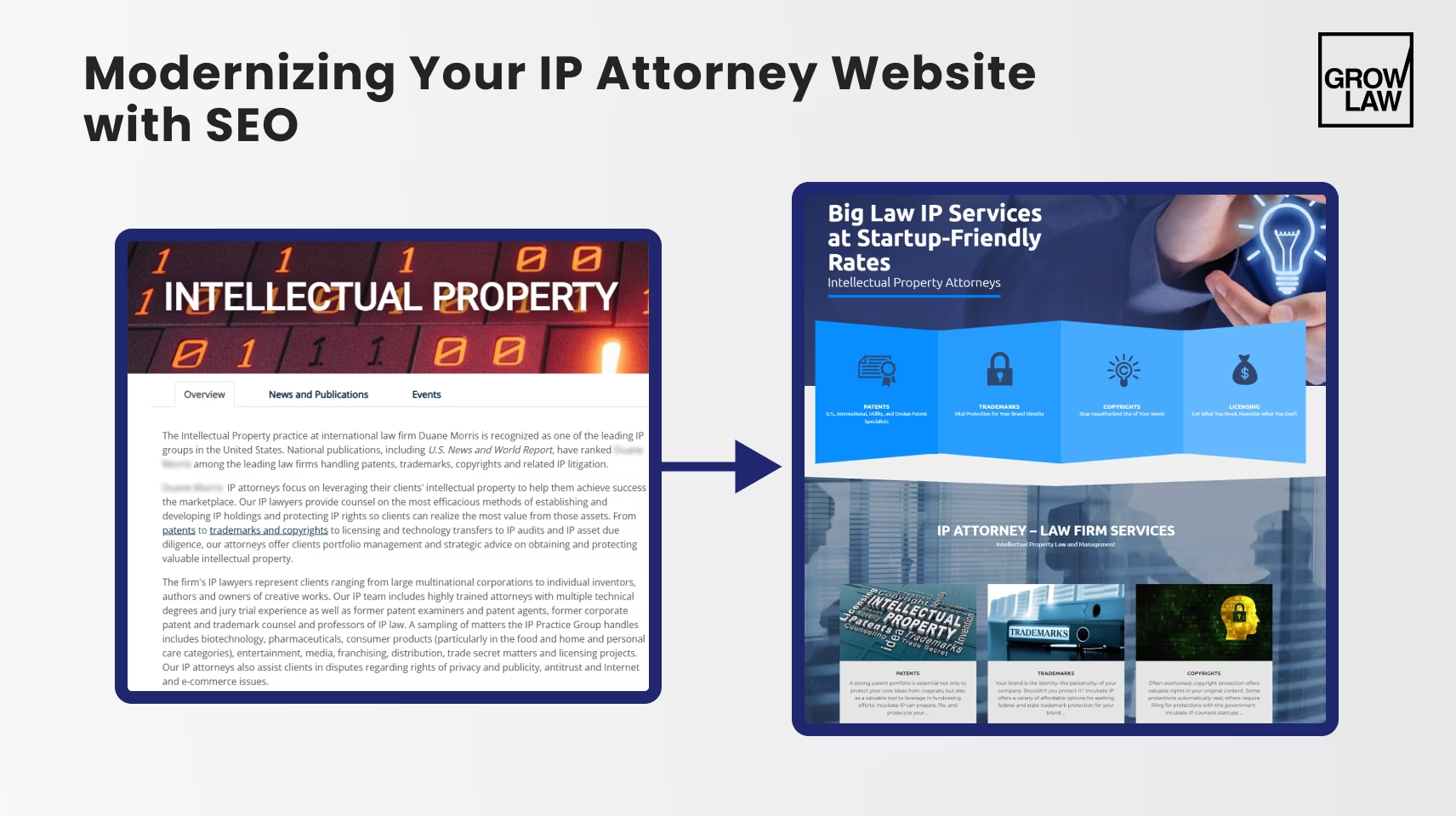
Omar Ochoa Law Firm achieved a 655% increase in organic traffic and a 1,087% increase in qualified leads through sustained digital marketing investment with Grow Law.
While not an IP-specific firm, the mechanics are identical: consistent content production targeting the right queries, combined with strong technical SEO, produces compounding organic growth that no paid channel can replicate at the same cost over time.
Summary
- SEO for intellectual property attorneys requires a client-language keyword strategy — startup founders and inventors don't search in legal terminology, and firms that bridge that gap win organic search.
- IP law covers four distinct search landscapes (patents, trademarks, copyrights, trade secrets) — each with different client profiles, query patterns, and content requirements.
- IP attorney SEO operates on both local and national intent simultaneously — geo-targeted pages serve local clients, while authoritative guides and explainers capture national informational traffic.
- Low search volume in IP law does not mean low opportunity — case value per client is higher, competition for key queries is lower, and content depth outperforms content volume in this niche.
- Patent lawyer SEO requires technical E-E-A-T signals — USPTO registration, technical degrees, and industry-specific content — that general law firm SEO work doesn't address.
- Compounding SEO results take 6–12 months to materialize, but produce sustained lead flow that paid channels can't match at scale — Sequoia Legal generated 1,053% marketing ROI and 276% more qualified leads through this approach.
Ready to build a consistent pipeline of patent, trademark, and copyright clients through organic search? Intellectual property law firm marketing services
Frequently Asked Questions

Compare Your Practice Instantly
Stay Ahead of the Competition!
Compare your law firm's performance to Local competitors with our instant assessment tool
Get a clear picture of your firm's performance
Boost your online presence
Compare My Firm
Compare Your Practice Instantly
Stay Ahead of the Competition!
Compare your law firm's performance to Local competitors with our instant assessment tool
Get a clear picture of your firm's performance
Boost your online presence
Compare My Firm
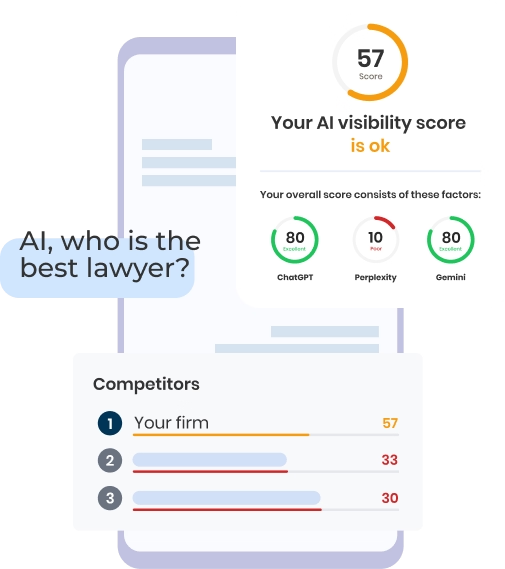
Check Your AI Visibility Instantly
Find Out What AI Is Telling Your Potential Clients
Run our free AI Visibility Report to:
See how often top AI tools mention your law firm
Spot which competitors show up first
Get the next steps to capture more cases
Run My Free AI Report