


Table of Contents
Pay-per-click (PPC) for criminal defense lawyers operates on a unique timeline.
Someone gets arrested. Within hours, their family is on Google (or ChatGPT) searching for help, and by that afternoon, they've hired someone.
Criminal defense lawyer PPC puts you in front of those desperate prospects at the exact moment they need you.
But in criminal defense advertising, where one retained client can be worth $5,000–$15,000+, the keywords are costly, and the competition is intense.
We don’t want you to guess your way through this process. At Grow Law, our law firm PPC management has delivered results like a 440% qualified PPC lead surge for KJT Law Group.
We’ll break down our exact PPC framework to tighten your own criminal defense campaigns.
What is PPC for Criminal Defense Lawyers?
PPC (pay-per-click) is a type of online advertising where you pay only when someone clicks on your ad.
You bid on phrases like "gun lawyer near me" or "criminal defense attorney in Chicago." When someone searches for those keywords, your ad could show up at the very top, even above organic listings.
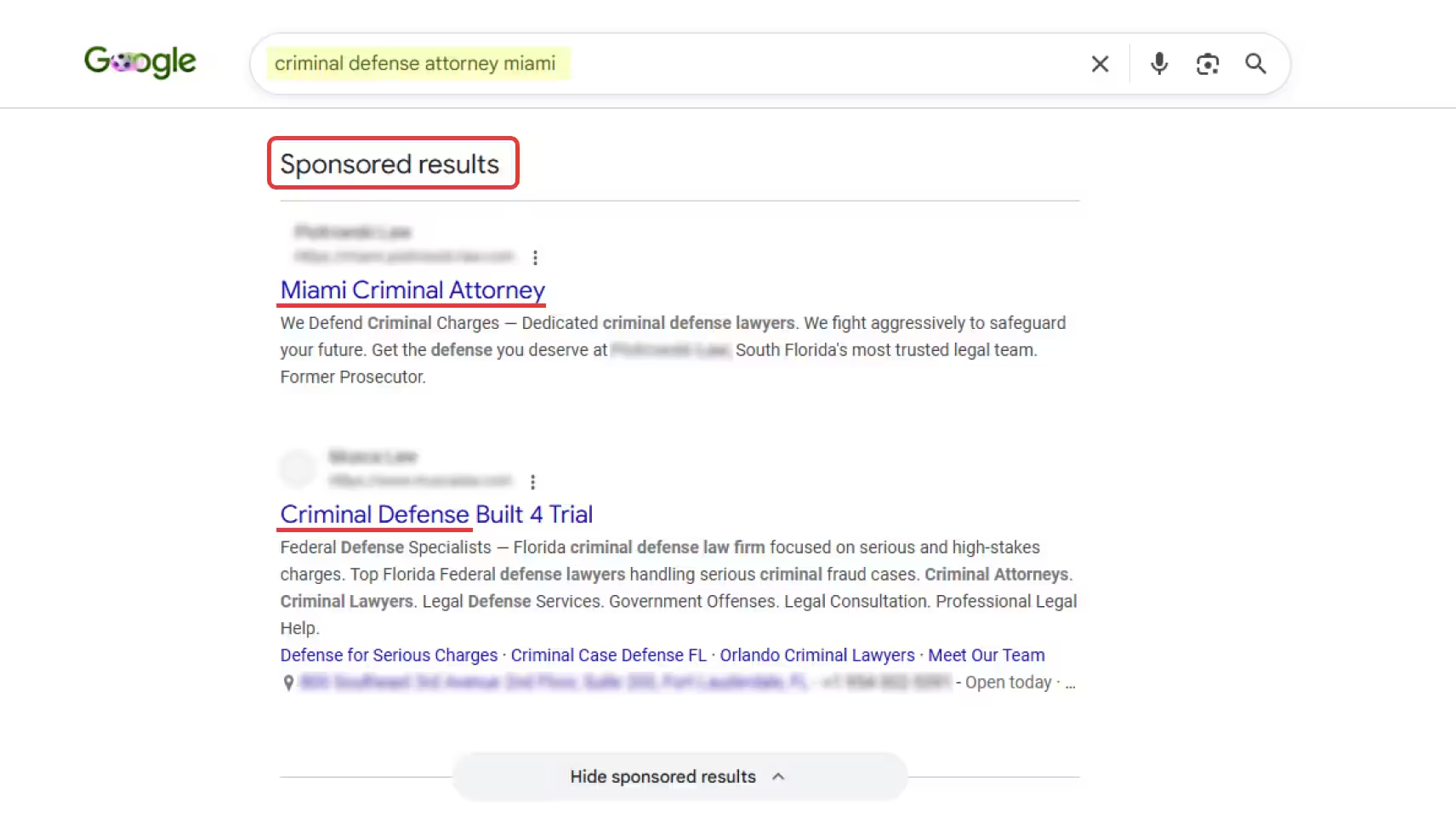
If they click, you pay a small fee.
Criminal defense Google Ads work because the intent is immediate. Someone was arrested in the night, their court date is the following morning, and a family member is looking for a lawyer ASAP.
Searches happen 24/7 (weekends, holidays, 2 a.m.) and every one of them is a time-sensitive hiring decision.
This is why speed-to-lead matters; i.e., how quickly you respond to leads. InsideSales reports you’ll be 8X more likely to convert a lead if you respond in the first 5 minutes. Take this into account as well in your PPC.
Ultimately, SEO (search engine optimization) is a great option to get leads consistently, but it takes 3-6 months to ramp up.
Criminal defense PPC campaigns put you at the top of results much faster, while SEO for criminal defense lawyers builds sustainable organic visibility over time.
Is the payoff of PPC for criminal defense lawyers worth it? We’d say yes. WordStream reports Google Ads delivers an average ROI of $2 for every $1 spent, making it one of the higher-ROI channels available to criminal defense firms.
What Are the Benefits of Criminal Defense PPC Advertising?
Pay-per-click gives you an edge by putting your firm in front of potential clients at the exact moment they search.
And it works. 46% of all clicks go to the top 3 PPC ads. This shows you just how much traffic you can capture by securing a top ad position!
In our experience over the last 18 years, here's what makes criminal defense lawyer PPC so effective:
- Refined Audience Targeting: Target by ZIP code, device, or proximity to jails and courthouses, reaching people at the moment of highest intent.
- Immediate Visibility: Appear at the top of results the same week you launch, critical when you're competing for urgent DUI and felony leads.
- Controlled Ad Spend: Set daily caps and adjust bids in real time, so you're never overspending in slow periods.
- Full Performance Tracking: Monitor clicks, calls, and consultations with complete transparency, and tie spend directly to retained cases.
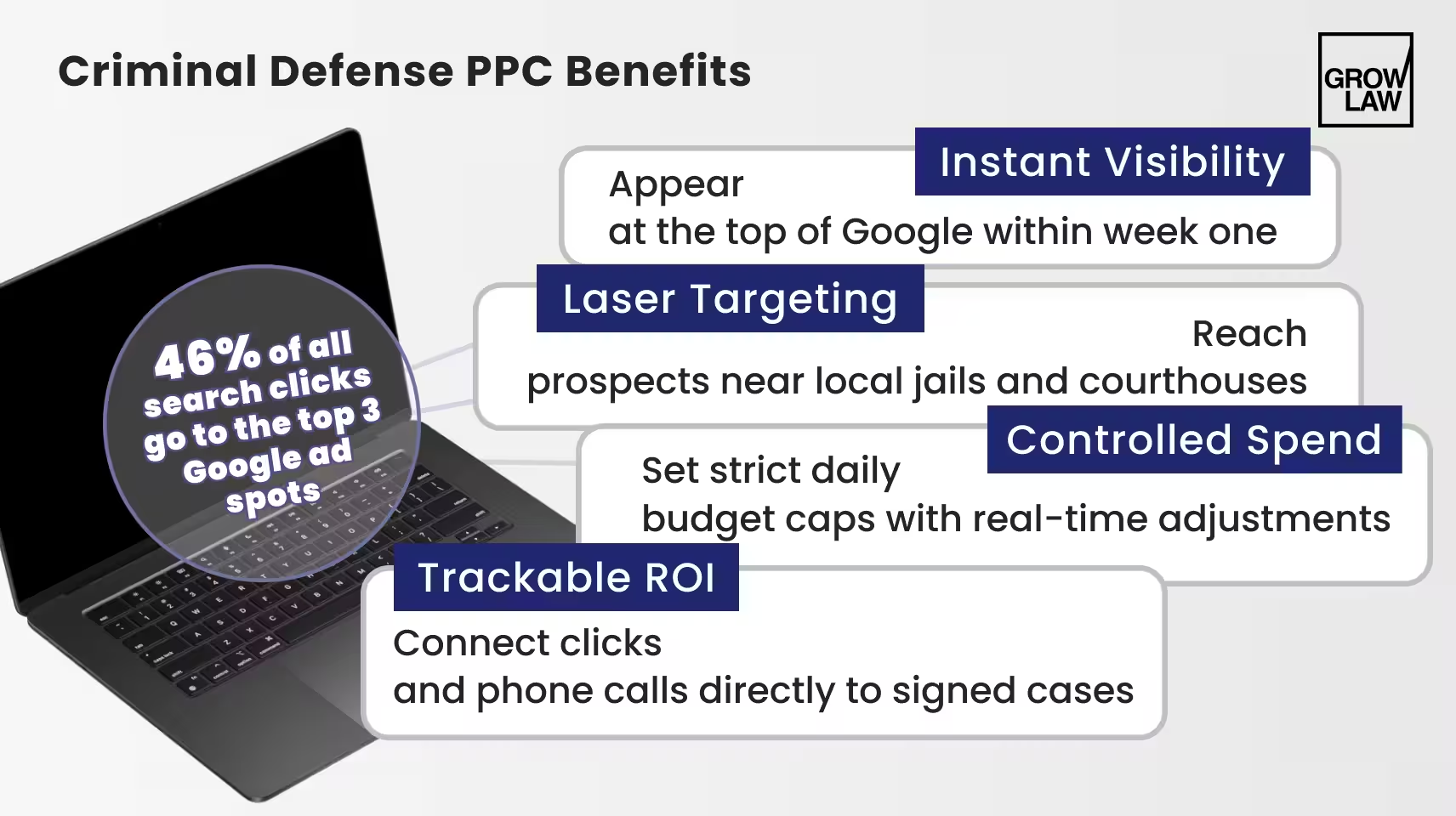
Trust us, PPC for criminal defense lawyer ads is one of the best tools in your arsenal, alongside SEO and AI search optimization, to generate leads.
Understand Your Target Audience
Not every criminal defense client is searching with the same fear, urgency, or budget in mind.
A parent searching from a suburban ZIP code at 9 p.m. on a laptop behaves very differently than a 24-year-old searching "DUI lawyer near me" from a phone at 1 a.m.
Your ad copy should reflect that. Start by building out buyer personas:
- First-time DUI offenders: often searching late at night, anxious, price-sensitive, may not have used a lawyer before
- Parents of minors: searching on someone else's behalf, focused on protecting a record or future, willing to pay more for reassurance
- Repeat offenders/felony clients: already familiar with the legal process, often searching for specific experience or case outcomes, less price-sensitive
Word to the wise: In your criminal defense advertising, layer in real targeting data on top of these personas: age, income bracket, location, and device type.
Criminal Defense PPC Keywords: What to Target and What to Avoid
We have to say it. Not every keyword is worth your money.
Some terms bring in clients ready to hire a lawyer. Others bring in students, job seekers, or people looking for free legal advice.
High-intent criminal defense lawyer PPC keywords:
Keep in mind, these criminal defense PPC keyword ranges shift by market and competition. Use this as a starting point for your budget planning.
— Negative Keywords Are Just As Important
Negative keywords are specific words or phrases that you can add to your ad campaigns on platforms like Google Ads. By doing this, you instruct the search engine not to show your ads to users who type in those terms.
Without negative keywords, you'll pay for clicks from people searching:
- "DUI prevention" or "how to avoid a DUI"
- "bail bondsman" or "how to post bail"
- "traffic ticket lawyer" (a different practice area entirely)
- "free legal advice" or "public defender"
Our advice: Block these terms from day one in your PPC for criminal defense lawyers campaign. They look like relevant traffic, but they rarely convert into retained clients.
— How a Houston Firm Cut Cost Per Lead by 64%
Back in 2022, we met a 5-attorney Houston criminal defense firm that was spending $8,000/month on Google Ads, targeting broad match keywords like "lawyer" and "criminal attorney."
It was no surprise to us when we saw that 72% of clicks came from irrelevant searches like traffic tickets, immigration questions, and general legal information.
After a full keyword audit and switching to phrase and exact match, adding 85 negative keywords, and geo-targeting within 15 miles of the firm's courthouse, their relevant traffic increased by 340%. Cost per lead dropped from $510 to $185.
This small step in their criminal defense lawyer PPC saved them thousands of dollars and bumped up their leads.
As you just saw, the keywords you target in your criminal defense PPC (and the ones you block) determine whether your criminal defense PPC campaigns generate retained clients.
Google Ads vs. Local Service Ads for Criminal Defense
Most criminal defense firms rely only on Google Search Ads.
Very few take advantage of Local Service Ads (LSAs). That's a missed opportunity, because you pay for verified leads rather than clicks, and they display prominently at the very top of Google (even above PPC ads).
Plus, 46% of all the searches on Google are for local information, like local lawyers. LSAs help you capitalize on that demand.
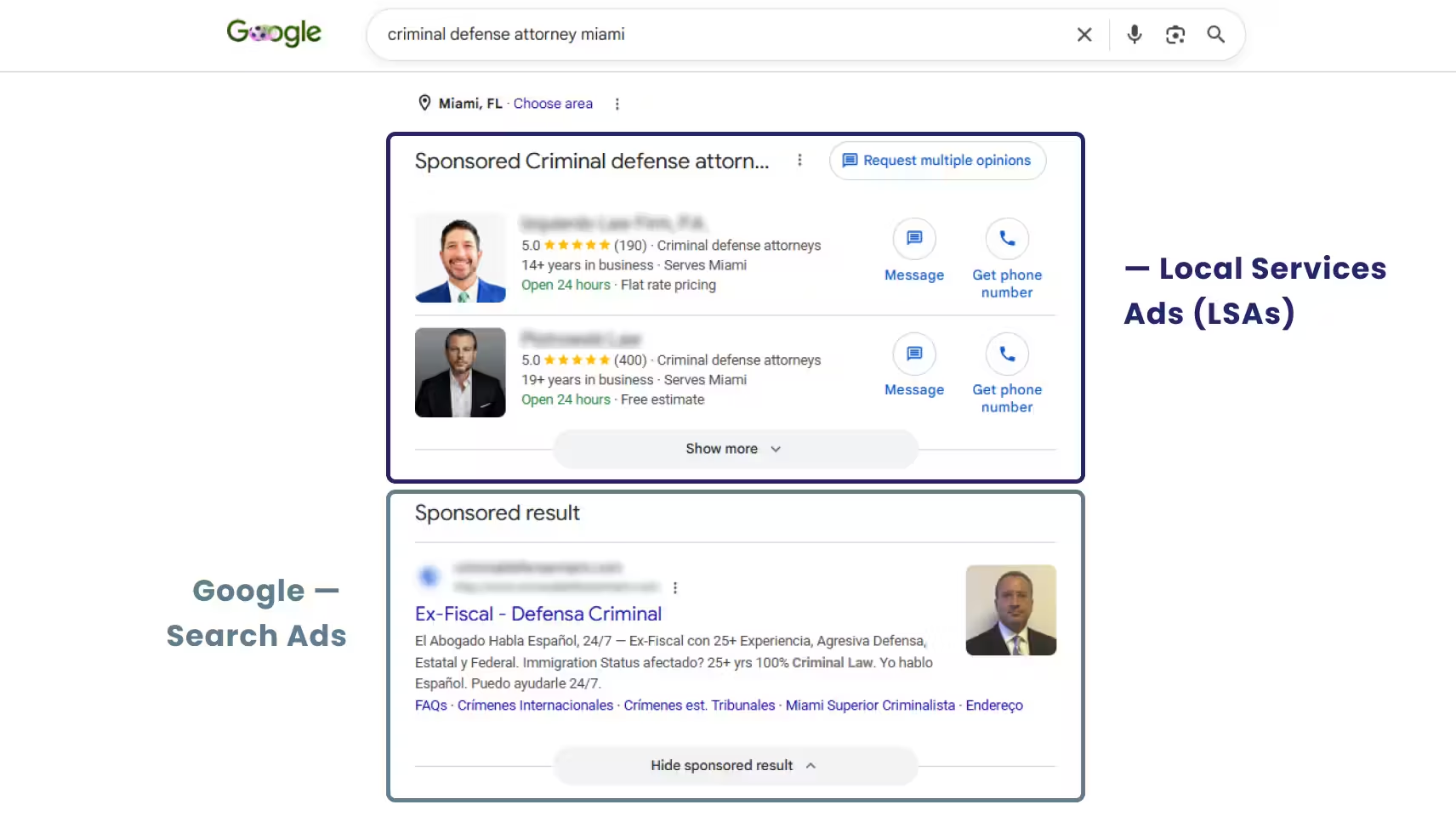
The difference between Google Search Ads and Local Services Ads:
Search Ads give you reach and flexibility. You can bid on any keyword, any case type, any time.
LSAs give you trust and qualified volume. You only pay when someone actually contacts you, and the "Google Screened" badge does some of the credibility work your ad copy would otherwise have to do.
Our advice? Add both to your criminal defense advertising strategy.
— Getting Verified for Google Screened
To run LSAs as a criminal defense attorney, you'll need to pass Google's screening process:
- Active bar license verification in your state
- Proof of malpractice insurance
- Individual background check for each attorney listed
- Business verification (address, phone, license documentation)
The process typically takes 1-2 weeks. Once approved, you select your case categories (DUI, drug crimes, assault, etc.), set your service radius, and set a weekly budget cap.
— How LSAs Cut Cost Per Conversion by 76%
Back in 2024, we added Local Service Ads to an existing Google Ads setup for a solo DUI defense attorney out of Phoenix.
In the first 3 months, their LSAs generated 14 verified calls at an average cost of $68 per call, compared to $290 per conversion from standard Search Ads. 8 of those 14 calls converted to retained clients within 30 days.
We used LSAs for DUI and drug defense categories only, keeping Search Ads running for broader criminal defense terms.
Pay attention to that split. LSAs work best for the case types where urgency factors in, like DUI, drug charges, anything where someone is searching at the worst moment of their life and wants to see a verified, reviewed attorney before they call.
Landing Pages and Conversion Optimization for Criminal Defense PPC
Your ad got the click — now your law firm's website has to seal the deal.
Your landing page should load fast, match the ad's message, and clearly explain why you're the right criminal defense lawyer. Keep it clean, persuasive, and focused on one call-to-action, like "Book a Free Consultation."
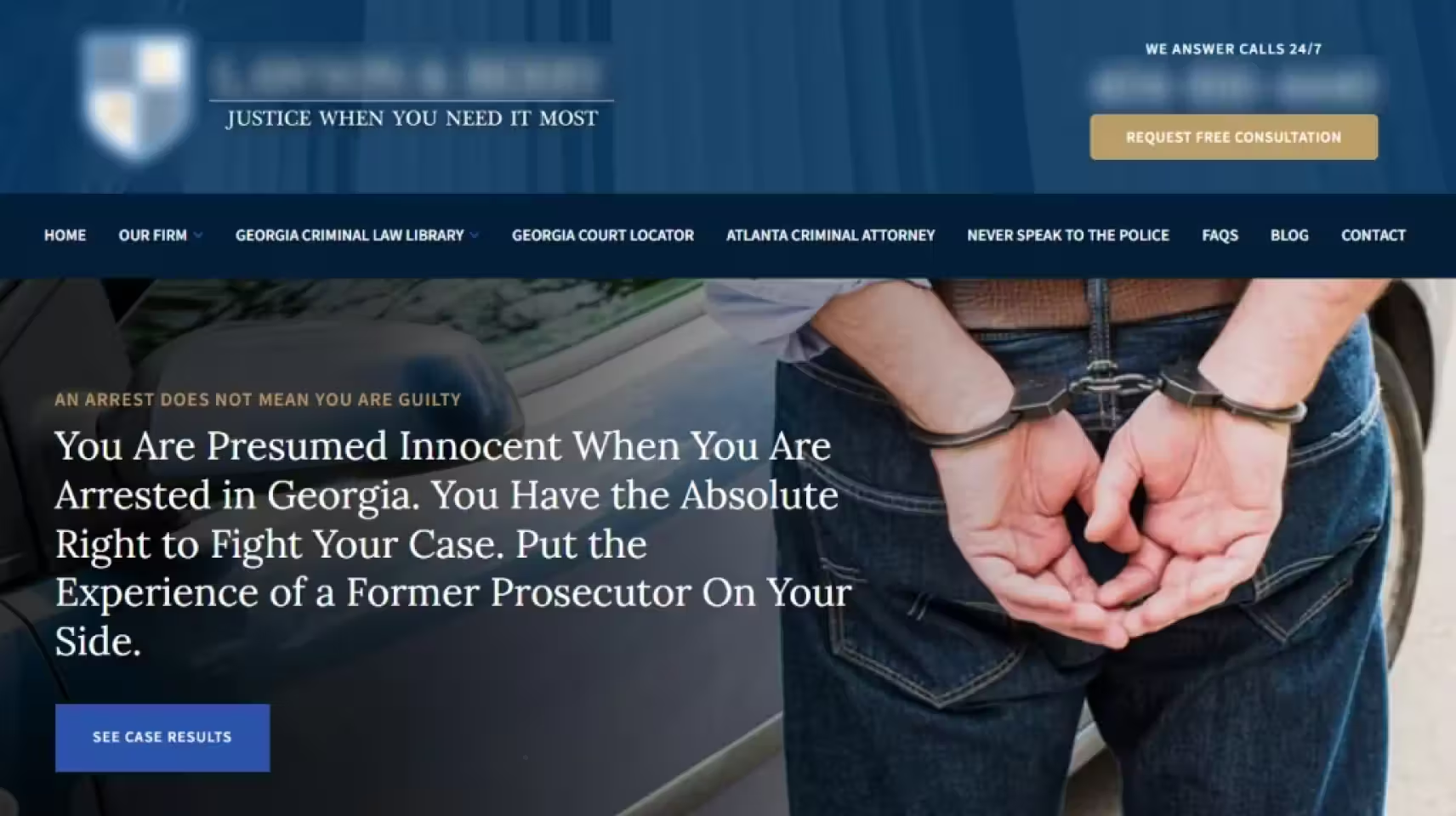
We suggest creating separate pages for each service (like DUI or drug charges) to match user intent.
Always, we repeat always, follow the ABA’s legal compliance rules for disclaimers and privacy.
— Our Conversion Tips for Your Landing Page
Get inside the mind of the person reading your page. They're scared; it's often the middle of the night, and they need to know 3 things immediately: can you help, can they trust you, how fast can they reach you?
Lead with that urgency:
- Your availability. "Available 24/7" or "We answer at 2 AM" tells a panicked reader they're not waiting until Monday.
- Make urgency the headline. "Arrested? Talk to a Defense Attorney Now"
- Offer a call-only path. Some visitors don't want to read a page or fill out a form. They want to tap and talk to someone immediately.
- Keep trust signals visible. Reviews, case results, and bar credentials matter, but they should support the CTA, not compete with it.
Unbounce data shows incorporating social proof on landing pages can boost conversion rates by up to 34%.
When we applied this conversion-first approach to our Dallas criminal defense client, Gounaris Abboud, their criminal defense PPC landing pages saw a 112% increase in conversion rate.
The above tips are not cosmetic. They trigger urgency and action, and they work.
Want to stand out even more and boost client acquisition from your ads?
Use ad extensions in your criminal defense Google Ads by adding:
- Call extensions for instant tap-to-call
- Location extensions for your office info
- Sitelinks to key service pages
— Finally, A/B Test Your Landing Pages
The first is rarely the best version.
Run two versions of your landing page with one variable changed at a time: headline, CTA button copy, or hero image.
Track which version generates more calls and consultations.
The 4 elements worth A/B testing are, in order, the headline, hero image, primary CTA, and form. These statistically produce significant winners roughly 24% of the time.
And be sure to give each test enough traffic (at least 500 visitors) to be statistically meaningful before declaring a winner.
Criminal Defense PPC Lead Quality: Filtering Junk and Maximizing Intake
Beware of junk leads.
If you run PPC for criminal defense for even 3 to 6 months, you'll notice a huge share of your calls aren't from potential clients at all.
— Why You’ll See so Many Junk Calls
Criminal defense ads attract calls from people who are emotionally involved but not the decision-maker, or not a client at all:
- Family members checking on someone who was just arrested
- People asking general questions about charges they read about online
- Callers looking for a public defender or free legal aid
- People trying to find out how to post bail (not hire an attorney)
None of these calls are "wasted" in the sense that they're spam, but none of them convert into retained cases either.
These make your cost per lead numbers look misleadingly bad. Your intake team will burn hours on calls that were never going anywhere.
— Our Solution: Use an AI Lead Qualification Filter
This is where AI lead qualification earns its place in a criminal defense PPC strategy.
At Grow Law, we built an AI lead qualification system to screen incoming calls and messages before they reach your intake team. It flags informational queries, third-party callers, and non-case inquiries so your staff spends time on people who are ready to hire.
For a practice area where so much volume is non-billable by nature, that filtering step often does 10 times more for your cost per case than any amount of additional ad spend.
— Speed to Lead
Speed-to-lead is critical everywhere in legal marketing, but criminal defense Google Ads raise the stakes.
Someone searching for a DUI or assault attorney at 1 a.m. is often calling 3-4 firms in the same 10 minutes. 42% of prospects will hire the first lawyer they speak with who makes a good impression.
That means you need:
- Live call answering covering nights and weekends
- Missed calls that get an immediate text follow-up
- Web form submissions that get an automated response within minutes
— A Simple Intake Script for Criminal Defense PPC calls
We’ve seen this intake script help our clients separate real cases from junk calls quickly, without sounding like they're interrogating a scared caller:
- "What happened, and when?" — establishes the case type and urgency
- "Have you been arrested, or is there a pending charge?" — filters out informational-only callers
- "Is there a court date already scheduled?" — surfaces time-sensitive cases
- "Are you calling on your own behalf, or for someone else?" — identifies third-party callers early, so you can redirect them appropriately
- "Let's get you scheduled with an attorney" — moves qualified callers straight to booking, without extra friction
This ensures your attorneys' time goes to the calls most likely to become retained cases.
Budgeting and ROI: How Much Should Criminal Defense Firms Spend on PPC?
There's no universal answer here, but there is a floor.
Below a certain spend, you're not really running a campaign. We like to say, you're donating to Google's testing budget.
— Minimum Viable PPC Budget for Competitive Markets
DUI and drug crime keywords are some of the most expensive in legal PPC, often running $50–$300+ per click in competitive metros.
For instance, Ahrefs reports that keywords like "felony domestic violence lawyer" ranks among the 100 most expensive keywords, with a cost per click of $270.
To gather enough data to optimize a campaign, you need a minimum of $3,000–$5,000/month just to start generating consistent clicks and leads.
Firms in major metros competing for high-value DUI or felony cases often need $8,000–$15,000+/month to compete seriously for top ad positions.
Typical CPL Ranges by Case Type
Be aware: These criminal defense law firm PPC keyword ranges shift based on your market competition, geo-targeting precision, and whether you're running Search Ads alone or pairing them with LSAs (which, as we said earlier, tend to bring lower per-lead costs).
— Calculating Your Target CPL (Cost Per Lead)
The number that actually matters isn't your CPL in isolation; it's your CPL relative to what a retained case is worth.
Start with your average case value for a given practice area, then work backward:
- Take your average retained case value (for example, $5,000 for a DUI case)
- Decide what percentage of revenue you're willing to spend on acquisition (commonly 10–20%)
- Multiply: $5,000 × 15% = $750 — that's your acceptable cost per case, not per lead
- Factor in your lead-to-case conversion rate (say, 20%) to get target CPL: $750 × 20% = $150 target CPL
In your criminal defense law firm PPC, is your actual CPL running higher than that number? The fix is tighter keyword targeting, better negative keyword lists, or a stronger landing page.
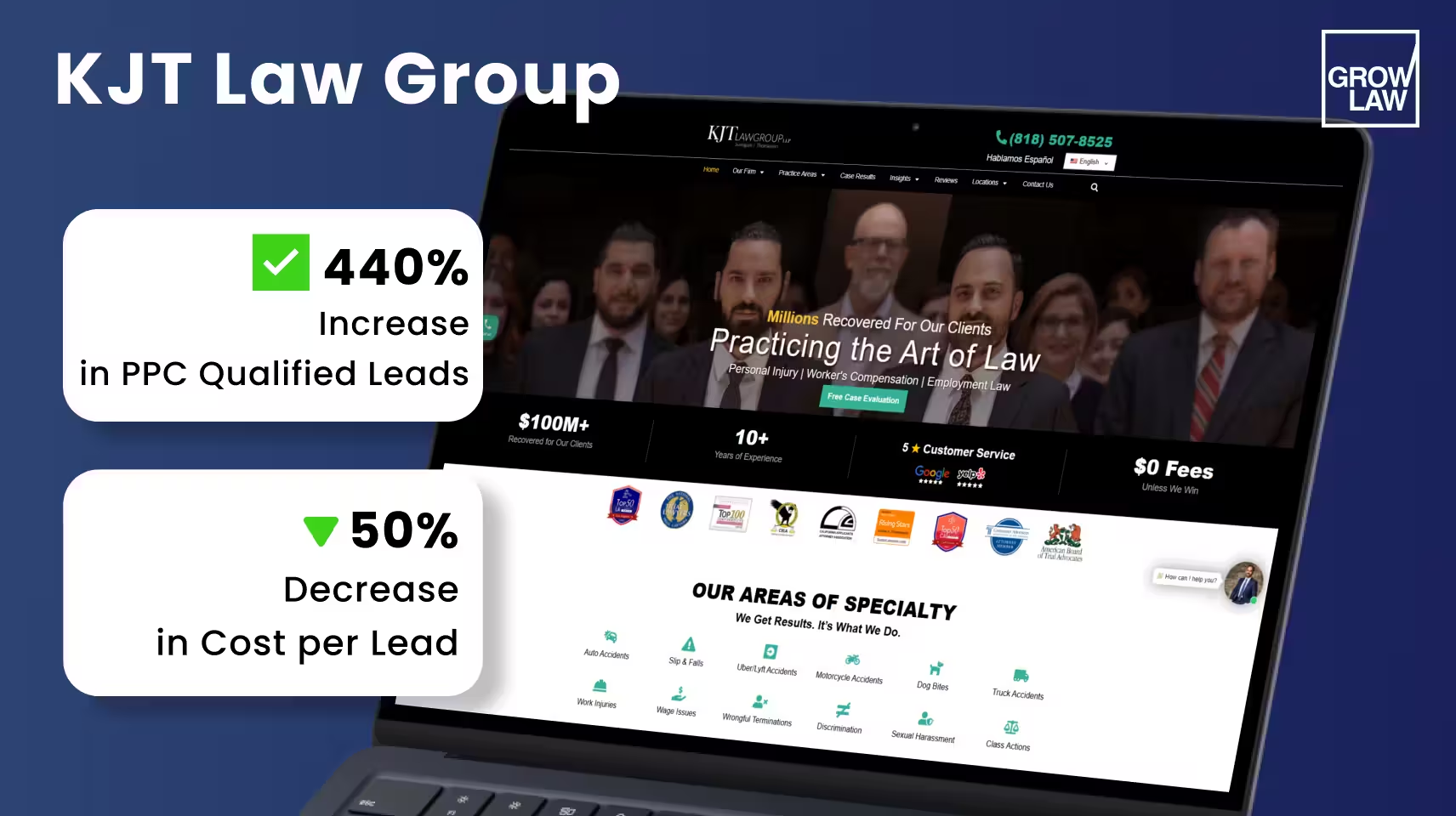
— How One LA Criminal Defense Firm Saw a 440% Surge in Leads
Back in 2023, KJT Law Group approached us with a barely-alive lead pipeline.
We set up and optimized their criminal defense PPC campaigns with proper budget allocation, paired with tight keyword and lead-quality management.
And success! They saw a 440% increase in qualified PPC leads alongside a 50% decrease in cost per lead.
That combination is the goal: more volume and a lower cost per lead at the same time, not one at the expense of the other.
Retargeting and Geo-Targeting
Have you ever tried retargeting? These ads follow people who've already shown interest, whether they viewed your DUI page, started a contact form, or clicked your ad without calling.
Why bother? Someone who has already visited your site is closer to hiring than a cold searcher.
Pair that with tighter geo-targeting and ad scheduling. For criminal defense, timing and location do a lot of the work:
- Set a tight radius or ZIP targeting near jails, courts, and booking facilities
- Bid higher in high-value neighborhoods, and exclude areas that consistently underperform
- Schedule ads for peak times: nights and weekends for DUI searches, weekday mornings for arraignment-related searches
- Use dynamic ad customizers to insert city or neighborhood names into headlines for stronger click-through rates
Together, these two tactics make sure your budget is going toward the right people, in the right place, at the right time.
Get More High-Paying Clients with SEO and PPC
You didn’t go to law school to figure out SEO and PPC. But without them, you’re losing prospective clients who need your help.
Since 2008, Grow Law has given criminal defense lawyers the caseload and the confidence to grow with SEO and PPC services for criminal defense firms.
Ask Yarborough Law Group, a family and criminal defense firm in Norman, Oklahoma: after a full digital overhaul including targeted PPC campaigns, the firm saw qualified leads increase by 452% and an 857% marketing ROI. For a deeper breakdown, see our guide to digital marketing for criminal defense attorneys.
Take action and fill your calendar with highly qualified leads.
Get Your Complimentary Growth Plan
PPC for Criminal Defense Lawyers FAQs

Compare Your Practice Instantly
Stay Ahead of the Competition!
Compare your law firm's performance to Local competitors with our instant assessment tool
Get a clear picture of your firm's performance
Boost your online presence
Compare My Firm
Compare Your Practice Instantly
Stay Ahead of the Competition!
Compare your law firm's performance to Local competitors with our instant assessment tool
Get a clear picture of your firm's performance
Boost your online presence
Compare My Firm
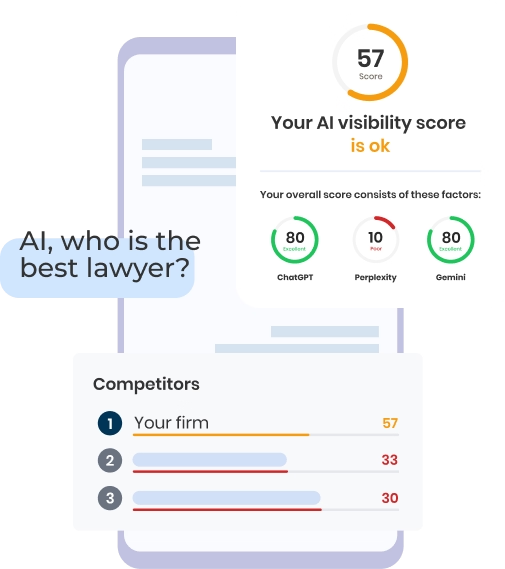
Check Your AI Visibility Instantly
Find Out What AI Is Telling Your Potential Clients
Run our free AI Visibility Report to:
See how often top AI tools mention your law firm
Spot which competitors show up first
Get the next steps to capture more cases
Run My Free AI Report
.avif)
.avif)
.avif)
- Pay‑per‑click advertising https://en.wikipedia.org/wiki/Pay-per-click
- Criminal defense lawyer https://en.wikipedia.org/wiki/Criminal_defense_lawyer
- Google Ads https://en.wikipedia.org/wiki/Google_Ads
- Keyword research https://en.wikipedia.org/wiki/Keyword_research

