


Table of Contents
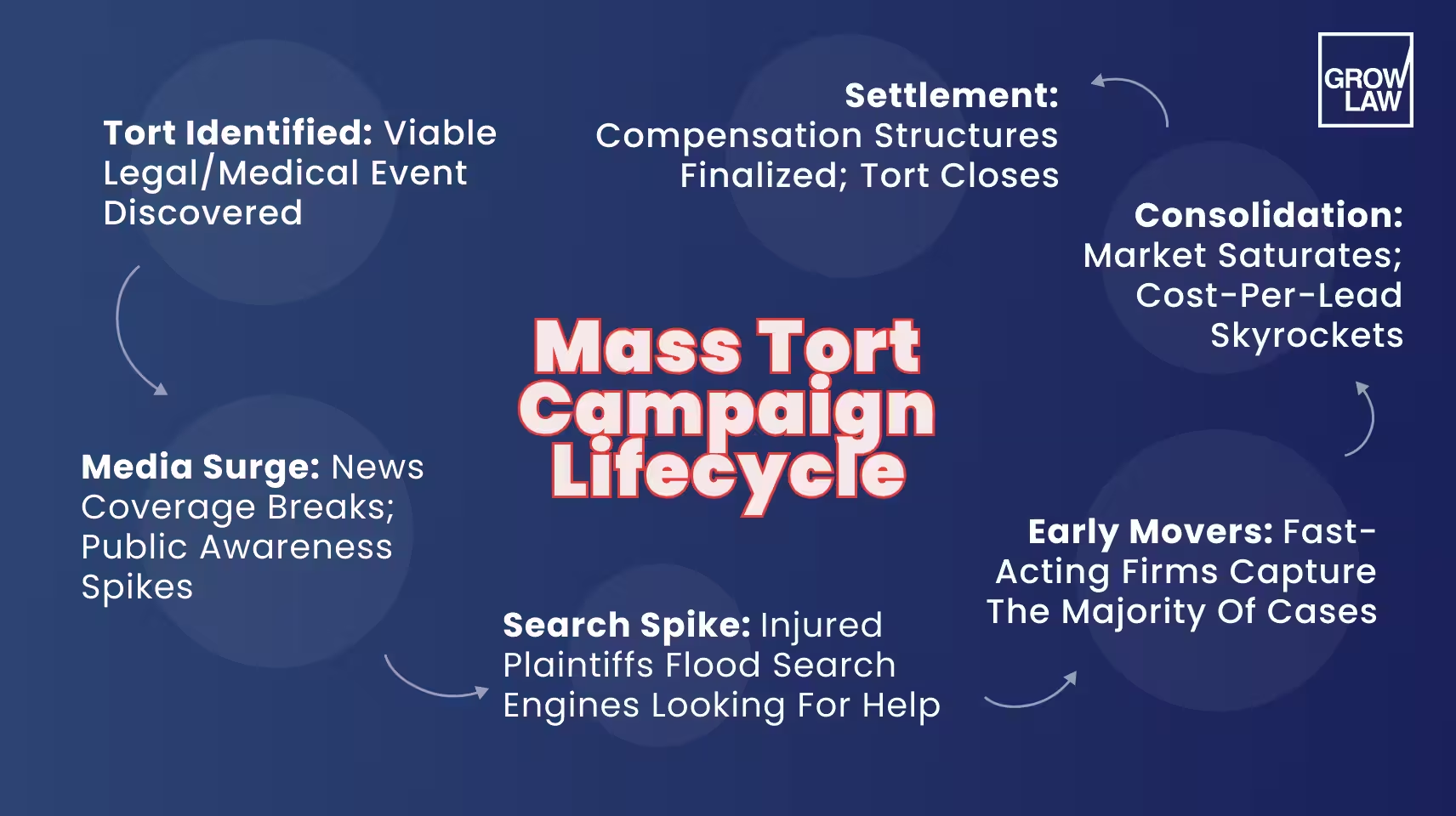
Mass tort marketing operates at a scale and speed that distinguishes it from every other segment of legal marketing. If your firm is able to identify and move on a viable mass tort opportunity early — Camp Lejeune contamination, CPAP device injuries, Roundup exposure, Paraquat Parkinson claims — it can build a substantial caseload in months. A firm that waits loses the window entirely as aggregators and early movers capture the available plaintiff pool.
This guide covers the marketing infrastructure that your mass tort law firm needs to compete: how to structure campaigns for specific tort events, how to generate qualified mass tort leads through paid advertising and legal networks, how to build intake systems that convert those leads into signed cases, and how to use content and your local presence to build sustainable long-term tort volume alongside campaign-driven spikes.
Positioning and Campaign Strategy: Moving Fast When a Tort Opportunity Opens
Mass tort law firm marketing starts with a decision that is strategic rather than tactical: which torts to pursue and when. The mass tort landscape shifts continuously — new MDLs form, existing settlements close, and emerging product liability situations create new plaintiff populations. If your firm has a monitoring system in place to identify emerging tort opportunities early, and a marketing infrastructure ready to activate quickly, you can capture a disproportionate caseload relative to firms that enter later.
Campaign positioning for mass tort marketing means making clear which specific product, exposure, or event your firm is pursuing in a given campaign. Prospects who have used CPAP devices and experienced health complications are not searching for "mass tort lawyer" — they are searching for "CPAP cancer claim attorney" or "is there a lawsuit for CPAP injuries." Mass tort advertising that speaks to those specific searches, and mass tort content that addresses those specific situations, captures the available plaintiff pool far more efficiently than broad personal injury advertising.
Your mass tort client acquisition also requires a realistic assessment of campaign timing relative to the MDL lifecycle. Early-stage torts with strong scientific support and active media coverage offer the best lead economics. Late-stage torts approaching settlement have exhausted most available plaintiff advertising spend. Build your mass tort marketing campaigns around the MDL timeline rather than treating all torts equally, and you’ll produce consistently better case economics.
See how we build mass tort marketing campaigns for law firms -> Mass Tort Marketing Services
Mass Tort Lead Generation: The Paid Advertising Infrastructure
— Google and Facebook Ads for Mass Tort Campaigns
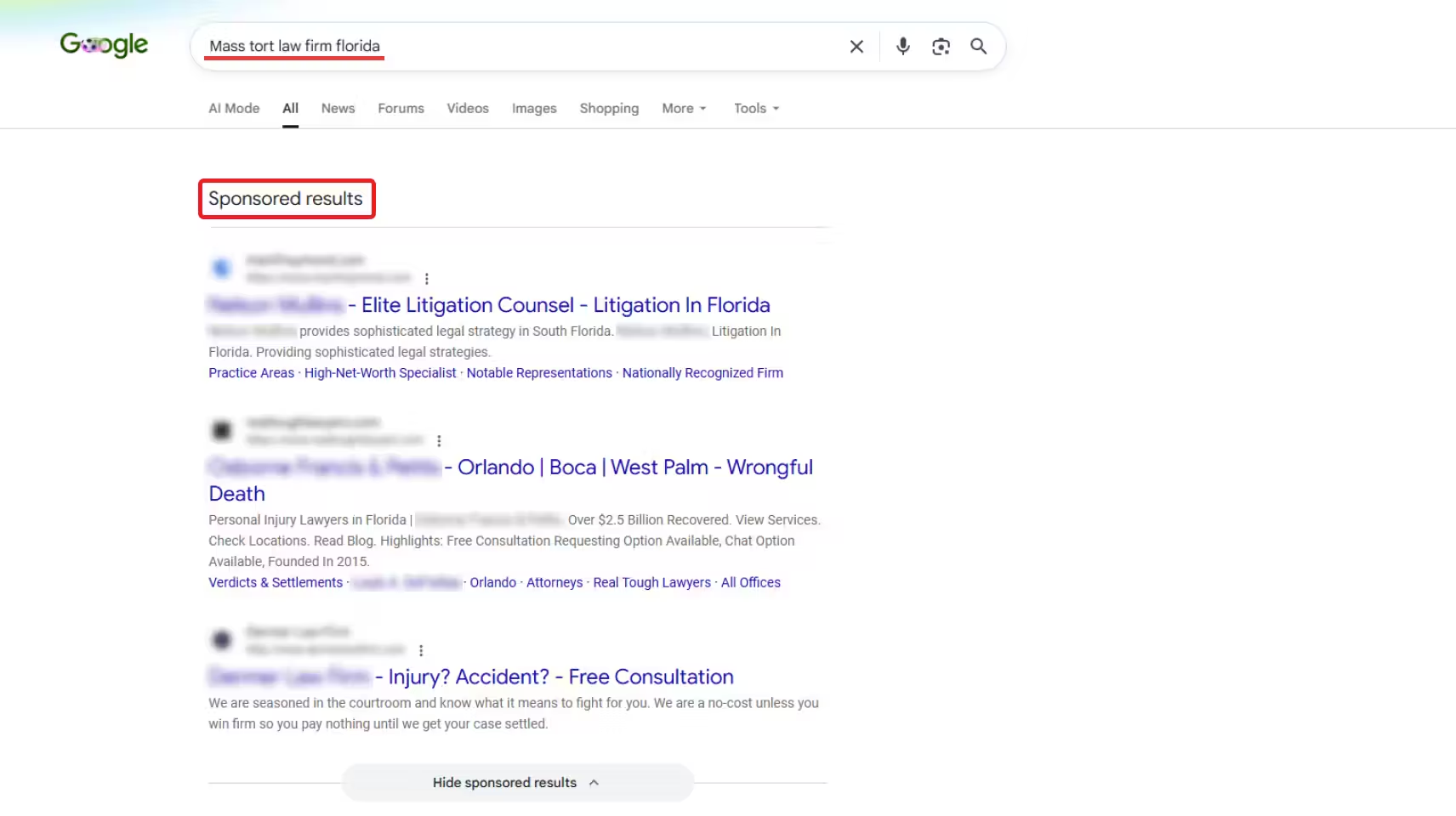
Mass tort advertising through paid search captures plaintiffs who are actively researching whether they have a claim. These are prospects who have seen media coverage, recognized their own exposure or injury, and are searching for legal options. Google Ads campaigns for specific tort events — built around the product name, the injury type, and the legal claim status — reach this highest-intent segment at the moment of peak motivation.
Use Facebook and Instagram advertising to reach a larger plaintiff population that has the qualifying exposure or injury but has not yet connected it to a legal claim. Mass tort Facebook campaigns that explain the specific product, the documented health risks, and the legal process for joining a claim build awareness among plaintiffs who would not have found the firm through search alone.
Video content performs particularly well in this channel: a two-minute explainer on the CPAP recall, the Roundup link to Non-Hodgkin lymphoma, or the Camp Lejeune contamination timeline reaches and educates prospects before directing them to contact.
Mass tort campaign marketing requires rapid iteration. The creative and targeting that works in week one of a new tort campaign may not be the creative that performs best in month three as more law firms enter the market and plaintiff awareness increases.
Be sure to review weekly performance and shift budget between channels, creative variants, and targeting approaches. This is a competitive requirement in high-activity tort markets.
— Legal Network Partnerships and Co-Counsel Relationships
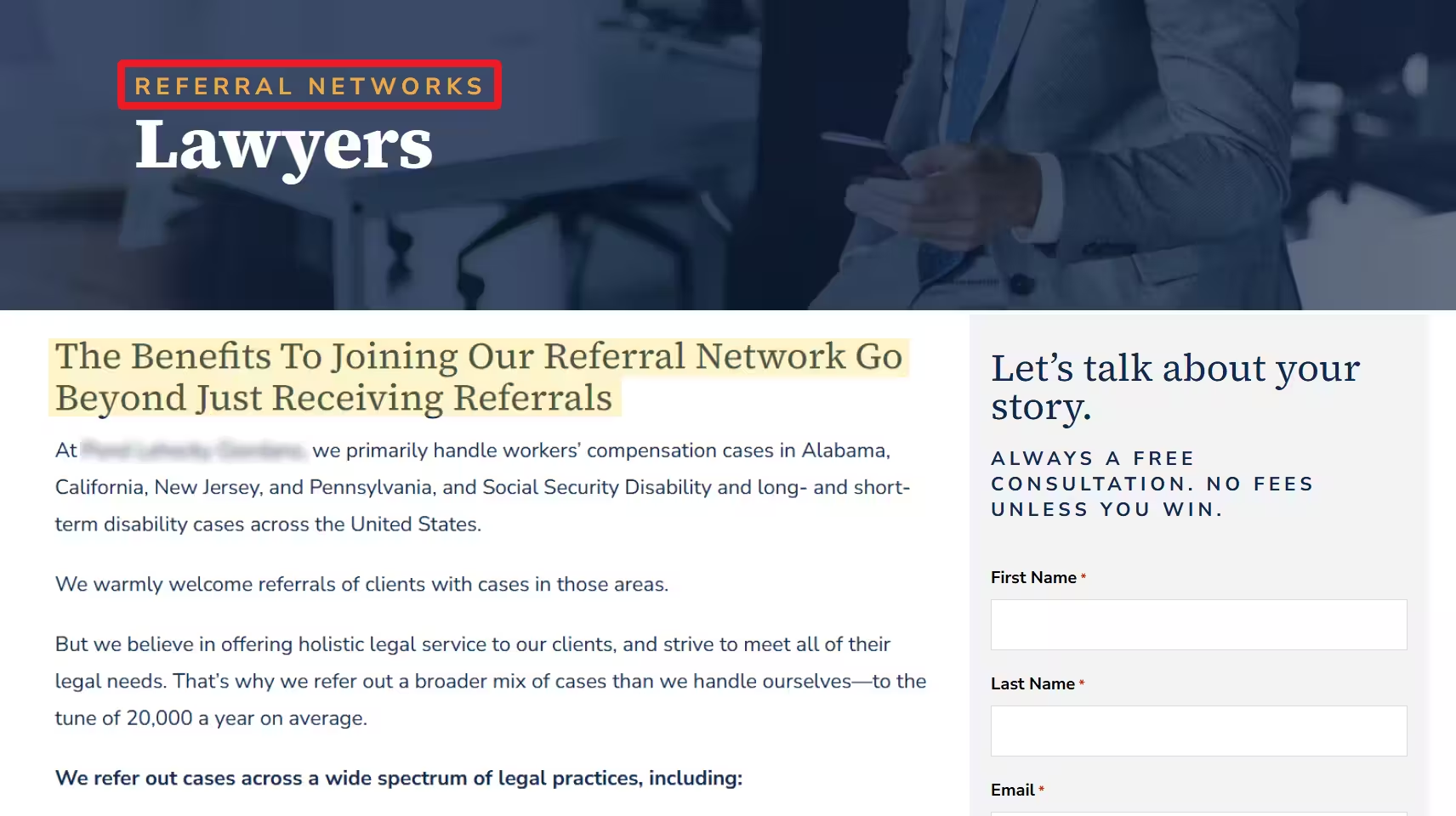
Mass tort lead generation also flows through legal networks — co-counsel relationships, referral arrangements with local attorneys who encounter qualifying plaintiffs in their practice, and aggregator relationships that provide qualified leads in exchange for referral fees or co-counsel arrangements. These channels supplement direct advertising with pre-qualified plaintiff introductions that convert at higher rates than cold advertising leads.
How to get mass tort clients through legal networks requires building relationships before the need is urgent. Attorneys who have worked with your firm on prior matters, trust your case evaluation, and understand your case criteria are the most reliable referral sources when a new tort campaign opens.
Invest in maintaining those relationships continuously — not just when actively seeking referrals — and you’ll build the network infrastructure that becomes a competitive advantage in high-volume tort campaigns.
Mass Tort Intake: Converting Leads Into Signed Cases at Scale
Mass tort marketing investment produces returns only if your intake system converts the leads it generates. Mass tort intake at scale requires infrastructure that most standard law firm intake processes are not built for: high-volume inquiry handling, rapid qualification screening against specific eligibility criteria, a short and frictionless digital intake form, and follow-up protocols that pursue non-converting inquiries without overwhelming the legal team.
The intake funnel for a mass tort campaign typically involves: initial contact through web form or phone, rapid screening for the qualifying exposure or injury criteria, a retargeting sequence for prospects who did not complete intake on first contact, and a signing process that can be completed digitally.
Every hour of delay between initial contact and follow-up in mass tort intake reduces your conversion rates — the plaintiff population is simultaneously receiving outreach from multiple competing firms.
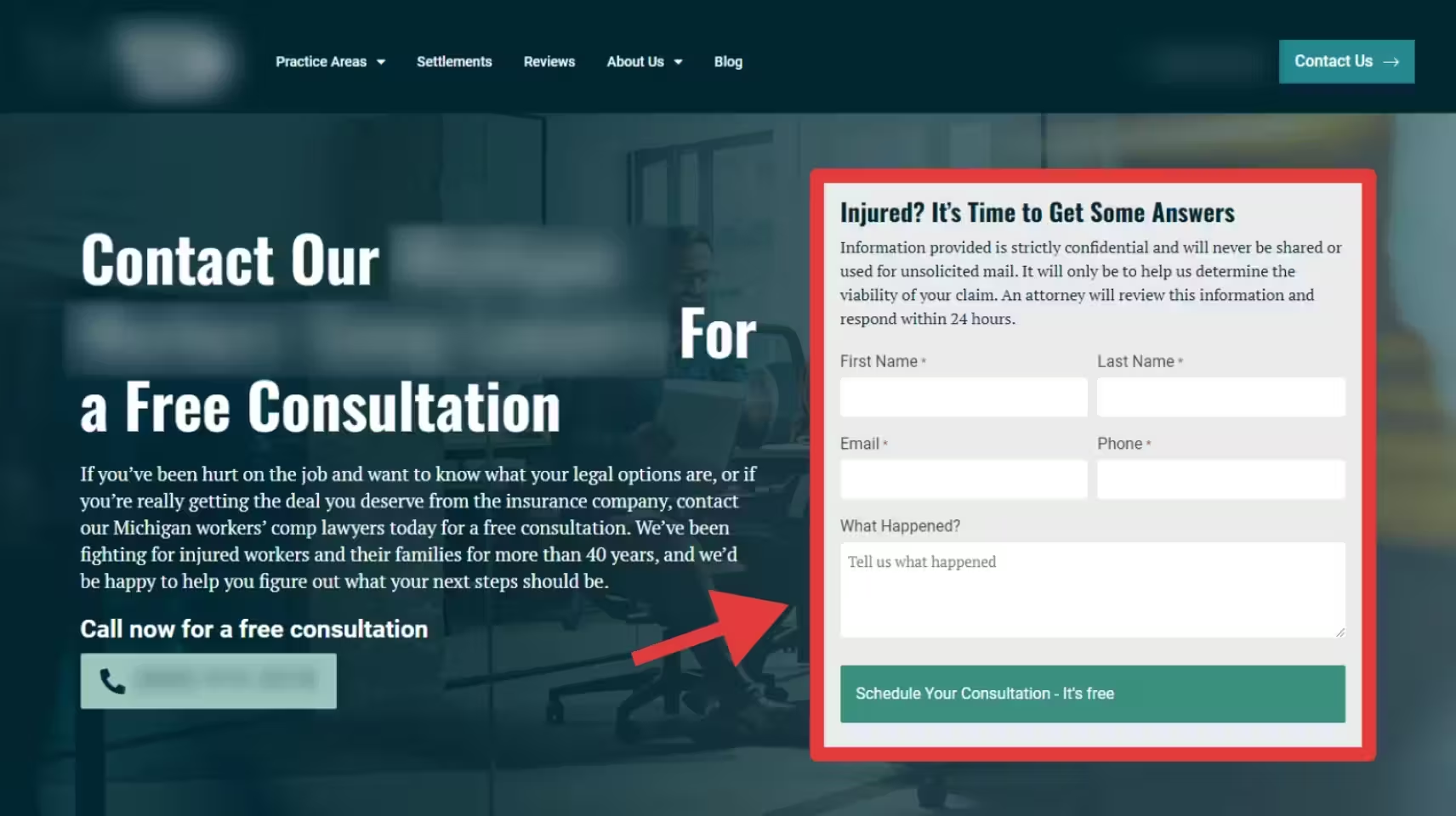
Your mass tort advertising spend will be wasted if your landing page and intake form create friction. Dedicated landing pages for each tort campaign — not your firm's homepage — with a short qualification form (exposure confirmed, injury type, date range) and an immediate response mechanism (live chat, immediate callback, or automated scheduling) convert at significantly higher rates than generic contact forms. Mass tort law firm marketing that invests heavily in advertising while underinvesting in intake conversion consistently produces disappointing signed case economics.
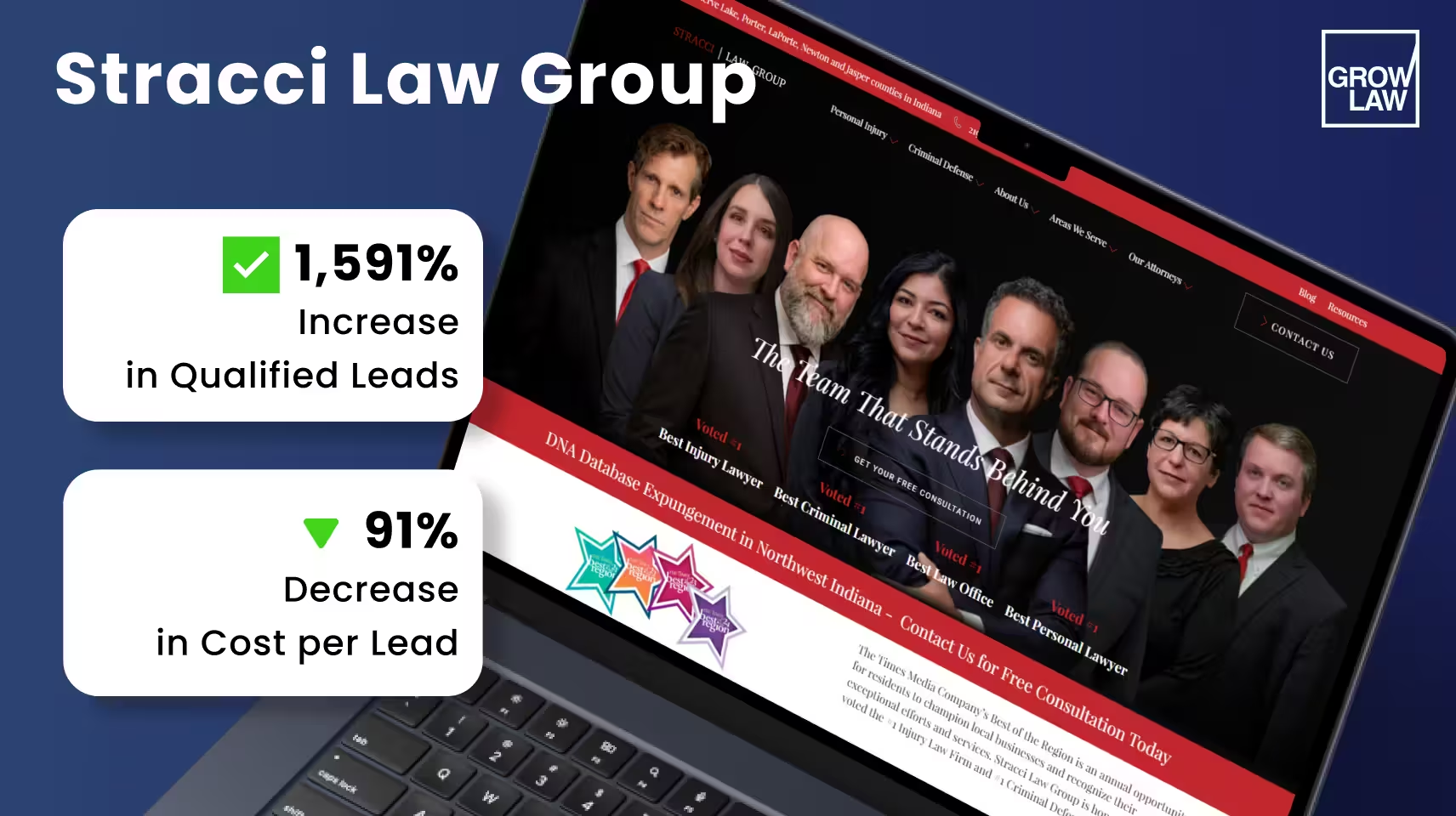
Learn how we build mass tort lead generation and intake systems -> Law Firm Lead Generation
Content Marketing and Long-Term Mass Tort Visibility
Mass tort marketing through content builds the organic search presence that supplements paid advertising with lower-cost, higher-intent traffic. Plaintiffs who research their potential claim over days or weeks before deciding to contact a firm frequently turn to Google to understand the legal landscape: "is there a lawsuit for [product]," "how do I know if I qualify for [tort] lawsuit," "what is the [MDL name] settlement status." Publish authoritative, current content on the specific torts they are pursuing to capture that research traffic and establish credibility before first contact.
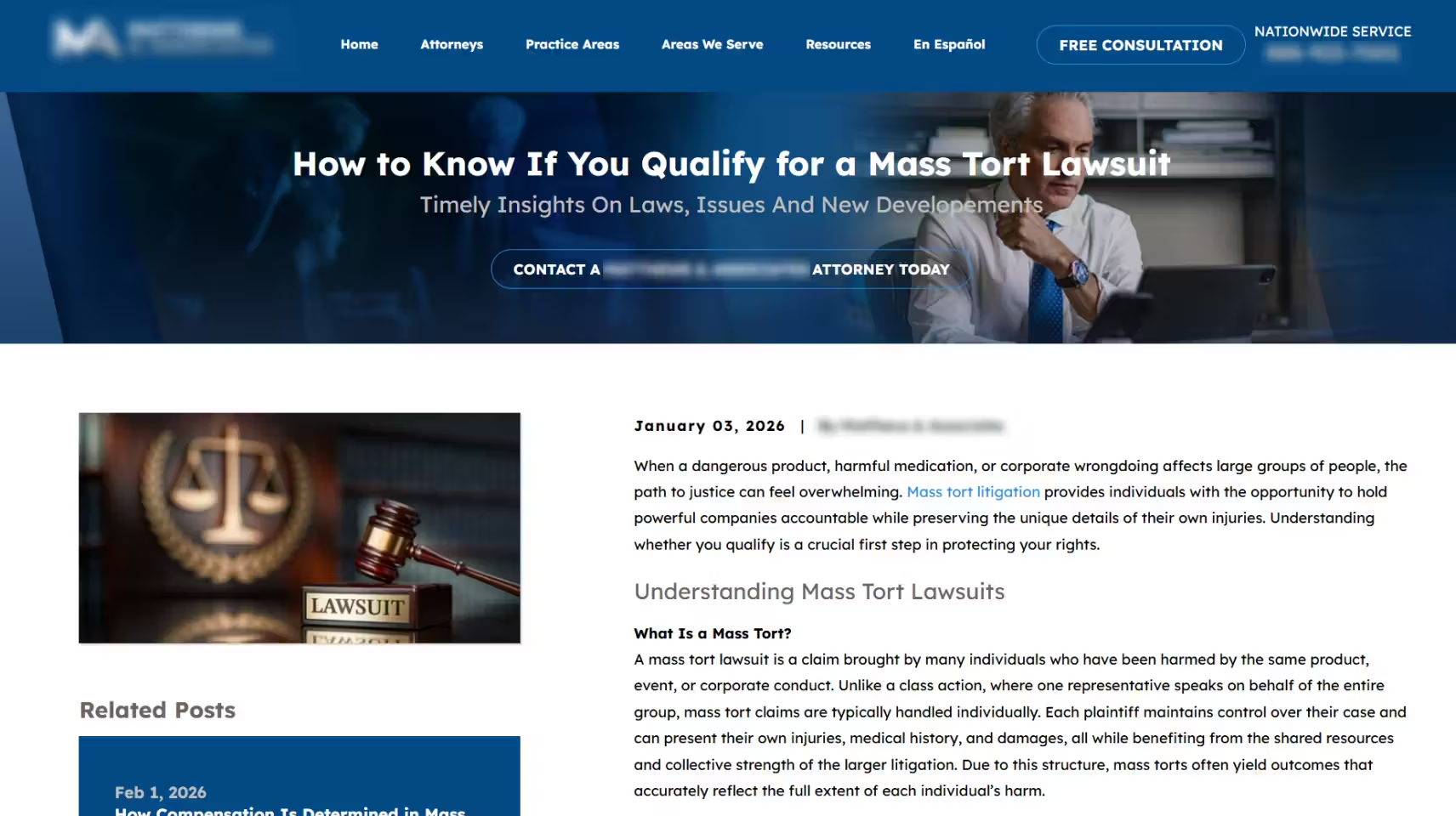
Your content for mass tort law firm marketing needs to be timely as well as authoritative. An article on CPAP lawsuit status published in 2022 and never updated loses credibility and search ranking as the MDL progresses.
Mass tort content that is regularly updated — reflecting MDL status, settlement developments, new scientific findings, and changes in plaintiff eligibility — maintains search visibility across the full lifecycle of the tort and demonstrates to the research-phase plaintiff that your firm is actively engaged with the case.
Mass tort client acquisition through local SEO supplements campaign-based national advertising with map pack visibility for local plaintiffs who search for representation in their geographic area. Even in mass torts with national MDL consolidation, plaintiffs often prefer local representation.
Optimizing your Google Business Profile with relevant tort categories and maintaining local citation consistency captures this geographically-constrained segment alongside the broader national campaign.
Get a custom mass tort marketing strategy for your firm -> Free Growth Plan
Summary
- Mass tort marketing requires early entry relative to the MDL lifecycle — firms that identify and activate campaigns in the first months of a new tort opportunity capture disproportionate caseload.
- Paid advertising for mass tort (Google Ads and Facebook) must be tort-specific, not generic personal injury — plaintiffs search for their specific product or exposure, not "mass tort lawyer."
- Legal network partnerships and co-counsel relationships supplement direct advertising with pre-qualified plaintiff introductions that convert at higher rates than cold advertising leads.
- Mass tort intake systems must be built for volume and speed — every hour of follow-up delay reduces conversion against competing firms pursuing the same plaintiff pool simultaneously.
- Dedicated tort-specific landing pages with short qualification forms consistently outperform generic contact forms for mass tort conversion.
- Content marketing that tracks MDL status and is regularly updated builds organic search visibility across the full tort lifecycle and establishes credibility with research-phase plaintiffs.
Frequently Asked Questions

Compare Your Practice Instantly
Stay Ahead of the Competition!
Compare your law firm's performance to Local competitors with our instant assessment tool
Get a clear picture of your firm's performance
Boost your online presence
Compare My Firm
Compare Your Practice Instantly
Stay Ahead of the Competition!
Compare your law firm's performance to Local competitors with our instant assessment tool
Get a clear picture of your firm's performance
Boost your online presence
Compare My Firm
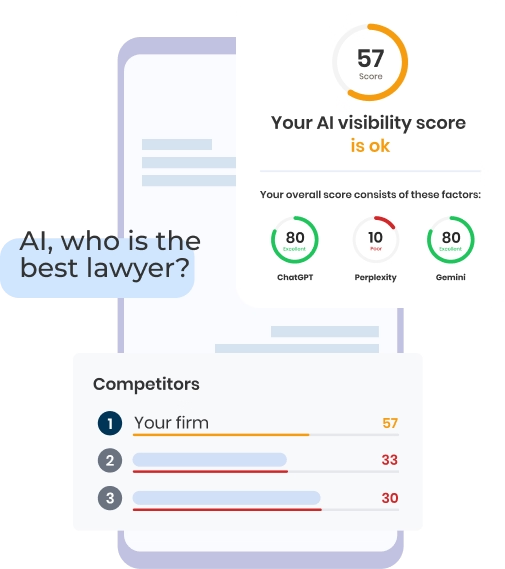
Check Your AI Visibility Instantly
Find Out What AI Is Telling Your Potential Clients
Run our free AI Visibility Report to:
See how often top AI tools mention your law firm
Spot which competitors show up first
Get the next steps to capture more cases
Run My Free AI Report
.avif)
.avif)
.avif)

