


Table of Contents
Intellectual property lawyer marketing is one of the most relationship-intensive disciplines in legal marketing. IP clients — technology companies, inventors, brand owners, content creators, and businesses protecting their competitive advantage — make attorney selection decisions based on demonstrated technical knowledge, peer referrals from trusted professional networks, and evidence of specific IP experience relevant to their industry. They do not respond to the same urgency-driven marketing that works in criminal defense or workers' compensation. They respond to expertise signals, industry-specific credibility, and the kind of educational content that makes them confident that a specific attorney understands both the law and their business context.
In this guide, we cover how to build the marketing system that reaches IP clients: positioning, referral development, website architecture, content authority, advertising, and the analytics that distinguish marketing investments that produce clients from those that produce only traffic.
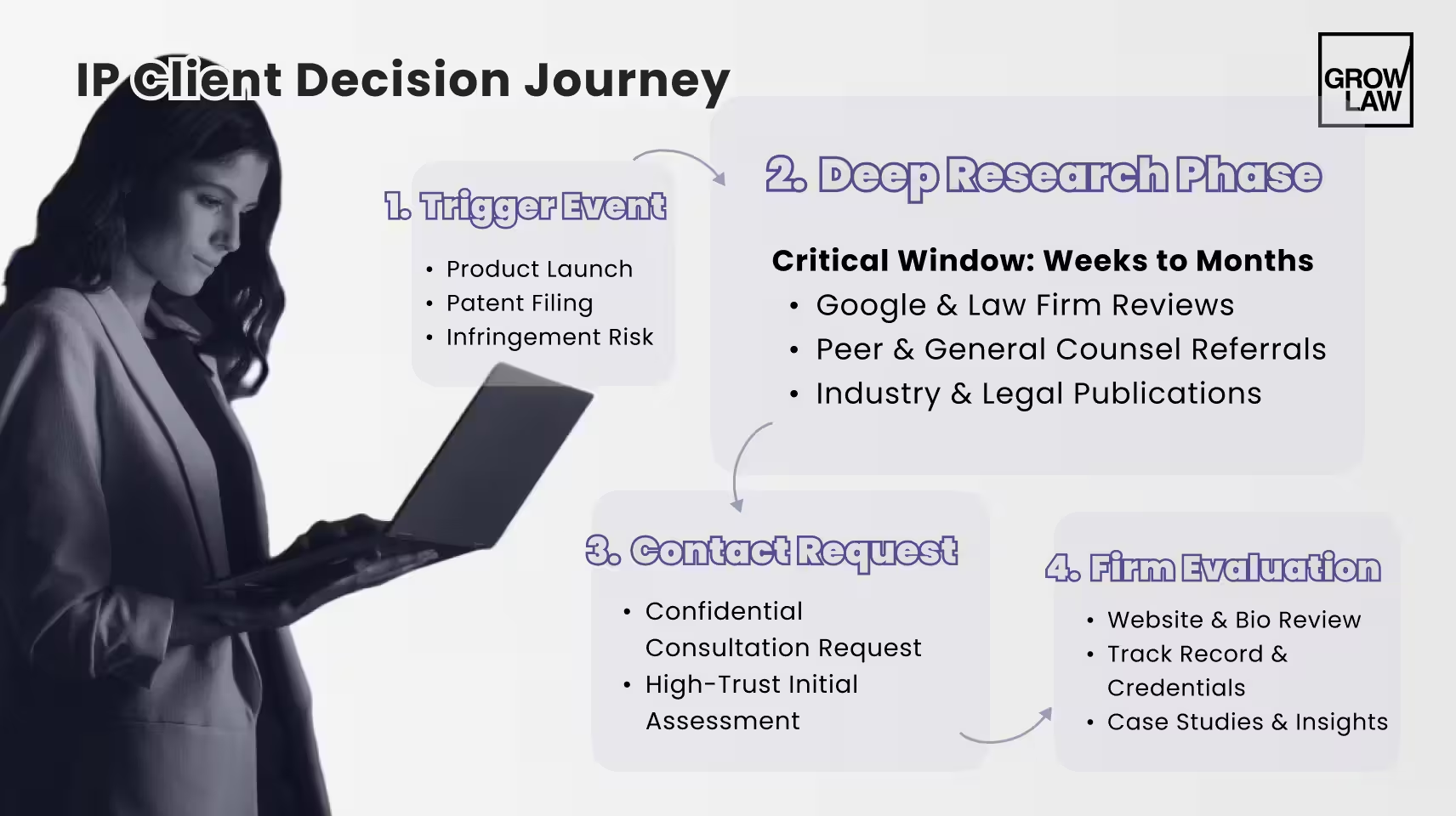
Positioning: The IP Specialization That Attracts the Right Clients
Intellectual property attorney marketing that tries to serve all IP clients — from the individual inventor filing a provisional patent to the Fortune 500 brand protecting trademark portfolios globally — produces marketing that resonates with none of them specifically.
The positioning decision that makes IP marketing efficient is choosing which IP disciplines and which client industries your firm wants to be known for.
IP law firm marketing built around specialization works at two levels. By discipline: patent prosecution and litigation, trademark registration and enforcement, copyright protection, trade secret and NDA practice, licensing and IP transactions, and domain disputes. By industry: technology and software, biotech and pharmaceuticals, consumer products, entertainment and media, fashion and luxury goods, manufacturing and engineering. The intersection of discipline and industry produces positioning that speaks directly to the right prospect at the right moment.
IP attorney marketing built around specific positioning earns referrals more efficiently than generalist marketing. A startup attorney who needs to refer a client to a patent lawyer will choose the attorney known for tech company patent work over the attorney known for general IP practice — because a specific referral makes the referring attorney look competent and the client feel understood. Patent attorney marketing, trademark attorney marketing, and IP law firm marketing each work better with that specificity than without it.
IP clients evaluate attorneys the way they evaluate any specialized technical service provider: on demonstrated expertise, relevant experience, and trusted referrals. Generic IP marketing does not pass that evaluation. Specific, technically grounded marketing does.
Referral Development: The Primary Growth Channel for IP Law Firms
— Building the Professional Network That Generates IP Clients
Intellectual property lead generation for most established IP practices flows primarily through referrals. The referral sources for IP work are distinct from those in consumer legal markets: startup attorneys and general counsel who need specialized IP outside their scope, venture capital firms and accelerators whose portfolio companies need IP strategy, technology transfer offices at universities where inventions originate, accountants and financial advisors who advise companies with significant IP assets, and other IP attorneys in non-competing specialty areas or geographies.
Your IP law firm marketing through referral development requires the same intentionality as any paid campaign: identifying which referral sources interact with your firm's target client profile, creating regular touchpoints that keep your firm visible and expert to those sources, and making the referral process frictionless.
A startup attorney who refers a client to an IP firm for patent work expects that the IP firm will handle the client professionally, communicate reliably, and not compete for the underlying corporate relationship. IP attorney marketing that treats referral sources as relationship investments — rather than as passive beneficiaries of good service — produces consistently stronger referral volume.
Industry events are a higher-leverage referral development channel for your IP firm than for most other practice areas. Technology conferences, biotech investor days, startup pitch competitions, and brand and licensing expos put IP attorneys in rooms with their ideal clients and referral sources simultaneously. Speaking at these events — presenting on IP strategy for a specific industry, or on a specific IP development relevant to that audience — demonstrates expertise in a way that advertising cannot replicate.
See how we build referral-integrated marketing strategies for IP law firms -> Intellectual Property Marketing Services
IP Law Firm Website: Demonstrating Technical Expertise Online
Your intellectual property law firm website serves a client population that is more analytically rigorous and more skeptical of marketing claims than most legal consumers. A technology company evaluating patent counsel will read the attorney bios, look for named cases or prosecution experience in their technical domain, and assess whether the content on the site reflects genuine technical understanding of their industry. A website that passes that evaluation earns the consultation; one that fails it loses the prospect to a competitor with more specific evidence of relevant expertise.
IP law firm websites that convert share specific structural features. Practice area pages are organized by IP discipline (patents, trademarks, copyrights, trade secrets, licensing) with sub-pages for the industries the firm serves in each discipline.
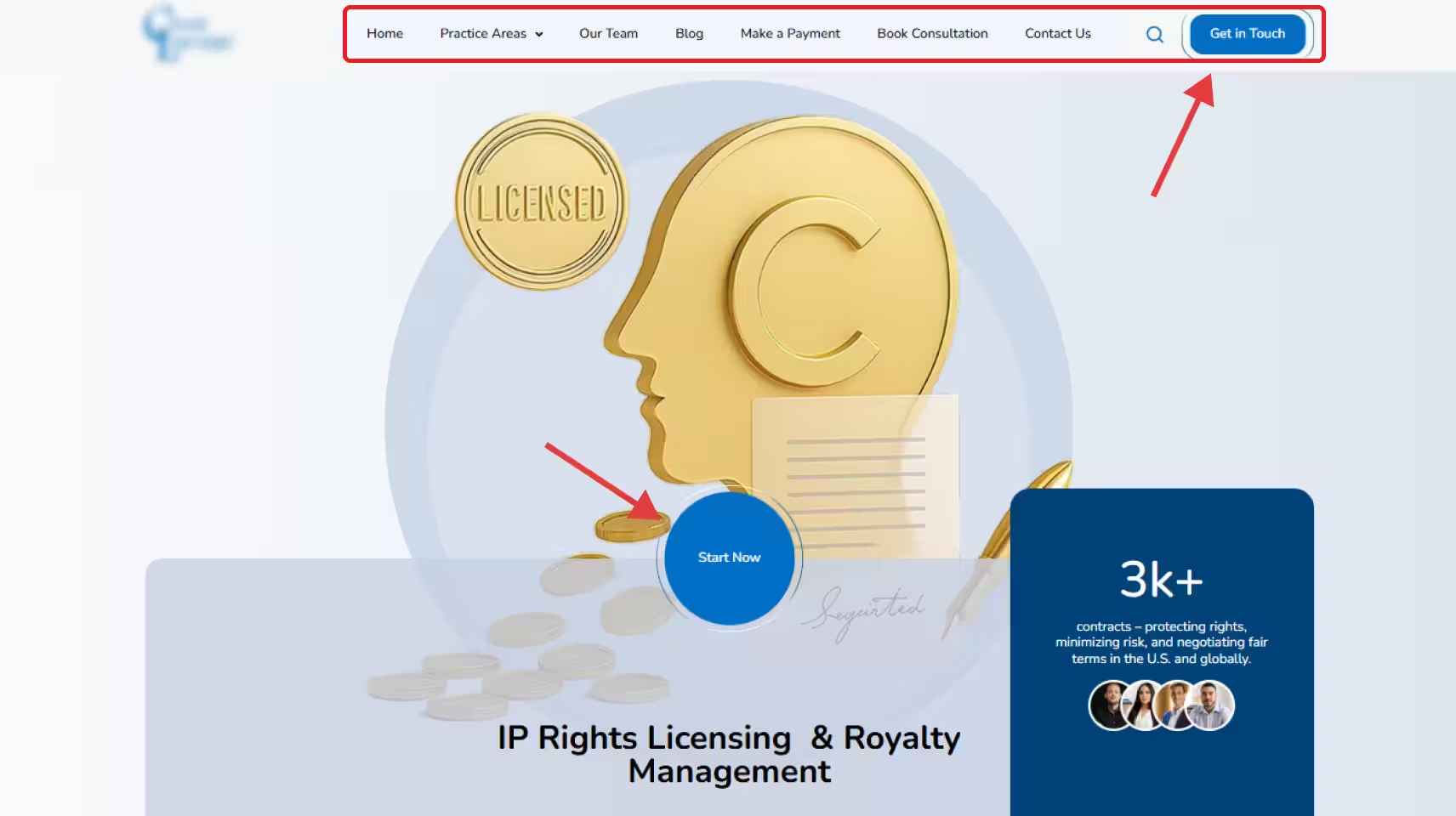
Make sure your attorney bios include technical backgrounds — engineering degrees, scientific training, industry experience — alongside bar admissions and credentials. Also, case studies or representative matter descriptions that give a technology company or brand owner evidence of specific prior work in their domain, and a clear, friction-free path to consultation scheduling, are a must.
IP lawyer advertising on the website also includes the content library. Blog posts, webinars, and downloadable guides on IP topics relevant to specific industries — "IP strategy for SaaS companies at Series A," "trademark basics for consumer brand launches," "how to structure a patent portfolio for licensing revenue" — demonstrate expertise in your specific intersection of IP law and industry context that IP clients are evaluating. Content that speaks to a technology founder about their specific IP situation outperforms content that explains general IP law to a general audience.

See how we design authority-first IP law firm websites -> Law Firm Website Design
Content Marketing, Email, and Long-Term IP Lead Generation
— Content Authority as the Foundation of IP Marketing
Intellectual property law firm marketing through content works because IP clients are heavy researchers.
- Before a technology company hires a patent attorney, someone on their team reads about patent strategy.
- Before a brand owner files a trademark, they research the process.
- Before a startup founder structures an IP licensing deal, they want to understand the landscape.
If your firm publishes the clearest, most relevant content on those topics, you earn a disproportionate share of research-phase attention — and research-phase attention converts into consultation requests at a higher rate than advertising-driven attention.
Your IP lawyer marketing through content should be organized by the specific situations IP clients research: patent filing timelines for startups, trademark clearance best practices for brand launches, copyright protection for digital content, trade secret policies for companies with remote teams, and licensing structures for technology commercialization. Each topic targets a specific client situation and demonstrates the specific expertise that the prospect is evaluating.
Your intellectual property lead generation through webinars and educational events is important. It extends content marketing into an interactive format that builds relationships alongside authority. A quarterly webinar on IP strategy for technology startups, promoted through LinkedIn and through startup ecosystem partners (accelerators, VC firms, legal tech networks), produces both direct lead generation and referral partner development simultaneously.

— Email Marketing: Staying Visible With IP Clients and Referral Sources
Email marketing for IP law firms serves two audiences with meaningfully different content needs.

For prospective clients and existing clients: a periodic newsletter covering relevant IP developments like a new USPTO guidance, significant court decisions in patent or trademark law, legislative developments that affect IP strategy, demonstrates ongoing expertise, and keeps your firm visible during periods between active legal needs.
For referral sources: a professional briefing focused on the developments most relevant to the attorneys, VCs, and business advisors who refer IP work, with enough technical depth to be genuinely useful rather than superficially informative.
How to get IP clients through email: the email list built from webinar registrations, content downloads, and professional event connections represents a prospect and referral population that has already demonstrated interest in IP topics and affinity for your firm.
Consistent, substantive communication with that list — not sales pitches, but genuine updates and analysis — maintains the relationship through the often-extended consideration phase that precedes an IP engagement.
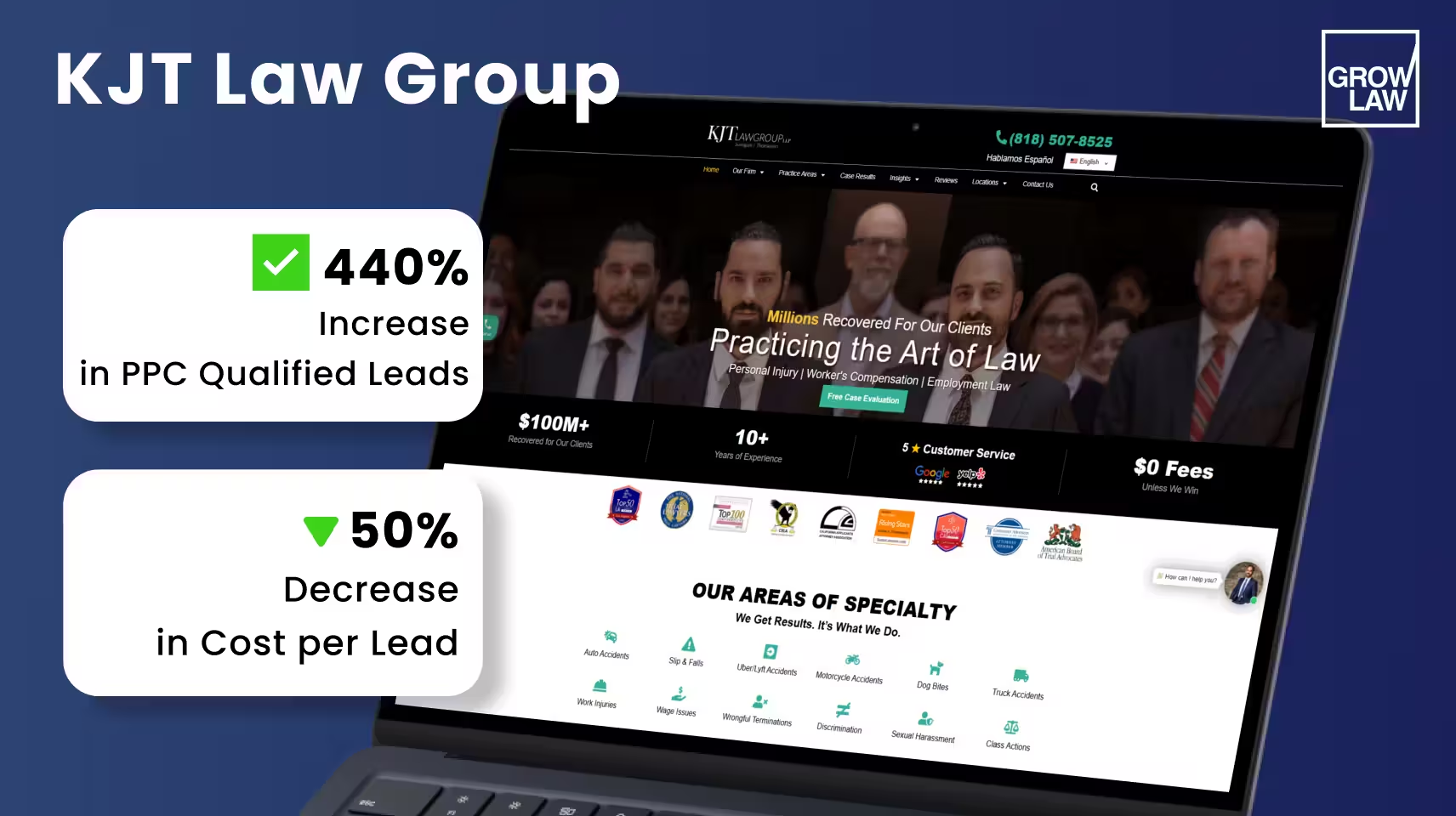
Get a custom IP law marketing plan for your firm and practice areas -> Free Growth Plan
Advertising and Analytics for IP Law Firms
IP law firm advertising through paid channels has a more limited role than in consumer legal markets, but it is not irrelevant. Google Ads for IP attorneys work best for specific, urgent situations: trademark infringement responses, patent invalidity searches, IP due diligence for pending transactions, and copyright licensing disputes.
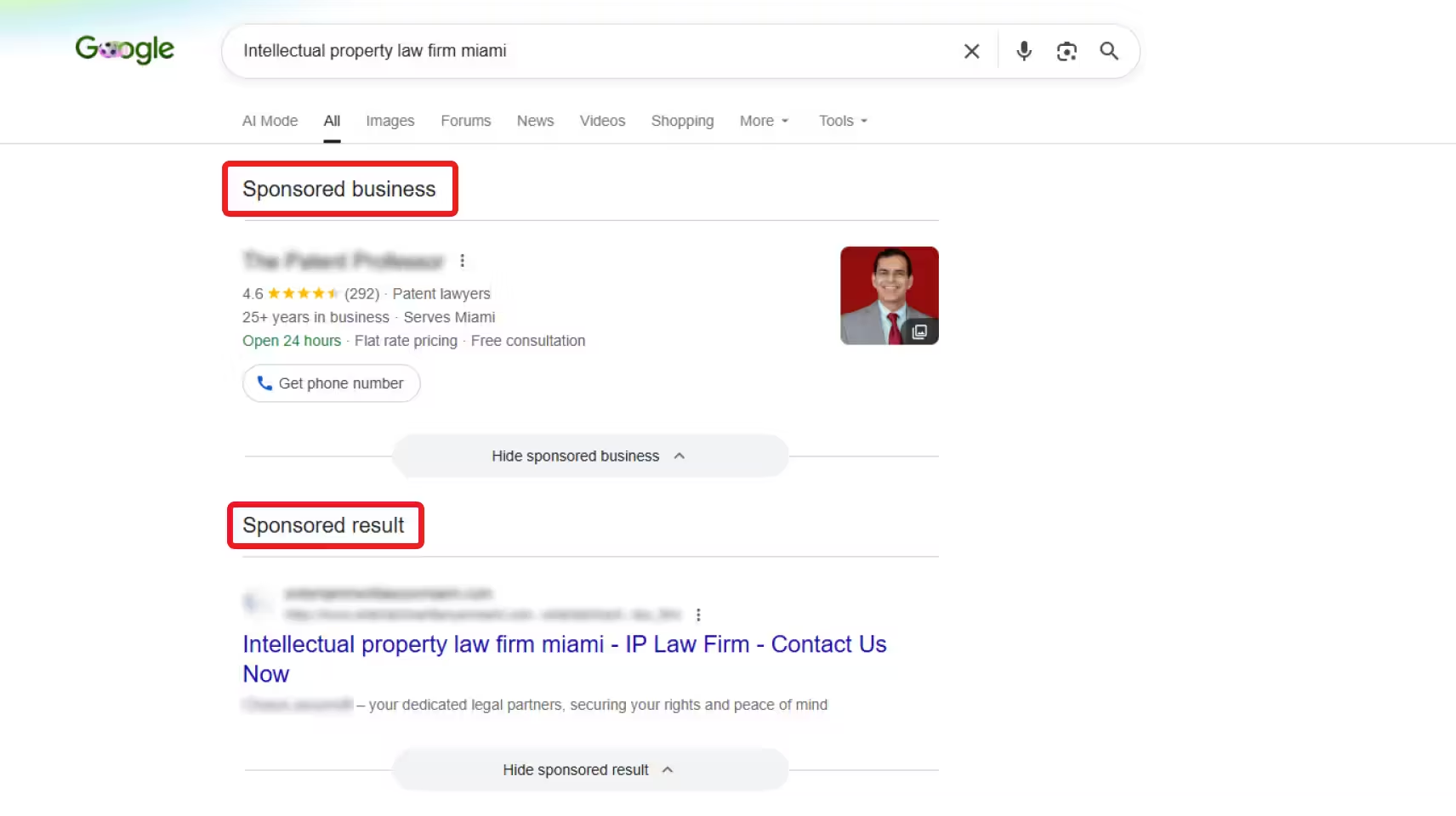
These are situations where a business is in immediate need of IP counsel and is actively searching for a specialist — the paid search environment captures that demand efficiently.
LinkedIn advertising for IP law firms reaches the professional audience that makes or influences IP decisions in business contexts: CTOs, founders, brand directors, general counsel, and technology transfer officers.
Don’t rule out LinkedIn Sponsored Content. You can distribute your firm’s IP articles to these audiences to build brand visibility with the exact decision-maker population in the IP client universe. This is awareness-phase advertising — it does not produce immediate consultation requests at the rate that search advertising does, but it builds the ambient familiarity that converts referrals and cold contacts more readily.
Intellectual property lead generation also requires tracking that goes beyond traffic metrics. If your IP law firm measures website visits without tracking which content leads to consultation requests, which referral sources produce the highest-value clients, and which advertising channels produce signed engagements, you’re investing blindly.
Google Analytics configured with conversion tracking, CRM integration that captures referral source at intake, and periodic review of which marketing investments produce actual clients (not just leads) is the analytics infrastructure that makes your IP marketing decisions defensible.
Summary
- Intellectual property lawyer marketing starts with positioning around specific IP disciplines and target industries — the specificity signals the technical credibility that IP clients use to evaluate attorneys.
- Referral development with startup attorneys, general counsel, VCs, technology transfer offices, and other IP attorneys is the primary growth channel for most established IP practices.
- IP law firm websites must demonstrate technical expertise through specific attorney credentials, industry-focused practice pages, and content that addresses the exact IP situations target clients face.
- Content marketing organized by client situation (patent strategy for Series A startups, trademark basics for brand launches) converts IP research-phase prospects at higher rates than generic IP law education.
- Email marketing for IP firms serves two distinct audiences: clients and prospects (IP updates and analysis) and referral sources (professional briefings calibrated to their information needs).
- Analytics infrastructure that tracks which marketing investments produce actual signed engagements — not just traffic or leads — is a competitive requirement in a practice area where marketing spend should be highly targeted.
Frequently Asked Questions
-
How to market an intellectual property law firm?
How to market an intellectual property law firm starts with positioning around specific IP disciplines and target industries, then building a referral development program with the attorneys, investors, and business advisors who interact with IP clients before those clients need dedicated IP counsel. From that foundation, IP law firm marketing combines a website that demonstrates specific technical expertise, content authority organized by client situation rather than by legal doctrine, email marketing for both prospects and referral sources, targeted paid advertising for urgent IP situations, and LinkedIn visibility with the professional decision-maker audience. Every element should reinforce the technical and industry-specific credibility that IP clients use to evaluate and select counsel.
-
How can IP lawyers get more clients?
How IP lawyers can get more clients: build and maintain referral relationships with startup attorneys, VC firms, accelerators, and other attorneys who interact with IP-intensive clients; publish industry-specific content that answers the IP strategy questions target clients research; speak at industry events where target clients and referral sources participate; run targeted Google Ads for specific urgent IP situations; maintain a LinkedIn presence that distributes IP analysis to the professional decision-maker audience; and systematize review acquisition from satisfied clients. Intellectual property lead generation that combines all of these channels builds a more resilient practice than any single-channel approach.
-
What marketing strategies work for intellectual property attorneys?
Marketing strategies that work for intellectual property attorneys are those calibrated to the research-intensive, relationship-driven decision process of IP clients. Content authority, like substantive, technically specific articles and guides that demonstrate expertise in the intersection of IP law and specific industries, outperforms generic advertising. Referral development with strategic professional network partners outperforms broad advertising in producing the highest-value IP engagements. LinkedIn visibility outperforms search advertising for awareness-phase business decision-makers. The combination of all three, with paid search covering urgent, immediate-need situations, produces the strongest IP practice growth.
-
What advertising works for patent lawyers?
What advertising works for patent lawyers: Google Ads targeting specific patent situation searches (provisional patent filing, patent invalidity search, patent infringement defense, office action response) with dedicated landing pages for each; LinkedIn Sponsored Content distributing patent strategy articles to technology company founders and CTOs; retargeting across Google Display and LinkedIn to maintain visibility with prospects who visited the website but did not convert; and, for firms with active patent litigation practices, targeted search advertising for infringement defense and inter partes review petition queries. Patent attorney marketing through paid channels is most effective for the specific, urgent situations that produce active patent search behavior.
-
How can trademark attorneys generate leads?
How trademark attorneys can generate leads: build a website with a clear trademark registration process explanation and a visible consultation path; run Google Ads targeting trademark filing and infringement queries with landing pages that explain the specific service and set realistic expectations; publish content covering trademark clearance, trademark application process, and trademark monitoring for the industries the firm serves; distribute that content through LinkedIn to brand marketing professionals and startup founders; and cultivate referral relationships with marketing agencies, brand consultants, and startup attorneys who regularly encounter clients with trademark needs. Trademark attorney marketing through educational content that demonstrates trademark process knowledge consistently produces qualified leads from prospects who have already decided they need help.
-
How should IP law firms build a marketing plan?
An IP law firm marketing plan should begin with positioning (which disciplines and which industries), then define the referral development program (which professional networks to cultivate and through what touchpoints), then address website content architecture (which practice area pages and industry-specific content sections to build), then content and email strategy (publication frequency, topic selection by client situation, newsletter format for each audience), and finally paid advertising (which specific IP situations justify search advertising spend, and what LinkedIn distribution budget makes sense for the firm target audience). IP law firm marketing plans that start with advertising and add strategy later consistently underperform those that start with positioning and referral infrastructure and add paid channels to supplement established organic volume. SEO for intellectual property attorneys is the organic-search layer inside that positioning-led plan.

Compare Your Practice Instantly
Stay Ahead of the Competition!
Compare your law firm's performance to Local competitors with our instant assessment tool
Get a clear picture of your firm's performance
Boost your online presence
Compare My Firm
Compare Your Practice Instantly
Stay Ahead of the Competition!
Compare your law firm's performance to Local competitors with our instant assessment tool
Get a clear picture of your firm's performance
Boost your online presence
Compare My Firm
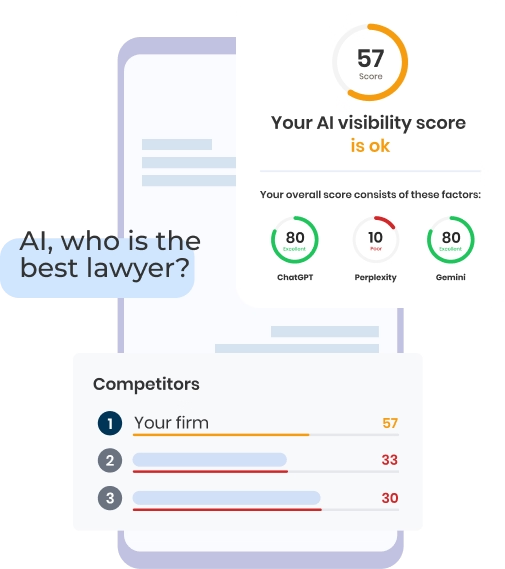
Check Your AI Visibility Instantly
Find Out What AI Is Telling Your Potential Clients
Run our free AI Visibility Report to:
See how often top AI tools mention your law firm
Spot which competitors show up first
Get the next steps to capture more cases
Run My Free AI Report
.avif)
.avif)
.avif)

