


Table of Contents
Civil litigation attorney marketing occupies a distinctive position in legal marketing: it must serve clients who range from individual plaintiffs in contract disputes to corporations in multi-million dollar commercial litigation. You’re also dealing with decision timelines that stretch from immediate (a temporary restraining order needed today) to extended (a business evaluating outside litigation counsel for an anticipated dispute).
To perform well here, you need litigation lawyer marketing that is built around specific practice positioning, a website that projects credibility to both individual and institutional clients, content that demonstrates genuine litigation knowledge, and referral relationships with the business attorneys, accountants, and other professionals who encounter civil disputes before those disputes reach the courtroom.
In this guide, we break down each element of an effective civil litigation marketing system to help you book more qualified consultations.
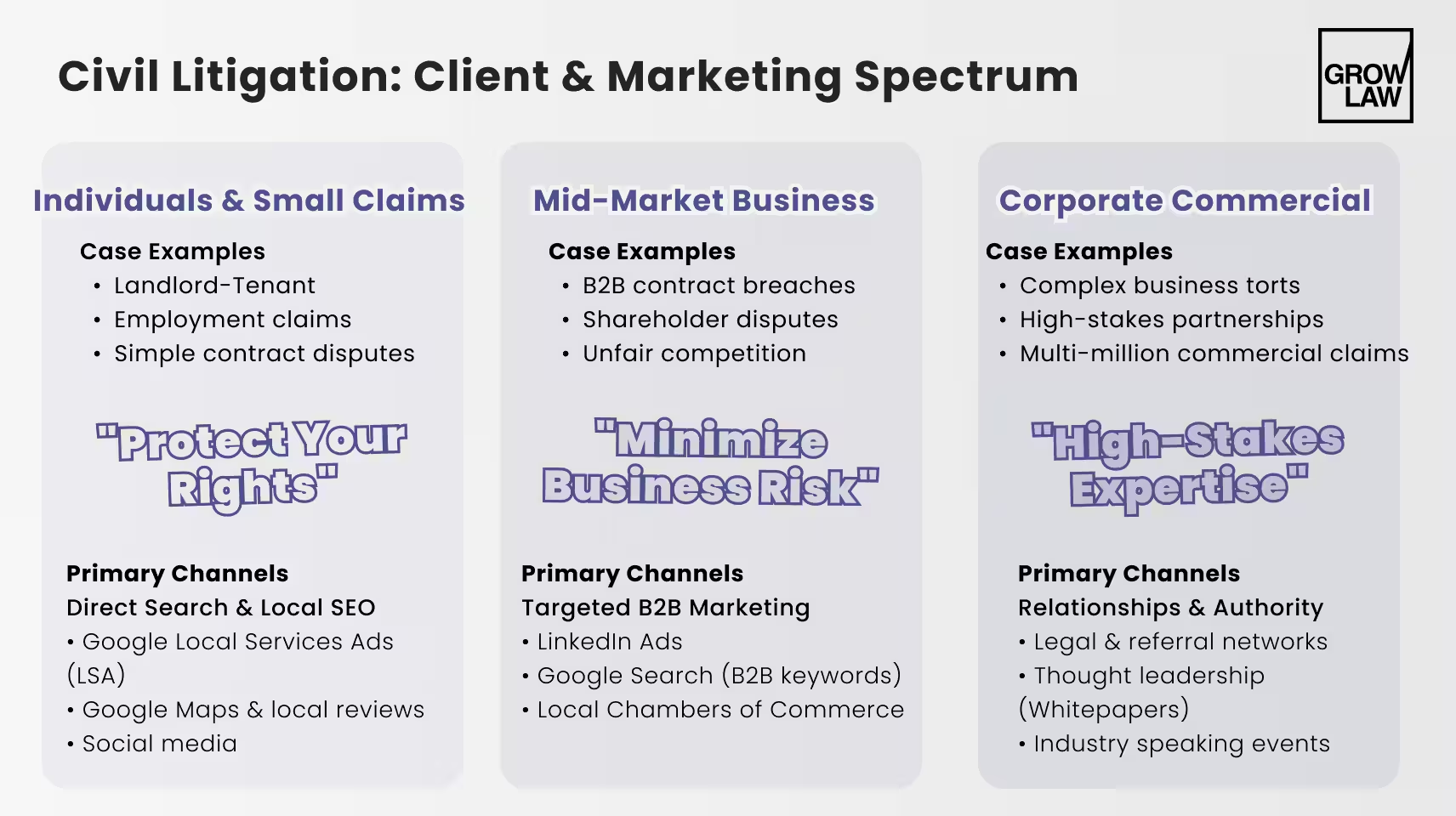
Positioning: The Litigation Niche That Makes Marketing Work
Does your civil litigation lawyer marketing try to attract every type of litigant — from the individual with a landlord dispute to the corporation in multi-district commercial litigation? This positioning will resonate with none of them.
The litigation practices with the strongest marketing results are almost always positioned around a specific type of dispute, a specific industry, or a specific case value range.
Litigation attorney marketing organized by dispute type:
- commercial contract disputes;
- business torts (fraud, misrepresentation, interference);
- partnership and shareholder disputes;
- real estate and construction litigation;
- professional negligence;
- employment litigation (employer-side or employee-side);
- fiduciary duty claims.
Each of these attracts different clients through different channels and requires different marketing messaging.
For example, a business owner in a partnership dispute is searching "how to remove a partner from LLC.” They’re not seeing the same websites, and not responding to the same trust signals as an individual plaintiff in a consumer fraud claim who is searching, "I was scammed by a company what can I do.”
This is why your litigation law firm marketing should be organized by industry vertical. It adds another layer of specificity that improves your search relevance and conversion: construction litigation for contractors, technology company disputes (IP and commercial), healthcare business litigation, financial services litigation, and real estate developer disputes.
Keep in mind, industry-specific positioning allows your marketing to speak the language of your target client — their specific contract structures, their industry-standard dispute triggers, their typical case economics — in a way that boosts your immediate credibility.
A litigation attorney who markets to everyone wins against no one specifically. A litigation attorney who markets to construction contractors facing subcontractor payment disputes wins against every generalist in that contractor market.
The Civil Litigation Website: Credibility Architecture for B2B and Individual Clients
— Website Design That Converts Across Client Types
Civil litigation law firm websites serve clients making high-stakes decisions under varying levels of urgency. An individual plaintiff in an employment dispute is anxious and needs reassurance. A CFO evaluating outside litigation counsel is analytical and needs specific evidence of relevant case experience. A website that converts both requires layered credibility: immediate trust signals for the anxious individual, and depth of case experience documentation for the analytical institutional evaluator.
The best civil litigation law firm websites organize content around dispute type, not around the internal legal categories the firm uses to classify its work. A business owner does not know whether their situation is a "commercial tort" or a "contract claim" — they know they have a problem with a business partner, a vendor, or a customer.
Make sure your navigation and practice area pages are organized around recognizable business dispute situations ("business partner disputes," "contract enforcement," "commercial fraud," "real estate disputes"). These convert better than pages organized around legal categories the client does not use.
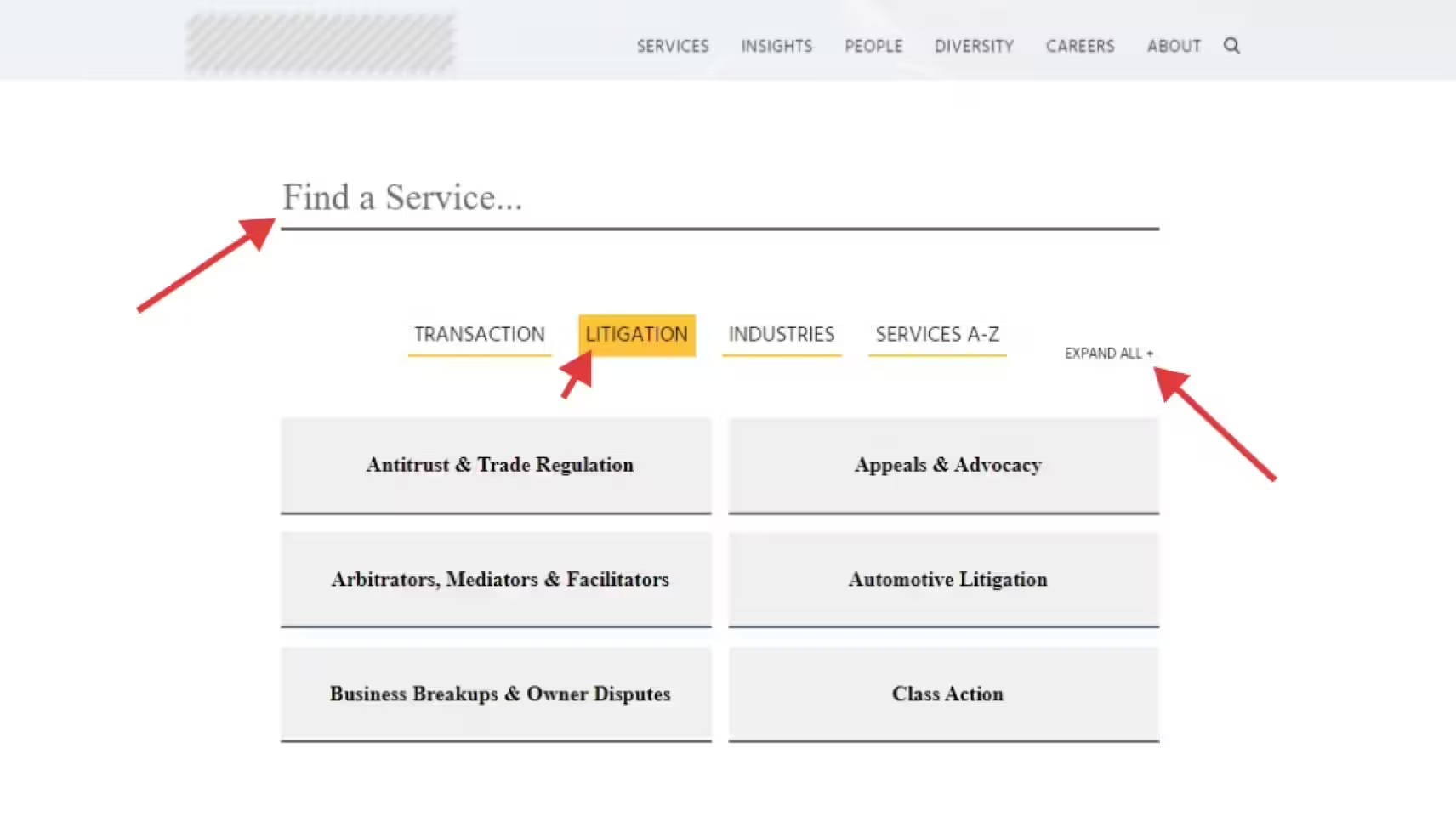
Moreover, attorney bios on civil litigation websites carry more conversion weight than in most practice areas because business clients evaluating litigation counsel are often choosing a specific attorney, not just a firm.
Our advice: Use bios that describe specific case types handled, name court experience where appropriate, and outcomes achieved for clients in similar situations. These are conversion assets. Litigation attorney marketing that treats bios as credential listings rather than experience demonstrations misses the primary purpose those pages serve.
.avif)
See how we design credibility-first civil litigation law firm websites -> Law Firm Website Design
Content Marketing: Demonstrating Litigation Expertise Before First Contact
Civil litigation lawyer marketing through content works because litigation clients — especially business clients — research their legal situation extensively before contacting an attorney. Think about it: A business owner who suspects a partner is misappropriating company funds will research the legal options for several days before deciding to call a litigation attorney.
A contractor facing a payment dispute will look for information on their contract rights and the litigation process in their state. The litigation firm that publishes substantive, specific answers to those questions establishes authority before any conversation happens.
We’ve seen that the best content in litigation marketing is organized by dispute situation rather than by legal doctrine. "What to do when a business partner stops contributing" outperforms "breach of fiduciary duty law in [state]" because the first speaks to the situation the prospect is experiencing, while the second speaks to the legal category the attorney uses to classify it. Marketing for civil litigation lawyers through content should start with the prospect's situation and work backward to the legal framework, not the reverse.

To improve your litigation attorney marketing, your content should include timely coverage of relevant court decisions and legal developments. A significant commercial litigation ruling in the firm's practice jurisdiction, explained in plain English and distributed through LinkedIn and email, reaches existing clients, referral sources, and prospects simultaneously — demonstrating current expertise and maintaining visibility with all three audiences in a single publication.
— Reputation Management: The Trust Signal That Closes Civil Litigation Clients
Civil litigation law firm marketing depends heavily on reputation signals because clients evaluating litigation counsel are making high-stakes decisions and are highly susceptible to peer validation.
A business owner considering hiring a litigation attorney will ask their accountant, their banker, and their attorney friends. They will check Google reviews, look at directory profiles, and search for the attorney's name alongside "reviews." A strong, consistent online reputation — verified by reviews, directory presence, and any available case outcome reporting — reduces the perceived risk of hiring significantly.
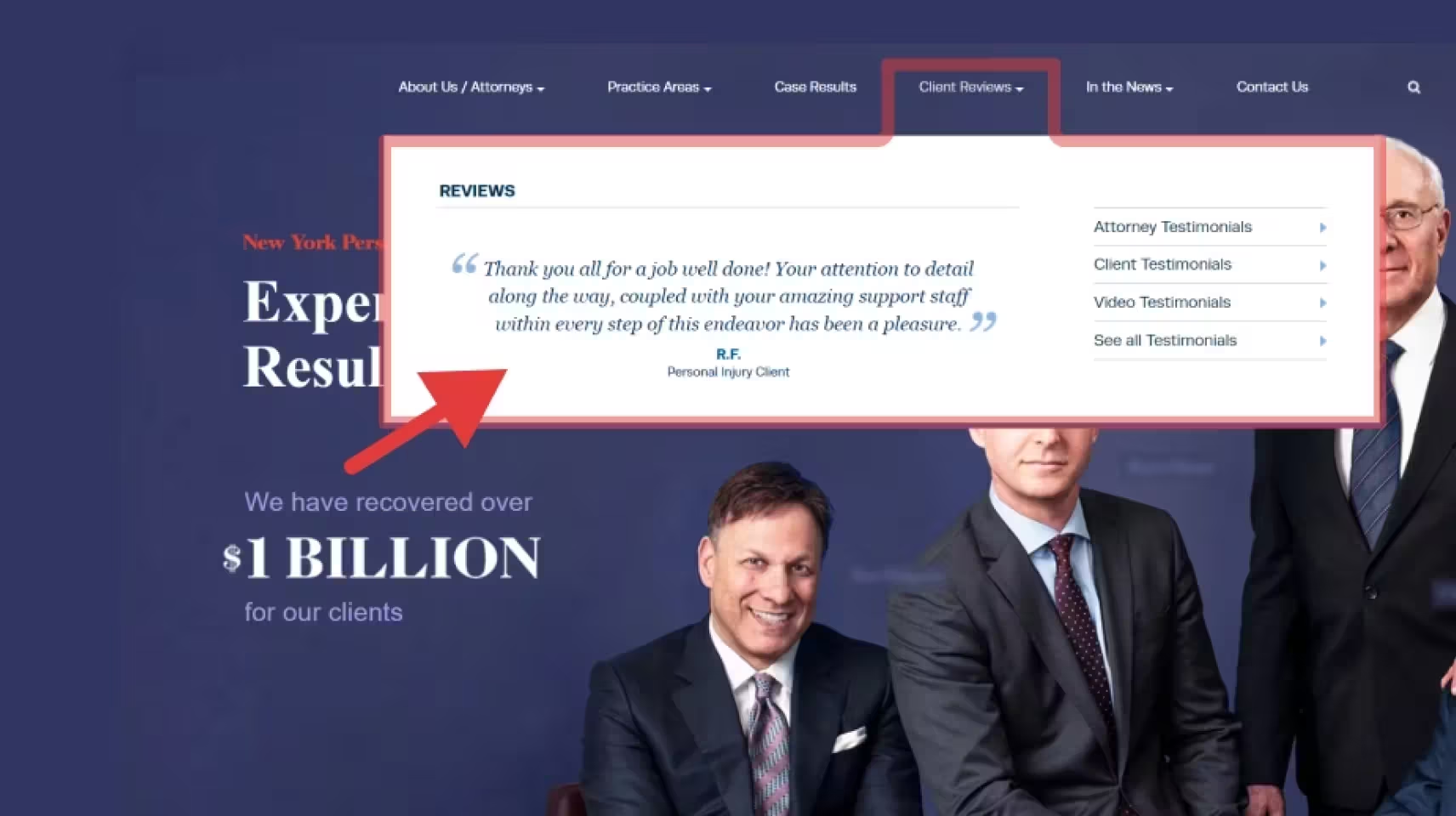
Review acquisition for civil litigation firms takes a slightly different approach than high-volume consumer legal markets. Business clients are often reluctant to leave public reviews because the nature of the dispute they resolved is sensitive.
Remember: Your review requests should be personal, private in the initial request, and framed around your firm's service quality rather than the outcome (which may be confidential). A handwritten note from you, the attorney, following matter resolution requesting a Google review produces higher compliance than an automated email sequence.
Learn how we build content and reputation systems for civil litigation firms -> Law Firm SEO Services
Paid Advertising and Lead Generation for Civil Litigation Attorneys
Civil litigation lawyer leads from paid advertising perform best for the urgency-driven segment of the market: a business owner who has just received a lawsuit, a contractor who has just been issued a stop-work order, a partnership that is in acute conflict and needs immediate legal intervention.
We’ve built Google Ads campaigns around those urgent-situation queries — "sued by business partner," "breach of contract attorney," "commercial litigation lawyer emergency," "injunction attorney near me" — and captured high-intent segments that are ready to call immediately.
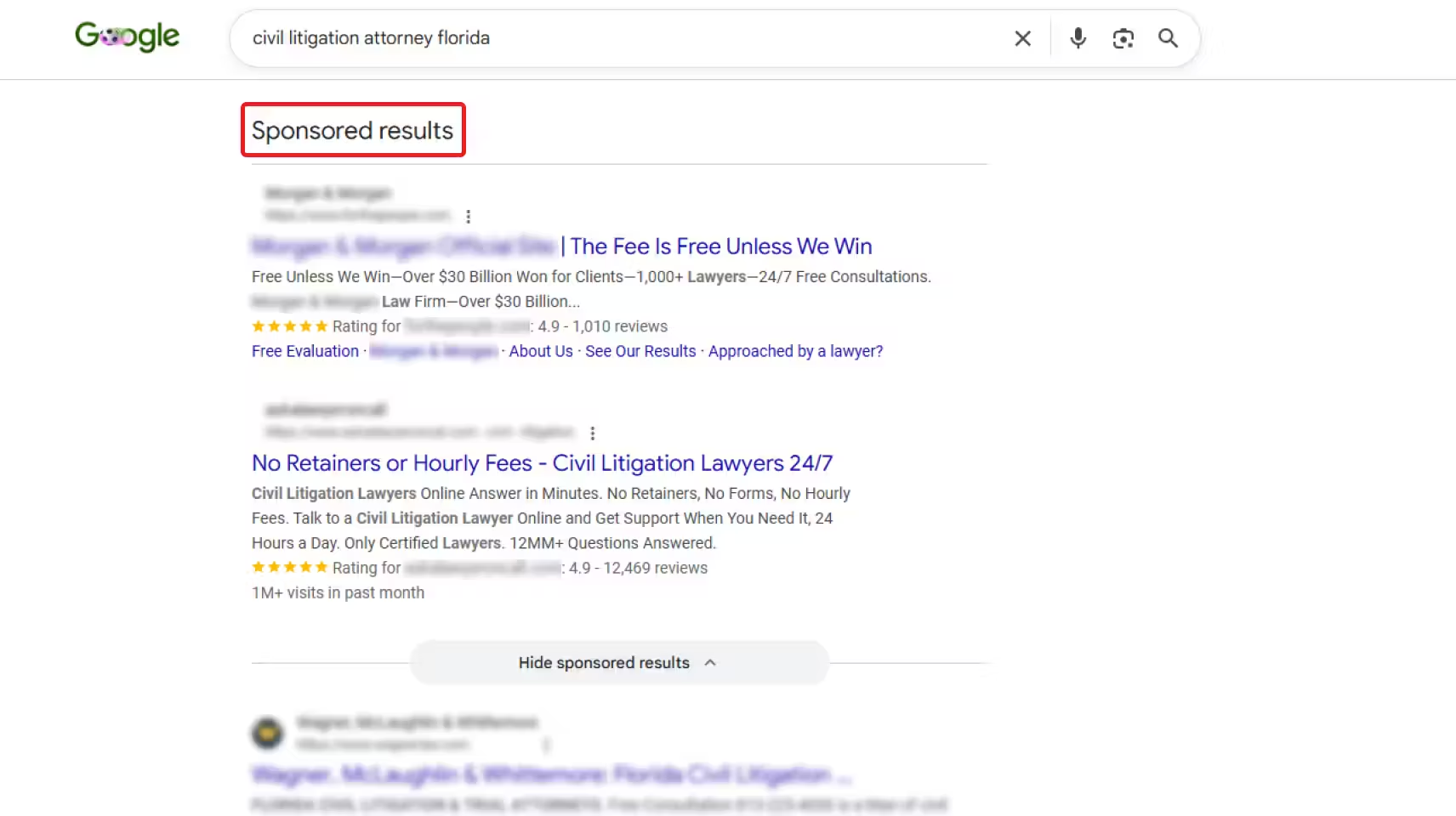
Don’t stop there. Civil litigation advertising through Google LSA provides additional top-of-page placement with per-lead cost economics that work well for business dispute matters with meaningful case value. The Google Screened verification gives LSA placement institutional credibility signals that reduce friction for the business client evaluating multiple firms.
We also recommend litigation attorney advertising through LinkedIn. This reaches the business decision-maker audience that becomes both direct clients and referral sources. A CFO, operations director, or business owner who follows a litigation attorney on LinkedIn, reads their content regularly, and develops familiarity with their approach to commercial disputes is more likely to think of that attorney when a dispute arises or when a colleague asks for a litigation referral. LinkedIn advertising for litigation firms is an awareness-phase investment that produces results on a longer timeline than search advertising but generates the institutional relationships that produce the highest-value engagements.

Get a custom civil litigation marketing plan for your firm -> Free Growth Plan
Referral Development: The Highest-Value Channel for Litigation Practices
Civil litigation lead generation through referral channels produces the highest-value cases for most litigation practices. The referral network for commercial litigation includes transactional attorneys who encounter disputes in their practice, corporate attorneys who need outside litigation support, accountants and financial advisors who advise businesses in conflict, insurance carriers who defend policyholders in covered disputes, and other litigation attorneys in non-competing practice areas or jurisdictions.
How to get litigation clients through referral development:
- Maintain visibility with transactional attorneys and general counsel who regularly encounter disputes through periodic legal updates, direct communication when relevant cases arise, and visible involvement in bar association litigation sections.
- Build relationships with accountants and business advisors who advise clients facing financial disputes.
- Invest in personal relationships with the attorneys and professionals who have referred matters historically — the referral relationship is maintained through demonstrated competence, reliable communication, and genuine reciprocity when appropriate.
You can produce the strongest economics with litigation attorney marketing that integrates referral development with digital visibility. A business client who receives a referral from a trusted attorney, then validates that referral by researching the firm online and finding substantive content, strong reviews, and specific case experience, converts more quickly and with less friction than a cold digital lead. Digital marketing that supports and amplifies an established referral foundation consistently outperforms digital marketing operating in isolation from relationship channels.
Summary
- Civil litigation attorney marketing starts with positioning around specific dispute types and industries — generic litigation marketing competes on brand awareness that most litigation firms have not built.
- Litigation websites must serve both individual and institutional clients: immediate trust signals for urgent individual prospects, and specific case experience depth for analytical business evaluators.
- Content organized by client dispute situation (not by legal doctrine) converts research-phase litigation prospects by speaking to their experience rather than the legal category their situation fits.
- Reputation management for litigation firms requires personalized review requests at matter resolution — business clients need individual outreach, not automated review sequences.
- Paid advertising for civil litigation captures the urgency-driven segment (business just sued, contract breach just occurred); LinkedIn advertising builds the institutional awareness that produces the highest-value business client relationships.
- Referral development with transactional attorneys, accountants, and business advisors produces the highest-value litigation engagements — digital marketing supports and amplifies that referral foundation rather than substituting for it.
Frequently Asked Questions

Compare Your Practice Instantly
Stay Ahead of the Competition!
Compare your law firm's performance to Local competitors with our instant assessment tool
Get a clear picture of your firm's performance
Boost your online presence
Compare My Firm
Compare Your Practice Instantly
Stay Ahead of the Competition!
Compare your law firm's performance to Local competitors with our instant assessment tool
Get a clear picture of your firm's performance
Boost your online presence
Compare My Firm
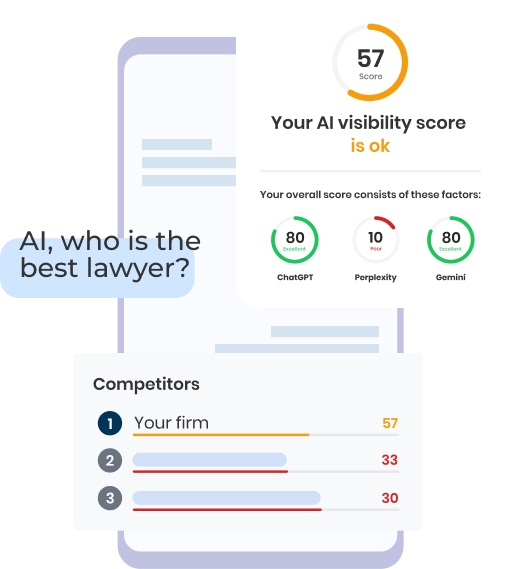
Check Your AI Visibility Instantly
Find Out What AI Is Telling Your Potential Clients
Run our free AI Visibility Report to:
See how often top AI tools mention your law firm
Spot which competitors show up first
Get the next steps to capture more cases
Run My Free AI Report
.avif)
.avif)
.avif)

