


Table of Contents
If you've been wondering how to optimize law firm practice area pages for SEO, this guide is for you — not a marketing agency reading list, but the attorney or managing partner who keeps hearing that their website needs more content and wants to understand what that actually means in practice. We'll cover why separate pages for each area of law are worth building, what needs to go on each page, how many words it should have, and how to prioritize when you're not starting from scratch. No filler. Just the decisions that move rankings and convert visitors into calls.
One honest note before we start: a practice area page is not a magic trick. Even with strong Chicago law firm SEO, a well-built page for "estate planning attorney Chicago" will not rank overnight. But a poorly built one — or no page at all — guarantees your firm is invisible for the searches that matter most to your revenue. The gap between firms that treat these pages seriously and firms that don't is one of the largest in legal SEO.
See how practice area pages fit into a complete strategy → Law firm SEO
Why Practice Area Pages Are the Highest-ROI Pages on a Law Firm's Website
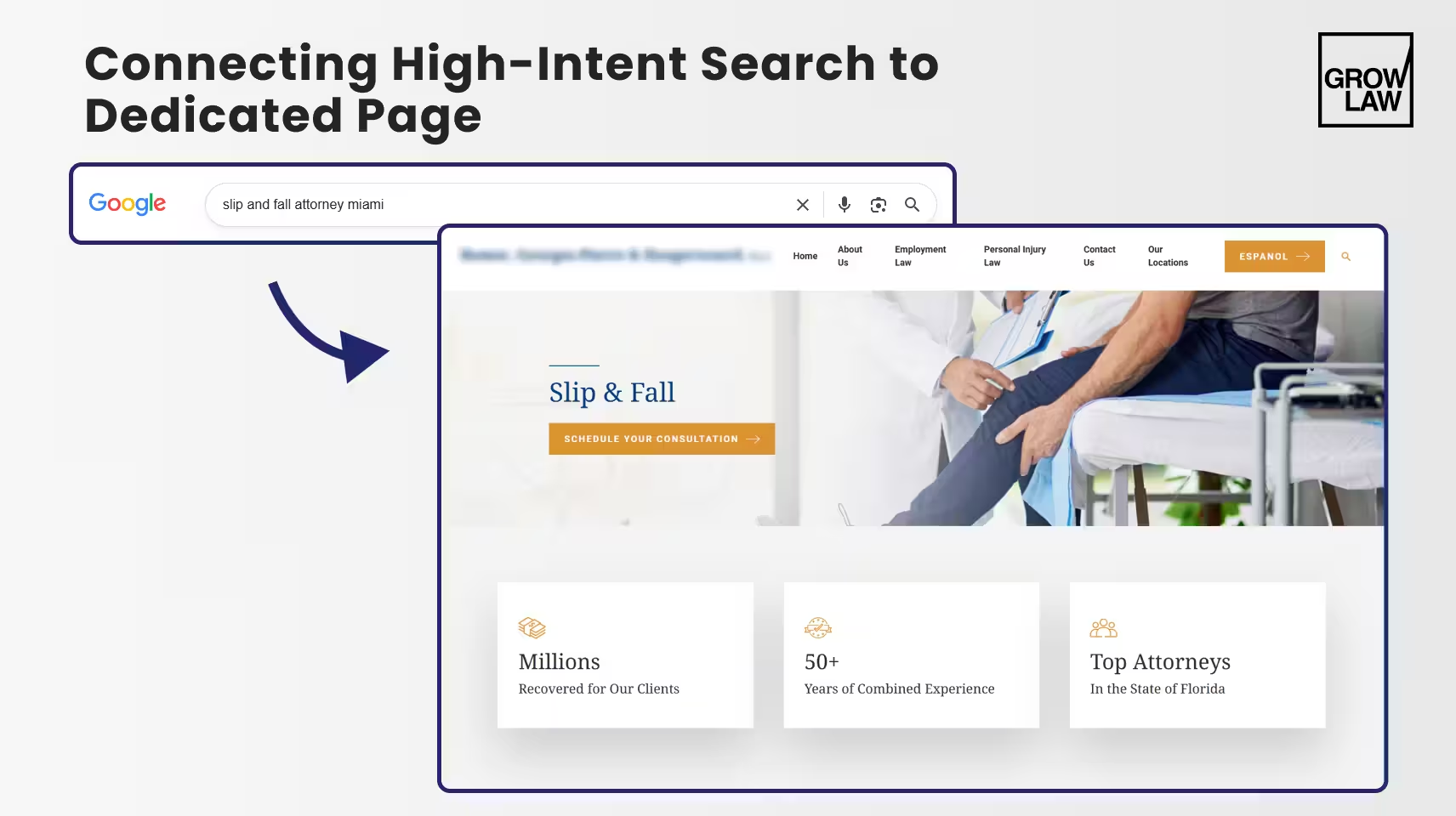
A generic "Services" page listing all the areas your firm covers competes for nothing. Google cannot rank a single page for divorce law, personal injury, and business litigation simultaneously — those are different searches, different intents, different clients. Our business law SEO guide applies this principle to business practices. When you build one page per practice area, each page can compete for every high-intent search in that area of law in your market.
The economics of this are straightforward. Our clients who invest in law firm SEO see marketing ROI in the 400%–800% range, but that return comes almost entirely from organic search traffic — and organic traffic comes almost entirely from pages Google has decided are worth ranking. Practice area pages are the pages Google is looking for. They are the foundation of every successful law firm SEO campaign we run.
If your firm's website currently has one services page, you are invisible for most of the searches your potential clients are running. The fix is not complicated. It is just work.
Why One Page Per Practice Area Beats a Combined Services Page
The most common website architecture mistake we see at law firms is the consolidated services page — one URL listing every practice area the firm handles, often in three-sentence paragraphs with no depth. Firms build these because they are faster to write and easier to manage. Google ranks them for almost nothing.
Here's why. Google's ranking system assigns authority to individual URLs. When someone searches "child custody attorney Denver," Google looks for a page specifically about child custody in Denver — not a page that mentions child custody in paragraph four alongside divorce, adoption, and guardianship. A dedicated custody page can accumulate the keyword signals, internal links, and topical depth that ranks it. A combined services page cannot.

We worked with a family law firm in a mid-size market that had exactly this problem. Their single services page listed divorce, custody, and adoption in three bullet points. Nearly all of their organic traffic was branded — people searching the firm by name. After we built out six separate practice area pages, each with 1,000–1,400 words, FAQ blocks, attorney attribution, and internal links to attorney bios and location pages, organic sessions from non-branded searches increased by 340% within five months. They began ranking on the first page for "divorce attorney [city]" and "child custody lawyer [city]" — queries they had never previously appeared for. The combined services page had been standing between them and those rankings for years.
A single "Services" page competes for nothing. A dedicated practice area page can own every high-intent search in that area of law in your market.
How to Structure a Law Firm Practice Area Page
Every practice area page that ranks and converts has the same core structure. Missing any of these elements is leaving both rankings and clients on the table.
| Element | What it does | Example |
|---|---|---|
| H1 with practice area + location | Tells Google exactly what the page is about | "Personal Injury Attorney in Chicago" |
| Opening paragraph with client pain | Establishes relevance immediately for the reader | "If you were injured in an accident and aren't sure what to do next..." |
| Practice area overview (what you do) | Establishes topical depth for rankings | How the firm handles cases, types of cases taken |
| Legal process section | Answers the most common client questions on the page | What to expect, timeline, how the process works |
| Attorney attribution / byline | E-E-A-T signal — Google wants a named expert | "Written by [Attorney Name], [State] Bar #XXXXX" |
| Social proof element | Conversion signal — reduces hesitation before calling | Case result, client testimonial, award or recognition |
| CTA block | Converts the visit into a call or form fill | "Schedule a free consultation" — high on the page, not just at the bottom |
| Internal link to attorney bio | Relevance + trust signal for Google | Link to the specific attorney who handles this practice area |
The attorney attribution element deserves emphasis. Google's quality guidelines specifically reward legal content that demonstrates who wrote it and what their credentials are. An anonymous practice area page is weaker than one with an attorney byline, bar number, and jurisdiction. This is not a small difference. It is one of the clearest signals of expertise Google can find on a law firm page.
Want pages built to this standard for your firm? See how we do it → Attorney SEO services
How Many Words Should a Practice Area Page Have — and Why
This is the question every firm asks, and the honest answer is: enough to cover the topic completely, not one word more. In practice, that means:
- 800–1,200 words for straightforward practice areas in less competitive markets
- 1,200–1,800 words for competitive markets or practice areas with multiple sub-topics (personal injury, family law, estate planning)
- 2,000+ words only when the topic genuinely requires it — and most practice area pages do not
Word count is not a ranking factor by itself. What word count reflects is depth — a 1,400-word page can cover the client's situation, the legal process, what the firm does differently, what to expect in terms of timeline and cost, and common questions. A 350-word page cannot. Google ranks pages that answer the query completely. Thin pages do not answer queries completely.
The conversion data confirms this. A personal injury firm we worked with had individual practice area pages, but each was under 400 words with no FAQ, no attorney attribution, and no case result references. Rankings were poor; the pages that did get traffic converted at under 1%. After rebuilding each page to 1,200+ words and adding FAQ blocks, an attorney byline, and a case result reference, the conversion rate on those pages rose to 4.1% within three months. Intake volume from organic traffic doubled. The word count increase was not the cause — the completeness it represented was.
The SEO Content Roadmap for Practice Area Pages: How to Prioritize
Most firms cannot build 12 practice area pages simultaneously. The firms that try to do everything at once usually end up with 12 thin pages that rank for nothing. A better approach is to build fewer pages well and add from there.
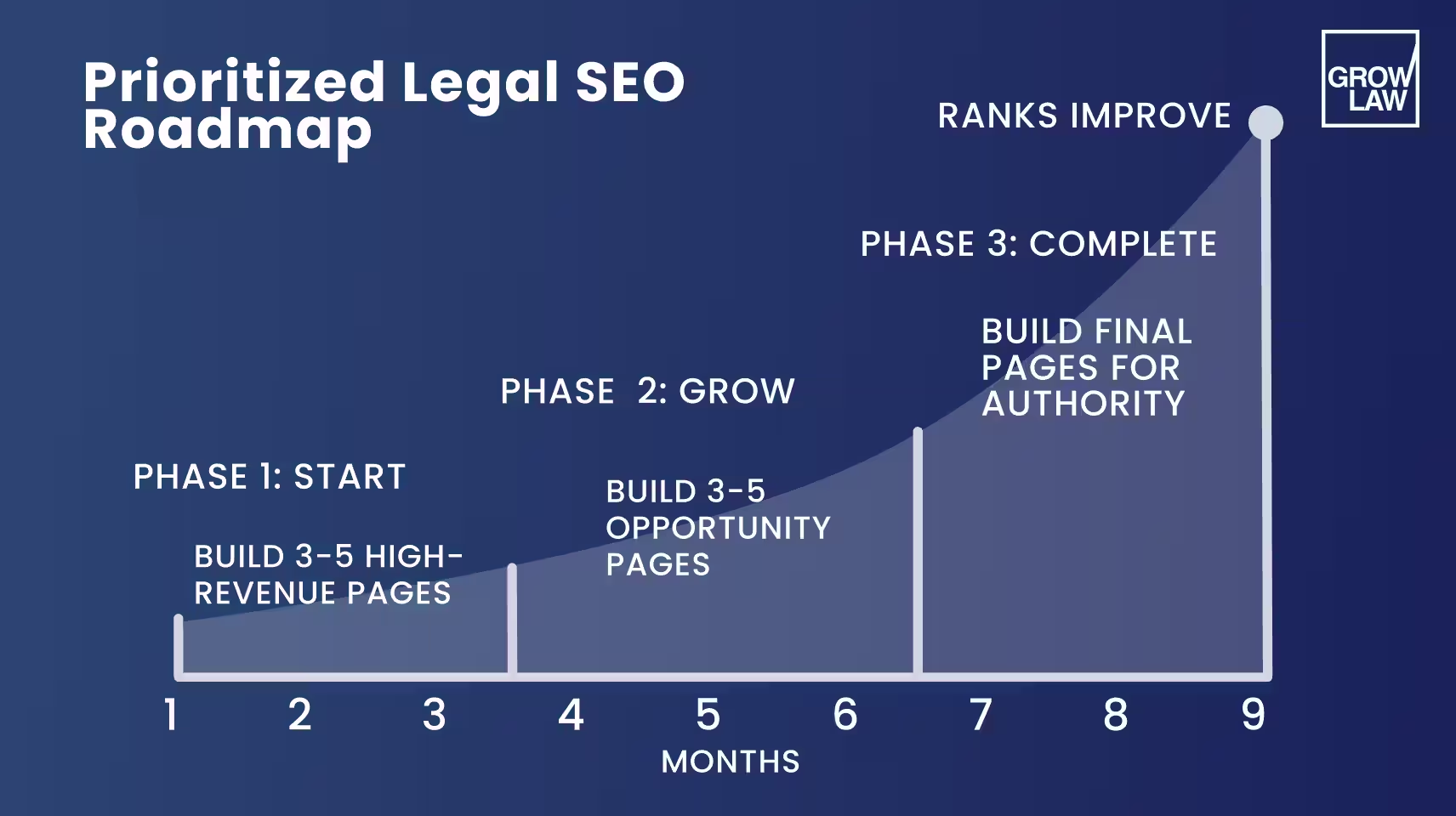
Here is the prioritization framework we use with clients. Start with the practice areas that generate the most revenue for the firm — the cases you most want. Then look for practice areas where your firm already has some ranking signal even at page two or three, because those pages are closest to the first page and will move fastest. Finally, look for practice areas where competitors have thin or missing dedicated pages — those gaps are easier to win than areas where five well-funded firms have 2,000-word pages with 50 backlinks each.
On timeline: firms starting from a reasonable SEO foundation typically see first ranking improvements within 60–90 days of publishing a correctly built page. Qualified leads from organic traffic usually follow at the 90–120 day mark. A correctly prioritized practice area page roadmap — three to five pages per quarter — produces compounding results because each page strengthens the topical authority of the others.
This sequencing is what we mean by an SEO content roadmap: not a list of topics to eventually write, but a prioritized build order tied to revenue and competitive opportunity. Treat it as infrastructure, not content marketing.
Should Practice Area Pages Include FAQs — and How to Write Them
Yes, always. FAQ blocks on practice area pages serve two functions that are difficult to replicate any other way.
First, they are how Google's AI Overviews pull from your site. When a prospective client asks ChatGPT or Google AI "how long does a personal injury case take in Texas," the AI looks for pages with clear, direct answers to that exact question. A FAQ block with "How long does a personal injury case take?" as an H3 heading, followed by a 60-word answer, is exactly the format AI systems prefer to cite. Firms without FAQ blocks on their practice area pages are voluntarily excluded from this traffic.
Second, FAQ blocks extend dwell time and address the objections that prevent people from calling. The most common questions clients have before they hire a lawyer — "How much does this cost?," "How long will this take?," "What are my chances?" — should be answered directly on the page. Not in a way that gives legal advice, but in a way that reduces the fear and uncertainty that stops people from picking up the phone.
How to write them correctly: phrase the question the way a client would actually ask it, not the way a lawyer would. "What are your fees for divorce representation?" is not how anyone searches. "How much does a divorce attorney cost in [state]?" is. Keep answers to 50–80 words — long enough to be substantive, short enough for Google to use as a featured snippet or AI citation. Place the FAQ block after the main body content and before the CTA. Add FAQ schema markup so Google can read the structure.
How Practice Area Pages Connect to Attorney Bios, Location Pages, and Blog Content
A practice area page does not work alone. Its rankings and its conversion rate both improve when it is connected to the right supporting pages through internal links. For the next step, see a law firm internal linking strategy.
The three connections that matter most: First, link from the practice area page to the lead attorney's bio page. Use specific anchor text that names the attorney and the practice area — "handled by [Name], our Chicago personal injury attorney." This tells Google that a named professional is associated with this work, which is an expertise signal. Second, link from the practice area page to the relevant city or location page. A "personal injury attorney Chicago" page that links to a Chicago practice area hub gets a local relevance boost. Third, link from practice area pages to directly relevant blog posts on the same topic — and link back from those posts to the practice area page. This builds topical authority across a cluster of pages rather than concentrating it all on one URL.
Sequoia Legal came to us as a boutique Denver business law firm with a strong offline reputation and a weak digital presence. Their existing website did not reflect the depth of their practice. After building out a structured cluster of practice area pages, attorney bio pages, and supporting guides — all connected with deliberate internal linking — organic traffic grew by 6,700% and qualified leads increased by 276%. No single page produced that result. The cluster did.

Ready to build practice area pages that compound? See our full approach → SEO strategy for law firms
Summary
- Separate pages per practice area — not a combined services page — are the foundation of law firm SEO. Each page can rank for every search in that area of law.
- Every page needs: H1 with practice area + location, attorney attribution, process explanation, social proof, CTA, and internal link to attorney bio.
- Word count should reflect completeness: 800–1,200 words for most practice areas, 1,200–1,800 in competitive markets.
- Always include a FAQ block — it feeds AI Overviews and handles the objections that prevent calls.
- Build in priority order: highest-revenue practice areas first, then areas with existing partial rankings, then competitor gaps.
- Connect practice area pages to attorney bios, location pages, and blog content through deliberate internal linking.
FAQ
-
How to structure a law firm practice area page?
How to structure a law firm practice area page starts with a clear H1 that names the practice area and location, followed by a brief intro that speaks to the client's situation. The body should cover what the firm does, how the legal process works, and what the client can expect. Include attorney attribution with credentials, a social proof element, a FAQ block, and a CTA. Every element should serve either the reader or Google's ranking signals — ideally both.
-
What should be included on a practice area page?
What should be included on a practice area page: an H1 with practice area and location, a client-focused introduction, a substantive explanation of the legal process, attorney byline with bar credentials, social proof (case result or testimonial), FAQ block with client-phrased questions, internal link to the attorney bio page, and a clear CTA placed high on the page and again at the bottom. Generic paragraphs about "our experienced team" do not count as content. For a deeper breakdown, see our guide to attorney bio page SEO.
-
How many words should a practice area page have?
How many words a practice area page should have depends on the topic's complexity and market competitiveness. In most markets, 800–1,200 words is sufficient for a straightforward practice area. Competitive metros and complex practice areas like personal injury or estate planning typically need 1,200–1,800 words to rank. More words only help if they add substance — padding to hit a word count does not improve rankings and hurts conversion.
-
Should practice area pages include FAQs?
Yes, without exception. FAQ blocks are how Google's AI Overviews cite your content, and they address the objections that stop prospective clients from calling. Write each question the way a client would actually search for it, keep answers to 50–80 words, and add FAQ schema markup. Place the block after the main body content, before the final CTA.
-
How should practice area pages link to attorney bios?
How should practice area pages link to attorney bios: use descriptive anchor text that names the attorney and their role — "handled by [Name], our [city] [practice area] attorney" — rather than generic text like "click here." Link to the specific attorney who handles that practice area, not the team page. This tells Google that a credentialed individual is responsible for that area of law, which is an expertise signal that supports both the practice area page and the attorney bio.

Compare Your Practice Instantly
Stay Ahead of the Competition!
Compare your law firm's performance to Local competitors with our instant assessment tool
Get a clear picture of your firm's performance
Boost your online presence
Compare My Firm
Compare Your Practice Instantly
Stay Ahead of the Competition!
Compare your law firm's performance to Local competitors with our instant assessment tool
Get a clear picture of your firm's performance
Boost your online presence
Compare My Firm
Check Your AI Visibility Instantly
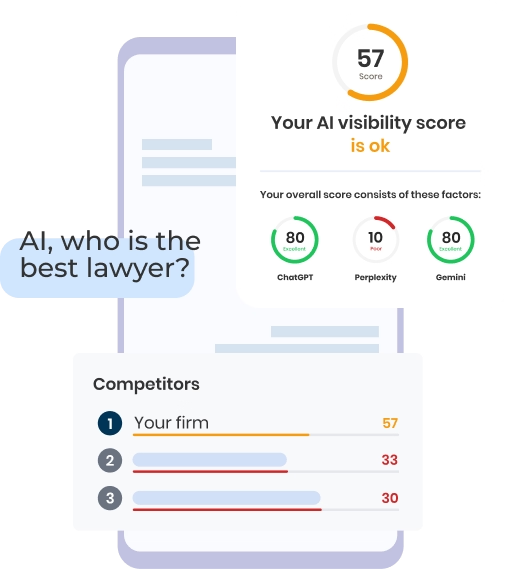
Find Out What AI Is Telling Your Potential Clients
Run our free AI Visibility Report to:
See how often top AI tools mention your law firm
Spot which competitors show up first
Get the next steps to capture more cases
Run My Free AI Report
.avif)
.avif)
.avif)

