


Table of Contents
Law firm conversion rate optimization is the difference between a website that fills your calendar and one that looks good while doing very little.
This article covers what CRO actually means for law firms, what realistic benchmarks look like across page types, the conversion blockers we see repeatedly on legal websites, the elements that drive the biggest improvements, and how to build conversion rate optimization for legal landing pages that perform — especially for paid traffic. Everything here comes from working directly with law firms, not from generic marketing theory.
What Is Law Firm Conversion Rate Optimization — and Why Does It Matter More Than Traffic?
Ask most law firm owners about their marketing, and the conversation quickly turns to traffic: organic rankings, ad clicks, and monthly visitors. Traffic matters — but it is only half the equation.
Conversion rate optimization for law firms is about what happens after someone lands on your site. Do they call? Do they fill out a form? Or do they leave and call someone else?
A conversion is any action that moves a visitor toward becoming a client: a phone call, a consultation request, or a live chat session. The conversion rate is simply the percentage of visitors who take that action.
If 1,000 people visit your site each month and 2% convert, you get 20 leads. Push that to 4% — same traffic, no extra ad spend — and you get 40. For a firm with a $5,000 average case value and a 25% close rate, that improvement is worth roughly $25,000 in additional monthly revenue.
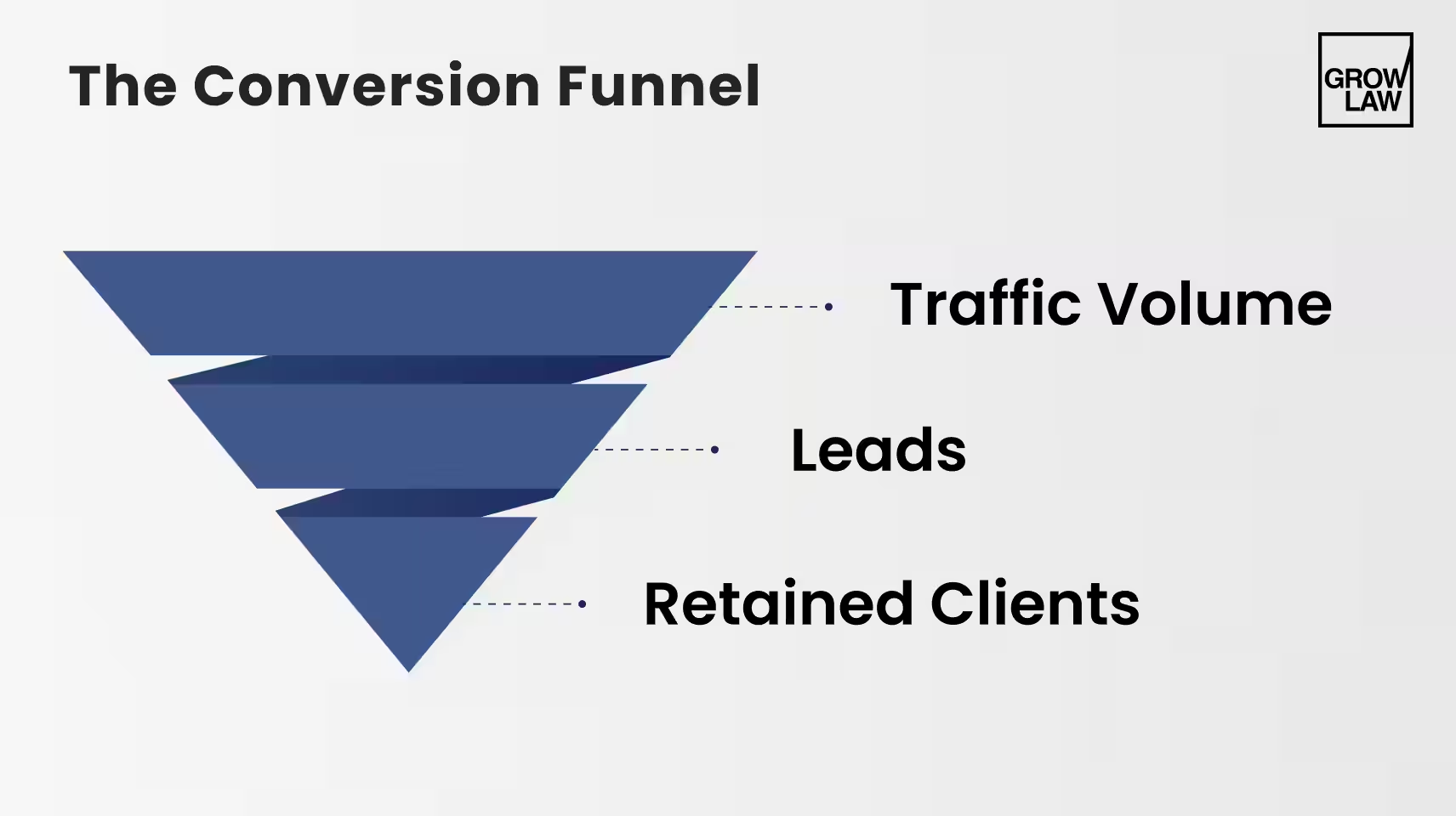
That is why conversion optimization techniques for law firm websites often deliver faster ROI than buying more traffic. And it is why firms that focus exclusively on growing visitor numbers while ignoring what those visitors do when they arrive tend to plateau, no matter how much they spend.
The data backs this up. Google's research on page experience shows that as load time increases from one to three seconds, the probability of a bounce increases by 32%. For a law firm paying $100 to $300 per PPC click, a slow site is not just a UX problem — it is a direct revenue leak.
What Is a Good Law Firm Website Conversion Rate?
This is one of the most common questions we hear — and one of the hardest to answer with a single number. The right benchmark depends on your practice area, traffic source, geographic market, and the specific type of page being measured. A personal injury firm running aggressive paid search campaigns in Houston is playing a different game than a boutique estate planning practice in a mid-size market.
That said, here are the ranges we see consistently across the legal websites we work with:
A few things worth noting. Organic traffic converts lower than paid traffic — that is expected and normal. Mobile traffic converts 30–50% lower than desktop, which is exactly why mobile UX deserves serious attention. Branded searches — visitors who type your firm's name directly — can convert at 15%+ because those visitors have already made a shortlist decision.
For paid search specifically, legal is consistently one of the highest-converting and highest-cost verticals. WordStream's industry benchmark data puts average legal conversion rates among the top performers across all industries — which makes optimizing those landing pages a high-leverage activity.
When a client tells us their conversion rate is "around 2%," our first question is always: 2% of what traffic, on which pages, from which source? Aggregate numbers hide the real story. Knowing your baseline by page type and channel is where any serious CRO program begins.

Want to know how your site stacks up against competitors in your market? → Get a Free Law Firm Website Analysis
The Biggest Conversion Blockers on Law Firm Websites
We have audited a lot of legal websites. The problems are rarely unique. The same handful of issues appear across firms of all sizes and practice areas — and clearing them is always step one before anything else is worth optimizing.
1. Weak or Missing Trust Signals
Hiring a lawyer is not an impulse decision. People visit your site in a state of stress, uncertainty, and often urgency. Before they pick up the phone, they want evidence that you are the right choice. A site that leads with a generic stock photo of a gavel and buries its client reviews three scrolls down is working against itself.
The trust signals that actually move conversion metrics: Google review count and average rating displayed near the top of the page, bar association badges and peer recognition, specific case outcomes (not vague claims), attorney headshots that feel like real people, and third-party media mentions or recognitions. These are not decorative — they are conversion elements.

2. Unclear or Weak Calls to Action
"Contact Us" is not a CTA. It is a label. An effective CTA on a law firm website removes uncertainty about what happens next and makes the ask feel manageable. There is a real, measurable difference between "Contact Us" and "Schedule Your Free 30-Minute Consultation" — and it shows up in the conversion numbers.
Common failures we see: a single CTA at the top of the page with nothing below it, button copy that says "Submit" instead of anything meaningful, no CTA on attorney bio pages — which are often among the highest-traffic pages on a legal site — and CTAs that are visually competing with five other elements on the screen.
3. Poor Mobile UX
More than 65% of legal website traffic arrives on mobile. Yet the majority of law firm sites we audit were clearly designed for desktop first, with mobile treated as an afterthought. Tap targets that are too small, text that requires pinching and zooming, forms that are a nightmare to fill on a phone, and phone numbers that are not actually tap-to-call — all of this bleeds conversion.
Phone-first design means one tap to call, always visible. It means the form has three fields, not twelve. It means the hero section communicates the firm's value proposition without requiring a scroll.
4. Slow Load Speed
Visitors expect pages to load in under three seconds. Every additional second increases the bounce rate by approximately 20%. For a law firm running PPC at $100–$300 per click, a slow site is not a technical inconvenience — it is a budget problem. Core Web Vitals — Largest Contentful Paint, Cumulative Layout Shift, and Interaction to Next Paint — affect both user experience and where you rank in Google.
5. Long, Complicated Contact Forms
This one is straightforward: forms with three to four fields convert at nearly twice the rate of forms with seven or more. Law firms often justify longer forms by saying they need the information upfront to qualify leads. In practice, you qualify leads on the intake call. The form's only job is to get the visitor to take action. Keep it short: name, phone, practice area, brief message.
6. Weak Page Hierarchy
Conversion rate optimization strategies for legal landing pages start with structure. If a visitor landing on your practice area page has to work to understand what you do, who you serve, and how to reach you, the page is losing conversions — not because the content is bad, but because the architecture is getting in the way. Competing design elements, excessive navigation options, and buried CTAs all pull attention away from the one thing the page should be doing.
Highest-Impact CRO Elements for Law Firm Websites
Once the blockers are cleared, these are the elements that drive the biggest improvements. Each one addresses a specific point where visitors are deciding whether to stay or leave.
— Above-the-Fold Messaging
The homepage hero section is your first — and sometimes only — conversion opportunity. Within three seconds of landing, a visitor should know exactly what you do, who you help, and what to do next. "Experienced Legal Representation" tells them almost nothing. "Personal Injury Attorneys in Chicago | Free Consultation — Call Now" tells them everything they need to make a decision.
.avif)
The above-the-fold redesign — sharper headline, direct practice area and geography, immediate CTA — was one of the first things changed. The visitor no longer had to figure out who they were looking at.
— Practice Area Relevance
Visitors on a practice area page are further along in their decision than homepage visitors. They have already narrowed their search.
The page needs to confirm, immediately and unmistakably, that you handle their specific situation in their location.
A personal injury page and a criminal defense page should not read like templates with swapped headlines — the trust signals, language, and case results need to match what that specific visitor is looking for.
— Attorney Bio Pages
Attorney bio pages receive more traffic than most firms realize — especially branded search. Most of them waste it.
A formal headshot and a list of law school credentials does not drive conversions. What works: a clear explanation of why this attorney chose this practice area, specific client outcomes, and a direct CTA on the page.
Adding a consultation button to every attorney bio page is one of the simplest changes with one of the most immediate returns.
— Reviews and Case Results
Social proof only works when it is visible. Google reviews buried in a footer, or testimonials accessible only through a separate page, do not influence the visitor who is deciding whether to call from your practice area page. Reviews need to appear at the point of decision — near the CTA, not somewhere else.
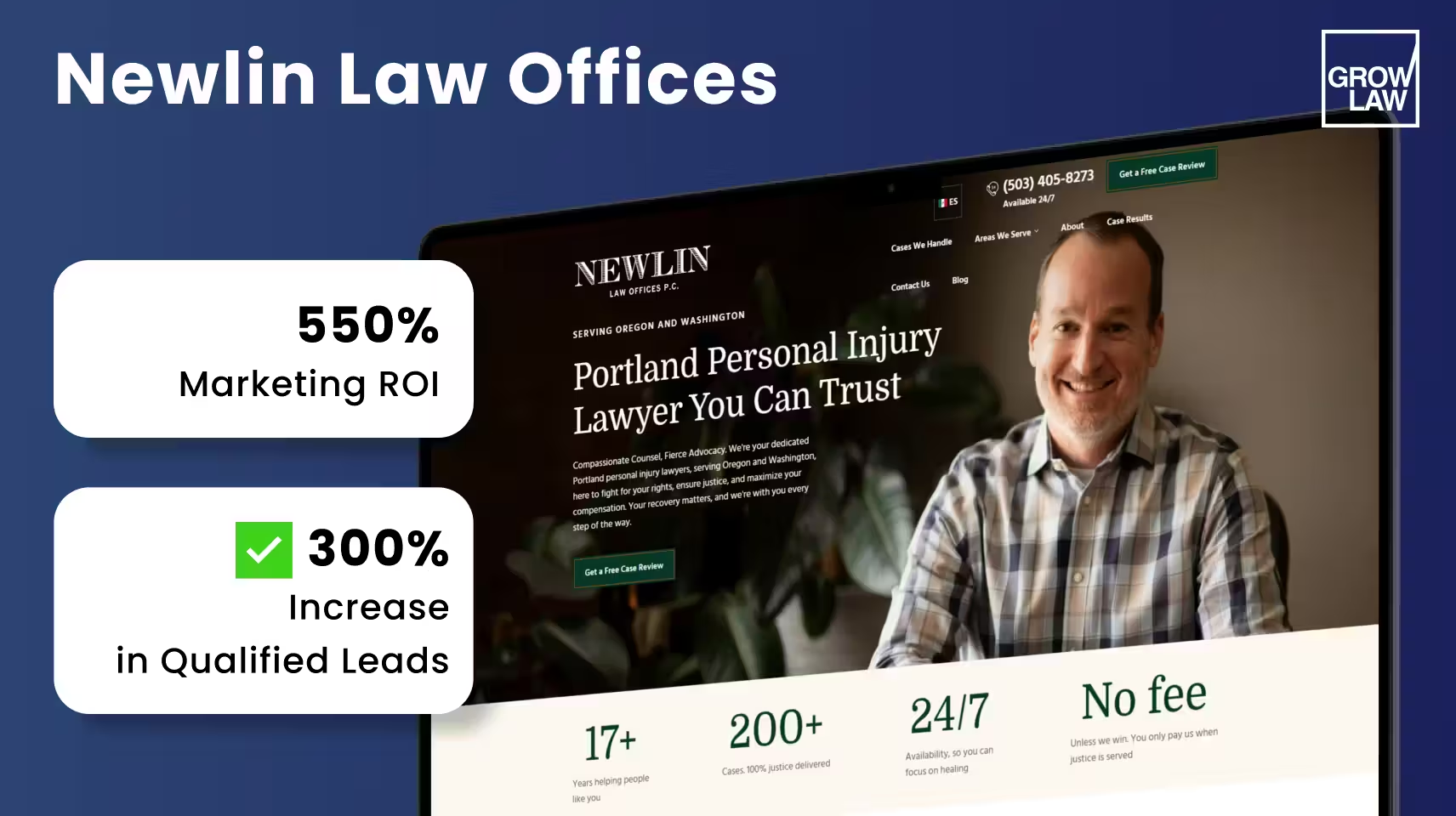
— Phone-First Design and Sticky CTAs
For most law firms, phone calls convert into retained clients at a higher rate than form submissions. This means the phone number should be sticky — always visible as the visitor scrolls on mobile — tap-to-call-enabled, and paired with CTA copy that reduces friction: "Call Now — Free Consultation" beats "Contact Us" every time.

— Live Chat
A visitor with a question at 9pm on a Tuesday is not going to fill out a form and wait. Live chat — especially when actively staffed during business hours and backed by a chatbot outside of them — captures intent in real time. For practice areas like criminal defense, family law, or immigration, where the emotional urgency is high and the need is immediate, live chat removes a significant barrier between a visit and a contact.
— Form Design
Beyond reducing field count, the details matter. Single-column layouts outperform multi-column. Inline error validation (showing what went wrong without clearing the form) reduces abandonment. Submit button copy that sets expectations — "Send My Request" or "Get My Free Case Review" — performs better than "Submit" or "Go." These are small changes with measurable impact when you have enough traffic to detect them.

See how we structure conversion-optimized legal websites from the ground up → Law Firm Website Design by Grow Law
Conversion Rate Optimization for Legal Landing Pages: PPC and High-Intent Traffic
Paid search landing pages operate under different rules than organic pages. They exist for one purpose: converting a specific visitor from a specific search intent into a specific action. Every element that does not serve that purpose is working against it.
— Message Match — The Most Important Variable
If someone searches "car accident lawyer near me" and clicks your ad, they should land on a page whose headline, hero image, and CTA are explicitly about car accident cases in their location. Not a general personal injury page. Not the homepage. The closer the alignment between the search query, the ad copy, and the landing page headline, the higher the conversion rate. This is called message match, and it is the single highest-leverage variable in paid search CRO.
Law firms that route all PPC clicks to their homepage — or a single catch-all practice area page — are paying for clicks they are not converting. At $50 to $300 per legal keyword, that math adds up quickly.
— Single CTA, Minimal Navigation
A PPC landing page is not a website. It should not have the full site navigation, links to blog posts, or footer menus with eight sections. Every additional exit point is a conversion point you are giving away. The structure should be: headline, social proof, value proposition, form or call CTA. That is it. This is why dedicated legal landing pages convert at 10–20% while general pages receiving mixed organic traffic sit at 2–4%.
— Trust Signals That Match the Urgency
Visitors from paid search are often in a state of urgency — they need help now, not eventually. Trust signals that speak to that urgency perform better than generic credibility markers. "Available 24/7," "Free Consultation — No Fee Unless You Win," practice-area-specific ratings from Avvo or Martindale, and specific outcome data all do more work than a generic "experienced and trusted" headline. These are the conversion rate optimization strategies for legal landing pages that move a 5% converter to a 15% one.
— Speed, Then Everything Else
A PPC landing page that loads in four seconds on mobile is costing you money on every single click. Page speed is not a nice-to-have on paid campaigns — it is a prerequisite. Core Web Vitals optimization: compressed and properly sized images, minimal third-party scripts, efficient caching. Get this right before running any conversion tests.
How CRO and Website Design Work Together
Here is a misconception we run into often: CRO is treated as a post-launch optimization layer. The firm builds the site, launches it, measures the results, and then starts trying to fix what is not working. This approach is fine — but it is slower and more expensive than building the conversion architecture into the design from day one.
The elements that most directly drive conversion — information hierarchy, CTA placement and frequency, hero section messaging, mobile navigation patterns, form design, page load performance — are all design decisions. Making them after launch often means rebuilding sections of the site rather than making simple adjustments.
Omar Ochoa Law achieved a 170% increase in conversion rate — in part because the CRO strategy was defined before a single design element was finalized.
The site's visual hierarchy, button placement, and content organization were built around the conversion goal from the start. The design served the strategy, not the other way around.
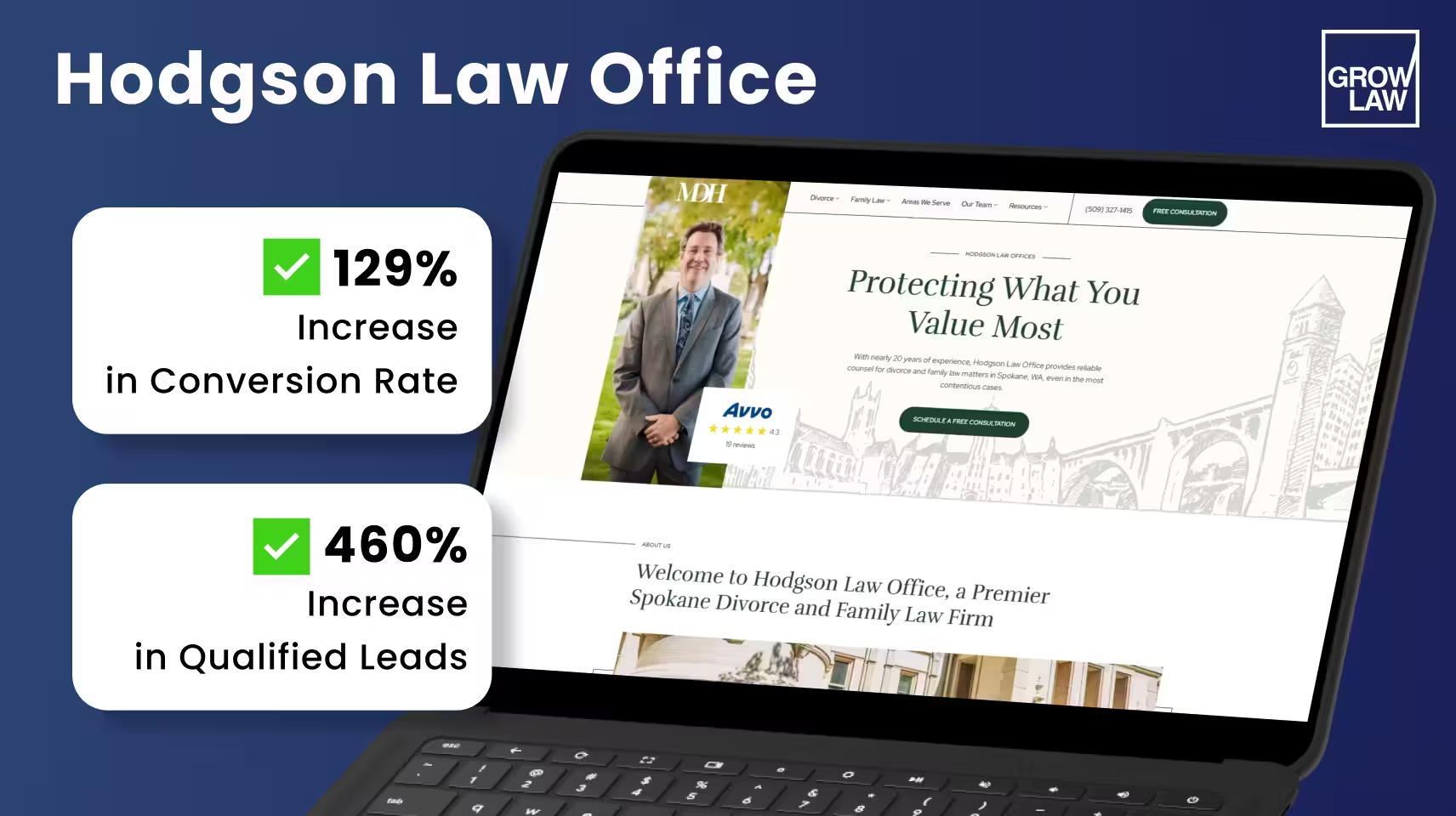
If your current site is underperforming, whether to optimize or rebuild depends on how deeply the conversion problems are embedded in the structure. A stronger headline and a better CTA can lift a page by 10–20%. A structural rebuild is what produces 100%+ conversion rate improvements.
Thinking about a redesign? See what a conversion-focused build looks like → Website Design for Law Firms
7 CRO Improvements to Prioritize First
If you are looking for a starting point, here are the changes that deliver the highest conversion impact relative to implementation effort — ranked in the order we typically recommend them:
Items one and two — sticky CTA and simplified form — can be live within days and typically show measurable improvement within two to three weeks. Items three through five build trust equity over a longer cycle. Items six and seven are foundational: without them, the other improvements are working on an unstable base.
Summary
Law firm conversion rate optimization is not about tricks or shortcuts. It is about building a website that respects the visitor's decision-making process — one that makes it easy to trust you and easy to reach you.
- A good law firm conversion rate ranges from 2–5% for general pages to 10–20%+ for optimized PPC landing pages.
- The biggest blockers are weak trust signals, unclear CTAs, poor mobile UX, slow load speed, and long forms.
- The highest-impact improvements are above-the-fold messaging, visible social proof, phone-first design, and dedicated landing pages for paid traffic.
- CRO and website design are inseparable — building the conversion architecture in from the start produces the most reliable results.
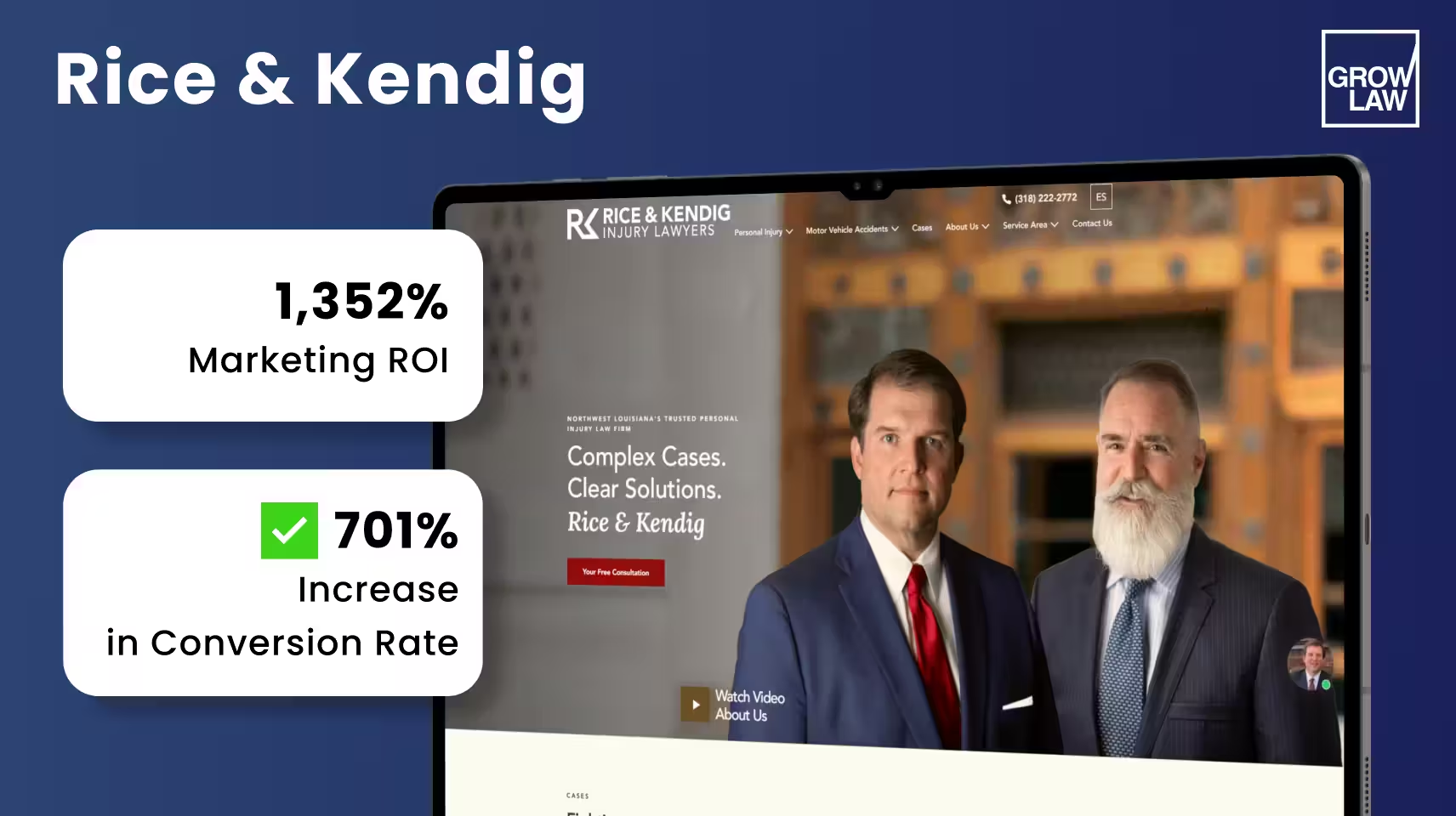
- Conversion rate improvements of 100%–1,880% are achievable with systematic rebuilds, based on Grow Law's client results.
If you want to understand where your current site is losing conversions, Grow Law offers a free practice growth plan that includes a website performance review, keyword analysis, and competitive comparison.
Ready to turn more visitors into consultations? → Get Your Free Law Firm Growth Plan
FAQ

Compare Your Practice Instantly
Stay Ahead of the Competition!
Compare your law firm's performance to Local competitors with our instant assessment tool
Get a clear picture of your firm's performance
Boost your online presence
Compare My Firm
Compare Your Practice Instantly
Stay Ahead of the Competition!
Compare your law firm's performance to Local competitors with our instant assessment tool
Get a clear picture of your firm's performance
Boost your online presence
Compare My Firm
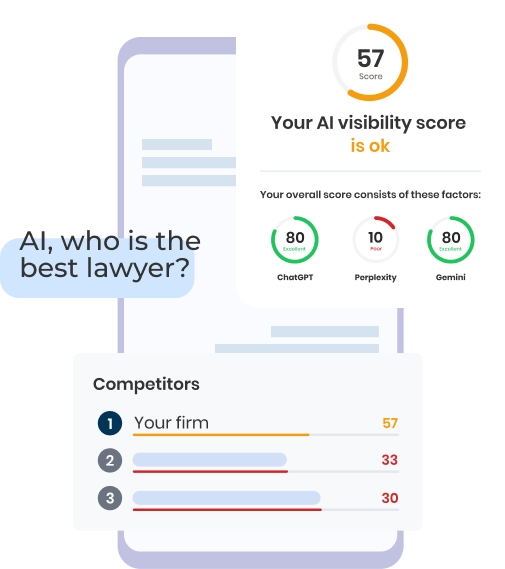
Check Your AI Visibility Instantly
Find Out What AI Is Telling Your Potential Clients
Run our free AI Visibility Report to:
See how often top AI tools mention your law firm
Spot which competitors show up first
Get the next steps to capture more cases
Run My Free AI Report
.avif)
.avif)
.avif)

