


Table of Contents
Every law firm has two stories:
The one you think is happening… and the one your data is quietly screaming in the background.
So, if you ever wonder why some months feel slow, why certain ads don't perform, and why intake drops the ball, your data will light up the way.
In fact, you're 23X more likely to outperform competitors on new-client acquisition when marketing decisions are backed by analytics (McKinsey).
In the next 10 minutes, we'll cover what legal analytics are, their benefits, and the 4 numbers you need to look at every week. Keep scrolling.
Key Takeaways
- What legal analytics are and why they matter for your law firm.
- How attorneys can use law firm analytics to grow faster.
- 4 key metrics that reveal the real health of your marketing and intake.
- How to build a simple operating rhythm that turns reports into action.
What Legal Analytics Really Means
Legal analytics is the process of analyzing your firm's data — cases, clients, marketing, intake, billing, and daily operations — to uncover patterns and help with better legal decision-making.
The proof: According to 2025 industry research, 81% of organizations now use analytics or AI for key decisions — and firms that do report measurably better operational outcomes.
Here's what legal data analytics reveal:
1. How your firm performs internally
Data from your cases, timekeeping, billing, intake, and workflows. It shows you where delays happen, what’s profitable, and how efficiently your team is working.
2. How clients interact with your firm
Behavior patterns, communication habits, satisfaction indicators, and outcome data. It gives you clues about what clients value and where they get stuck.
3. How your marketing and growth channels perform
Lead sources, campaign performance, cost per case, and overall ROI. Tracking these numbers consistently can make your firm 2–3x more likely to grow year over year.
From a 100-foot level, legal analytics tells you 3 things: what’s driving your growth, what’s slowing you down, and where to invest next.
How Legal Analytics Works
As we said, legal analytics pulls the raw data your firm already generates. Then, it turns it into insights you can act on.
Here’s how this breaks down in your legal strategy:
- Your data gets collected and organized.
All the information in your legal analytics tools, intake software, billing tools, and marketing platforms "talks" to each other — giving you an idea of how your firm is running. - Patterns and performance gaps become clear.
You can clearly see which campaigns bring clients, where prospects drop off during intake, which matters drag on, and which practice areas are profitable. - AI highlights trends and forecasts case outcomes.
Modern legal analytics platforms — including Clio Manage, MyCase, and Filevine — now incorporate AI to forecast timelines, surface risk signals earlier, and detect patterns across cases, clients, and marketing channels.
You’re already sitting on great information in your existing systems. The next step is using it to drive better outcomes in your marketing strategy.
Benefits of Using Legal Analytics
Your gut instinct is great. But legal analytics (hardcore numbers!) give your firm a higher level of control and confidence.
In the legal industry, when decisions are backed by numbers, everything from attracting prospective clients to staffing becomes far more predictable.
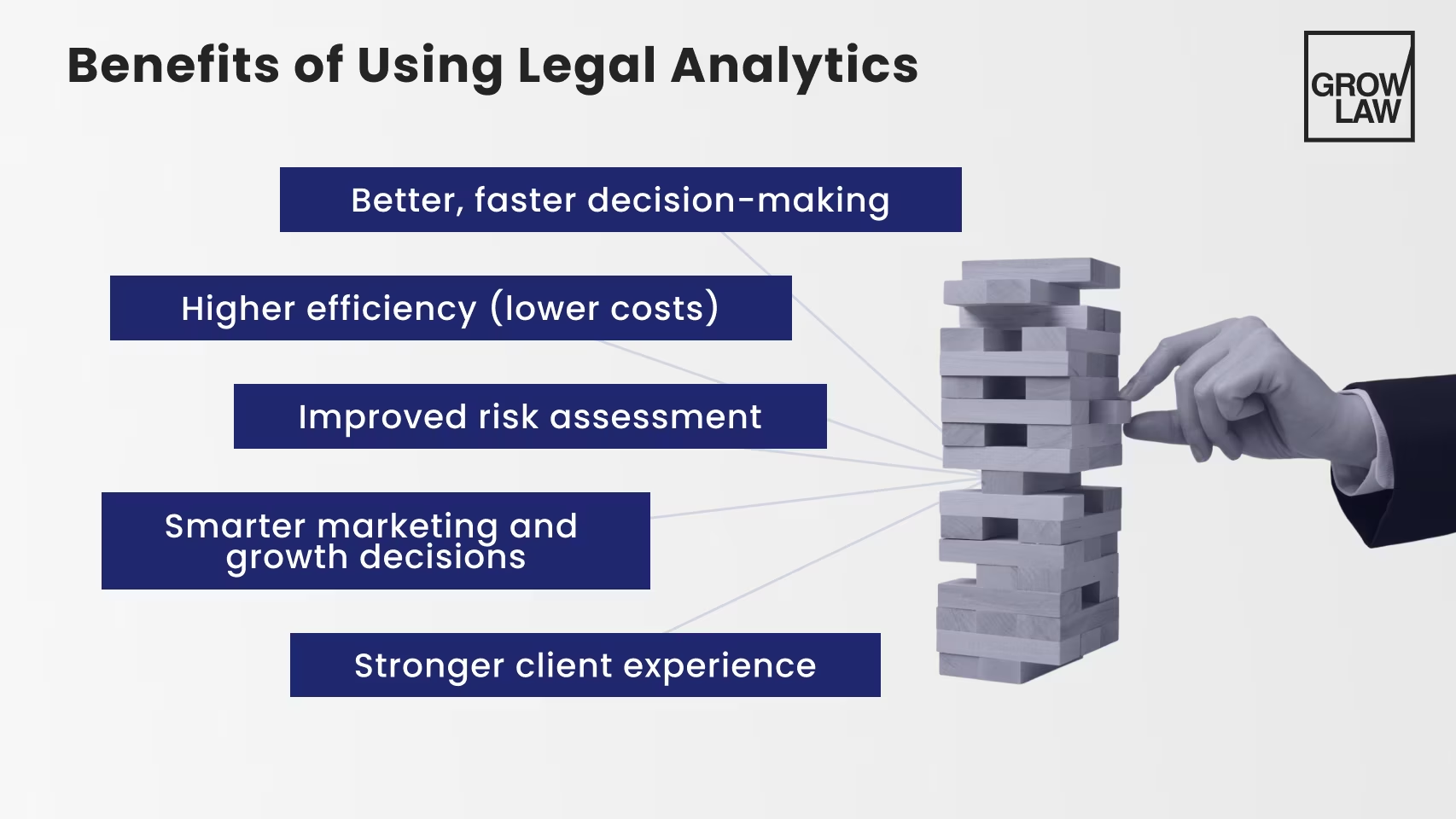
1. Better, faster decision-making
Instead of "stab-in-the-dark" guesses, you can see what works. Your analytics reveal what drives revenue, what slows you down, and where your best opportunities are.
2. Higher efficiency (lower costs)
When you analyze data, it exposes where your time disappears — slow intake, delayed case milestones, or overloaded staff.
Research consistently shows that eliminating operational bottlenecks through data-driven process improvements can boost firm by 20–30% — time that can go back into billable work or business development.
3. Improved risk assessment
When you have actionable insights to see which cases are likely to stall or which clients may drop off, you can act early.
4. Smarter marketing and growth decisions
With data analysis, you can finally see which channels bring profitable cases. Since 78% of legal clients hire the first firm to respond to their inquiry (Lead Docket, 2025), it pays to know which leads are worth prioritizing — and to act on them immediately
5. Stronger client experience
Analytics show client data like how quickly you respond to each client, and where communication breaks down — giving you clear opportunities to improve satisfaction and retention.
Some of this is complex data, but remember, you can always contact a pro marketing agency to get help.
Send Your Numbers to the Moon!
At Grow Law, over 100+ happy lawyers have seen marketing returns as high as 800%. Ready to join in the success?
Book Your Free Growth Session

How Can Attorneys Use Legal Analytics?
Fun fact: You don't need to be a big firm with a data team to use law firm analytics!
Any attorney can use it to identify inefficiencies earlier, and grow with way less stress. Here’s where it gives your legal practice a competitive advantage:
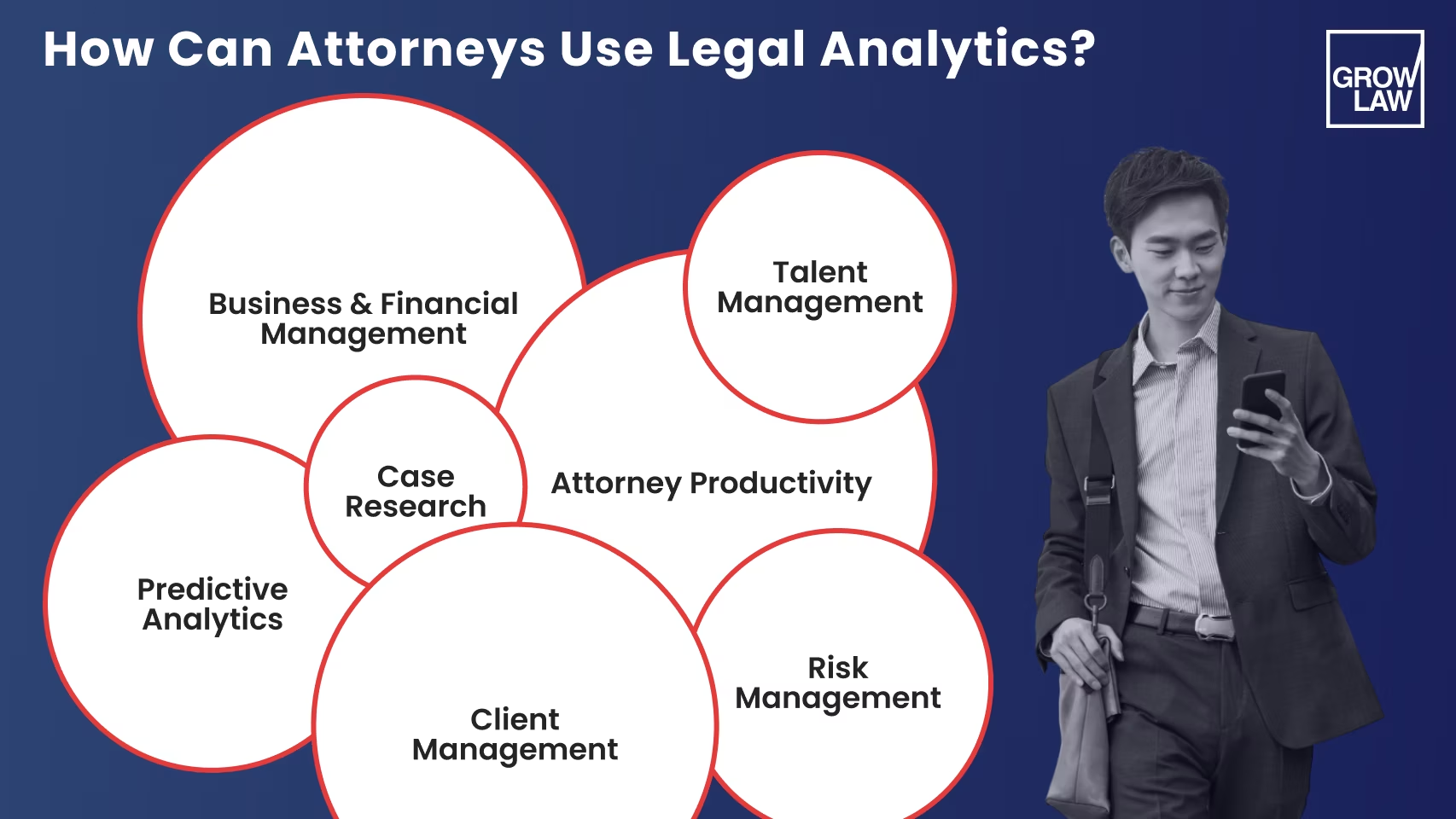
1. Case Research
Instead of digging through old files or relying on memory, legal analytics identify patterns from past matters — how certain judges rule, how long cases usually take, and what strategies led to better outcomes.
2. Predictive Analytics
With enough historical data — and today's AI-assisted legal analytics tools — you can model how a case might unfold: likely timelines, probability ranges, and realistic settlement bands. This is especially powerful in high-volume practice areas like personal injury and immigration.
3. Client Management
See where your clients get stuck, who’s waiting on an update, and which matters are starting to slow down. You’ll be able to step in before small issues snowball into angry phone calls.
4. Business & Financial Management
Which case types actually make you money? Which ones drain time and budget? Analytics break it all down so you can forecast revenue, refine billing, and make smarter financial decisions. For the next step, see forecasting law firm SEO results.
5. Talent Management
Ever wonder who’s overworked or who’s secretly crushing it? Analytics show workload, efficiency, and results, helping you distribute work fairly and spot coaching opportunities early.
6. Attorney Productivity
You can see where time disappears — unnecessary admin tasks, slow approvals, dragged-out case stages. Once you see the patterns, you can fix them and free up hours every week.
7. Risk Management
Analytics even flag the cases that are stalling, deadlines creeping up, or clients who might disengage. Catch the risks early, save yourself stress later.
Take note, legal professionals! Use this data the right way, and you’ll wonder how you ever practiced without it.
Marketing Metrics That Move Matters: From Visibility to Verifiable Revenue
Now, let's step outside pure “legal analytics” for a second to focus on marketing data.
If you don’t know where your clients come from, what it costs to get them, or which channels bring the best cases… everything else is pointless. Look at:
1. Marketing and Channel Efficiency
Most firms assume they “know” their best sources. When you look at the data, the truth is usually very different.
Track your channel efficiency to see which sources consistently deliver paying cases (Google LSAs, organic search, referrals, social, paid ads).
Clear channel data ultimately delivers info like:
- The channel that brings in the most paying clients
- Which channels to shut off because they’re not converting
- How to spend smarter instead of simply spending more
2. Funnel and Intake Performance
Your marketing can be amazing… but if intake is slow, inconsistent, or overwhelmed, those leads are gone. Analytics help you track:
- Lead → consultation conversion
- Consultation → signed case conversion
- Response times
- Abandoned calls or form fills
- Where prospects drop off in the process
If your intake is dragging, fix it fast. The first firm to provide a helpful, professional response wins 79% of the time — not just the first to respond, but the first to actually add value (Lead Docket, 2025). Speed to respond is now a direct revenue driver.
3. Revenue and Matter Economics
Not all case types are equally profitable. Following a data-driven approach reveals what fuels your firm. Matter-level economics reveal:
- Revenue per case
- Cost per case
- Staff time per case
- Billing efficiency
- True profitability per practice area
4. Client Experience & Retention
The client experience is directly tied to reputation, reviews, and referrals. Analytics show you:
- How fast clients get updates (client relationships depend on it)
- How long they wait between milestones
- Feedback trends
- Client satisfaction scores
- How many clients return or refer others
Most clients don’t leave because of the result — they leave because they feel ignored.
Reacting to the right law firm data helps you cater to client preferences, and yes, win more business!

How One Firm Saw a 758% Lead Boost
Fuchsberg, a top personal injury firm, saw BIG gains at Grow Law. Ready to craft your own success?
Book Your Free Growth Session
Data Foundations For Marketing-Led Growth
Before you can use any of the marketing insights we just covered, you need one thing most law firms don’t have: solid data to build on.
Otherwise, all those “metrics” are just noisy numbers.
Here are the 4 essentials to make your marketing effective, giving you a competitive edge:
- Start with clean, consistent data: If intake entries are incomplete, lead sources are mislabeled, or your systems don’t match, your reports won’t tell you the truth.
- Make attribution non-negotiable: You should always know exactly where a client came from — Google LSAs, organic search, paid ads, AI-driven referrals (GEO/AI search), social, or direct referrals. Without clean attribution across all channels — including AI search — you'll scale the wrong ones.
- Focus on the key performance indicators: Cost per lead, cost per signed case, conversion rates, response time, and revenue per matter. You don’t need 40 dashboards — just those that move revenue.
- Build a culture that checks the data every week: When your team reviews your firm's performance regularly and adjusts, new clients come in consistently.
From Reports to Revenue: A Simple Operating Rhythm
Do you glance at reports once a month? Big mistake!
You need to build a simple weekly habit: check your numbers, see what’s slipping, and make tiny adjustments before they turn into lost leads.
At Grow Law, this gets way easier with our LIVE Client Portal. It tracks leads, traffic, channel performance, ROI, and revenue projections in real time — including AI search visibility (ChatGPT, Perplexity, Google AI Overviews) — and uses AI to qualify and prioritize your highest-value opportunities.
This weekly rhythm will streamline processes and keep your profitability soaring.
Ready to Sign (More) Clients?
Grow Law stacks your pipeline with up to 1,018% more leads. Breathe easier. Sleep better.
Book Your Free Growth Session
Final Word: Use Your Data to Drive Sustainable Growth
Law firm analytics is super technical, but it comes down to this:
- Clean tracking shows you where clients come from, so you can invest confidently.
- Key metrics reveal your bottlenecks: slow intake, low conversion, or unprofitable case types.
- Weekly check-ins keep your response times tight and revenue more predictable.
Thankfully, you don’t have to do this alone.
At Grow Law, we've helped 100+ law firms grow faster with top-tier law firm SEO, PPC, and web design.
Add in our live Client Portal — tracking leads, ROI, traffic, and AI-powered lead scoring — and you enjoy 100% transparency.
Book Your Free Growth Session →
Fill your pipeline. Let your competitors panic instead.

Compare Your Practice Instantly
Stay Ahead of the Competition!
Compare your law firm's performance to Local competitors with our instant assessment tool
Get a clear picture of your firm's performance
Boost your online presence
Compare My Firm
Compare Your Practice Instantly
Stay Ahead of the Competition!
Compare your law firm's performance to Local competitors with our instant assessment tool
Get a clear picture of your firm's performance
Boost your online presence
Compare My Firm
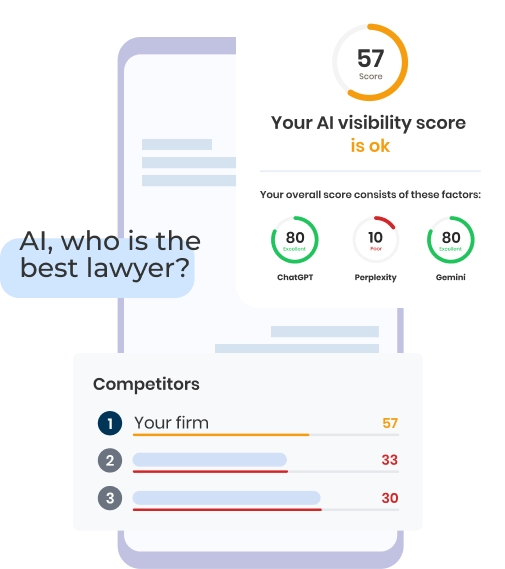
Check Your AI Visibility Instantly
Find Out What AI Is Telling Your Potential Clients
Run our free AI Visibility Report to:
See how often top AI tools mention your law firm
Spot which competitors show up first
Get the next steps to capture more cases
Run My Free AI Report
.avif)
.avif)
.avif)
- Legal Research https://en.wikipedia.org/wiki/Legal_research
- Law firm https://en.wikipedia.org/wiki/Law_firm
- Business intelligence https://en.wikipedia.org/wiki/Business_intelligence
- Data-informed decision-making https://en.wikipedia.org/wiki/Data-informed_decision-making

