


Table of Contents
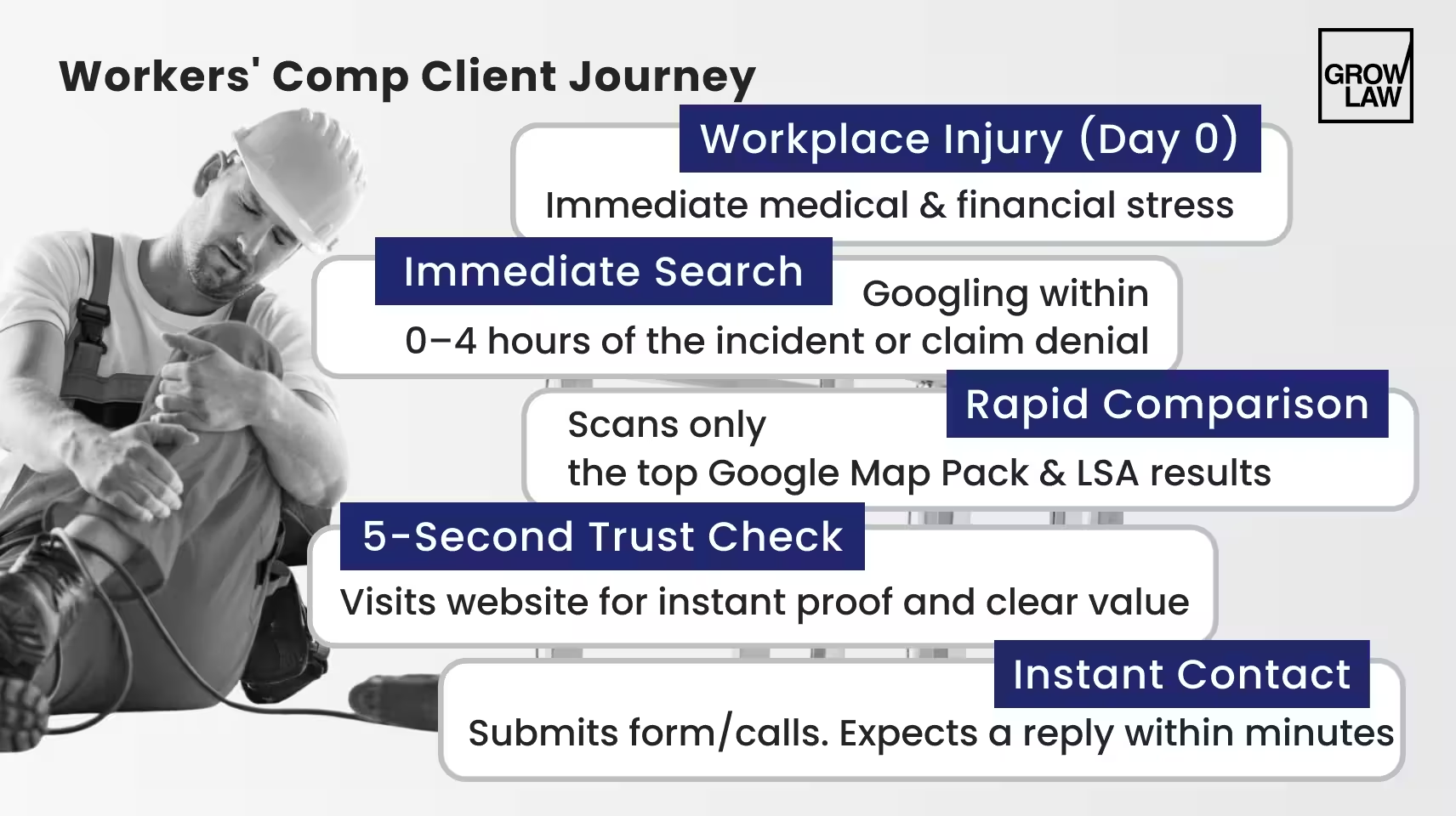
Workers' comp lawyer marketing operates in one of the most competitive and time-sensitive segments of personal injury law. The average workers' compensation settlement in the US reaches $41,800 — a meaningful case value for both the client and the firm — and injured workers make contact with attorneys quickly, often in the days immediately following an injury or after a claim denial. To capture this demand, your firm must appear first in local search, present a credible and accessible website, and follow up on leads within minutes rather than hours.
In this guide, we cover the full marketing system for workers' compensation attorneys: how to build a website that converts injured workers, how to generate consistent workers' comp leads across digital channels, how to use paid advertising efficiently, and how to build the referral relationships that supplement digital volume with the highest-trust cases.
Positioning Your Workers' Comp Practice for the Clients You Want
Workers' comp attorney marketing that produces high-quality cases starts with a positioning decision: which types of injuries, which industries, and which geographic markets does your firm want to own? "Workers' compensation attorney" describes every firm in this market. "Construction accident lawyer specializing in OSHA violations in [region]" or "workers comp attorney for warehouse and logistics workers denied by [state]" describes a specific firm with specific expertise.
This specificity matters for two reasons. First, it improves search relevance — more specific keyword targeting in both organic and paid search produces higher-intent traffic from prospects who match the description. Second, it improves conversion — an injured construction worker who lands on a page that speaks directly to construction accident claims in their state sees themselves in the firm marketing and converts at a higher rate than one who lands on a generic workers comp homepage.
Workers' compensation law firm marketing that also addresses employer or insurance company denials — the "we denied your claim, here is what you do now" scenario — captures a large and urgent segment that standard workers' comp marketing often underserves. Many injured workers do not seek an attorney immediately after injury; they seek one after the first denial. Marketing that speaks directly to that moment produces some of the highest-converting workers' comp leads.
See how we build workers' comp marketing strategies for law firms -> Workers Comp Marketing Services
The Workers' Comp Law Firm Website: Conversion for Injured Workers
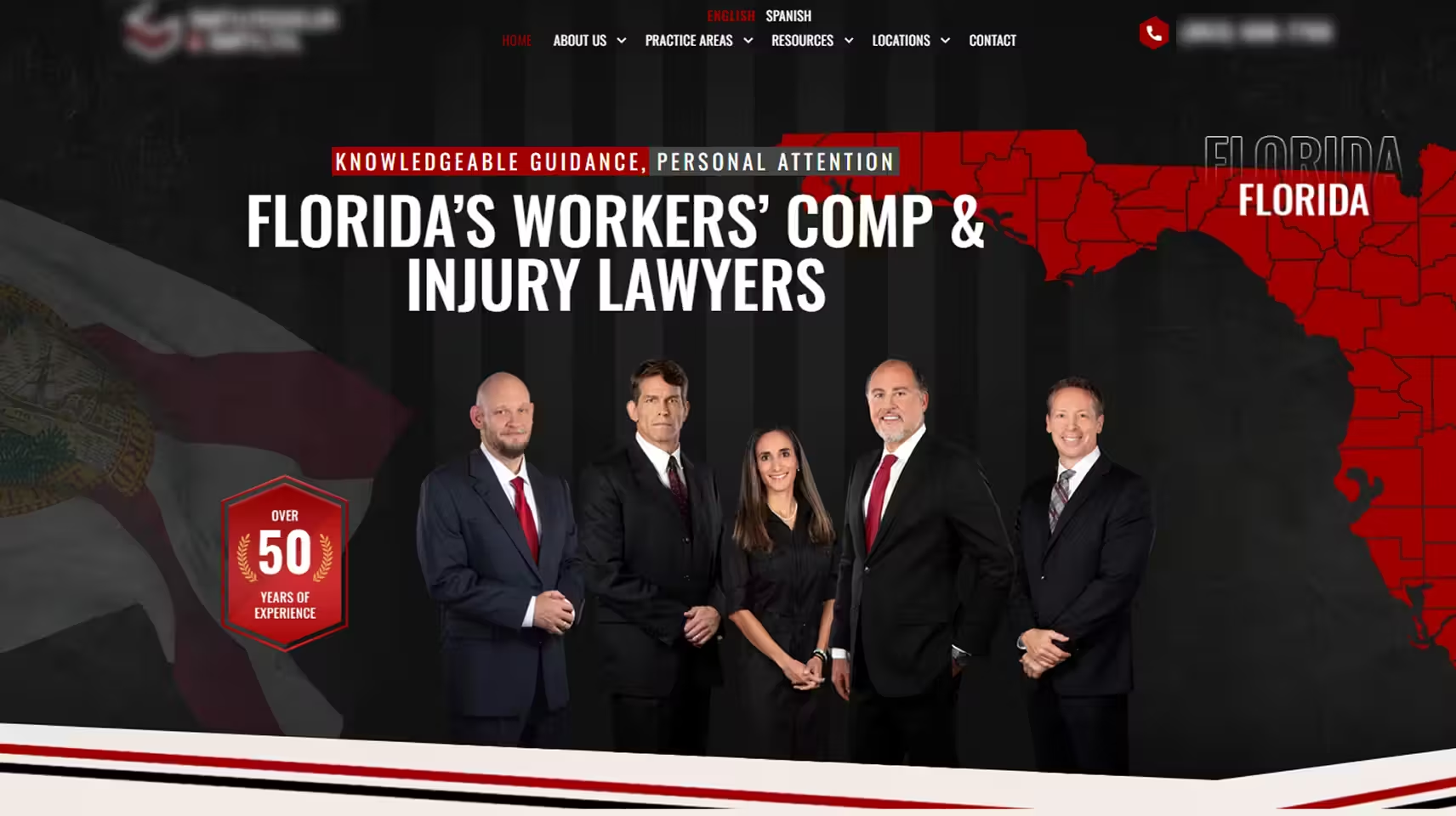
A workers' compensation law firm website that does not convert is expensive in both directions — it costs money to drive traffic to it, and it costs clients who arrive and leave without contacting. The conversion requirements for an injured worker visiting a workers' comp website are specific and well-understood.
The phone number must be visible in the header and work on mobile with one tap. The homepage must immediately communicate what types of injuries and claims the firm handles. There must be a clear, short path to contact — a form with name, phone, and injury type (three fields) or a click-to-call button prominently placed above the fold. Trust signals need to appear immediately: case results, client testimonials that mention specific injury types, and attorney bios that describe real workers' comp case experience rather than general legal credentials.
Practice area pages for the injury types the firm handles most — construction accidents, repetitive stress injuries, toxic exposure claims, OSHA violations, denied medical treatment — each captures its own search traffic, and each provides the specific proof an injured worker in that situation needs to feel the firm understands their case. A single generic "workers' comp" page cannot do that work for multiple distinct injury populations.
See how we design high-converting workers' comp law firm websites -> Law Firm Website Design
Workers' Comp Lead Generation: Digital Advertising That Delivers Cases
— PPC and Local Search for Workers' Comp Attorneys
Workers' comp lead generation through paid search is one of the most immediate and controllable channels available to workers' compensation attorneys. Google Ads campaigns for workers' comp should be structured around injury type, claim stage, and geographic location. A denied workers' comp claim prospect who searches "workers' comp denied by employer attorney [city]" has a specific, urgent need — the campaign that delivers a relevant ad to a relevant landing page captures that prospect; the generic workers' comp campaign that sends them to the homepage loses them.
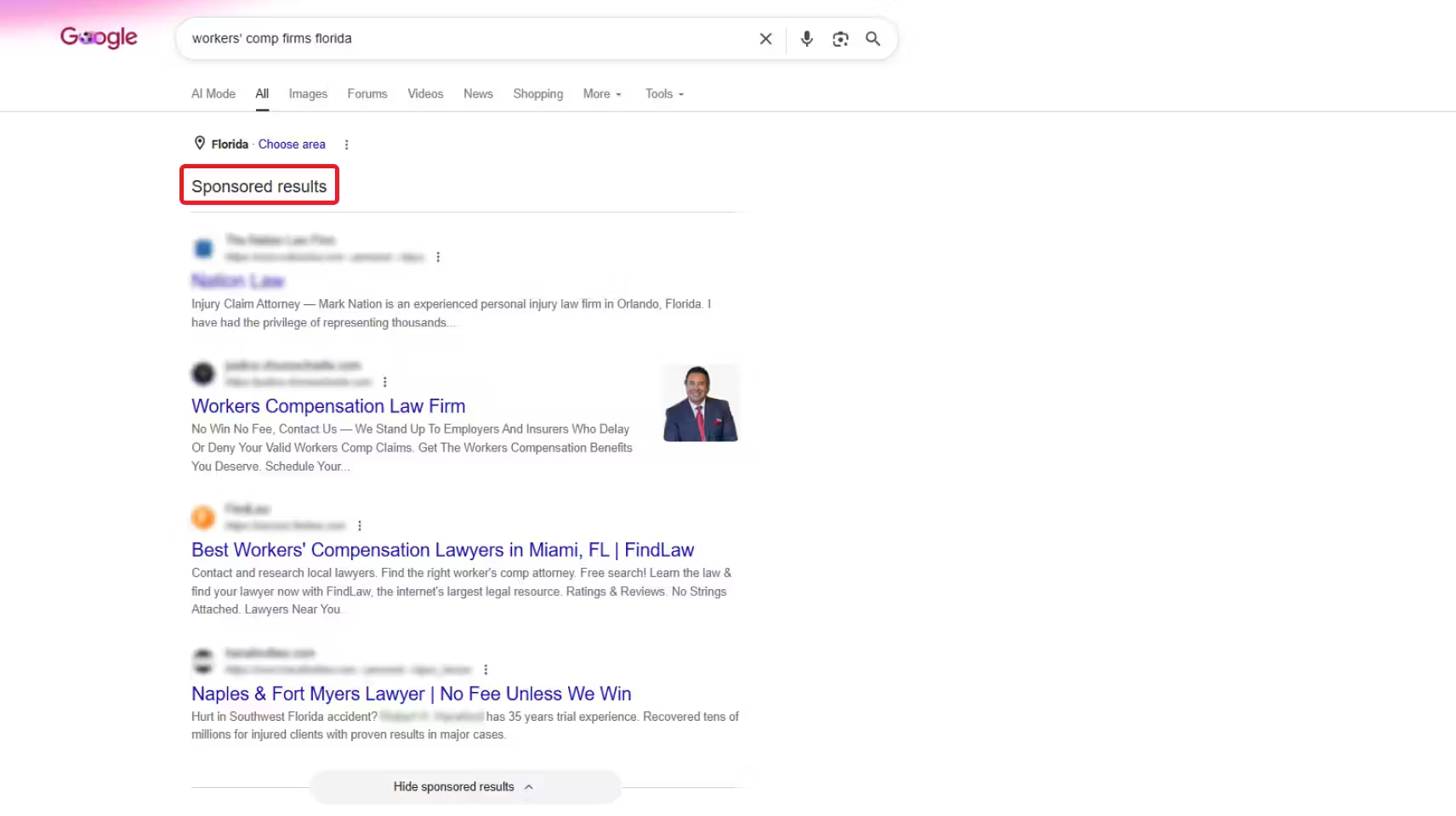
With Google Local Services Ads for workers' comp, your firm can get the highest-visibility paid placement — above standard PPC — with a per-lead cost model and Google Screened credibility. Workers' comp leads from LSA tend to be higher-intent than broad PPC clicks because the prospect is using the Google-validated interface specifically to find and contact a lawyer. But your response speed is critical: LSA ranking factors include response rate and response time, which means intake protocols directly affect paid advertising performance.
— Workers' Compensation Advertising Beyond Search
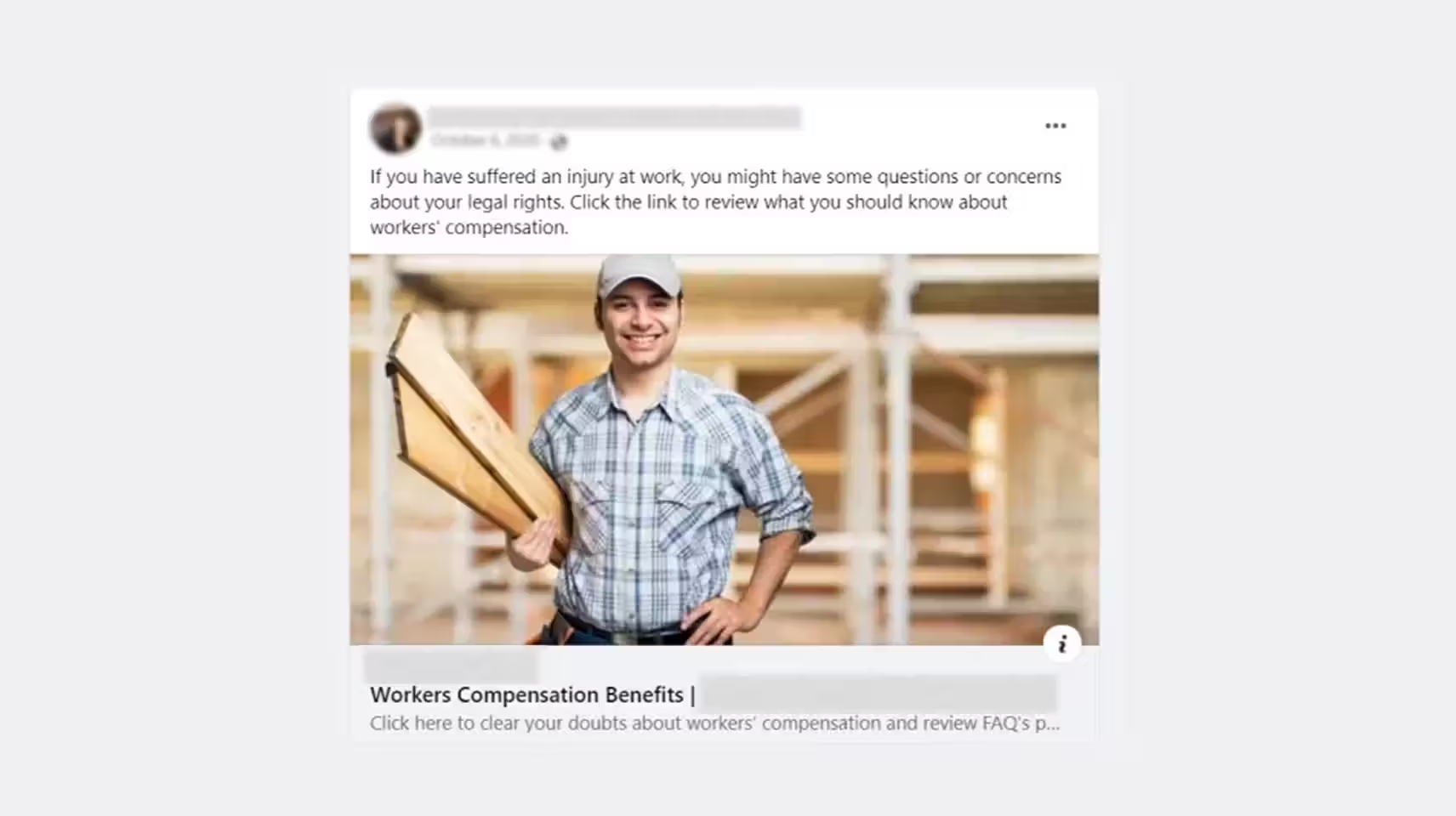
Workers' compensation attorney advertising through Facebook and Instagram reaches injured workers who are not yet in active search mode but who are processing their situation on social media. Targeting by geography, age (prime working-age demographics), and interests related to labor and employment creates a reachable audience for this channel. Use video ads to explain the workers' comp claim process — what rights an injured worker has, what triggers the need for an attorney, what a denied claim means — this educates and builds awareness before the moment of active search.
Moreover, retargeting campaigns keep your firm visible to website visitors who did not convert on first contact. Given that workers' comp clients often visit multiple firm websites before calling, retargeting across Google Display and social platforms during the consideration period maintains presence at a fraction of the cost of continuous prospecting.
.avif)
Learn how we build workers' comp PPC and lead generation campaigns -> PPC for Law Firms
Content, Reviews, and Referral: The Long-Term Growth Engine
— Content That Attracts Injured Workers Before They Know They Need a Lawyer
Workers' compensation digital marketing through content captures a segment that paid advertising misses: injured workers who are in the early stages of figuring out what their rights are, before they have decided to hire an attorney. Content that answers questions like "can I be fired for filing a workers' comp claim," "what happens if my employer disputes my injury," or "do I need a lawyer for a workers' comp settlement" reaches these prospects at the research stage and builds the firm into their consideration set before the active attorney search begins. Workers' comp GEO services help that educational content become citable in AI search.
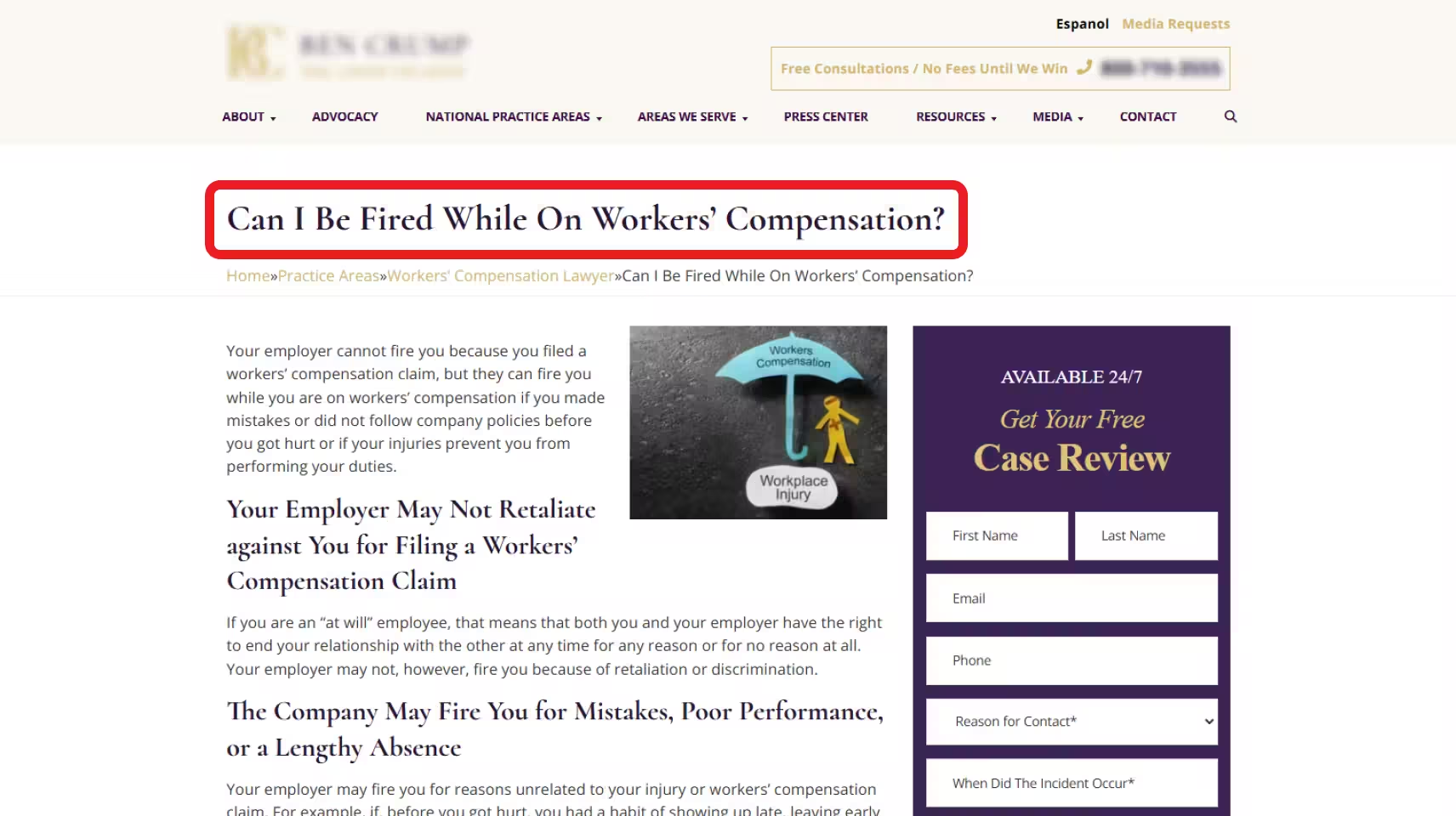
Your workers' comp lead generation through content compounds over time. Each well-optimized piece of content continues attracting organic traffic and contact requests for months and years after publication. Follow a consistent publishing schedule — at least one to two substantive pieces per month on workers' comp topics relevant to the local market. This builds topical authority that improves your search visibility across the entire domain, not just for individually targeted pieces.
— Reviews and Referral Relationships
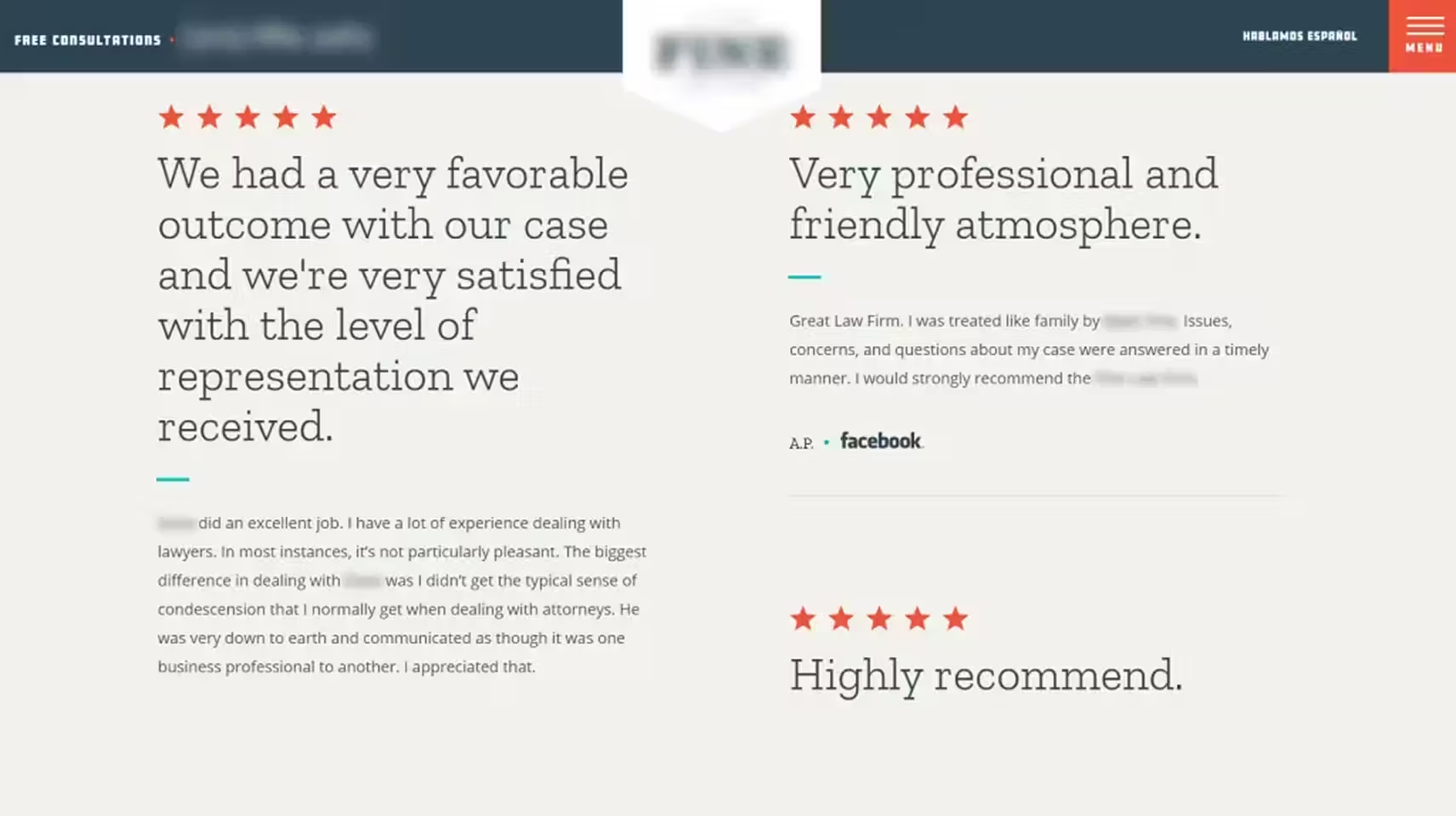
Workers' comp marketing that relies only on digital advertising is more expensive and more fragile than marketing that includes strong reviews and referral relationships. Workers' comp clients research before calling — they read reviews, check multiple sources, and ask friends and family. A firm with 60 Google reviews averaging 4.9 stars, several of which specifically mention denied claims or employer disputes, wins more comparisons than a firm with 8 reviews, regardless of ad spend.
How to get workers' compensation clients through referral: build relationships with treating physicians, physical therapists, and occupational medicine providers who interact with injured workers before those workers contact an attorney. These healthcare providers see the full scope of the injury and can identify cases where attorney representation would benefit the patient. A physician referral carries trust transfer that no paid impression can replicate.
Get a custom workers' comp marketing plan for your firm and market -> Free Growth Plan
Summary
- Workers' comp lawyer marketing that produces quality cases starts with positioning around specific injury types, industries, and claim situations — generic workers' compensation marketing competes on price.
- The website must convert injured workers who often arrive in distress: one-tap phone number, above-fold contact form, injury-specific practice area pages, and trust signals that reflect real case experience.
- PPC and LSA for workers' comp work best with injury-type and claim-stage specificity — matching ad copy to landing page content consistently doubles conversion rates vs. generic homepage campaigns.
- Content marketing captures the research-phase injured worker before the active attorney search begins, building the firm into the consideration set at zero marginal cost per impression over time.
- Review acquisition systematized into post-resolution workflow is the highest-ROI trust-building activity for workers' comp firms competing in local search.
- Referral relationships with treating healthcare providers produce the highest-trust workers' comp leads and supplement digital volume with cases that carry built-in credibility.
Frequently Asked Questions
-
How to market a workers' comp law firm?
How to market a workers' compensation law firm combines a high-converting website with injury-specific practice area pages, paid advertising targeting denial-stage and injury-specific searches, local SEO for the map pack searches that produce the highest-converting traffic, educational content capturing research-phase prospects, and referral relationships with healthcare providers treating injured workers. Workers' comp lawyer marketing that positions the firm around specific injury types and industries rather than general workers' compensation representation produces better lead quality and lower cost per acquisition.
-
How can workers' compensation lawyers get more leads?
How workers' compensation lawyers can get more leads: build injury-specific landing pages for the types of cases the firm handles most; run Google Ads and LSA campaigns targeting denied claim, employer dispute, and injury-type searches; optimize the Google Business Profile with workers' comp practice area categories and an active review profile; publish educational content answering the questions injured workers research before calling an attorney; and cultivate referral relationships with occupational medicine providers and physical therapists. Workers' comp lead generation that combines paid and organic channels with community referral produces the most resilient pipeline.
-
What marketing strategies work for workers' compensation law firms?
Workers' compensation law firm marketing strategies that consistently produce results combine urgency-calibrated paid advertising (workers' comp clients make contact decisions quickly after injury or denial) with long-term organic content authority and referral relationships. The firms that see the strongest economics invest in all three simultaneously: paid search for immediate volume, content for compounding organic growth, and healthcare provider relationships for the highest-trust cases. Workers' comp advertising that matches the urgency and specificity of the injured worker search behavior converts at significantly higher rates than generic legal marketing.
-
What advertising works for workers' comp attorneys?
What advertising works for workers' comp attorneys: Google Ads campaigns built around injury type and claim stage with matching landing pages; Google LSA for top-of-SERP placement and per-lead cost efficiency; Facebook campaigns targeting working-age demographics with process education video content; and retargeting to maintain presence through the multi-source comparison that most workers' comp prospects conduct before calling. Workers' compensation attorney advertising that leads with the denied claim scenario and the firm's ability to reverse that decision consistently outperforms advertising that leads with attorney credentials.
-
How can workers' comp lawyers attract more clients?
How workers' comp lawyers can attract more clients combines digital visibility with community credibility. Digital: injury-specific website pages optimized for local search, paid advertising targeting denied claim and injury-type queries, and educational content capturing research-phase traffic. Community: referral relationships with treating physicians and occupational medicine providers, a review acquisition process built into post-resolution workflow, and involvement with local labor unions and worker advocacy organizations that can generate referral volume. Workers' comp lead generation that runs both tracks simultaneously builds a more resilient practice than digital-only marketing.
-
How to get workers' comp clients?
How to get workers' comp clients at scale: appear in local search for the injury-type and claim-stage queries that workers' compensation prospects use; run paid advertising that captures denied-claim urgency with immediate conversion paths; build a review profile that reflects specific case types and outcomes; cultivate healthcare provider referral relationships that produce pre-qualified cases; and publish educational content that captures prospects before they begin active attorney search. Workers' comp lawyer marketing that operates across all of these channels consistently produces more qualified leads at a lower cost per acquisition than single-channel approaches.

Compare Your Practice Instantly
Stay Ahead of the Competition!
Compare your law firm's performance to Local competitors with our instant assessment tool
Get a clear picture of your firm's performance
Boost your online presence
Compare My Firm
Compare Your Practice Instantly
Stay Ahead of the Competition!
Compare your law firm's performance to Local competitors with our instant assessment tool
Get a clear picture of your firm's performance
Boost your online presence
Compare My Firm
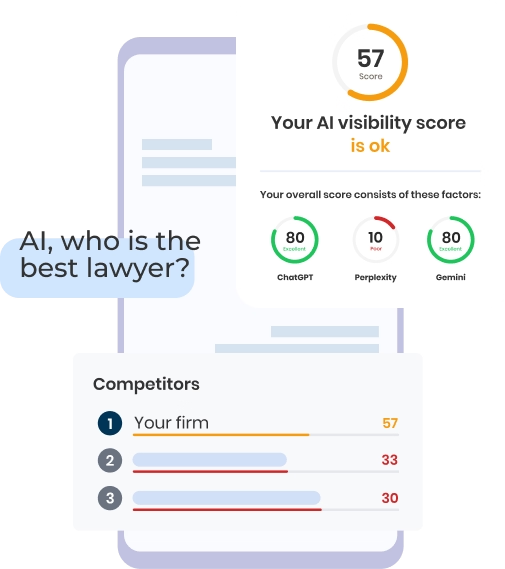
Check Your AI Visibility Instantly
Find Out What AI Is Telling Your Potential Clients
Run our free AI Visibility Report to:
See how often top AI tools mention your law firm
Spot which competitors show up first
Get the next steps to capture more cases
Run My Free AI Report
.avif)
.avif)
.avif)

