


Table of Contents
Estate planning SEO is the foundation of any marketing strategy that actually fills your firm's calendar with qualified consultations.
This guide covers the core challenges estate planning attorneys face online — from weak search rankings and generic websites to poorly targeted ads and invisible local profiles — and explains what effective marketing looks like at each stage.
Whether you're starting from scratch or trying to fix a strategy that isn't producing results, the sections below will give you a clear picture of what works and why.
Why Estate Planning Firms Struggle to Get Found Online
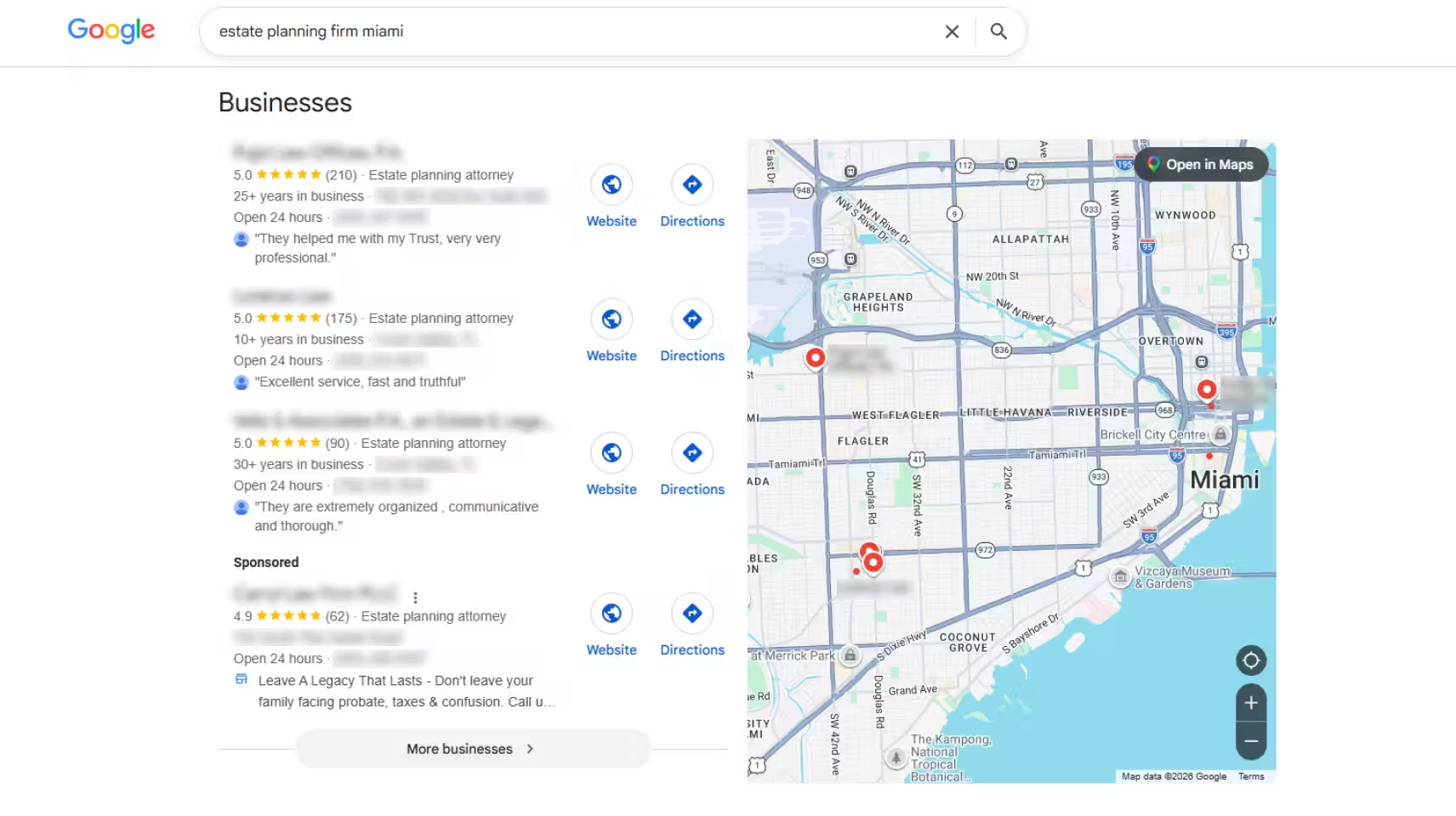
The estate planning market is crowded. There are over 200,000 estate planning attorneys in the United States, and most of them are targeting similar keywords in similar geographic areas. Generic marketing — a decent-looking website, a few blog posts, maybe a Google Ads campaign — is no longer enough to differentiate a firm in search results or capture meaningful attention from high-net-worth prospects.
The firms that grow consistently online share a few traits: their websites are built to convert, not just to exist; their SEO for estate planning attorneys targets intent-driven queries rather than broad terms; and their content answers the exact questions potential clients are typing into Google before they pick up the phone.
What follows is a breakdown of the most common marketing problems we see at estate planning firms — and the specific fixes that bring you clients.
Search Visibility: Ranking for the Keywords That Drive Consultations
— Your Website Isn't Ranking for High-Intent Estate Planning Queries
Most estate planning firms are optimizing for the wrong things. Broad terms like "estate planning attorney" are competitive and expensive. The terms that actually bring in consultations are more specific: "do I need a trust or a will," "estate planning lawyer in [city]," "probate attorney near me," or "how to avoid estate taxes in [state]."
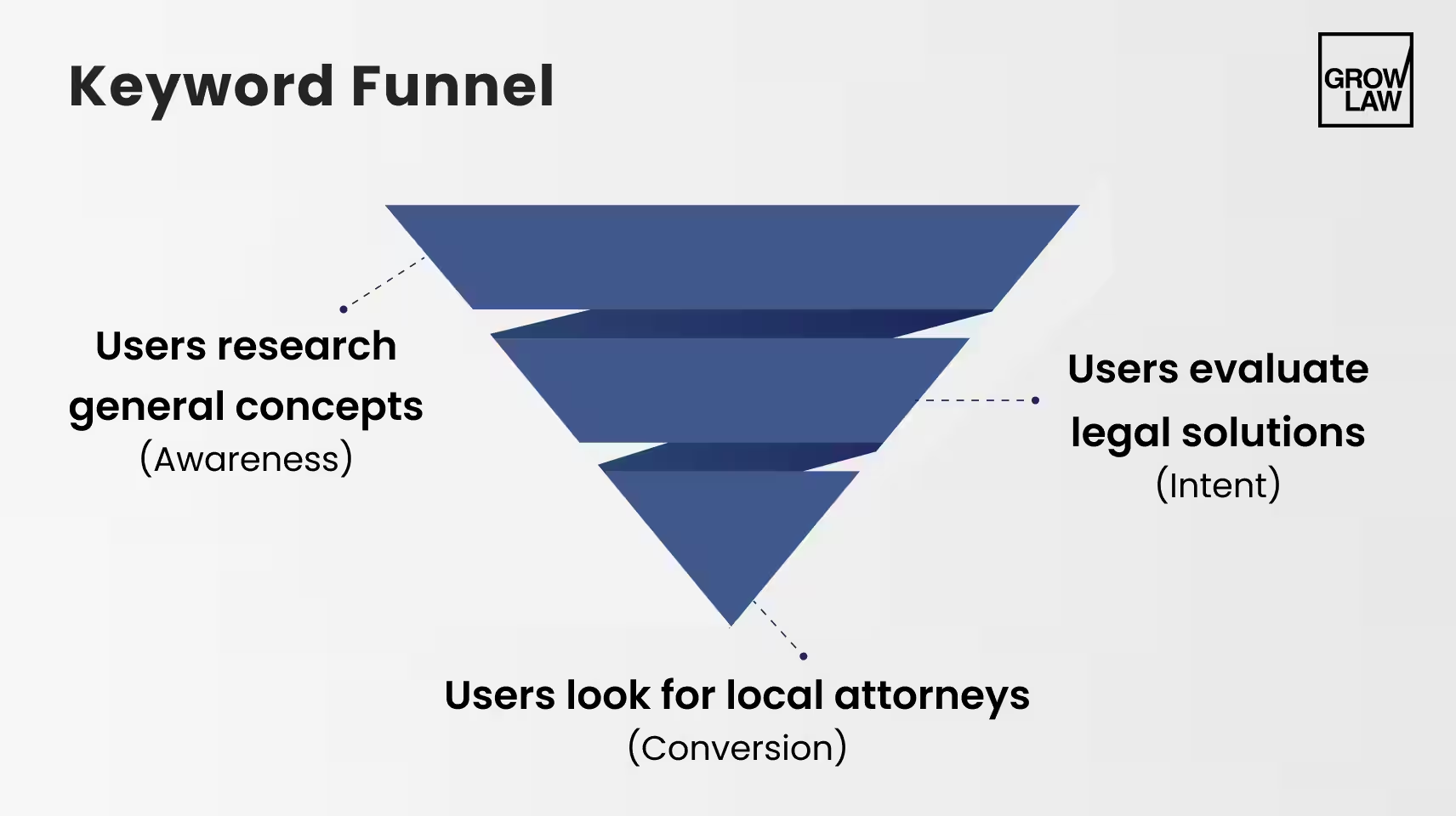
Effective SEO for estate planning lawyers means building a content architecture that captures demand at each stage of a prospect's research process:
- Service pages need to target primary location-intent queries.
- Blog content addresses the informational questions.
- Attorney bio pages build credibility with secondary searches on the attorney's name.
- Backlink strategy focuses on local legal directories and authoritative publications, which Google treats as trust signals for local practices.
Every page — from service descriptions to attorney bios — needs to be technically sound: fast load times, mobile-first layout, clean URL structure, and proper internal linking between related pages.
See how we structure SEO for estate planning and probate firms → Law Firm SEO Services
— Local Search: Showing Up When Clients Are Ready to Hire
For most estate planning firms, the highest-converting traffic comes from local searches. Someone typing "estate planning attorney near me" or "probate lawyer in [city]" has already decided they need legal help — they're choosing who to call.
Appearing in Google's local map pack for these searches requires a fully optimized Google Business Profile: accurate NAP (name, address, phone), practice area categories set correctly, a steady flow of recent client reviews, and location-specific content on the website that matches what the profile says about your firm. Local citations — consistent mentions of your firm's name and address across legal directories like Avvo, Justia, and FindLaw — reinforce the local authority signal Google uses to determine your map pack rankings.
Marketing for estate planning that ignores local SEO leaves the most valuable traffic segment entirely to competitors.
Website Performance: Turning Visitors Into Consultation Requests
— Your Estate Planning Website Looks Like All the Rest
A website that blends in with the competition isn't doing its job. Estate planning clients are making significant decisions about their family's financial future — they're evaluating whether they can trust you before they call. A website that looks dated, loads slowly, or lacks clear service descriptions sends the wrong signal at exactly the wrong moment.
High-converting estate planning websites share specific characteristics: separate service pages for wills, trusts, probate, powers of attorney, and other practice areas (not one generic "estate planning" page); attorney bios that demonstrate real expertise rather than list credentials; client testimonials that speak to outcomes; and a clear, frictionless path from landing on the site to requesting a consultation. Mobile performance matters as much as desktop — a significant portion of estate planning searches happen on phones.
.avif)
Texas Horizons Law Group saw a 510% marketing ROI and a 494% increase in qualified leads after a full website redesign paired with SEO and lead tracking — results that came from treating the website as a conversion tool rather than a digital brochure.
— Traffic Is Coming In But Nobody's Converting
Traffic without conversions is a lead capture problem. Common culprits: contact forms buried deep in the page, calls-to-action that are vague ("Learn More" rather than "Get Your Free Estate Planning Consultation"), no follow-up mechanism for leads who visit but don't convert immediately, and landing pages that don't match the ad or search query that brought the visitor there.
Fixing this requires clean CTAs above the fold, forms that ask for minimal information upfront, a response protocol that follows up within minutes rather than hours, and retargeting campaigns that bring back visitors who showed interest but didn't act. On average, estate planning clients need multiple touchpoints before making contact — the marketing plan for a law firm needs to account for that journey.
Want a website audit that identifies why your traffic isn't converting? → Law Firm Website Design
Paid Advertising: Getting ROI from Estate Planning PPC
Generic Google Ads campaigns for estate planning terms are expensive and often wasteful. The average conversion rate across all Google Ads campaigns is around 3.75%. Estate planning PPC campaigns built around the right audience signals and the right landing pages regularly exceed that by a significant margin.
What separates effective estate planning ads from average ones: they speak to the emotional trigger, not just the service. Ads that address specific life events — aging parents, a new child, a business succession concern, a recent health diagnosis — outperform generic "contact an estate planning attorney" messaging because they match what the prospect is actually thinking when they type the query. You can close the conversion gap by pairing those ads with dedicated landing pages (not the homepage) that mirror the ad's language.
The estate planning clients most likely to hire are the ones with a specific problem and a deadline. Good PPC finds them at that moment.
Estate planning marketing ideas that work in paid search: campaigns targeting long-tail queries tied to specific documents (living trust setup, pour-over will, irrevocable trust attorney); geographic modifiers for the firm's actual coverage area; negative keyword lists that exclude irrelevant traffic (DIY estate planning, estate planning software); and ad scheduling focused on business hours when intake teams can respond.
Learn how we structure PPC for estate planning and probate firms → PPC for Law Firms
Content, Reputation, and Long-Term Client Acquisition
— Attracting the Right Clients Through Content
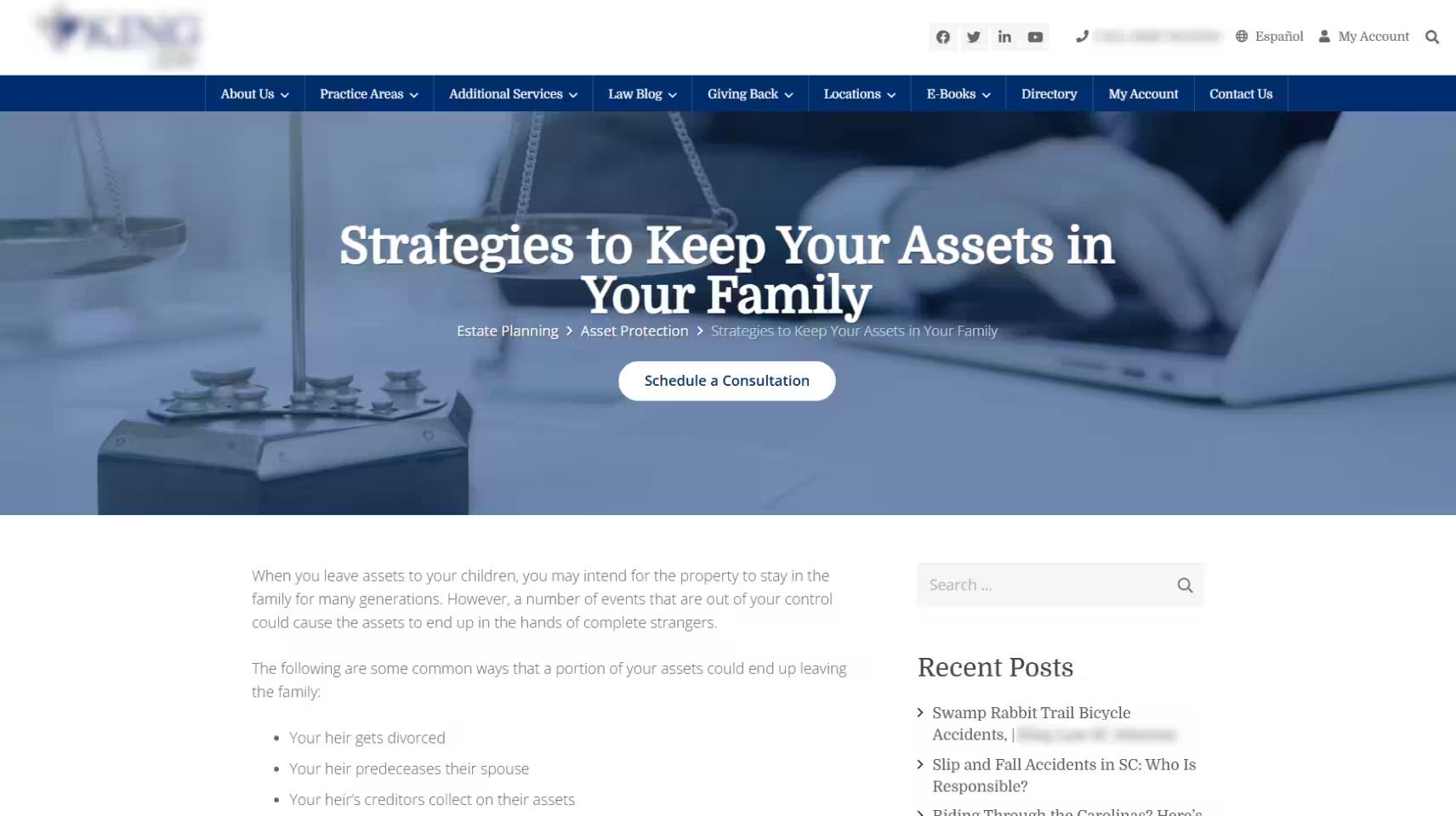
The question most estate planning prospects ask before hiring an attorney isn't "who is the best estate planning lawyer in my city" — it's "do I need a trust or a will," "how does probate work," or "how do I protect my assets for my kids." Content marketing that answers those questions puts the firm in front of prospects before they've decided who to hire.
How to get estate planning clients through content means building a library of genuinely useful blog posts, FAQs, and guides that address real client questions. The topics need to come from actual Google search data. Don’t simply guess. Each piece of content should be written for a specific search intent, optimized for the relevant keyword cluster, and internally linked to the relevant service page. This builds topical authority over time — Google's signal that a firm knows its subject area deeply.
Estate planning probate law SEO benefits significantly from this approach because the practice area involves so many distinct sub-topics (trusts, wills, powers of attorney, healthcare directives, probate administration, estate litigation). Your content can target dozens of distinct keyword clusters without overlap.
— Reviews and Referrals: The Trust Layer
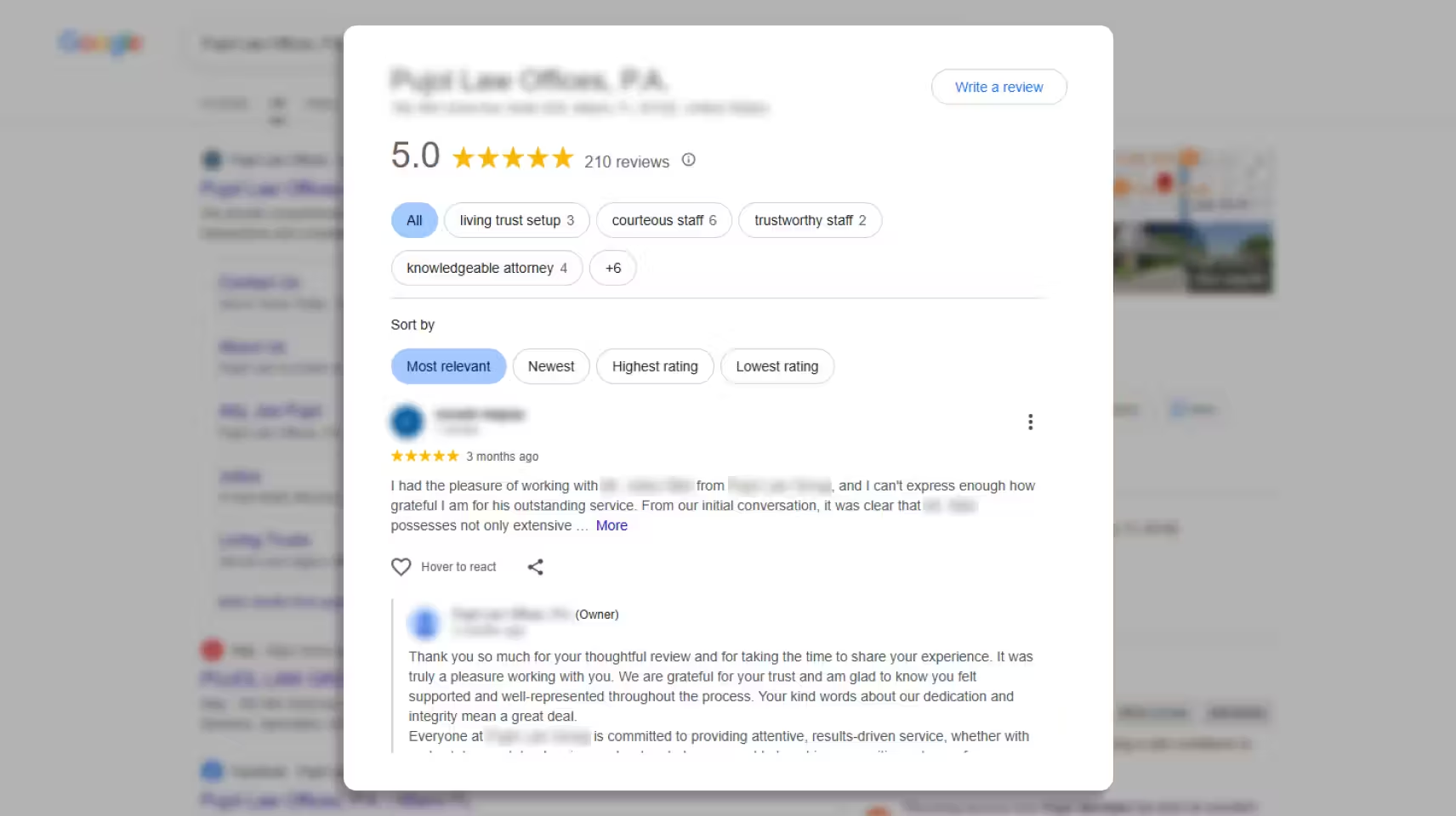
Estate planning clients rarely hire an attorney based on one ad or one search result visit. They research. They read reviews. They ask their financial advisor or accountant. A firm's online reputation — the number and recency of Google reviews, the presence on legal directories, the tone of client testimonials on the website — functions as a trust signal that either confirms or undermines everything the marketing says.
How to market estate planning to financial advisors is a question we hear often, and the answer ties directly to reputation: financial advisors refer clients to estate planning attorneys they trust, which means being visible in the right professional networks, having a strong online presence that reflects well on the referring advisor, and maintaining consistent communication about outcomes. Digital marketing supports that process but doesn't replace the relationship.
— Email and Social: Staying Visible Between Consultations
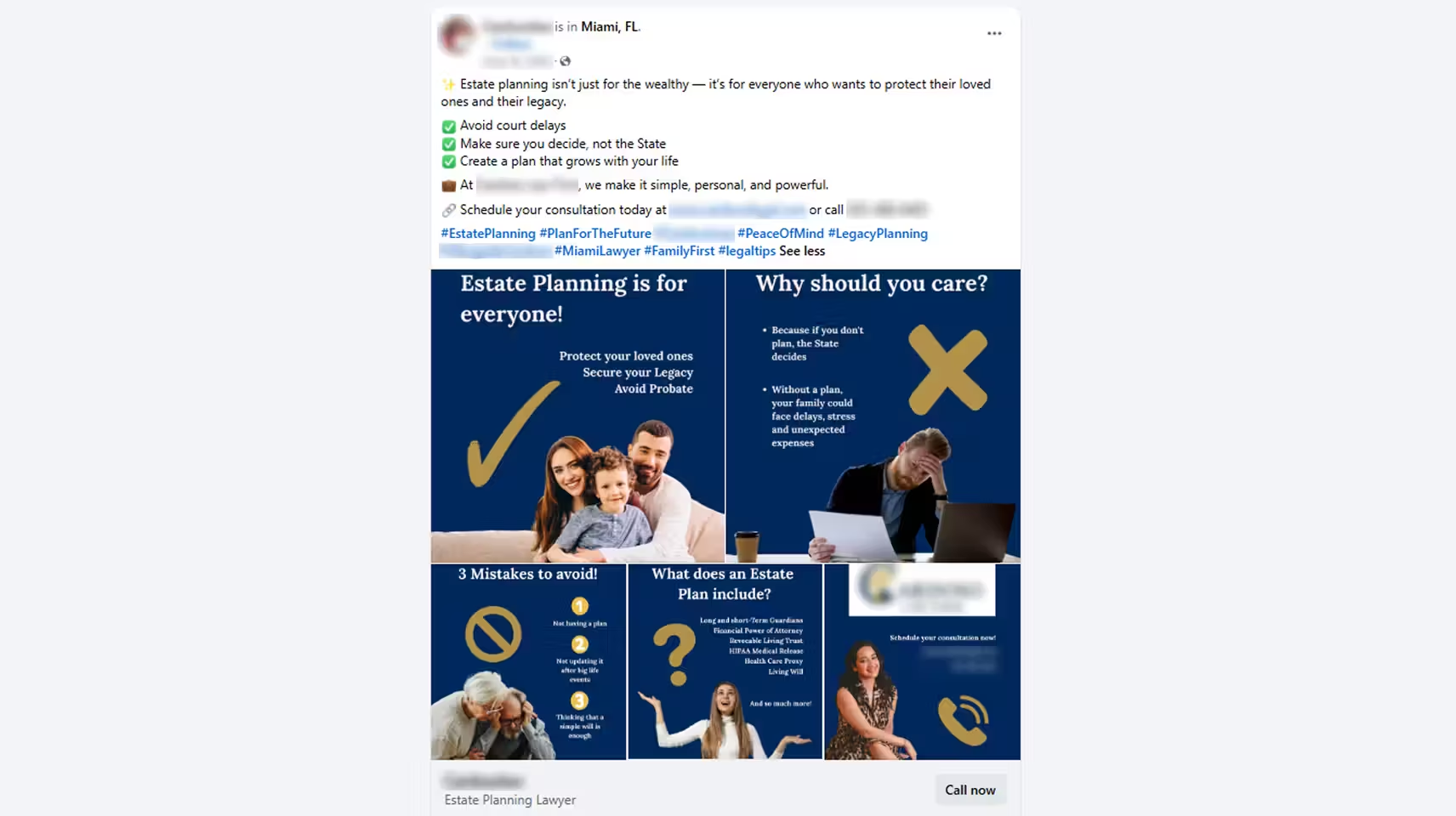
Most estate planning firms underuse email. A monthly newsletter with useful content — tax law updates, estate planning checklists, explanations of recent probate cases — keeps your firm visible to past clients, referral sources, and prospects who weren't ready to hire the first time. These campaigns convert slowly but reliably, and they cost a fraction of paid search.
Social media for estate planning firms works best as a traffic amplifier, not a lead source. Using platforms to distribute blog content, drive traffic to service pages, and run retargeting campaigns to past website visitors extends the reach of your firm's content investment without requiring a constant stream of original social posts.
Get a custom marketing plan built around your firm's practice areas and market → Free Growth Plan
Summary
- Estate planning SEO that works focuses on intent-driven local and long-tail keywords, not broad competitive terms.
- A high-converting estate planning website separates service pages by practice area, loads fast on mobile, and has clear consultation CTAs above the fold.
- PPC campaigns perform better when built around specific life events and matched to dedicated landing pages, not the homepage.
- Content marketing builds topical authority over time — answering the questions prospects ask before they decide to hire.
- Reputation (Google reviews, directory presence, referral relationships) functions as a trust layer that marketing supports but cannot replace.
- Email and retargeting extend the firm's visibility to prospects who need multiple touchpoints before converting.
Frequently Asked Questions

Compare Your Practice Instantly
Stay Ahead of the Competition!
Compare your law firm's performance to Local competitors with our instant assessment tool
Get a clear picture of your firm's performance
Boost your online presence
Compare My Firm
Compare Your Practice Instantly
Stay Ahead of the Competition!
Compare your law firm's performance to Local competitors with our instant assessment tool
Get a clear picture of your firm's performance
Boost your online presence
Compare My Firm
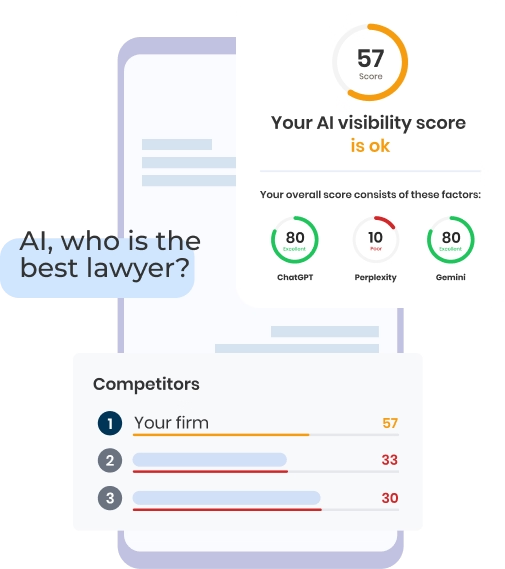
Check Your AI Visibility Instantly
Find Out What AI Is Telling Your Potential Clients
Run our free AI Visibility Report to:
See how often top AI tools mention your law firm
Spot which competitors show up first
Get the next steps to capture more cases
Run My Free AI Report
.avif)
.avif)
.avif)

