


Table of Contents
Entity SEO is the practice of establishing your law firm as a recognized, authoritative entity in Google's knowledge graph — and increasingly, in the AI systems that now answer legal questions directly in ChatGPT, Gemini, and Perplexity. Traditional keyword SEO enhances text for pattern matching.
Entity SEO enhances your firm's digital presence so that search engines understand who you are, what you practice, where you operate, and why you're authoritative.
This article explains what entity-based SEO means for law firms, why it's now tied directly to AI search visibility, and how to build it systematically.
Work with a law firm SEO company that builds entity authority alongside rankings → Explore our law firm SEO company
What Is Entity SEO and How Does Google Use It
Entity SEO refers to the optimization strategies that help search engines understand a website and its associated real-world entity — in this case, a law firm — rather than just matching keywords on a page.
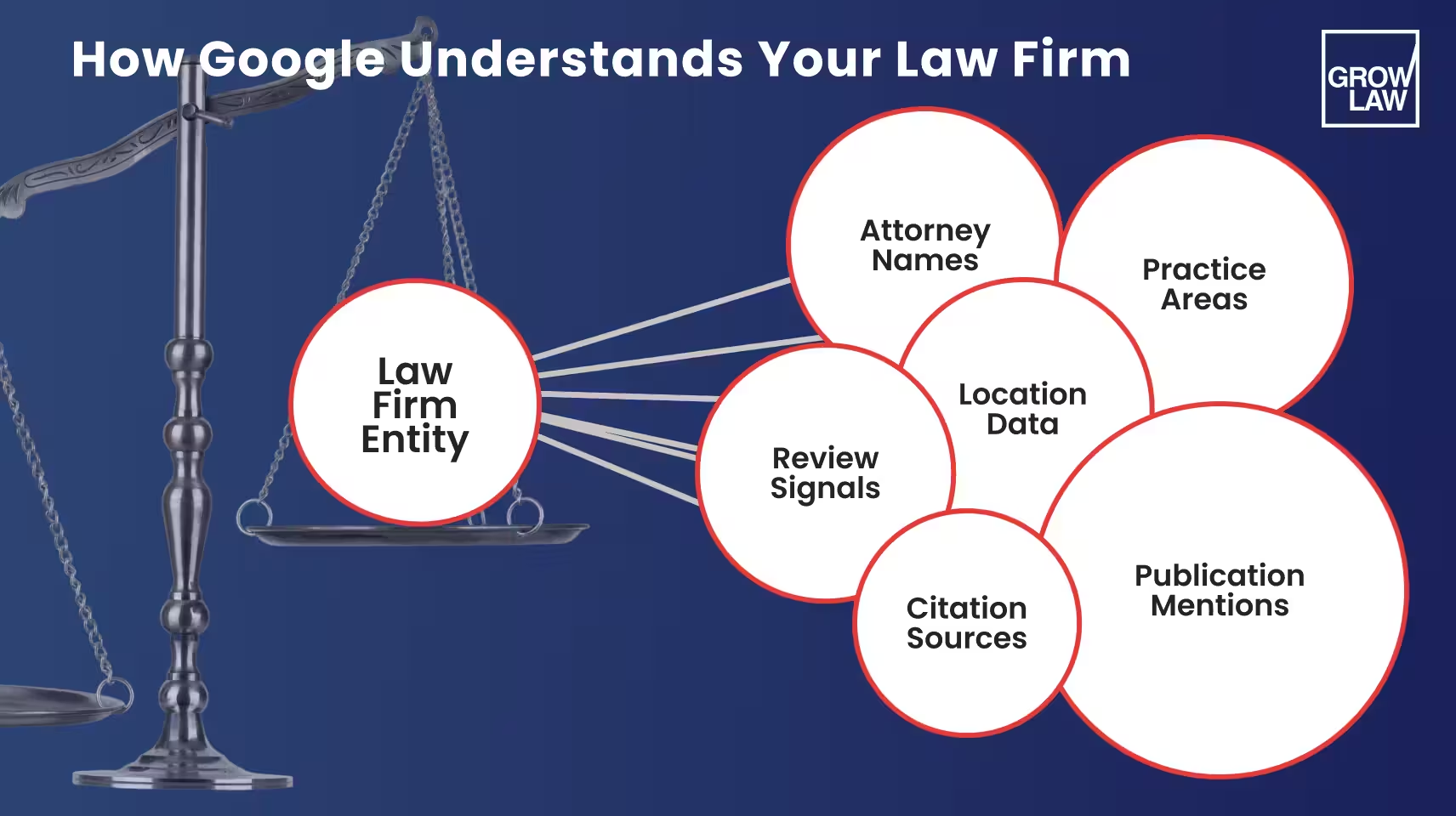
Google's Knowledge Graph is a structured database of entities (people, organizations, places, and concepts) and their relationships. When your firm exists as a recognized entity in this graph, Google understands more than what your pages say — it understands what your firm is.
The difference matters in practice. Keyword SEO can rank a page for “divorce lawyer Dallas,” but Dallas law firm marketing also needs entity signals: consistent profiles, credible local mentions, strong reviews, and a Google Business Profile that confirms the firm’s relevance across the market.
Why Entity SEO Matters for Law Firms in 2026
Three reasons entity authority is critical for law firms now, not in a future algorithm update.
First: AI search. ChatGPT, Gemini, and Perplexity pull answers from entity knowledge graphs. Firms with strong entity signals get cited; firms without them don't appear at all, regardless of keyword rankings.
Second: Knowledge Panel. A recognized entity gets a Knowledge Panel in Google search results — the box showing your firm name, location, hours, and reviews. This increases branded search CTR and signals to potential clients that your firm is established.
Third: entity-based rankings. How Google categorizes your site affects how it ranks for practice area queries. A firm recognized as a criminal defense entity in Phoenix ranks differently than a generic legal services firm with identical keyword density. Omar Ochoa Law's 3,345% marketing ROI and 2,592% organic traffic growth reflect the compounding effect of that entity authority in a competitive Texas PI market.
How Google's Knowledge Graph Affects Law Firm Search Visibility
Google's Knowledge Graph is a database of billions of entities and their attributes and relationships. When you search for a law firm by name and see a panel on the right with the firm's address, phone number, and reviews — that's the Knowledge Graph in action.
Knowledge graph SEO for law firms requires consistent, structured, authoritative signals across multiple sources. The website is one node.
The others include legal directories, GBP, attorney profiles, and schema markup. Barr & Douds, a partner since 2016, built a 29,340% increase in organic traffic through decade-long entity signal accumulation — consistent NAP, legal directory presence, and content authority compounding year over year. Sequoia Legal's 6,700% organic traffic increase follows the same pattern: entity recognition that grew as citation and content signals strengthened.
Level Up Your Brand
Find out how much demand there is in your geographical area
Book a Free Consultation

How to Build Entity Authority for Your Law Firm
Entity optimization is systematic. There's no single action that creates entity recognition — it's the accumulation of consistent, structured signals across authoritative sources over time.
Step 1 — Consistent NAP: Your firm name, address, and phone number must be identical across every online source. Check GBP, Avvo, Justia, FindLaw, Martindale-Hubbell, Lawyers.com, Yelp, and BBB.
Step 2 — Legal-specific schema markup: Add LegalService, Attorney, and LocalBusiness schema to your website. Schema tells Google explicitly what your entity is, which practice areas it covers, and what geographic area it serves.
Step 3 — Attorney publication bylines: Content authored by your attorneys on Avvo, Justia guides, or bar association resources creates attribution links between attorney entities and your firm entity, strengthening both.
Step 4 — GBP completeness: Complete every attribute: practice areas, attorney names, hours, service areas, photos (150+ for competitive markets), and Q&A.
An estate planning firm had no Google Knowledge Panel, inconsistent NAP across 22 directories, and no legal schema. After a 6-month entity optimization project — schema markup, consistent citations, legal publication mentions, and GBP optimization — a Knowledge Panel appeared and branded searches increased 310%.
Use entity optimization as the practical framing for internal documentation — different stakeholders use different terms.
Want a team that builds entity authority alongside rankings and local SEO? Explore our attorney SEO services.
Entity SEO and AI Search Visibility for Attorneys
The connection between entity authority and AI search is now direct and documented. ChatGPT, Perplexity, and Gemini use entity knowledge graphs — the same signals Google uses for Knowledge Panels — to determine which law firms to cite when a user asks 'who is the best immigration lawyer in [city]?' or 'what are the top personal injury firms in [state]?'
Firms with strong entity signals get cited consistently. Firms without entity authority don't appear in AI responses regardless of how well their websites rank in traditional search. This is a significant and growing traffic source that law firms without entity SEO are currently missing entirely.
An immigration law firm began appearing in Perplexity and ChatGPT responses for 'best immigration lawyer in [city]' queries after Grow Law built entity authority through 40+ structured citations, 3 legal publication bylines, and optimized GBP attributes with complete practice area data. Monthly AI-attributed referral traffic grew from 0 to 38 sessions within 5 months. These sessions are high-intent — a user who found the firm through an AI response recommendation is already primed to engage.
Brand entity SEO — the specific practice of building your firm's entity signals to dominate both branded and practice area AI citations — is the emerging layer of legal SEO that will separate high-performing firms from those stuck in keyword-only optimization. Grow Law's AI search optimization service is built on this entity foundation.
Measuring Entity SEO Progress
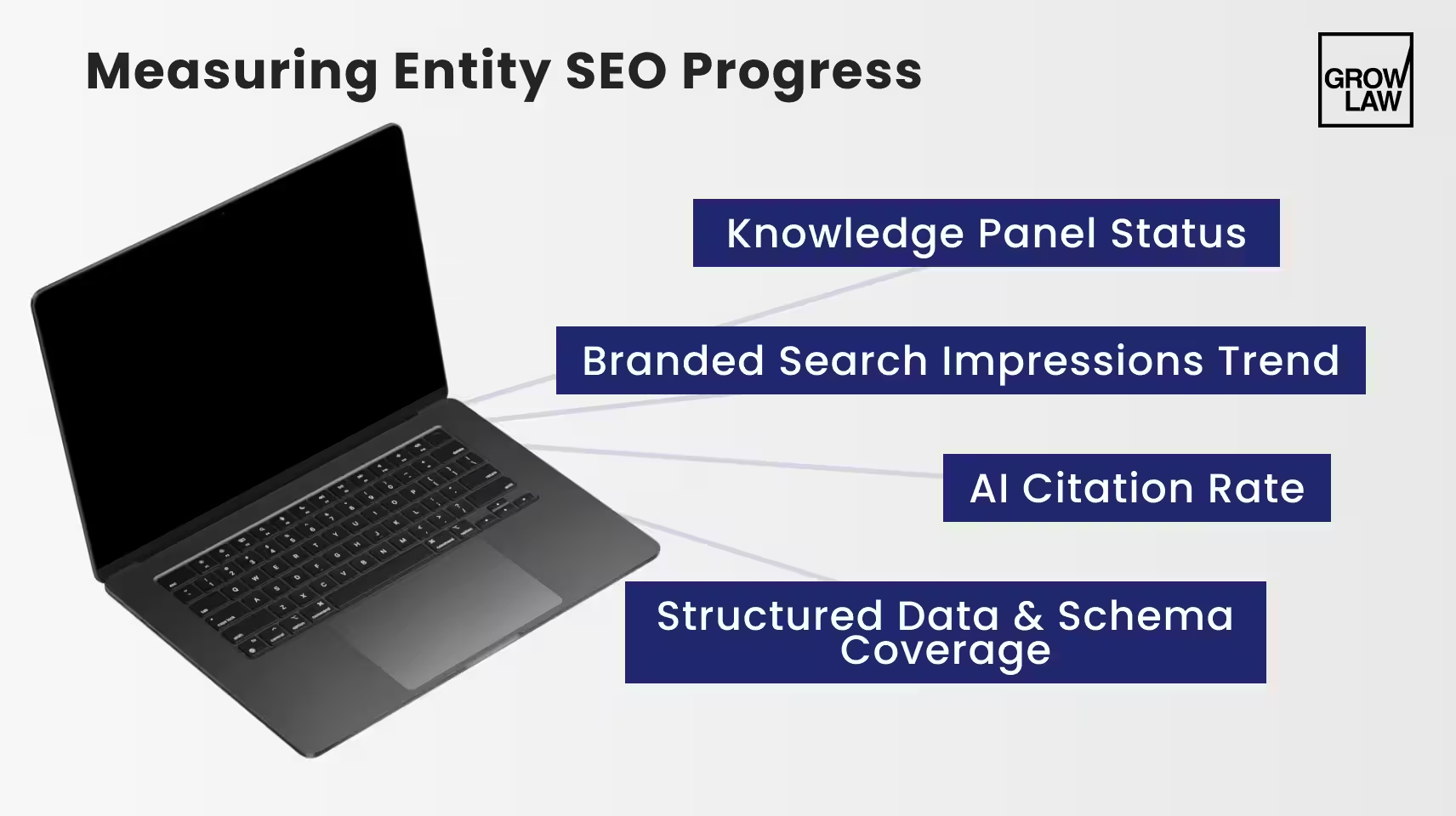
Entity progress is slower than keyword ranking movement — allow 3–6 months. Track four metrics:
(1) Knowledge Panel status: search your firm name monthly. (2) Branded search volume in GSC → Performance. (3) AI citation rate: monthly test queries in ChatGPT and Perplexity for 'best [practice area] attorney in [city]'. (4) Structured data coverage: GSC → Enhancements → Rich Results.
Summary
- Entity SEO establishes your firm as a recognized entity in Google's knowledge graph and AI search systems, not just a keyword-matching website
- Entity authority drives three outcomes: Knowledge Panel appearance, entity-based practice area rankings, and AI search citations
- Build entity signals through consistent NAP, LegalService schema markup, attorney publication bylines, and complete GBP
- AI search (ChatGPT, Gemini, Perplexity) uses entity knowledge graphs — firms without entity authority don't appear in AI responses
- Knowledge Panel formation takes 3–6 months of consistent signals; track monthly
- Measure entity progress through branded search volume, Knowledge Panel status, AI citation rate, and schema validation
Build entity authority that makes your firm visible in both Google and AI search. Learn more about SEO for law firms.
Frequently Asked Questions

Compare Your Practice Instantly
Stay Ahead of the Competition!
Compare your law firm's performance to Local competitors with our instant assessment tool
Get a clear picture of your firm's performance
Boost your online presence
Compare My Firm
Compare Your Practice Instantly
Stay Ahead of the Competition!
Compare your law firm's performance to Local competitors with our instant assessment tool
Get a clear picture of your firm's performance
Boost your online presence
Compare My Firm
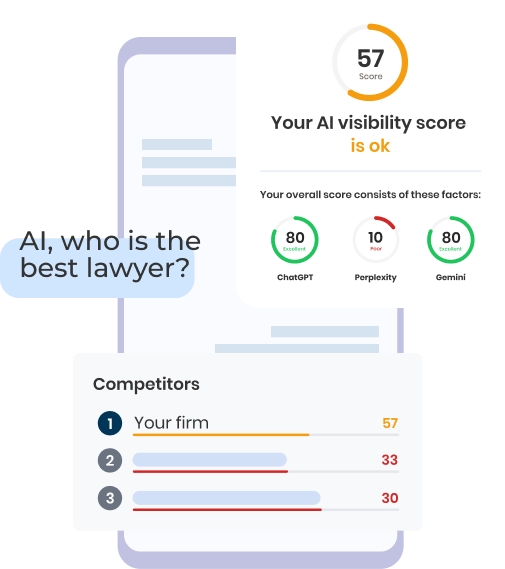
Check Your AI Visibility Instantly
Find Out What AI Is Telling Your Potential Clients
Run our free AI Visibility Report to:
See how often top AI tools mention your law firm
Spot which competitors show up first
Get the next steps to capture more cases
Run My Free AI Report
.avif)
.avif)
.avif)

