


Table of Contents
Tax attorney marketing faces a challenge that most other practice areas do not: the stop-and-go nature of tax law demand. Your individual and small business clients spike around filing season; IRS enforcement and tax resolution matters appear throughout the year but cluster around specific triggers (audits, collection notices, employment tax issues, unfiled returns). To build a sustainable practice, your firm must have marketing systems capable of generating qualified tax attorney leads year-round — not just in February and March.
In this guide, we cover how to position your tax law firm for the right clients, how to build a website that converts high-intent prospects, how paid advertising and content marketing work together in tax law, and how referral relationships with CPAs and financial advisors produce the highest-value new clients.
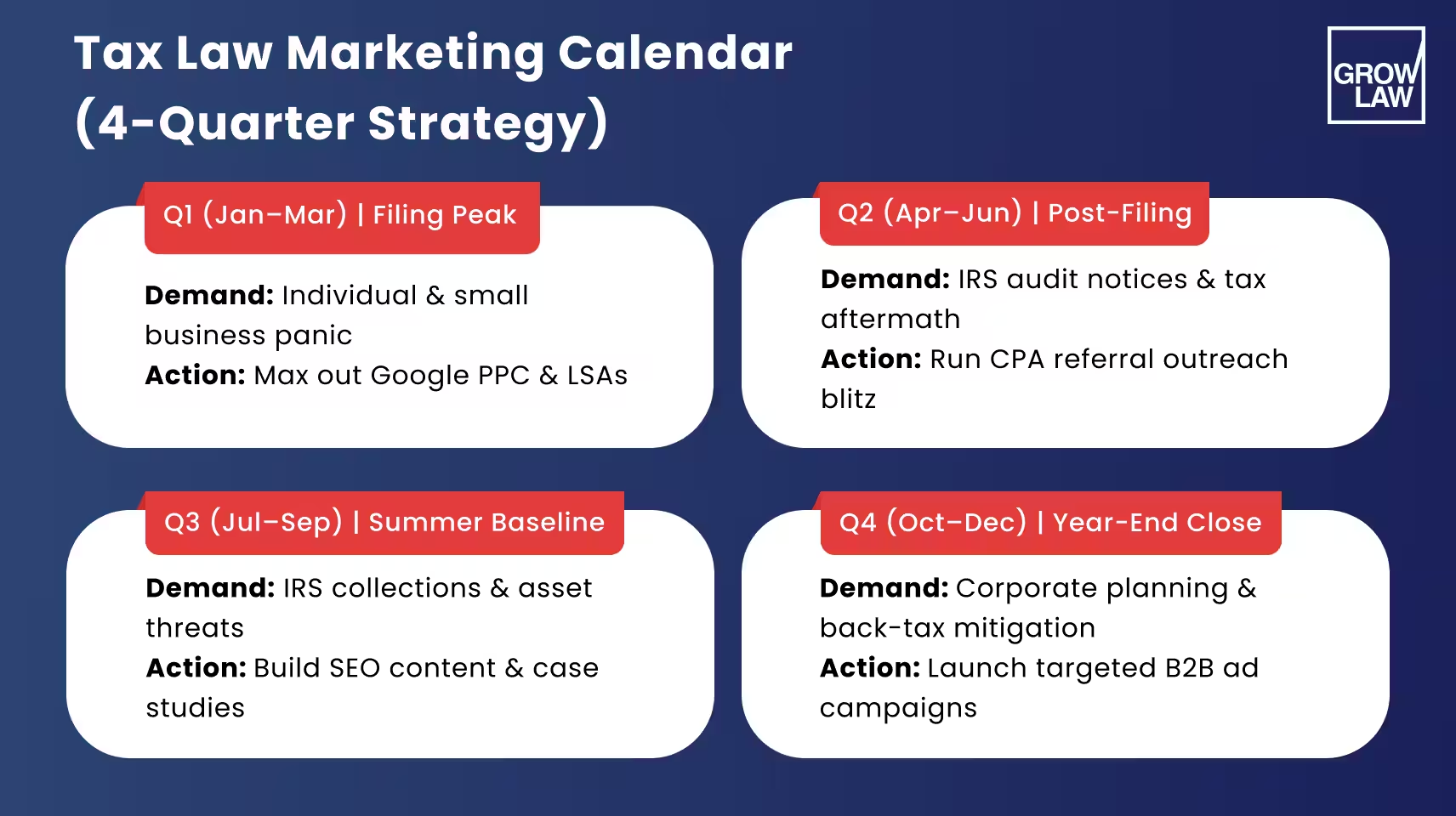
Positioning: The Tax Law Clients Worth Marketing To
If your tax law firm marketing tries to serve all tax clients — from the individual with an unfiled return to the business facing an IRS audit to the high-net-worth investor with international tax exposure — it produces campaigns that speak clearly to none of them. The positioning decision that precedes effective tax attorney marketing is which client segment and which tax situation your firm wants to own.
Marketing for tax attorneys works most efficiently when your firm positions itself around specific tax situations: IRS audit representation, tax resolution (offers in compromise, installment agreements, penalty abatement), business tax planning and compliance, international tax, employment tax issues, or state tax controversy. Each of these serves a different audience with different search behavior, different urgency levels, and different decision criteria.
A business owner facing an IRS payroll tax problem is in crisis; a high-net-worth individual exploring offshore compliance options is in a research phase. These are not the same prospect, and they should not receive the same marketing.
We’ve seen these tax law marketing ideas convert most efficiently: campaigns built around specific IRS programs (Offer in Compromise, Currently Not Collectible status, FBAR compliance, voluntary disclosure); content organized around specific notice types that taxpayers receive and search for immediately after opening; and referral relationships with the CPAs, enrolled agents, and financial advisors who encounter tax problems before those problems reach the point where a tax attorney is needed.
Tax attorney marketing that speaks to the specific notice, the specific program, or the specific business tax situation converts. Tax attorney marketing that says "we handle all tax matters" competes on price.
See how we build positioning-first marketing strategies for tax law firms -> Tax Law Marketing Services
Your Tax Law Firm Website: Building the Asset That Works Year-Round
Your tax law firm website is the conversion point for every other marketing channel — every ad click, every organic search result, every referral validation lands there. A website that fails to communicate the specific types of tax situations your firm handles, or that makes contact difficult, costs leads regardless of how much is spent driving traffic to it.

High-converting tax law websites have a specific structure. Service pages are organized by tax situation type (IRS audit representation, tax resolution, business tax planning, payroll tax problems, state tax controversy) rather than by generic "tax law services." Attorney bios that describe specific experience in the tax situations your firm handles — not just tax law broadly. A visible phone number and a short contact form that captures the type of tax situation without requiring the prospect to type a paragraph. And a resources section — FAQs, notice-type explainers, tax resolution program descriptions — that gives the research-phase prospect enough information to evaluate whether your firm handles their specific situation.
Your tax law firm website content will perform well in search and convert if you use: explainers on specific IRS notices (CP2000, CP504, Letter 2205, LT11) that taxpayers search for immediately after receiving them, guides on specific resolution programs with realistic eligibility criteria, and business-focused content on payroll tax compliance and employment tax audits. This type of specific, practical content captures high-intent traffic at exactly the moment the prospect is most motivated to take action.
— Local SEO and Map Pack Visibility for Tax Attorneys
Local SEO for tax lawyers captures the high-converting local intent searches that produce the most immediate new clients — "tax attorney near me," "IRS audit lawyer [city]," "tax resolution attorney [county]." Your Google Business Profile optimization is foundational. It must have accurate practice area categories, a complete description that reflects the specific tax situations handled, and an active review profile with reviews that mention specific case types.
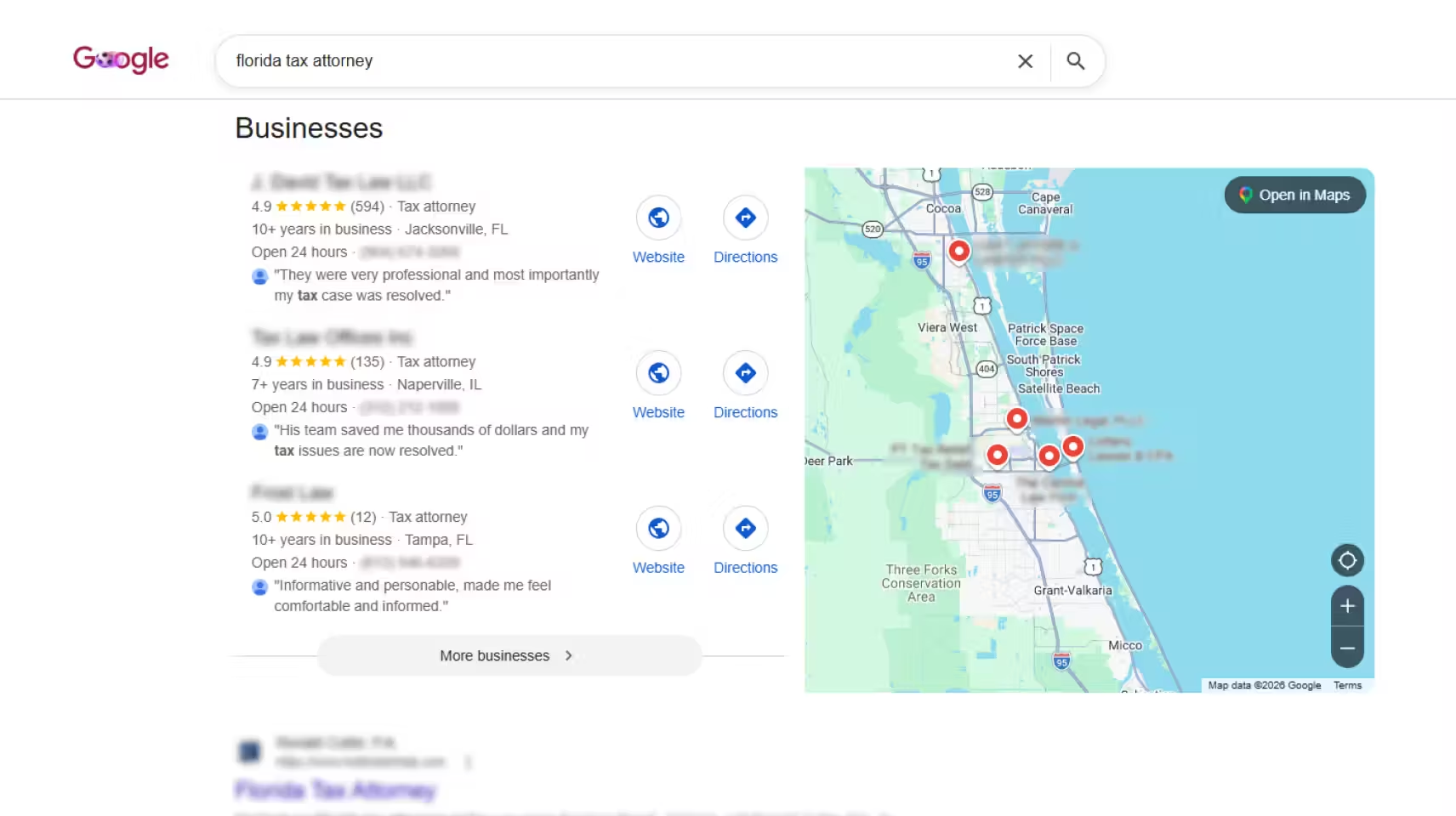
Another important element is tax law digital marketing through local citations. Build consistent listings on Avvo, Martindale-Hubbell, FindLaw, and tax-specific directories to reinforce your geographic authority. This determines map pack placement. Inconsistencies in name, address, or phone number across citations undermine your local ranking regardless of how well your website itself is optimized.
Tax Attorney Advertising: Paid Channels for High-Value Tax Clients
Tax law PPC advertising has favorable economics when structured correctly. The case values in IRS audit representation, tax resolution, and business tax compliance are high enough to justify meaningful cost-per-lead investment. The structuring principle is the same as in other legal markets: use situation-specific ad groups with matching landing pages. This significantly outperforms generic "tax attorney" campaigns.
Your PPC for tax lawyers will perform best around specific IRS programs and notice types. A campaign targeting "offer in compromise attorney" with a landing page explaining the Offer in Compromise program, realistic eligibility criteria, and a clear consultation path converts at several times the rate of a generic tax resolution campaign. The prospect who searched that specific term is asking a specific question; the campaign that answers it wins the contact.
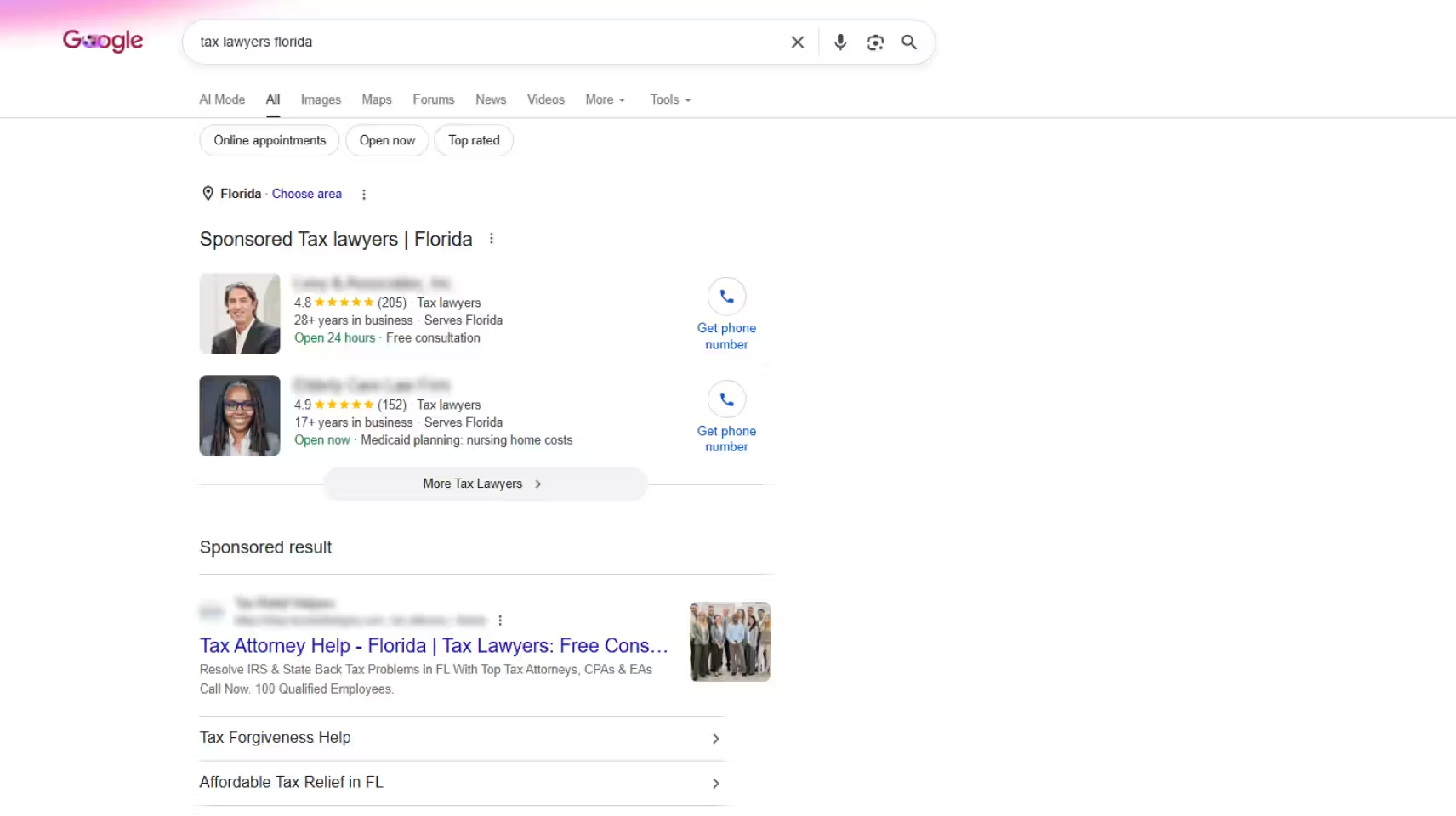
Use Google Local Services Ads for tax attorneys to add a cost-per-lead model with Google Screened credibility. This works well in tax law because your service is professional, credentialed, and trust-dependent — the LSA verification process signals quality that converts higher-value prospects. Tax attorney advertising through Facebook and LinkedIn supplements search with awareness-phase outreach: LinkedIn for business owners and CFOs with business tax exposure, Facebook for the individual taxpayer segment with notices and resolution needs.
Learn how we structure PPC and digital advertising for tax law firms -> PPC for Law Firms
Content Authority and Referral Partnerships: The Long-Term Growth Levers
— Content Marketing That Attracts Tax Clients Before They Call
Tax law marketing through content is particularly effective because the tax law client research phase is extensive. A business owner who receives an IRS payroll tax notice will spend time researching what it means, what the consequences are, and what options exist before contacting an attorney. If your firm publishes clear, authoritative content on that specific notice type — explaining what triggers it, what happens if it is ignored, and how an attorney can help resolve it — you become the expert in that prospect's mind before any conversation happens.
Keep in mind, tax attorney lead generation through content compounds differently than in other practice areas because tax law changes annually, and IRS programs evolve. Fresh, timely content on tax law changes, new IRS programs, and enforcement trend shifts attracts both search traffic and referral source attention. CPAs and financial advisors who read substantive tax law content from your firm become more confident in referring their clients to you.

— The CPA and Financial Advisor Referral Network
How to market tax law firm services to referral sources: the CPA, enrolled agent, and financial advisor relationships that generate consistent high-value tax attorney referrals are built through demonstrated expertise, reliable client service, and regular visibility.
CPAs who encounter a situation beyond their scope — a criminal tax investigation, a complex offshore disclosure, an employment tax crisis — refer to the tax attorney they know and trust. Marketing to that referral source means you stay visible with substantive tax updates, hosting occasional CPE events, being responsive when colleagues send a case, and maintaining the professional reputation that makes referring clients to you feel safe.
Tax lawyer advertising directed at referral sources looks different from client-facing marketing. A quarterly email newsletter covering relevant tax developments, a one-page practice summary explaining the specific situations the firm handles, and a straightforward referral process that makes it easy for the CPA to pass a client without administrative friction are more effective than broad brand advertising for this audience.
.avif)
Get a custom tax law marketing plan for your firm and practice areas -> Free Growth Plan
Summary
- Tax attorney marketing that works year-round requires positioning around specific tax situations (IRS audit, tax resolution, business tax, payroll tax) rather than general tax law representation.
- Your tax law firm website must organize service pages by tax situation type, include specific IRS notices and program explainers, and have a fast contact path visible without scrolling.
- PPC for tax attorneys converts best when built around specific IRS programs and notice types — campaign specificity is the primary conversion lever in tax law paid advertising.
- Content marketing in tax law is particularly durable because tax law changes annually, giving firms a continuous stream of timely topics that attract both search traffic and referral source attention.
- CPA and financial advisor referral relationships produce the highest-value tax attorney leads — maintaining visibility with those professionals through substantive content and reliable client service is a structured marketing activity, not a passive relationship.
Frequently Asked Questions

Compare Your Practice Instantly
Stay Ahead of the Competition!
Compare your law firm's performance to Local competitors with our instant assessment tool
Get a clear picture of your firm's performance
Boost your online presence
Compare My Firm
Compare Your Practice Instantly
Stay Ahead of the Competition!
Compare your law firm's performance to Local competitors with our instant assessment tool
Get a clear picture of your firm's performance
Boost your online presence
Compare My Firm

Check Your AI Visibility Instantly
Find Out What AI Is Telling Your Potential Clients
Run our free AI Visibility Report to:
See how often top AI tools mention your law firm
Spot which competitors show up first
Get the next steps to capture more cases
Run My Free AI Report
.avif)
.avif)
.avif)

