


Table of Contents
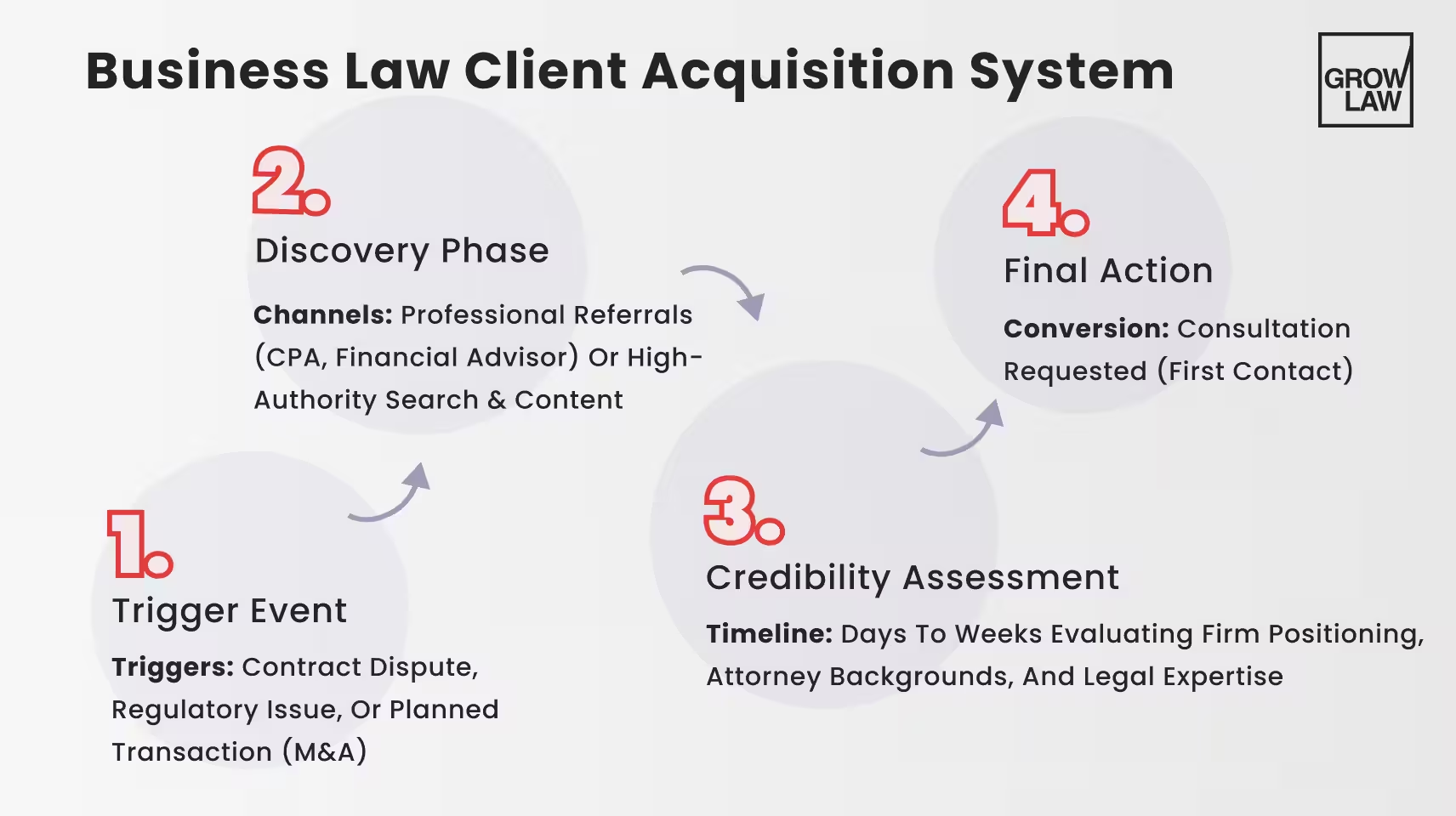
Business lawyer marketing is a discipline built for patience and precision. The clients that your business law firm wants — founders evaluating outside counsel, CFOs managing contract disputes, business owners navigating M&A or regulatory compliance — do not make hiring decisions the way a DUI defendant makes one. They research. They ask their CPA or financial advisor. They evaluate multiple firms over weeks or months before making first contact.
In this guide, we cover the marketing system that reaches them: positioning, website authority, referral development with the professional networks that advise business clients, content strategy, digital advertising, and lead generation.
Marketing for business lawyers, built around how corporate clients actually make decisions, produces the client quality and economics that every business law firm wants.
Positioning: Why Business Law Firm Marketing Starts With Specificity
Business law firm marketing that competes on breadth — "we handle all business legal needs" — is invisible to the clients who are searching for a specific answer to a specific legal problem.
To get the strongest business law marketing outcomes, you must position your firm around something narrower and more specific: a practice area, an industry vertical, a company stage, or a combination of these.
The positioning choices available to your business law firm are varied.
By practice area: M&A transactions, commercial contracts, business litigation, IP protection, regulatory compliance, and employment matters.
By industry: technology companies, healthcare businesses, construction contractors, professional services firms, and manufacturing.
By company stage: startups and early-stage companies, mid-market growth businesses, and family-owned businesses with succession concerns.
By combination: "we represent technology companies from seed round through acquisition" or "we handle commercial litigation for construction contractors in [state]."
Each of these positions makes your business law firm marketing more efficient in two ways. First, it sharpens your keyword and content strategy: "technology startup attorney [city]" is less competitive, more affordable, and more intent-specific than "business lawyer." Second, it makes your firm more referable: a CPA who knows that a specific firm handles M&A for mid-market manufacturers can make a direct, confident recommendation to a client facing that exact situation. Business law marketing that tries to be all things loses both of these advantages.
See how we build positioning-first marketing strategies for business law firms -> Business Lawyer Marketing Services
Building the Referral Network That Business Law Firms Depend On
Business law marketing that ignores referral development is leaving the highest-quality client acquisition channel on the table.
Your business clients hire outside counsel based on trust, and trust most often comes from a recommendation from someone they already rely on — a CPA, a financial advisor, a commercial banker, a business broker, or another attorney in a non-competing practice area.
You need a structured approach to business lawyer lead generation through referral channels. Good relationships alone won’t suffice. Identify the professionals in your local market who advise the client profile your firm wants: the accountants handling the mid-market businesses, the wealth managers advising family business owners, the commercial bankers financing the transactions, the business brokers facilitating the sales.
Each of these professionals interacts with your potential business law clients before those clients have decided to engage an attorney — a recommendation at that stage carries enormous weight.
How to get business law clients through referral development:
- Create resources that make referring attorneys and professionals look good to their clients (brief guides on contract essentials, regulatory updates relevant to specific industries, summaries of relevant court decisions);
- Host or co-host educational events for the professional networks the firm wants to cultivate;
- Maintain visibility with a regular newsletter;
- Invest in personal relationships with the professionals who refer most consistently.
Business attorney marketing that treats referral development as a passive outcome of good service underinvests in the channel that most often drives the highest-value new clients.
The Business Law Firm Website: Authority, Not Just Presence

Business attorney marketing online flows through your website — it is where every referral gets validated, every search result gets converted, and every prospect makes the final trust assessment before deciding to contact.
If your business law firm website lists practice areas without demonstrating substantive expertise, features generic attorney bios, and does not give a prospective business client evidence of specific relevant experience, you’ll be invisible at the moment it matters most.
The best business law websites share a specific architecture. Each practice area has its own dedicated page with depth: not "we handle M&A transactions" but an explanation of the firm's approach to M&A, the transaction sizes and structures it has handled, and the industries it typically serves.
Your attorney bios must describe specific deal experience and matter types, not just credentials. Case studies must present specific legal challenges your firm has solved — the business situation, the legal approach, the outcome — in enough detail that a prospective client facing a similar situation can see their own problem reflected.
Business lawyer website marketing that converts also leverages social proof specific to the B2B context. Client testimonials from business owners and executives, named if possible, carry far more conversion weight than anonymous testimonials. Recognition from legal directories (Best Lawyers, Super Lawyers, Chambers) that business clients recognize provides third-party validation. And thought leadership content — articles on legal developments relevant to target client industries, published either on the firm's site or in industry publications — demonstrates expertise in a way that a credential list cannot.
.avif)
See how we design authority-first business law firm websites -> Law Firm Website Design
Content Marketing and Digital Advertising for Business Lawyers
— Content Authority: The Long-Term Business Law Lead Engine
Business law firm marketing strategies that compound over time are almost always built on content. Your business clients research their legal questions extensively before contacting an attorney — they want to understand the issue, know what is at stake, and identify who knows this area well before they invest in a consultation.
We’ve seen that the firms that publish the most useful, specific answers to those questions earn a disproportionate share of organic search traffic and, more importantly, a disproportionate share of the trust that precedes a hiring decision.
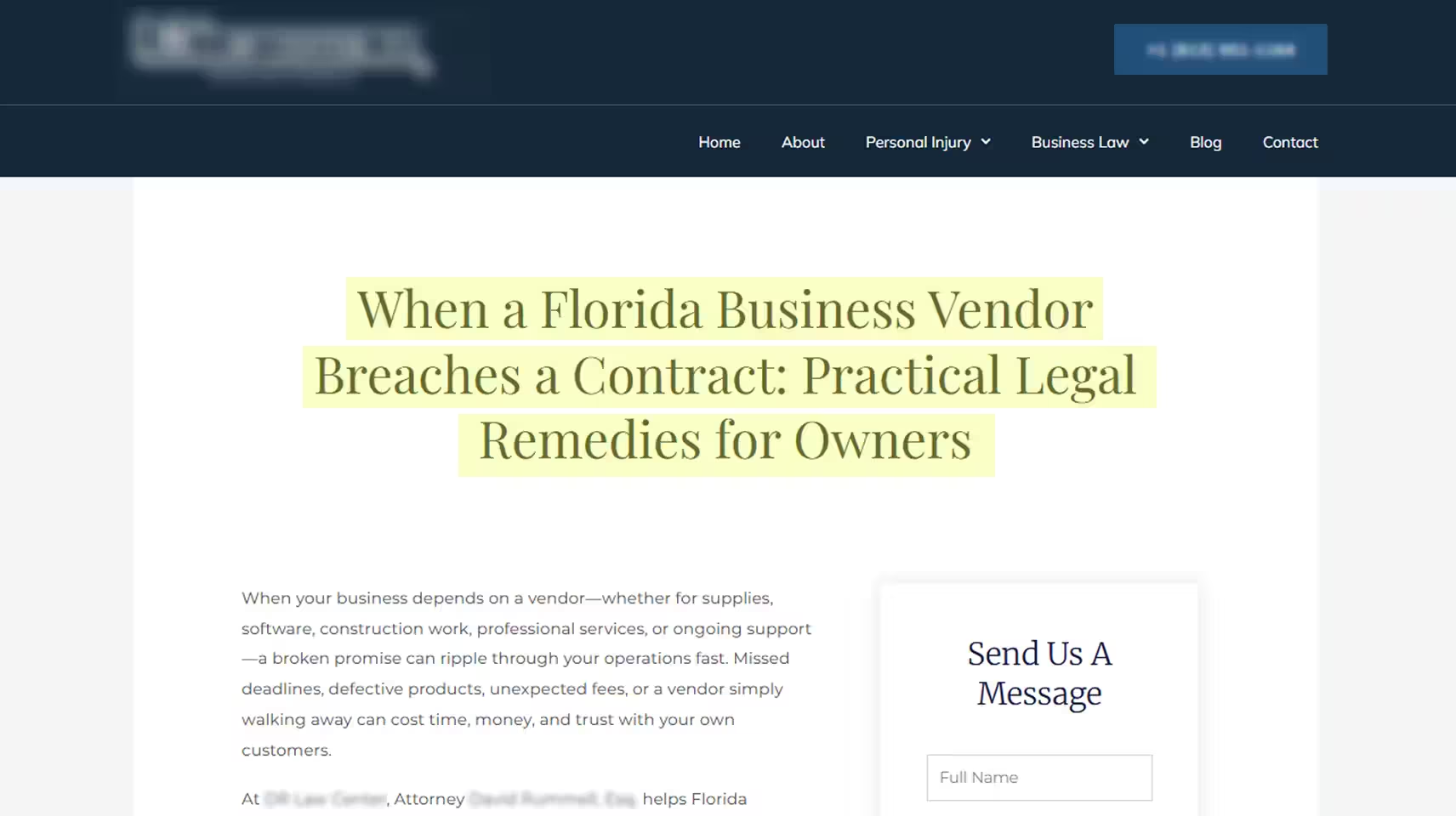
Content that performs in business law marketing is specific, not general. "What is a commercial contract" performs poorly. "What happens if a vendor breaches a supply contract in [state]," "how to protect IP when hiring remote contractors," or "what triggers personal liability for business owners in [state] LLC disputes" perform because they match the exact questions business owners ask when facing a real legal situation. Each piece of content that earns a top search ranking for one of these queries is a client acquisition asset that works continuously without additional spend.
Digital marketing for business lawyers through LinkedIn amplifies all of this content to the exact professional audience your business law firm wants to reach. Articles, legal updates, and case study narratives published on LinkedIn reach business decision-makers, referral partners, and prospective clients who are not in active search mode but are maintaining the professional awareness that influences who they call when a legal need arises.
— PPC Advertising and Business Lawyer Leads
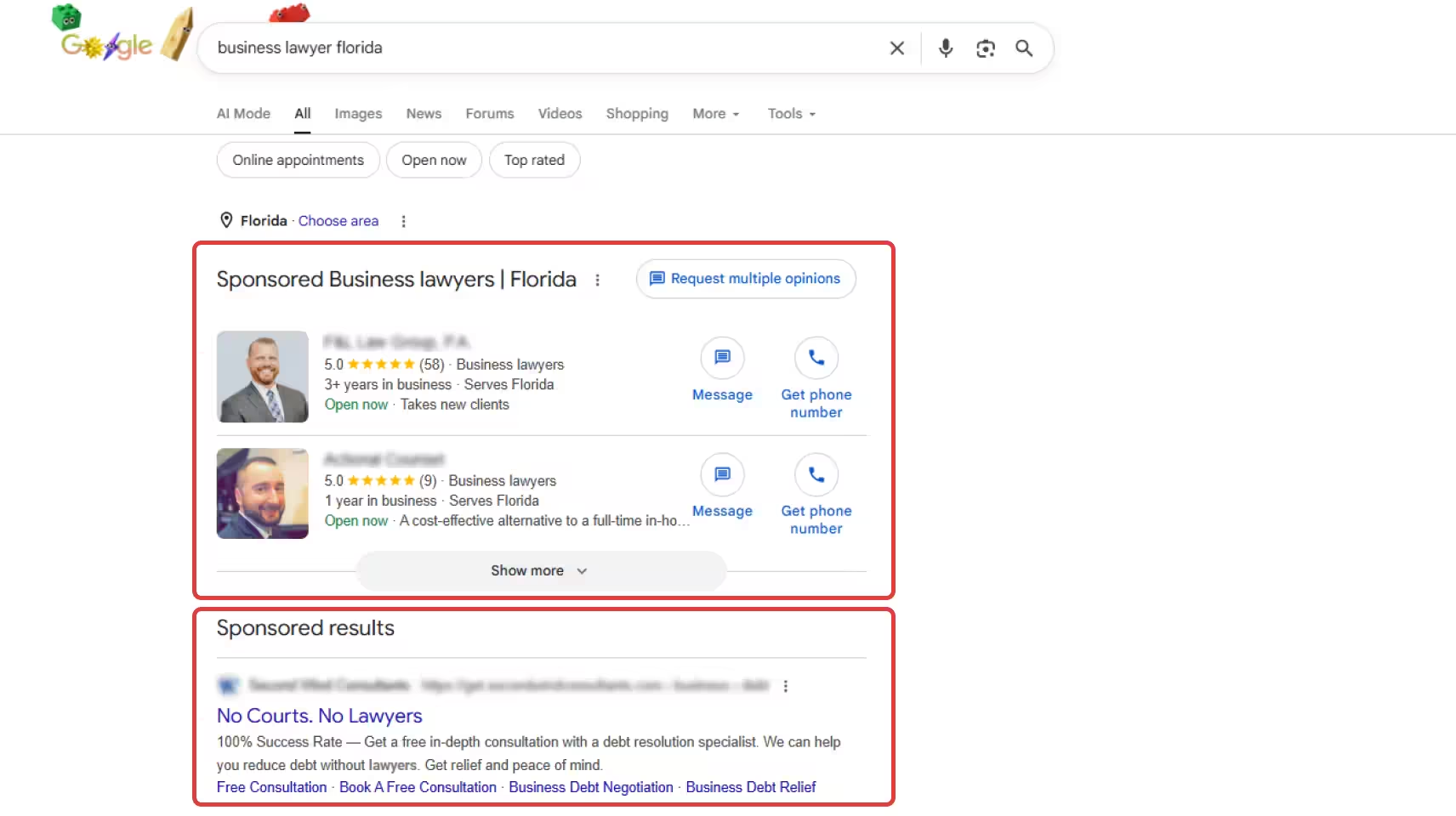
PPC for business lawyers has a narrower effective use case than in consumer legal marketing, but within that use case, it produces strong results. Business law paid advertising works best for practice areas with genuine urgency (commercial litigation when a deadline is approaching, regulatory compliance with an enforcement window), high-value specific services where the cost-per-click economics are justified by case value, and geographic targeting in markets where your firm has a competitive advantage.
Business law firm lead generation through paid search requires the same structural discipline as consumer legal PPC: practice-area-specific ad groups with matching landing pages, not campaigns sending all traffic to the homepage. A business owner searching "commercial lease dispute attorney" who lands on a dedicated commercial lease dispute page with relevant experience and a clear consultation offer converts at a significantly higher rate than one who lands on a generic business law homepage.
Your business lawyer advertising can supplement search with retargeting. This extends your visibility through the long research and consideration phase that characterizes B2B legal decisions. Business clients visit multiple sources over weeks. Retargeting maintains your presence throughout that window without the cost of continuous broad prospecting.
Business attorney advertising through LinkedIn Sponsored Content adds a professional-network channel to reach business decision-makers who are not actively searching but are evaluating their legal needs.

Get a custom business law marketing plan built around your practice areas and market -> Free Growth Plan
Summary
- Business lawyer marketing is built for the B2B decision cycle: longer research phases, credibility-driven conversion, and multiple touchpoints before contact. Strategies calibrated for urgency underperform in this market.
- Positioning around specific practice areas, industry verticals, or company stages dramatically improves lead quality and makes the firm more referrable to the professional networks that drive the highest-value business clients.
- Referral development with CPAs, financial advisors, commercial bankers, and business brokers is a structured marketing activity. The most productive channel for high-value business law clients requires intentional investment, not passive relationship maintenance.
- Best business law websites feature practice-area-specific pages with substantive depth, experience-focused attorney bios, and case studies that give prospective clients evidence of relevant prior work.
- Content authority through specific articles answering the legal questions business clients research compounds over time and produces organic lead flow that paid channels cannot sustain alone.
- PPC and LinkedIn advertising for business lawyers supplement the organic system for urgency-driven practice areas and retargeting through the long consideration phase.
Frequently Asked Questions

Compare Your Practice Instantly
Stay Ahead of the Competition!
Compare your law firm's performance to Local competitors with our instant assessment tool
Get a clear picture of your firm's performance
Boost your online presence
Compare My Firm
Compare Your Practice Instantly
Stay Ahead of the Competition!
Compare your law firm's performance to Local competitors with our instant assessment tool
Get a clear picture of your firm's performance
Boost your online presence
Compare My Firm

Check Your AI Visibility Instantly
Find Out What AI Is Telling Your Potential Clients
Run our free AI Visibility Report to:
See how often top AI tools mention your law firm
Spot which competitors show up first
Get the next steps to capture more cases
Run My Free AI Report
.avif)
.avif)
.avif)

